

Quick answer: When considering which hospital bed is best for home use, start with the patient’s care plan, the exact bed specification and the home environment. Confirm required movements, load capacity, mattress and accessory compatibility, transfer method, delivery access and caregiver ability. Use the manufacturer’s instructions and clinical guidance rather than relying on a product name alone.
How to compare the options in “Which Hospital Bed Is Best for Home Use?”
Compare the beds against a written care routine: transfers, meals, personal care, pressure-risk management, sleep, prescribed positioning and emergencies. A feature matters only if it makes one of those tasks safer or more practical.
Ask each supplier to state platform size, safe working load, available movements, mattress specification, accessory compatibility, power requirements, delivery route and service response in writing. Do not choose from the model name or lowest advertised price alone. The patient’s ability to use controls and the caregiver’s physical capacity are part of the comparison.
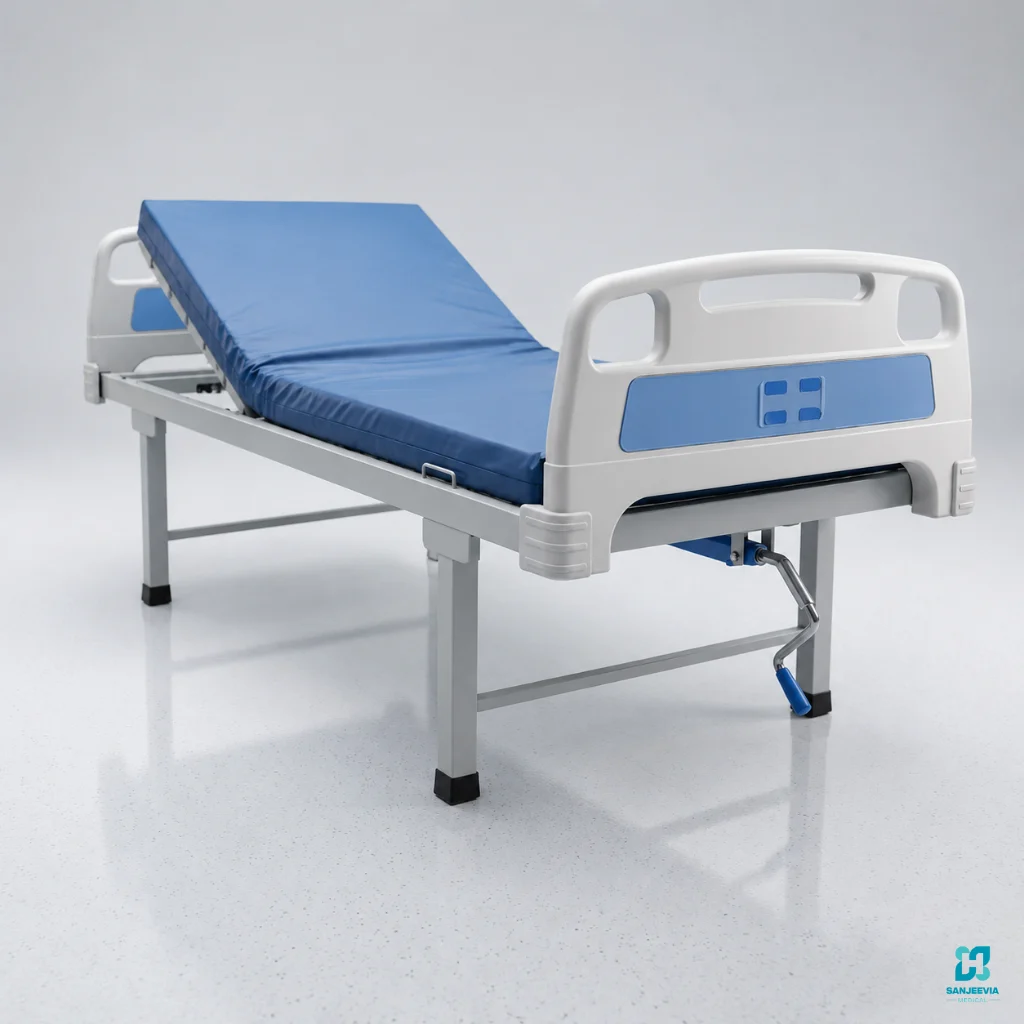
- Required movement and working-height range.
- Manual effort versus powered adjustment.
- Mattress and rail compatibility.
- Room access, turning space and transfer side.
- Rental duration, maintenance and replacement process.
Turn the topic into a decision checklist
Write down the patient’s approximate height and weight, ability to turn and sit, transfer method, number of caregivers, skin risk, cognition, night-time needs and expected review date. Then translate those facts into equipment requirements. For example, “caregiver needs a safer working height for twice-daily wound care” is more useful than “we want an advanced bed.”
Confirm the platform size, safe working load, movement range, electrical supply, mattress model and approved accessories. The safe working load must account for the patient and everything the manufacturer says should be included. If the patient is unusually tall, heavy, restless or at risk of entrapment, ask for a specific assessment rather than assuming a standard configuration.
Sanjeevia’s hospital-bed selection guide and home-care safety checklist provide a practical sequence for comparing models.
Room and delivery planning
Measure the building entrance, lift opening and cabin, stair landing, corridor turns, bedroom doorway and final bed position. Ask the provider for the dimensions of the largest delivered component and whether assembly happens inside the room. Mark the footprint on the floor and include clear working space for the transfer method, wheelchair or commode, moving rails and caregiver access.
Use a level, dry area with lighting and ventilation. Remove loose rugs, clutter and trailing cables. Powered beds need a suitable earthed socket positioned so the cable will not be stretched, crushed by the frame or placed across a walking route. Keep water, heaters and oxygen equipment managed according to their own safety instructions.
Daily use and caregiver routine
At handover, every regular caregiver should practise brakes, controls or cranks, approved rail movement, emergency procedures and safe return to a neutral position. Explain adjustments to the patient before movement and check that limbs, bedding, tubes and cables are clear. Set the brakes for care and transfers unless the manufacturer’s procedure says otherwise.
Adjustability can make a planned task easier, but it does not replace adequate help or correct technique. If the care plan calls for two people or a transfer aid, changing the bed height does not convert it into a one-person task. Keep the handset within safe reach only when the patient can understand and operate it without harm.
Safety, cleaning and maintenance
The U.S. Food and Drug Administration describes the frame, mattress, rails and accessories as a bed system because mismatched parts can create gaps and entrapment hazards. Rails are not automatically required and are not a universal fall-prevention solution. They need individual assessment, correct fit and repeated review. Never improvise a rail, fill a gap with loose objects or use a mattress that resists the moving platform.
Inspect the bed visually each day for unlocked wheels, damaged cables, loose parts, fluid ingress, mattress-cover tears or new gaps. Clean only with products permitted by the manufacturer and keep motors and controls dry. Stop using the affected function after unusual noise, smell, heat, resistance or uncontrolled movement. The provider, not an untrained caregiver, should open or repair powered components.
Reassess after a fall, major weight change, new confusion, skin breakdown, pain increase or changed transfer ability. For urgent breathlessness, chest pain, sudden weakness, serious injury or any medical emergency, seek emergency care rather than repeatedly changing the bed.
Rental or purchase questions
Ask for an itemised quote covering the frame, mattress, clinically appropriate accessories, delivery, installation, demonstration, cleaning, preventive maintenance, breakdown support, exchange, pickup, taxes and deposit. Record the exact model and the provider’s service number at delivery. Rental can suit short or changing needs; purchase can suit stable long-term use, but ownership includes maintenance and eventual disposal.
- What exact movements and limits does this model provide?
- Which mattress and rails are approved for it?
- What is the service response if a motor or control fails?
- Can the model be exchanged if mobility or care needs change?
- Who cleans, services and collects the equipment?
Frequently asked questions
Can the bed be selected from the diagnosis alone?
No. Diagnosis is only context. Mobility, cognition, skin risk, transfer method, caregiver support and prescribed positioning determine the practical requirements.
Can an ordinary mattress or rail be added?
Do not assume so. Use only components compatible with the exact frame and platform. Mattress thickness and compression can change rail height and gap risk.
Should the bed stay plugged in?
Follow the manufacturer’s instructions. Keep the cable visible, undamaged and away from wheels, moving joints, water and trip routes. Ask about backup operation during an outage.
When should the setup be reviewed?
Review it whenever the patient, mattress, rails, room, caregiver team or transfer plan changes, and after any fall, equipment fault or new pressure injury.
Sources and further reading
- U.S. FDA: Hospital Beds
- U.S. FDA: Bed Safety and Bed Rails
- U.S. FDA: Bed-System Accessories and Entrapment Risk
Medical boundary notice: This article provides general educational information, not diagnosis, prescription or a substitute for the treating team’s advice. Follow the patient’s written positioning, transfer, pressure-care and emergency plan and the manufacturer’s instructions.
Need help comparing home-care equipment? Contact Sanjeevia Medical with the care requirements, patient details, room measurements and expected duration. The team can help compare compatible options in Delhi NCR.
Published by Sanjeevia Medical.