
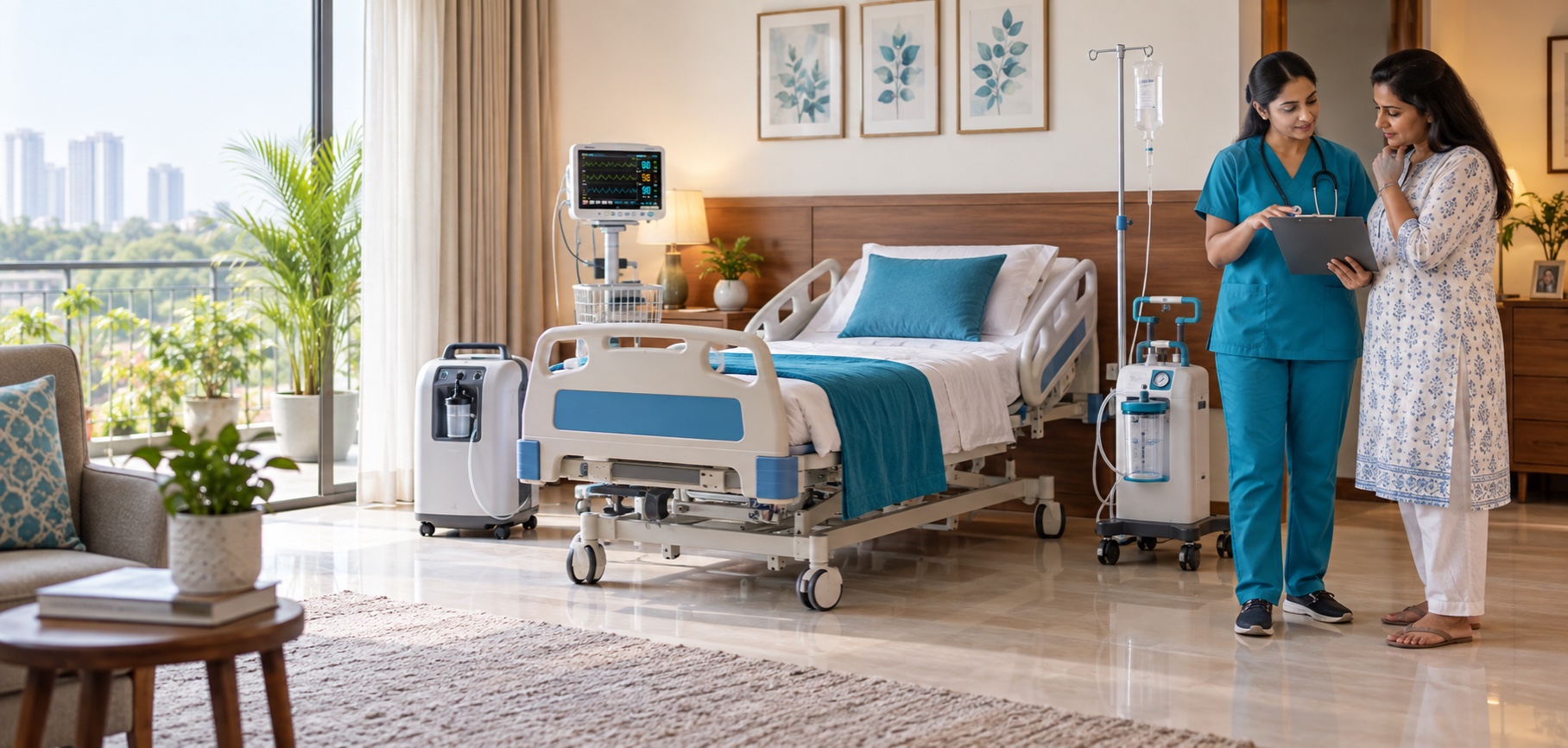
Quick answer: A home ICU equipment setup should begin with a written plan from the treating team, not with a standard package. Depending on the patient’s condition, the plan may include a hospital bed, pressure-care mattress, respiratory support, monitoring, suction or infusion equipment. The exact device, settings, accessories and backup arrangements must be confirmed before discharge.
When a hospital says that a loved one can continue care at home, families often receive several instructions in a short conversation. One person calls about a bed, another searches for oxygen support, and someone else tries to prepare the room. The phrase “home ICU setup” can make this sound like a fixed bundle, but the safe approach is a prescription-led plan built around one patient. This guide explains how to coordinate medical equipment for a home ICU setup in Delhi NCR without guessing which devices or settings are required.
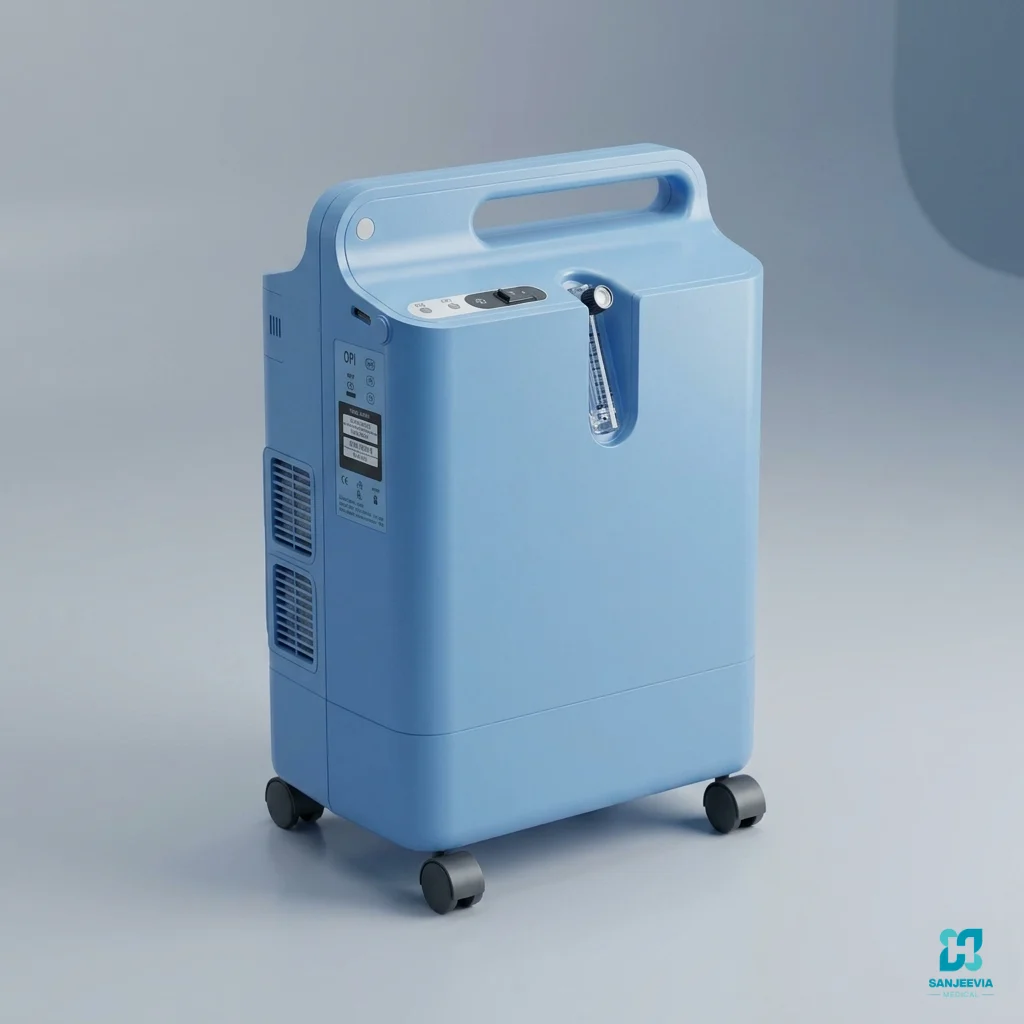
A home ICU equipment setup is not a standard shopping list
Two patients leaving the same hospital ward may need very different equipment. One may need positioning support and short-term monitoring. Another may have a clinician-approved respiratory plan, a suction requirement and several trained caregivers. Renting every device seen in an ICU can overcrowd the room, increase caregiver confusion and create equipment that nobody is trained to operate.
Start with the discharge summary and a single clinician-approved requirement list. It should identify the equipment type, essential specifications, prescribed settings where applicable, accessories, expected duration and the person responsible for clinical questions. Sanjeevia’s hospital discharge equipment checklist can help families organise these conversations before the patient comes home.
The FDA home healthcare medical-device checklist recommends checking what each device needs to operate, whether the home is suitable, what alarms mean and what backup plan applies. These questions are especially important when several devices share one room.
Which equipment may be considered for a home ICU setup?
The treating team should decide which categories are clinically necessary. The table below is a planning guide, not a prescription.
| Equipment category | Planning question for the family | Who should define the requirement? |
|---|---|---|
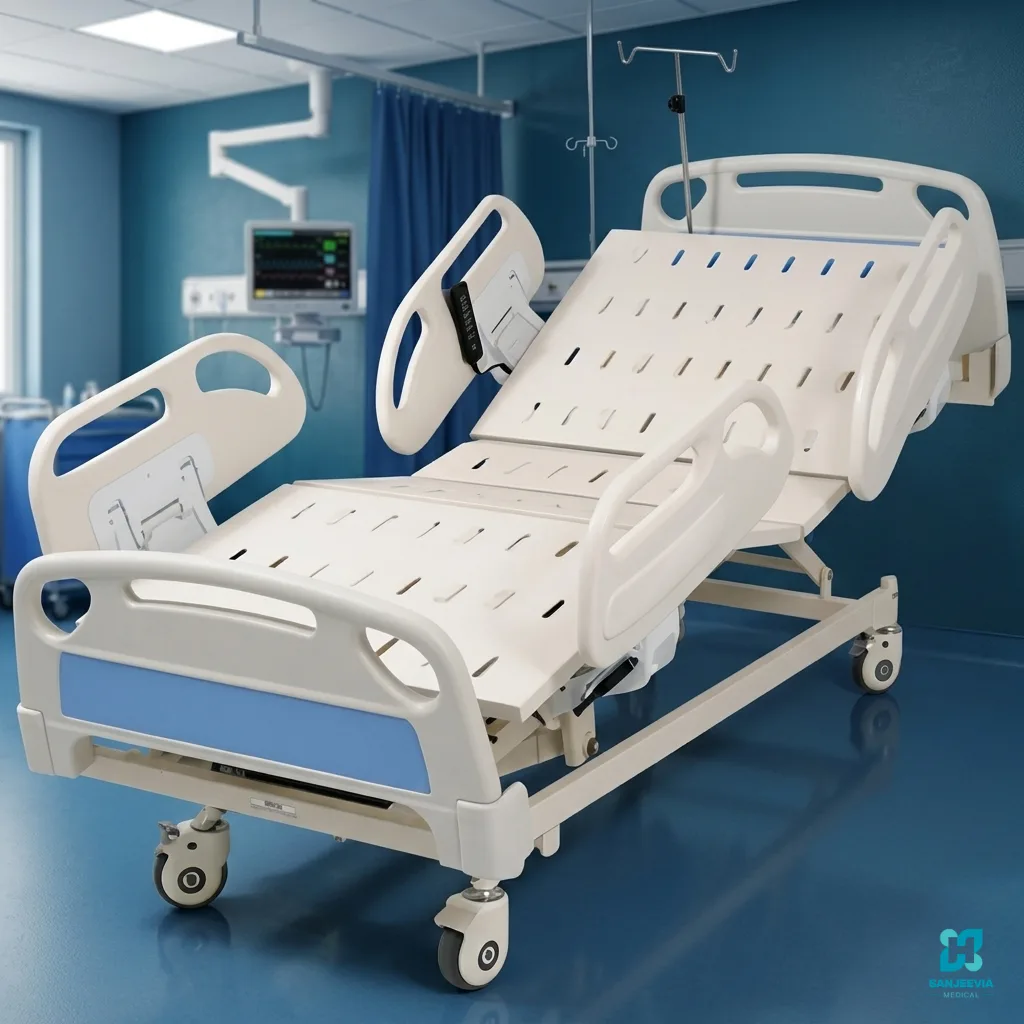
| Hospital bed and mattress | Which positions, height functions, rails and pressure-care surface are required? | Treating doctor, nurse or physiotherapist |
| Oxygen or respiratory support | What device, flow or mode has been prescribed, and what backup plan is required? | Treating doctor or respiratory professional |
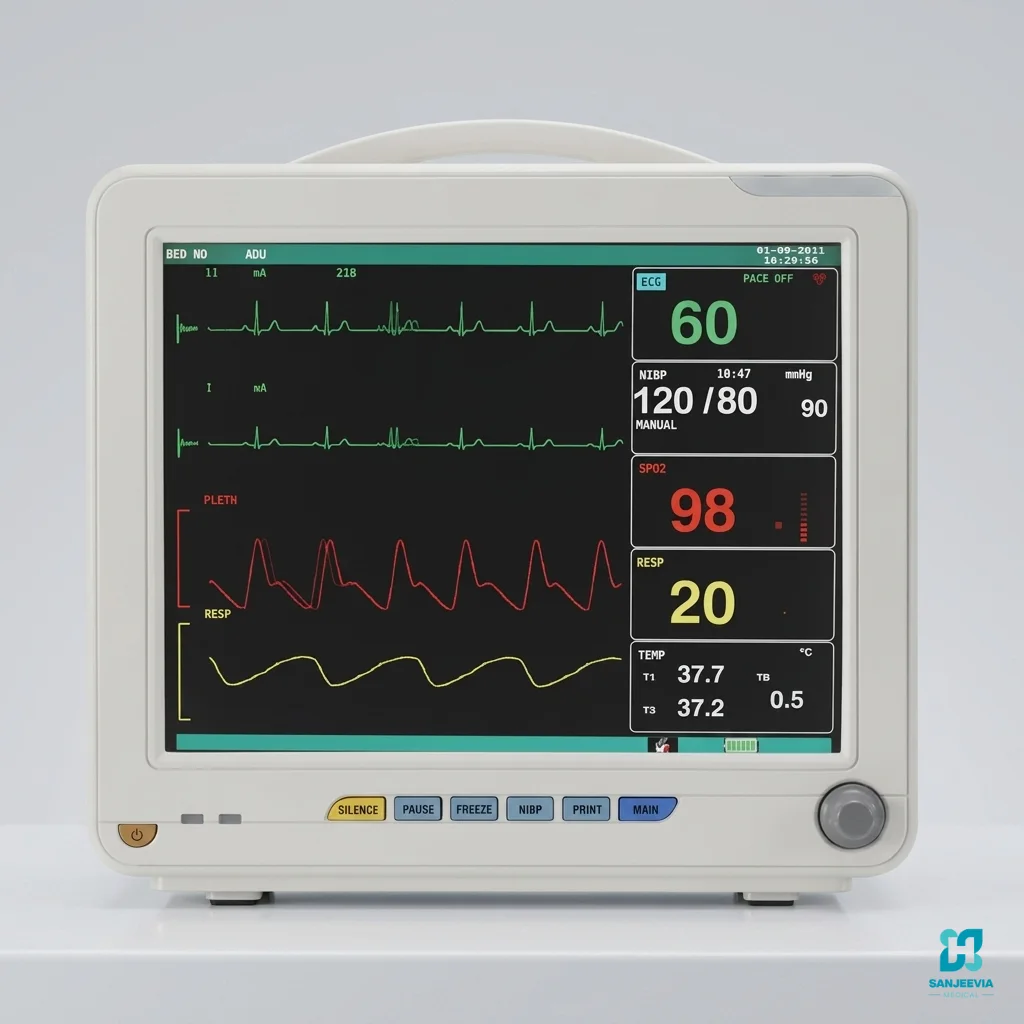
| Patient monitoring | Which readings should be observed, how often, and when should the caregiver escalate? | Treating clinical team |
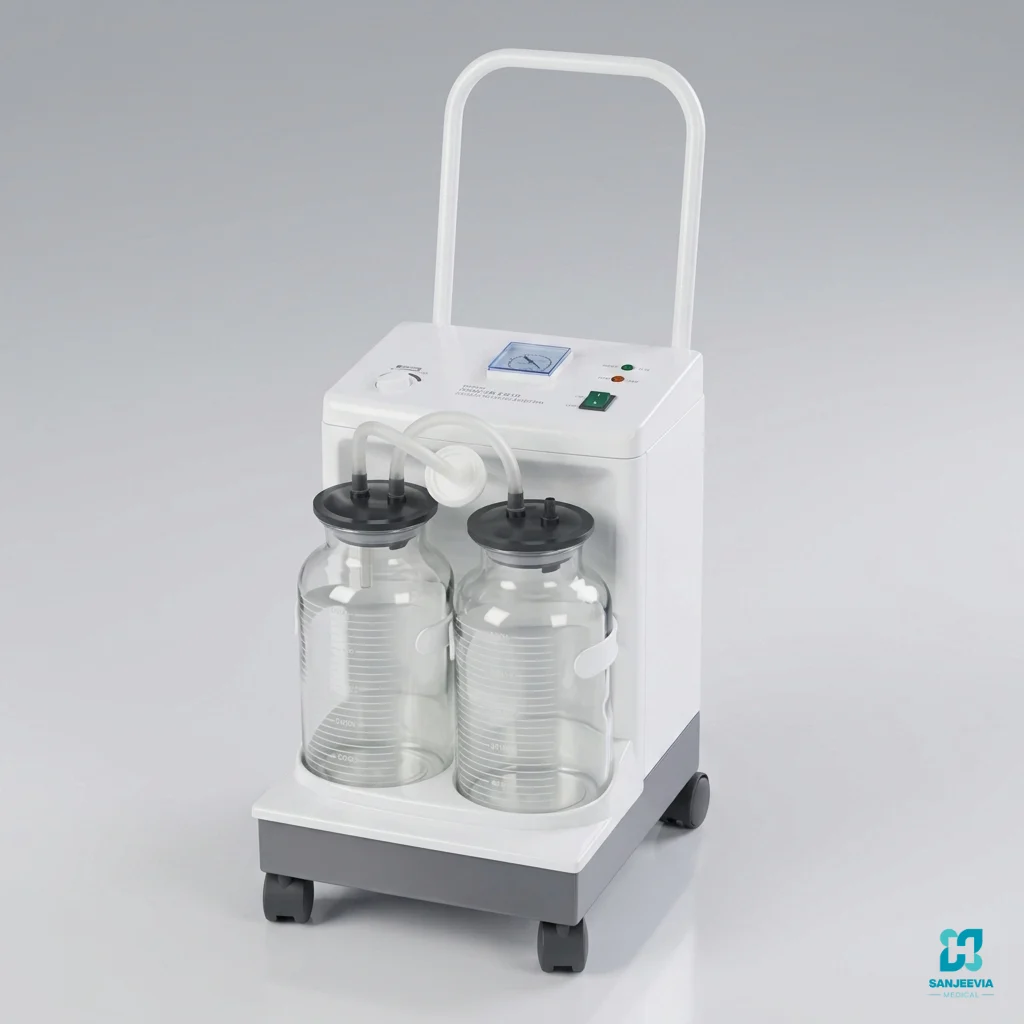
| Suction equipment | Is suction clinically required, and who will train the caregiver in its use? | Treating doctor, nurse or respiratory professional |
| Infusion or syringe pump | Is pump-based therapy planned at home, with trained supervision and written settings? | Prescribing clinician and qualified care team |
| Mobility and bedside aids | Can the patient transfer safely, and does the room allow the recommended equipment? | Physiotherapist or occupational therapist |
Families can review Sanjeevia’s hospital-bed category, respiratory-care equipment, oxygen-support category and critical-care and supporting equipment after the clinical requirement is clear.
Plan the room, power and access before confirming equipment
A device that is appropriate in hospital may still be difficult to use in a bedroom with narrow doors, limited sockets or furniture on both sides of the bed. Draw a basic room plan and mark the patient’s position, caregiver working side, door, bathroom route, windows, sockets and clear emergency access. Add space for moving parts, tubing, accessories and routine cleaning.
Check the complete access route
- Measure the narrowest usable doorway and the lift opening.
- Note corridors, sharp turns, steps and raised thresholds.
- Keep a clear route from the entrance to the patient’s room.
- Confirm society or building-entry requirements in advance.
- Nominate one local adult to coordinate access and attend the handover.
Families living in an apartment can use the detailed high-rise medical equipment rental guide to check lift clearance, society access and the final room.
Review power and backup needs together
List every powered device and confirm its socket, cable route, battery status and clinician-approved response to a power interruption. Do not depend on a single extension arrangement for several devices. Keep vents clear and protect equipment from moisture, heat, food and drinks. The family should understand which action belongs to the equipment provider and which situation requires the treating team or emergency services.
Arrange one coordinated handover for all rented equipment
Multiple deliveries can create separate instructions, accessory bags and support contacts. Reduce confusion by appointing one main coordinator and one backup. Record each unit’s name, identifying details, accessories, room position and the person who attended the demonstration.
For every device, ask the receiving caregiver to show the basic steps back to the person conducting the demonstration. Keep the manufacturer’s instructions near the device. Do not change prescribed settings, connect accessories across different machines or silence an alarm without the approved response plan.
Use Sanjeevia’s guides on patient-monitor alarms and handover, clinician-led suction setup and infusion-pump questions before discharge when those items appear on the approved requirement list.
Home ICU rental checklist before discharge
- The treating team has provided the equipment requirement in writing.
- Prescribed modes, flow rates, settings and accessories are clearly recorded.
- The room, doorway, lift and caregiver working space have been checked.
- Power, battery and backup arrangements have been discussed.
- One local recipient will attend the complete handover.
- Every supplied unit and accessory will be recorded separately.
- Caregivers know whom to contact for clinical questions, equipment support and emergencies.
- Rental review dates are placed on the family calendar.
Sanjeevia’s article on coordinating multiple medical equipment rentals provides a practical register and room-planning method for families managing several devices.
How Sanjeevia can support equipment coordination
Sanjeevia can help families organise prescribed equipment categories for a home setup across Delhi NCR, subject to current availability and PIN-code confirmation. Share the discharge requirement, address, room-access details and responsible recipient through the Sanjeevia contact page. The treating healthcare professional remains responsible for clinical selection and prescribed settings.
Frequently asked questions
What is included in a home ICU equipment setup?
There is no universal package. The combination may include a hospital bed, mattress, respiratory equipment, monitor, suction machine, infusion equipment or mobility aids, but only the treating team should define what the patient needs.
Can a family choose a ventilator, BiPAP or oxygen concentrator on its own?
No. Respiratory equipment and its settings must follow the treating professional’s prescription and care plan. Ask for the exact device type, mode, flow, accessories and backup instructions.
How much room is needed for a home ICU setup?
The answer depends on the bed, other equipment and caregiver workflow. Measure the whole access route and leave clear working space around the patient, rather than checking only whether each item fits against a wall.
Who should attend the equipment handover?
The main daily caregiver should attend, along with a backup caregiver where possible. They should receive the demonstration, check accessories and understand the written support and escalation contacts.
What happens when the patient’s requirement changes?
Ask the treating team to review the care plan, then contact the equipment provider. Do not replace a device or change settings based only on a family decision.
This article provides general equipment-planning information. A home ICU or critical-care plan requires assessment and continuing direction from qualified healthcare professionals.
Next Read
Once the equipment list is confirmed, the next step is: How to Coordinate Multiple Medical Equipment Rentals at Home.
Searches This Guide Answers
- home ICU equipment rental in Delhi NCR
- medical equipment for ICU setup at home
- home ICU setup equipment checklist
- ICU equipment on rent near me
- hospital bed ventilator and monitor rental together
- medical equipment needed after ICU discharge
Related keywords: home ICU setup Delhi NCR, ICU equipment rental, critical-care equipment at home, hospital discharge equipment, hospital bed and monitor rental, respiratory equipment rental, patient room setup.
Intent-based key phrases: arrange medical equipment before ICU discharge, rent prescribed ICU equipment for home, set up a critical-care room at home, coordinate a hospital bed and respiratory equipment, prepare caregivers for home medical devices.