

Quick answer: Choose an IV stand for home care by checking base stability, hook condition, height adjustment, castor movement, load rating and compatibility with any prescribed infusion pump. Place it where the line can reach the patient without pulling, kinking or crossing a walking path. An IV stand only supports the container and equipment. A qualified clinician must prescribe, connect and supervise the infusion.
An IV stand looks simple, so it is often ordered at the end of a home-care setup. In practice, the wrong pole can create avoidable problems: the bag hangs too low, the base does not fit beside the bed, the wheels catch on a rug, or the tubing stretches across the caregiver’s route. A few measurements and a proper handover make the space safer and easier to manage.
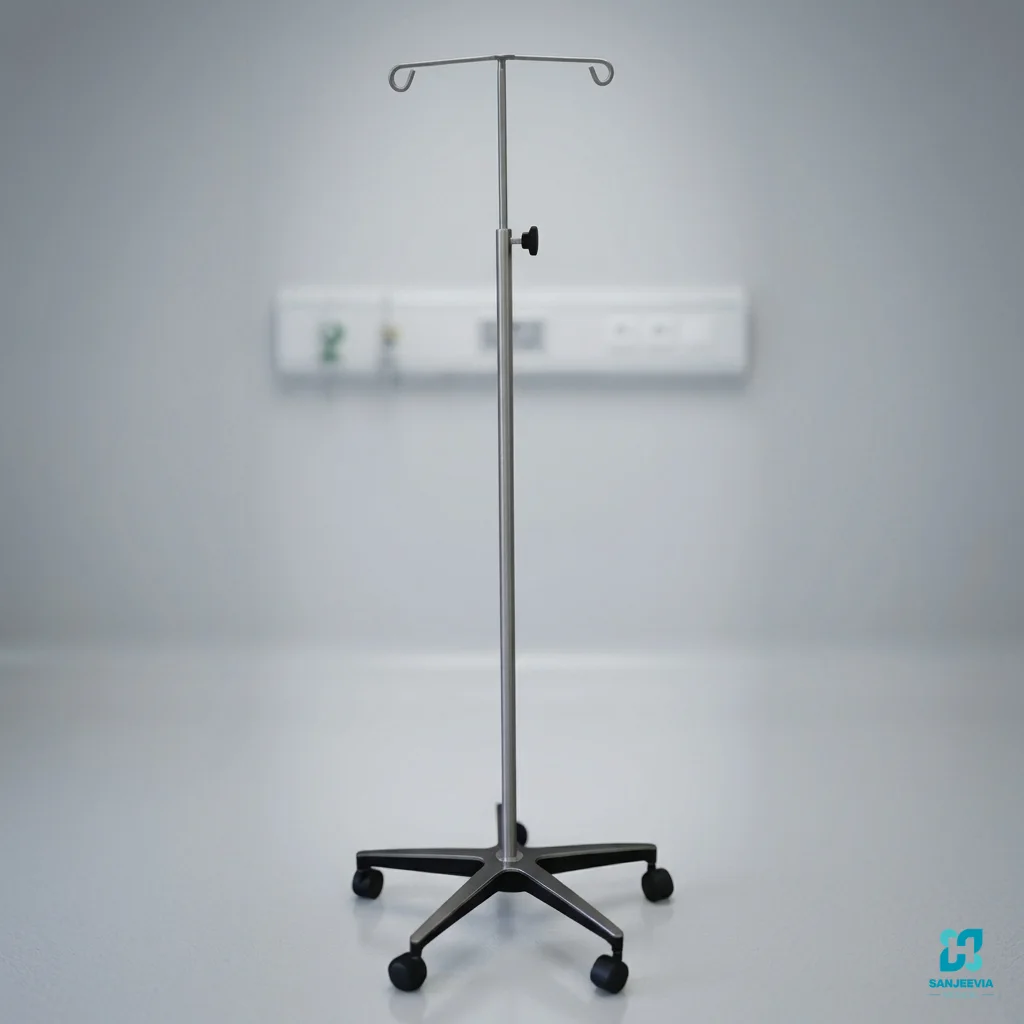
Sanjeevia’s height-adjustable IV stand is intended for hanging IV bags, infusion lines or other compatible suspended equipment during clinician-led home therapy. IV bags, administration sets and pump mounts are separate clinical items and must be confirmed for the treatment plan.
What an IV stand does and does not do
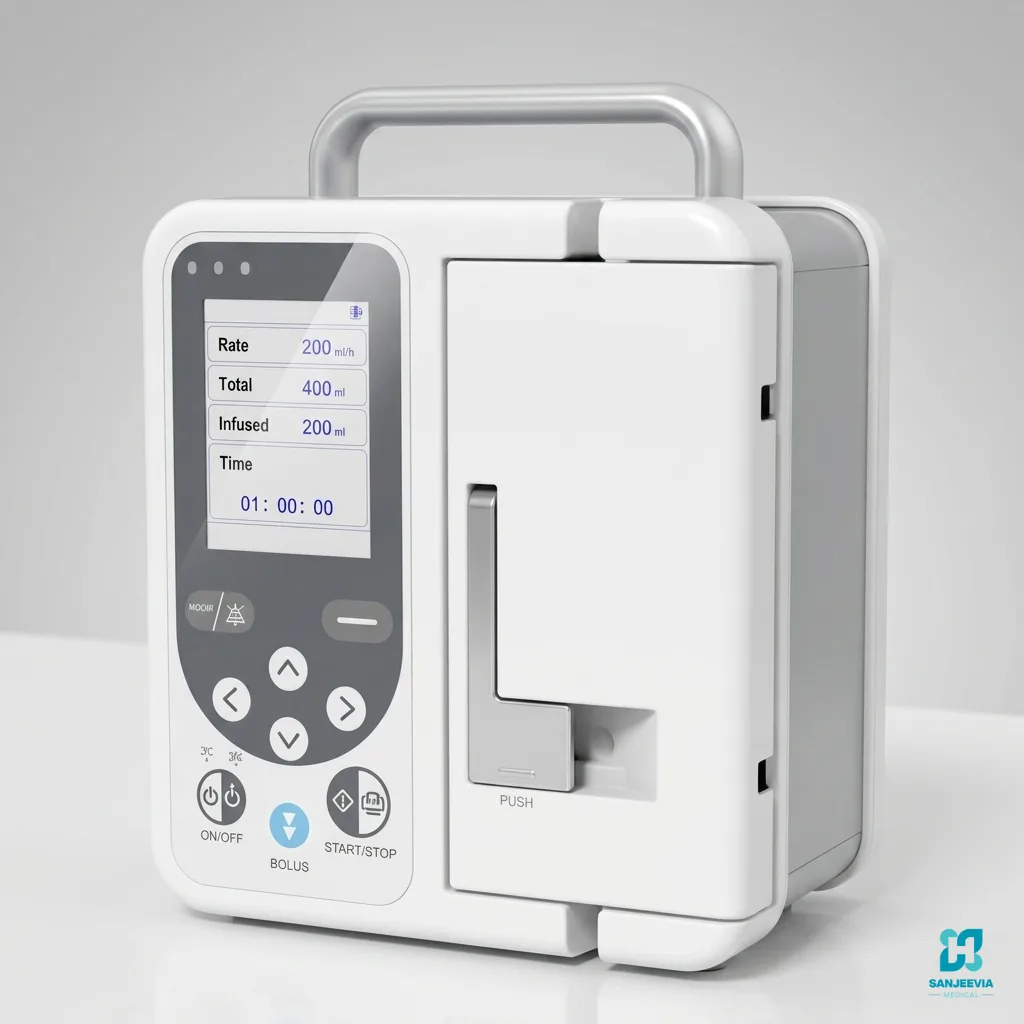
The stand provides a stable, adjustable support point for a prescribed fluid container and compatible equipment. It does not control a dose, select a flow rate, confirm medication, prevent infection or replace monitoring. When precise delivery is required, the clinician may prescribe an infusion pump or a syringe pump.
The US Food and Drug Administration explains in its home infusion-pump guidance that patients and caregivers need training, a clean work surface, a clear understanding of alarms and a plan for problems. The same organised approach should shape the stand and bedside layout.
Seven checks before choosing an IV stand
1. Base stability
A broad multi-leg base generally offers better resistance to tipping than a narrow base, but it also needs more floor space. Check that every leg sits level and that no castor is bent or loose. The stand should remain upright when moved gently with the intended container and approved equipment attached.
Never use the pole as a walking aid, grab rail or support for transfers. If the patient needs mobility support, use equipment selected for that purpose.
2. Height-adjustment range
The pole should raise and lower smoothly, then lock firmly at the clinician’s required height. Height depends on the therapy method, bed position and equipment, so avoid relying on a generic setting. Once adjusted, the upper section should not slide down under the approved load.
3. Hook number and condition
Confirm how many hooks the clinician needs and what may be hung from each one. Hooks should be smooth, intact and shaped to prevent a container from slipping during normal movement. Do not add shopping bags, water bottles or unrelated items because uneven loading can make the stand unstable.
4. Castor movement and locks
Roll the unloaded stand across the actual floor. Castors should rotate and swivel without sticking. If the model has locking castors, confirm which wheels lock and practise using them. A stand that rolls well on tile may behave differently at a rug edge, threshold or floor joint.
5. Compatibility with a pump mount
If an infusion pump will be attached to the pole, confirm the stand diameter, clamp type and combined load with the equipment provider. Mounting a heavy device high on a light stand can change its centre of gravity. Positioning and maximum load must follow the maker’s instructions.
6. Bedside footprint
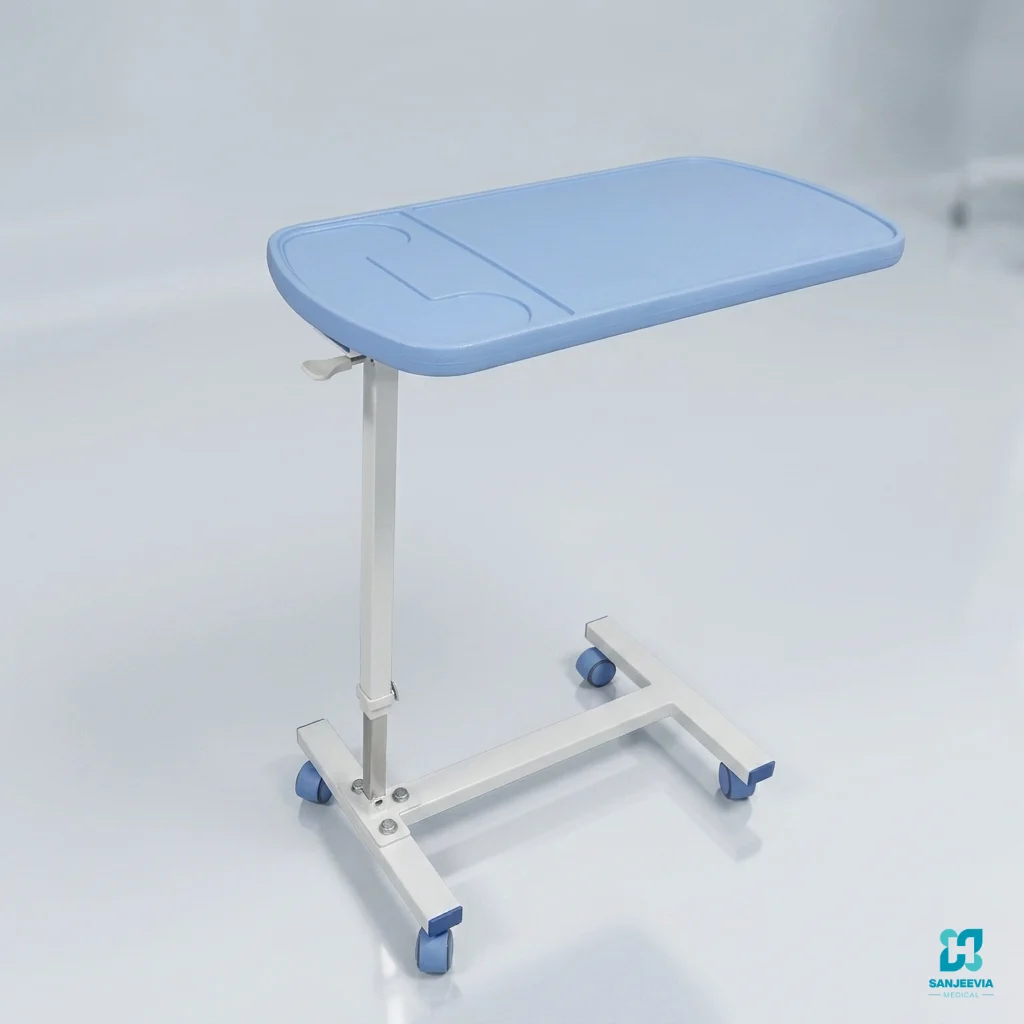
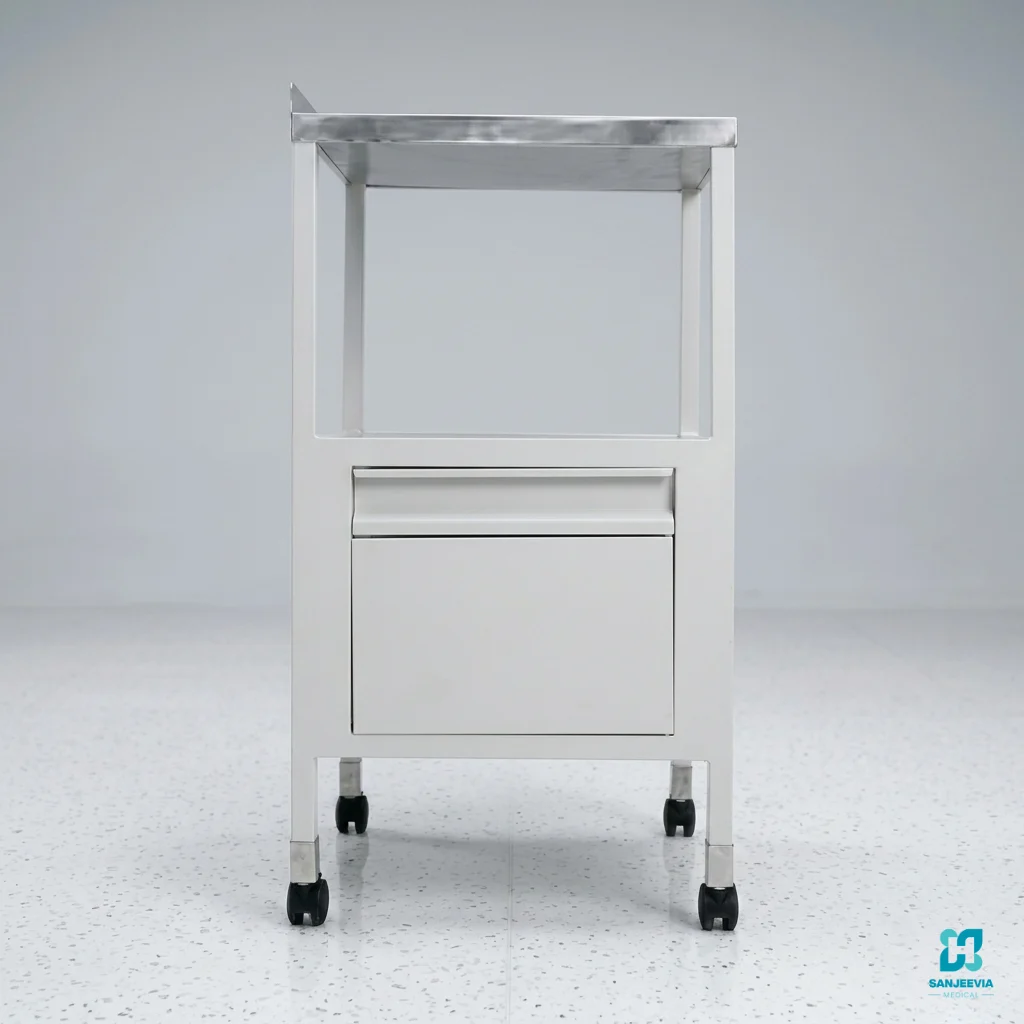
Measure the gap beside the bed, including the spread of the stand’s legs. A bedside locker, over-bed table, commode or oxygen device may already occupy the same area. Draw the arrangement on paper before delivery so essential equipment does not block access.
7. Cleaning and surface condition
Choose a stand with accessible surfaces that can be cleaned according to the maker’s instructions. Inspect for rust, sharp edges, cracked castors and residue around adjustment points. Cleaning the pole does not make infusion connections sterile, so caregivers must follow the nurse’s infection-control instructions.
Plan the room around the patient and the line
Start with the patient’s usual position. Decide which side gives the clinician safe access to the IV site and the pump display. Place the stand close enough to avoid tension, while keeping the base clear of bed controls and caregiver feet. The tubing should not run beneath a mattress, around a rail joint or across the route to the bathroom.
Keep food, drinks, fans, heaters and direct sunlight away from the infusion work area. Children and pets should not be able to pull the tubing or bump the pole. The FDA’s risk-reduction advice for home pump users also recommends a backup plan and clear contact instructions if the pump or therapy does not work as expected.
Gravity infusion and pump-based infusion need different checks
| Setup | Role of the stand | Extra questions |
|---|---|---|
| Gravity-based infusion | Holds the prescribed container at the clinician-selected height | Who controls the flow, how the line is monitored, and what signs require a call |
| Volumetric infusion pump | Supports the container and may support the pump with an approved clamp | Clamp compatibility, combined load, power plan, alarms and backup instructions |
| Syringe pump | May support the device only when the stand and clamp are approved for it | Secure mounting, line routing, programmed settings and who may operate controls |
For a fuller explanation of the two devices, read Sanjeevia’s syringe pump versus infusion pump guide. The medical team should identify the correct delivery method. The stand is selected around that plan.
Handover checklist
- Inspect the pole, hooks, base and castors for visible damage.
- Raise and lower the pole, then verify that the lock holds.
- Confirm the allowed load and what may be attached.
- Check the pump clamp and stand together if a pump is prescribed.
- Move the stand through the intended route without the line connected.
- Place it beside the bed and remove trip hazards.
- Ask the clinician to demonstrate line routing and safe movement.
- Write down who to call for a therapy problem and who to call for an equipment fault.
If the patient is returning from hospital with several devices, work through Sanjeevia’s ICU discharge home-care checklist and browse the critical-care equipment range. Coordinating the bed, table, locker, pump and stand together prevents last-minute clashes around the bedside.
Safe daily use
Before each clinician-approved session, check that the stand is upright, the adjustment lock is firm and the base is clear. Do not move it by pulling the tubing. If the patient must change position or walk, a trained clinician should first explain how the line, container and stand are managed together.
Do not ignore a pump alarm, a wet connection, a damaged line, swelling, pain or redness near the access site. Follow the clinical plan and contact the treating team. Do not restart, flush or reprogram equipment without authorisation.
Frequently asked questions
Can any IV stand hold an infusion pump?
No. The stand, clamp and pump must be compatible, and the combined load must stay within the approved limit. Confirm the full setup rather than ordering each part separately.
Should the stand have wheels?
Castors can make repositioning easier, but they must roll smoothly on the home’s floor and the stand must remain stable. Locking features vary by model.
Can a caregiver change the height during an infusion?
Only according to the instructions of the clinician supervising the therapy. Height can affect a gravity-based setup, and careless adjustment can pull the line or destabilise attached equipment.
Are IV bags and tubing included with the stand?
No. These are treatment-specific clinical supplies. The prescribing team should identify the correct fluid, administration set, access device and replacement schedule.
Can the patient walk while holding the stand?
Only when the clinical and mobility teams have assessed the patient and taught a safe method. An IV pole is not a substitute for a walker.
Arrange the stand around the clinical plan
When you contact Sanjeevia, share the bed height, available bedside space, floor type, number of required hooks and whether an approved pump clamp is needed. Also share the expected duration so the team can discuss the suitable arrangement.
This article supports home setup planning. IV therapy must be prescribed, connected and monitored by qualified healthcare professionals.
Next read: Syringe pump vs infusion pump for home care.