
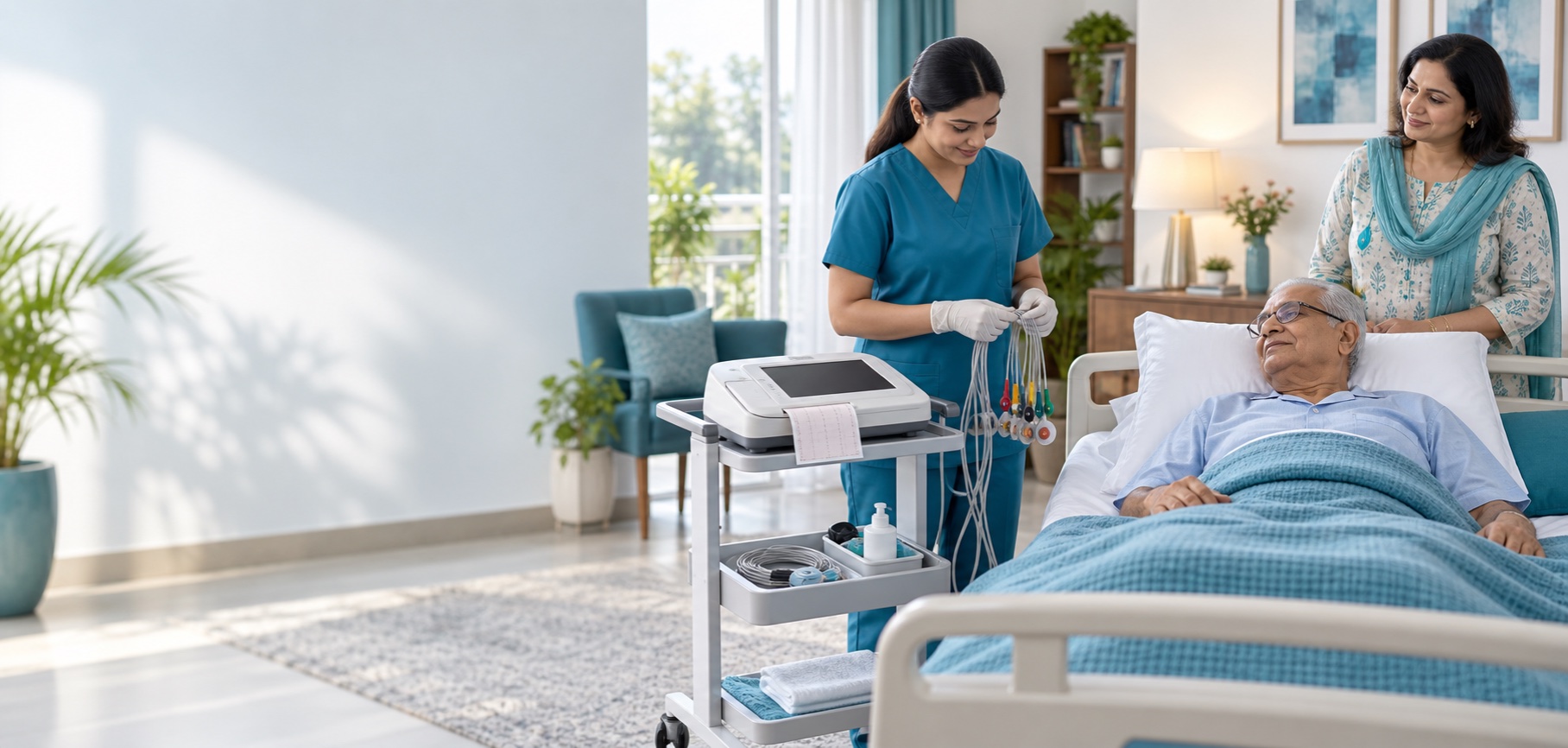
Quick answer: A resting 12-lead ECG machine records a short electrical tracing of the heart for review by a qualified clinician. It is different from a bedside patient monitor and it does not provide continuous surveillance or a final diagnosis. At home, it should be used by a trained person following a clinician’s request, with correct skin preparation, electrode placement and signal-quality checks.
A doctor may request an ECG after discharge, during a planned cardiac review or when evaluating symptoms. Families then face an important choice: arrange a clinic visit, book a trained home service or rent equipment for a defined care programme. A machine alone is not enough. A useful tracing depends on correct lead placement, a still patient, suitable electrodes and prompt clinical interpretation.
This guide explains what to confirm before arranging a 12-lead ECG machine on rent in Delhi NCR, including included accessories, setup requirements and the difference between a resting ECG and continuous monitoring.
What does a resting 12-lead ECG machine do?
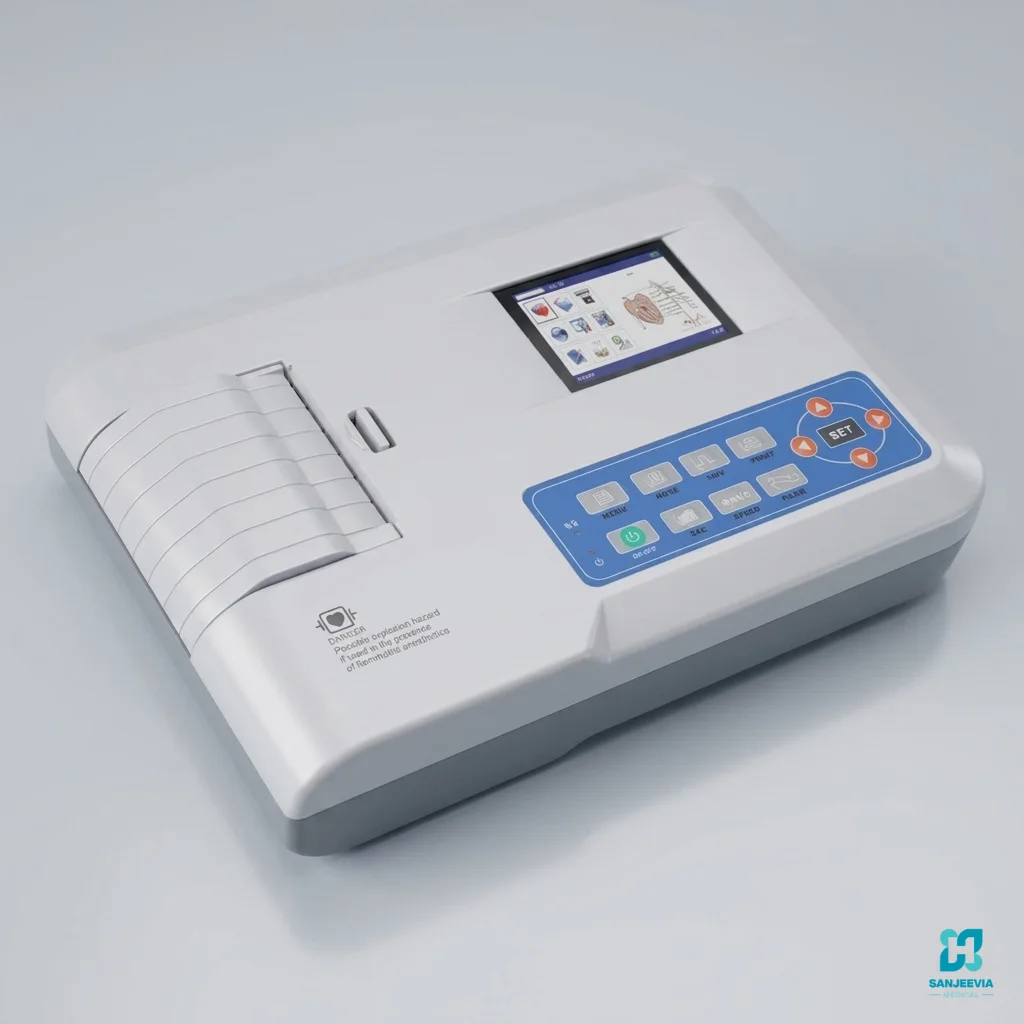
A standard resting ECG uses ten electrodes to generate twelve electrical views, called leads. The tracing can help a qualified clinician assess heart rhythm, rate, conduction and other patterns in the context of the patient’s symptoms and medical history.
The device records electrical signals. It does not independently confirm or exclude a heart attack, explain every symptom or replace a clinician. A technically poor tracing caused by movement, weak electrode contact or misplaced leads may be misleading and may need to be repeated.
Sanjeevia’s listed resting 12-lead ECG machine includes a 10-wire patient cable, limb clips, precordial chest leads, rechargeable battery, power cable, an initial thermal-paper roll and a placement guide. Disposable adhesive electrodes, extra paper, gel when required and clinician interpretation are separate.
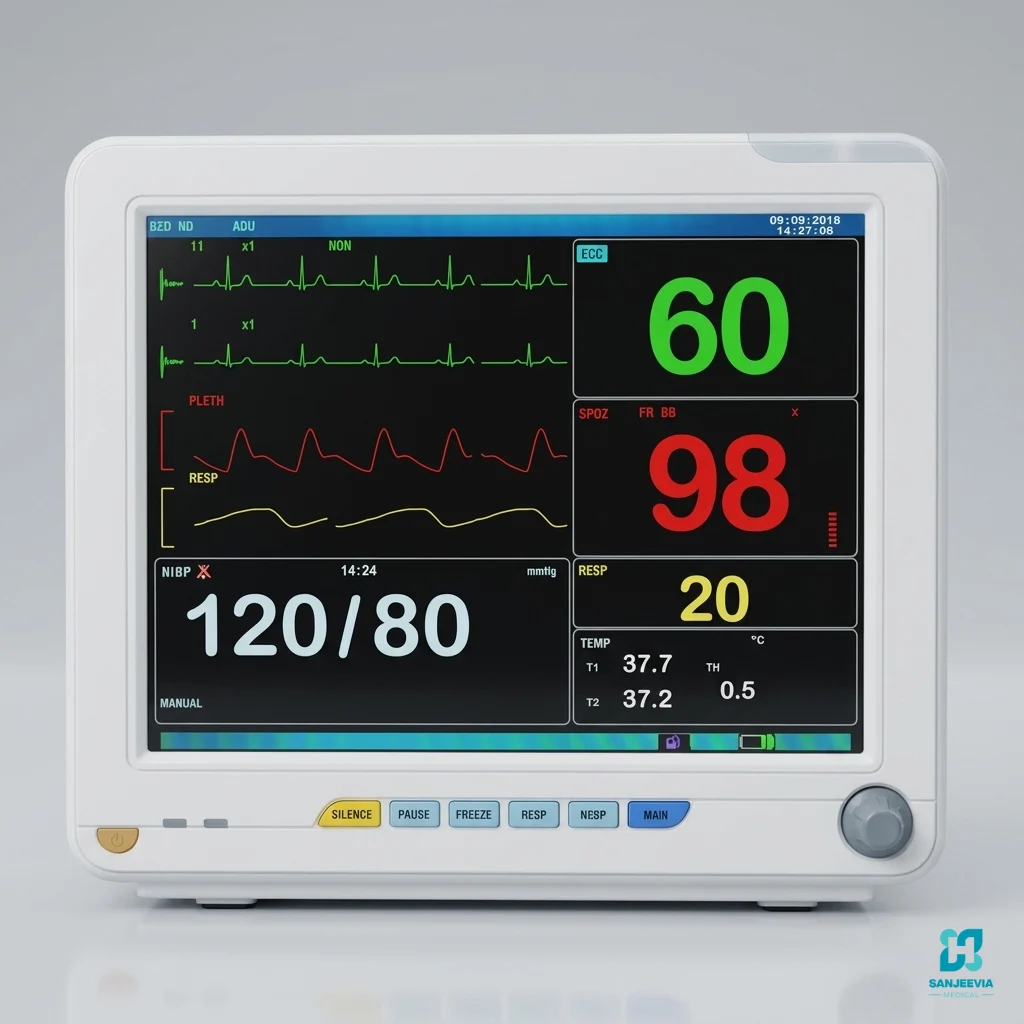
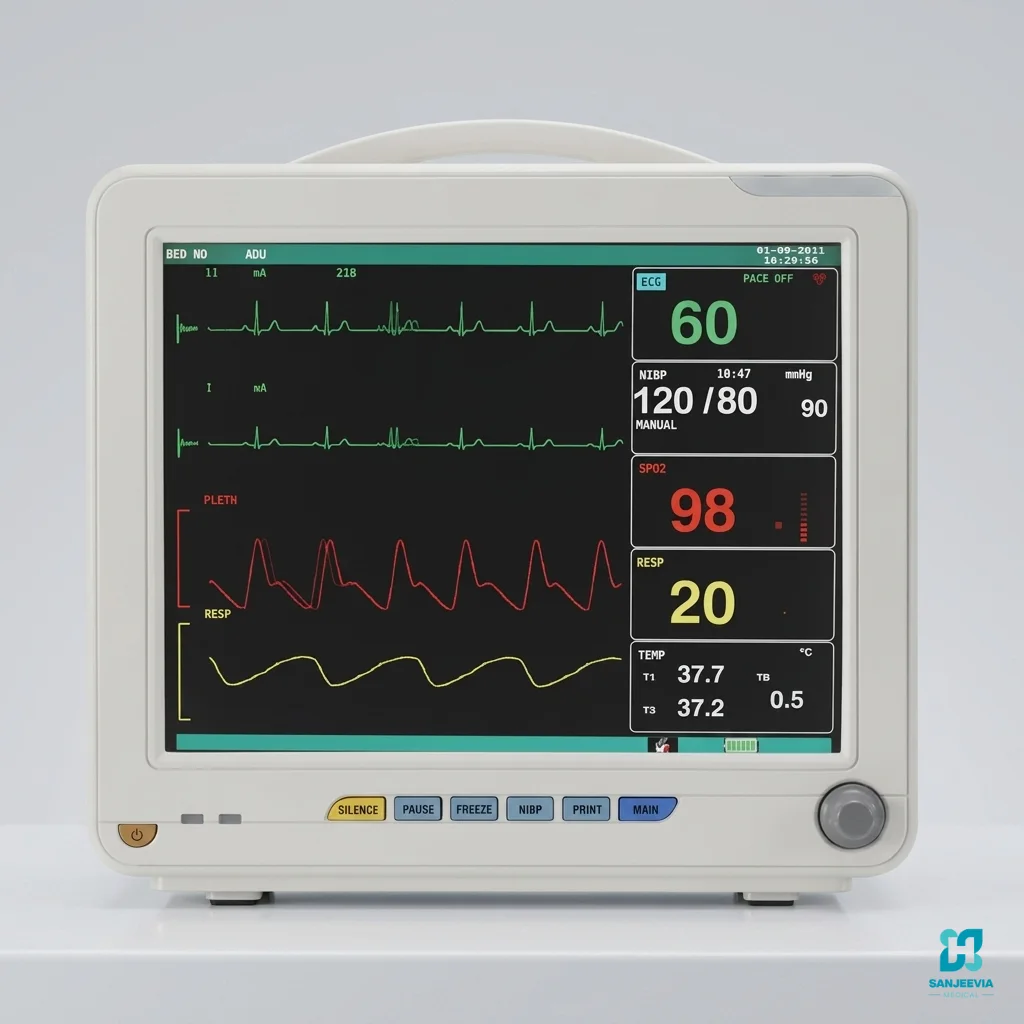
Resting ECG vs patient monitor
Families often search for an “ECG monitor” when they need either a printed diagnostic tracing or continuous bedside observation. These are different requirements.
| Feature | Resting 12-lead ECG machine | Bedside patient monitor |
|---|---|---|
| Main purpose | Records a short 12-lead tracing for clinical review | Displays selected measurements continuously or repeatedly |
| Typical output | Thermal-paper or digital ECG tracing | Live waveform, numbers and alarms |
| ECG view | Standard 12-lead acquisition when correctly prepared | Usually fewer monitoring leads, depending on model |
| Interpretation | Requires qualified clinical review | Requires a written monitoring and escalation plan |
| Emergency role | Must not delay emergency care | Does not replace emergency assessment |
If the care plan requires ongoing SpO₂, blood pressure, temperature or ECG observation, compare the 5-parameter patient monitor and the 3-parameter cardiac monitor. Read ECG Monitor Explained before choosing, because a monitor cannot substitute for a requested diagnostic 12-lead tracing.
When might a clinician request a resting ECG?
A resting ECG may form part of a planned medical assessment, medicine review, follow-up after treatment or investigation of symptoms. The reason and urgency must come from the treating clinician.
Do not use a rental ECG machine to assess a medical emergency at home. New or severe chest pain, collapse, marked breathlessness, confusion, bluish lips, severe weakness or rapidly worsening symptoms require urgent medical assessment. Recording a tracing should never delay calling emergency services.
For a planned test, confirm these details before booking:
- Who requested the ECG and why
- Whether a standard resting 12-lead tracing is required
- Who will place the electrodes and operate the machine
- Who will check the tracing quality
- Who will interpret the result and by when
- How the tracing should be sent securely
- What symptoms require urgent escalation before the appointment
Preparing the room and patient
Good signal quality begins before the leads are attached. The trained operator should follow the supplied device instructions and the organisation’s clinical procedure. FDA-hosted 12-lead setup guidance notes that good electrode-to-skin contact helps reduce movement artefact and interference.
- Use a quiet room with enough privacy and working space.
- Position the patient as directed for a resting recording.
- Keep the machine on a stable trolley or surface.
- Use fresh, compatible electrodes and inspect their expiry date.
- Prepare the skin only according to the clinical procedure.
- Place each electrode in the correct anatomical position.
- Keep power cables and lead wires away from trip hazards.
- Reduce movement and conversation during acquisition.
- Check the tracing for artefact, missing leads and lead reversal before ending the visit.
An over-bed table should not be used as an equipment trolley unless its safe load and stability are suitable for the supplied device. Keep drinks and meal items away from the ECG machine.
Why trained lead placement matters
The standard twelve views depend on electrodes being placed in defined positions. Small placement errors, reversed cables or poor contact can change the tracing. A printed result that looks complete can still be technically unsuitable for interpretation.
The operator should know how to:
- Identify the patient and confirm the clinical request.
- Prepare the skin and attach compatible electrodes.
- Place limb and chest leads correctly.
- Enter or label patient details securely.
- Recognise obvious artefact or missing leads.
- Repeat the acquisition when the procedure requires it.
- Save, print and send the tracing through the agreed route.
- Clean reusable leads and clips according to the manufacturer’s instructions.
A placement diagram is useful as a reminder, but it does not replace practical training. Families should not reposition leads or interpret changes independently.
Equipment handover checklist
If the machine is being rented for repeated planned recordings by trained personnel, complete a handover before accepting it.
| Check | What to confirm |
|---|---|
| Machine identity | Manufacturer, model and print configuration |
| Patient cable | All ten wires are present, labelled and undamaged |
| Electrodes and clips | Limb clips and chest leads match the supplied machine |
| Paper | Correct thermal-paper size and loading method |
| Battery | Charging method, battery status and expected backup |
| Signal check | Machine completes its startup and demonstration check |
| Data handling | How patient details and stored tracings are cleared or secured |
| Support | Contact for a cable, printer, battery or device fault |
Use the 15-point rental provider checklist before paying, and review how Sanjeevia prepares rental equipment before delivery.
Who should rent an ECG machine?
- A clinic or trained home-care team with a defined period of repeated recordings
- A family with an authorised operator and a clear clinical interpretation pathway
- A care programme that needs the machine for longer than a single home visit
- A facility comparing purchase that wants a time-limited operational requirement first
For a single one-off tracing, a complete home ECG visit may be more practical than renting a machine for a month. Compare who operates the device, who supplies disposables and who interprets the result.
How Sanjeevia can help
Sanjeevia can provide the current rental details for its 12-lead resting ECG machine once the required configuration and rental duration are clear. If the home plan includes other prescribed equipment, browse critical-care and home-care essentials. Families arranging several devices can also use the ICU-discharge home-care checklist or contact Sanjeevia.
Frequently asked questions
Does a 12-lead ECG machine diagnose a heart attack?
No. It records a tracing that must be interpreted with symptoms, examination and other tests by a qualified clinician. Urgent symptoms require immediate medical assessment.
Is a 12-lead ECG the same as continuous monitoring?
No. A resting ECG captures a short standard tracing. A patient monitor displays selected measurements over time and uses a different lead configuration.
Can a caregiver place the ECG leads?
Only if that person has appropriate training and is authorised within the care plan. Incorrect placement can produce a misleading tracing.
Are disposable electrodes included?
The current Sanjeevia product listing excludes disposable adhesive electrodes. Confirm the compatible type and quantity before the first recording.
Can the machine be used during chest pain at home?
Do not let equipment setup delay emergency care. Follow the treating team’s emergency instructions and contact emergency services for severe or rapidly worsening symptoms.
Technical reference
For general electrode and skin-preparation principles, see the FDA-hosted 12-lead ECG monitoring setup guide. Always follow the supplied machine manual and local clinical procedure.
Next read
If the care plan also includes controlled medicine delivery, read: Syringe Pump vs Infusion Pump: Uses and Rental Guide.