
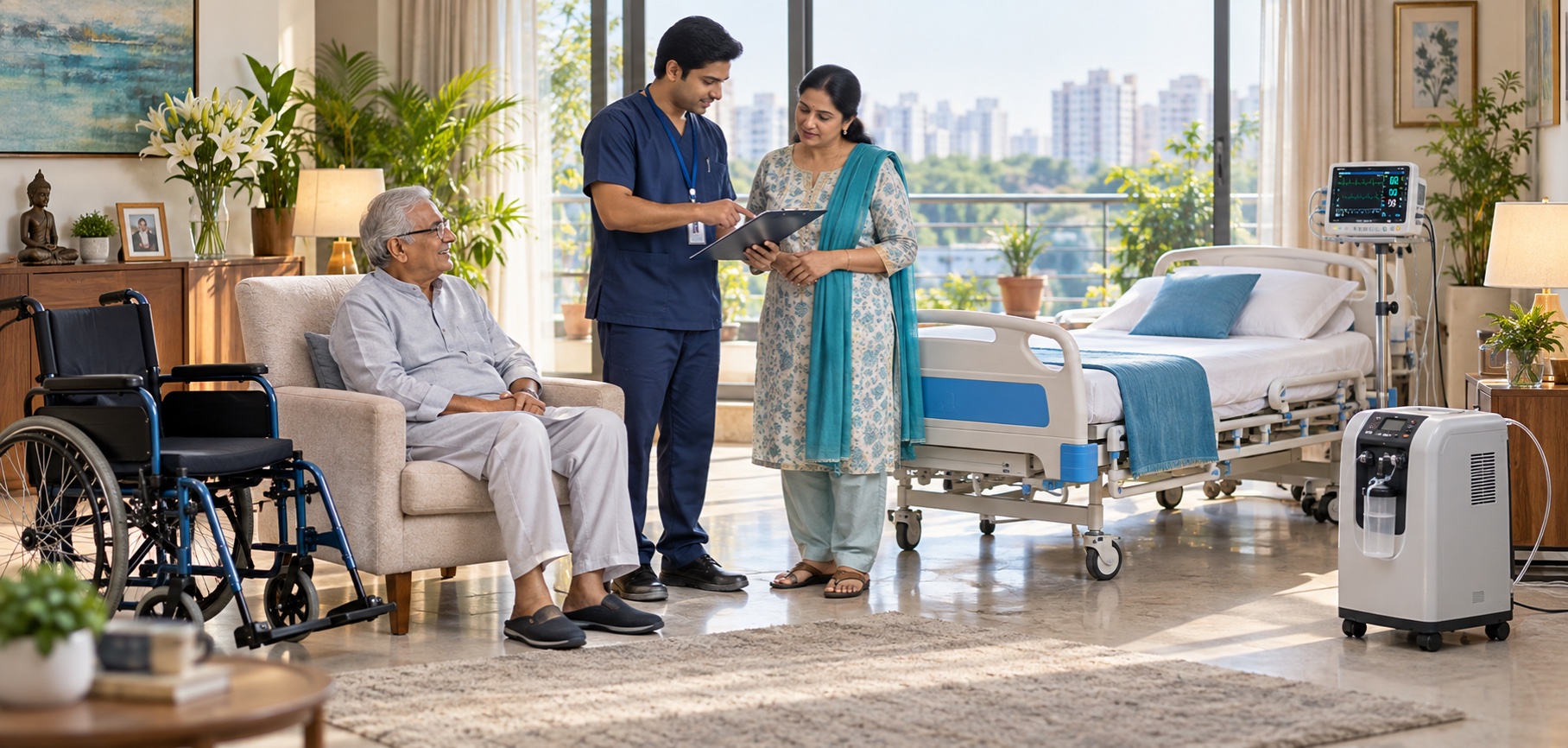
Quick answer: To coordinate multiple medical equipment rentals at home, begin with one clinician-approved requirement list, map each item to a safe place in the room, nominate one family coordinator and record every unit, accessory and support contact at handover. The equipment should work as one organised care setup, even when different people use or supervise it.
A family rarely plans for several pieces of medical equipment at once. A discharge note may list a bed, mobility support, respiratory equipment and monitoring needs, while the home still has ordinary furniture, limited sockets and several caregivers sharing responsibility. The challenge is not simply arranging each item. It is making sure the complete setup fits the patient, the room and the care plan.
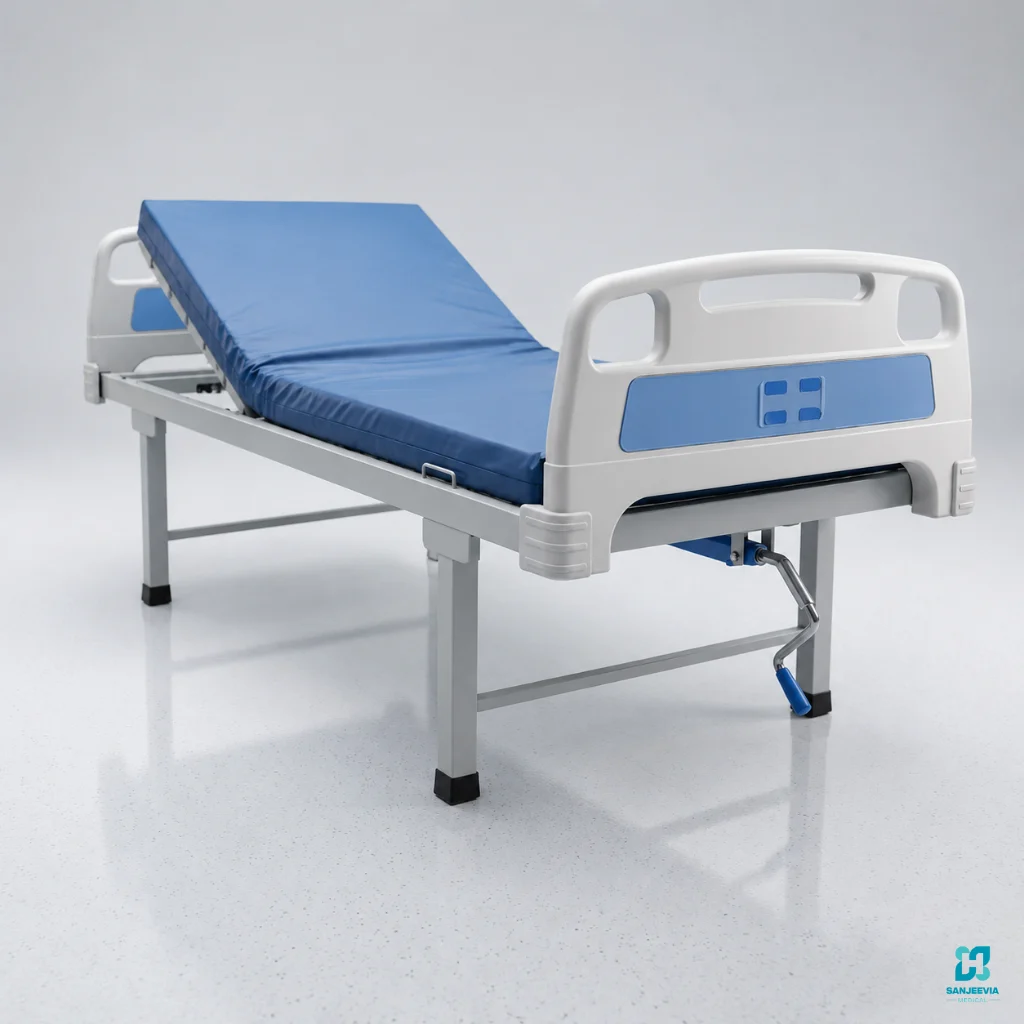
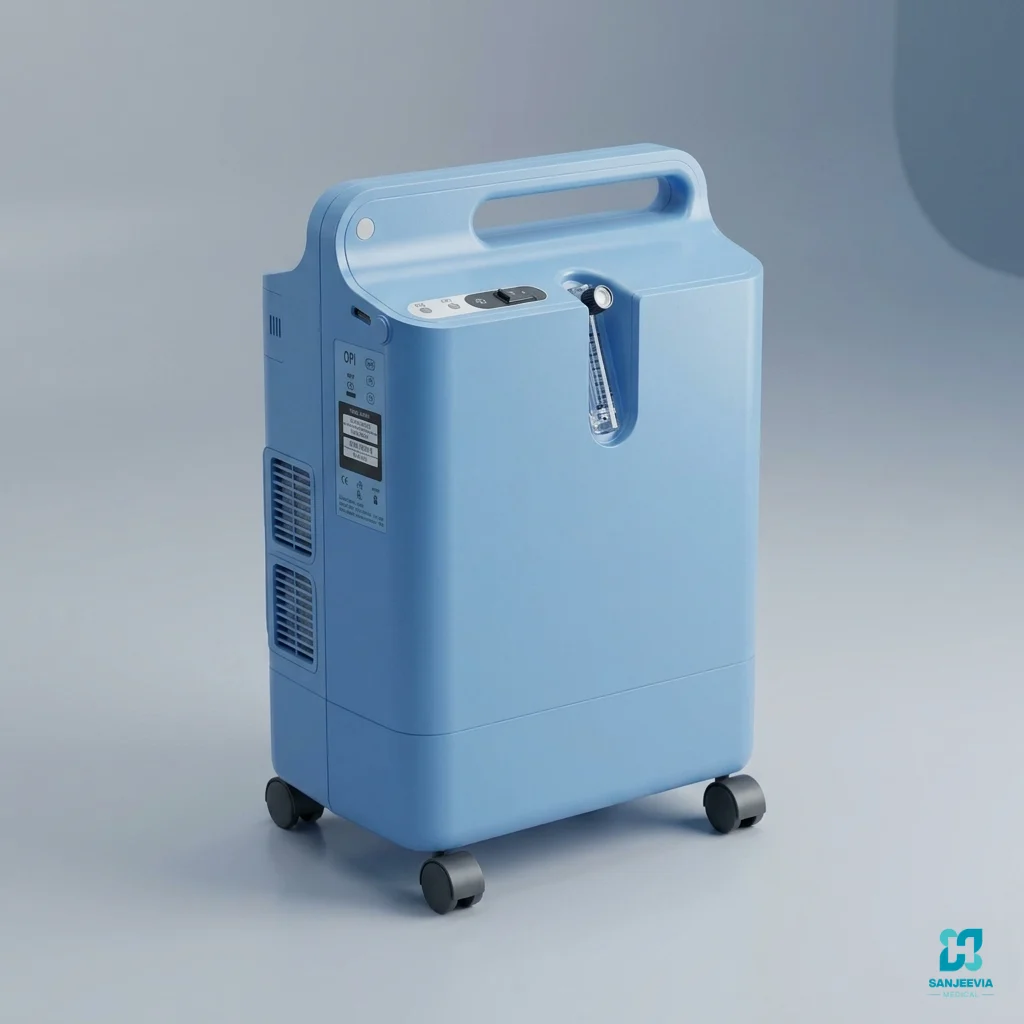

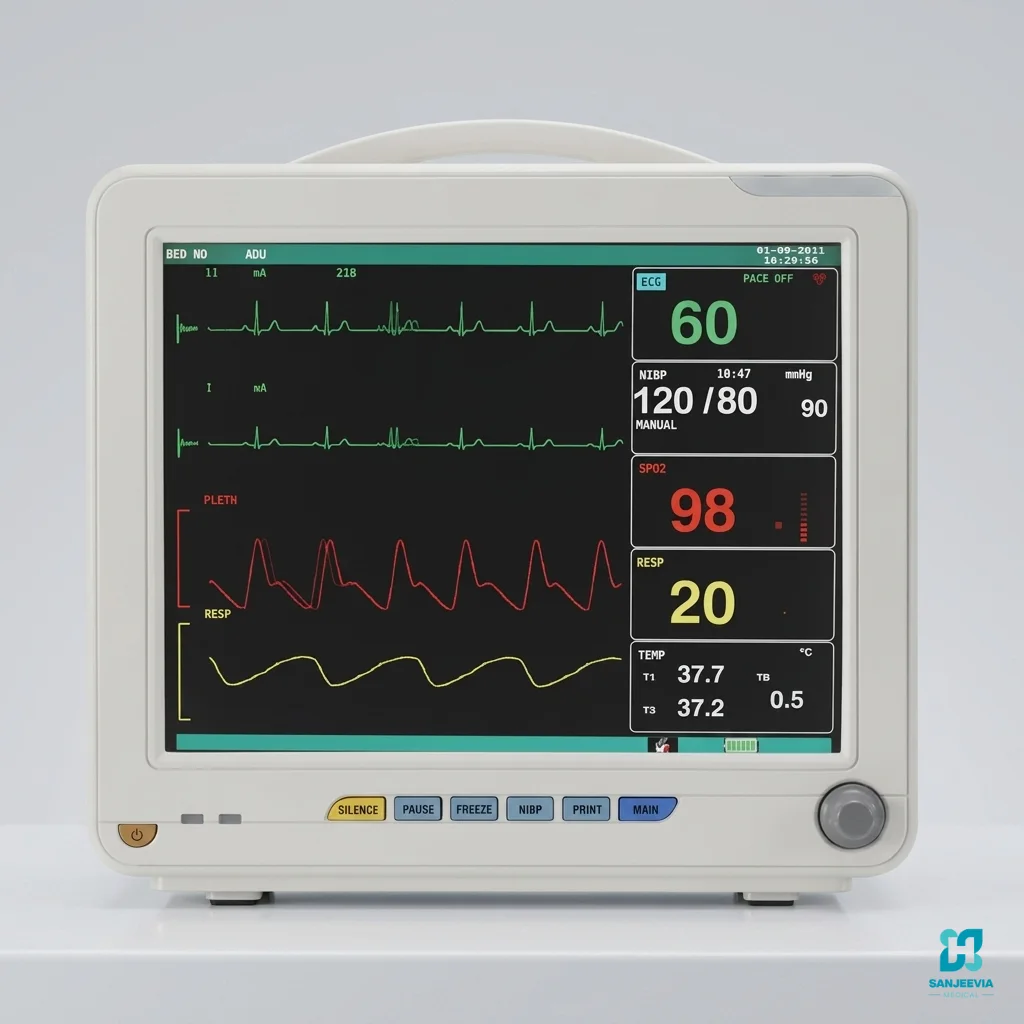
Start with one approved requirement list
Ask the treating doctor, physiotherapist, respiratory therapist or discharge team to define what the patient needs. Keep device type, essential specifications, prescribed settings, accessories and expected duration in one written list. If more than one clinician is involved, ask who will approve the final combined requirement.
Sanjeevia’s equipment matcher can help families identify relevant categories, but it does not replace clinical selection. You can review hospital-bed options, respiratory-care equipment, oxygen support and critical-care and supporting equipment after the clinical requirement is clear.
Plan the room as one care environment
Draw a simple room plan before confirming multiple medical equipment rentals at home. Mark the patient position, caregiver side, doorway, bathroom route, sockets, windows and clear walking path. Add the approximate footprint of each item and the space needed to operate it. A unit that fits against a wall may still become difficult to use if its controls, rails or tubing are blocked.
The FDA home healthcare device checklist recommends checking stairs, doorways, wiring, operating requirements, instructions and backup arrangements. Those checks become more important when several powered or mobile devices share one room.
Keep access around the patient clear
- Leave enough room for the caregiver’s normal working position.
- Keep emergency access and the route to the door unobstructed.
- Avoid placing loose cables or tubing across a walking route.
- Do not block air vents, alarms, controls or moving bed sections.
- Keep liquids and unstable furniture away from powered equipment.
Check power and backup needs together
Do not assess each powered device in isolation. List which units need continuous power, which contain a battery and which require a clinician-approved backup plan. Confirm that sockets are accessible without unsafe extension arrangements. Ask the treating team what the patient should do during a power interruption, and keep clinical and equipment-support telephone numbers visible.
The FDA advises home-device users to understand operating needs, alarms and the action to take if a device fails. Sanjeevia’s equipment breakdown and replacement policy explains the current process for reporting a rental malfunction. A service response plan and a medical emergency plan serve different purposes, so families should keep both.
Create one equipment and accessory register
Record every unit separately at handover. Include its description, identifying details, condition, included accessories, date, room location and responsible caregiver. Small accessories can look similar, yet they may not be interchangeable. Store each set with its own device unless the manufacturer or provider confirms otherwise.
The World Health Organization’s medical equipment inventory guidance explains the role of inventory records in equipment management. A family register can be much simpler than an institutional system, but the same principle helps: everyone should know what is present, where it is and who is responsible.
A practical home register should include
- Equipment name and identifying details
- Clinician responsible for its medical use
- Accessories supplied with that unit
- Person who attended the demonstration
- Provider support contact
- Rental review date
Arrange a coordinated handover
Nominate one adult to receive the complete setup and one backup contact. The receiving person should compare the equipment with the requirement list, confirm accessories, attend each demonstration and understand which questions belong to the clinician and which belong to the equipment provider.
Sanjeevia’s rental equipment quality-check guide describes the pre-delivery checks, sanitisation, accessory count and demonstration process. If several caregivers work in shifts, the first recipient should repeat the handover using the written register and manufacturer instructions. No caregiver should guess prescribed settings.
Use labels without covering safety information
A simple removable label can identify the responsible contact or room, but it must not cover manufacturer information, warning labels, vents, controls or maintenance markings. Use a separate folder for instructions and order records. Keep frequently needed support details near the care area without displaying the patient’s private information to visitors.
Review Sanjeevia’s privacy policy before sharing identification, clinical documents or the delivery address. Use only the stated communication and order process.
Review the setup when the care plan changes
A new prescription, hospital visit, change in mobility, new caregiver or move to another room can affect the whole setup. Ask the treating professional whether the equipment requirement has changed. Then contact the provider before moving, replacing or returning a rental unit.
The current rental policy, renewal policy and return and refund policy explain the applicable processes. Keeping a review date for every unit prevents one rental from being forgotten while the others continue.
How Sanjeevia can help coordinate the setup
Sanjeevia supports home medical equipment rentals across its Delhi NCR service area, subject to current availability and PIN-code confirmation. Families can share the clinician-approved list, address, access information and nominated recipient through the contact page. Read how Sanjeevia works for the standard order, handover and support journey.
Frequently asked questions
Should all equipment arrive at the same time?
That depends on room readiness, the care plan and confirmed availability. A coordinated sequence may be easier when a large item must be positioned before smaller units. Agree on the order before handover.
Can one caregiver operate every device?
Only if the caregiver has received the appropriate instruction and the clinical team has authorised their role. Complex or prescribed equipment may require trained supervision.
Can rented equipment be moved to another room?
Contact the provider first, especially for large, powered or clinically sensitive equipment. The new space and route may need to be checked, and the clinical team may need to review the setup.
What if one unit is no longer needed?
Confirm the change with the treating professional, then follow the provider’s return process for that unit. Update the home register so every caregiver knows it has been removed.
This guide provides general coordination information. It does not select equipment, prescribe settings or replace advice from a qualified healthcare professional.
Next Read
If the equipment must enter a gated society or apartment tower, your next question is likely: Medical Equipment Rental for High-Rise Apartments in Delhi NCR.
Searches This Guide Answers
When several items are needed at home, families often search for the complete setup rather than one device at a time:
- how to rent multiple medical equipment items for home
- hospital bed oxygen concentrator and wheelchair rental together
- medical equipment rental after hospital discharge
- home ICU equipment rental in Delhi NCR
- medical equipment for elderly parents at home
- how to coordinate home medical equipment delivery
- complete patient room setup with rented medical equipment
- one provider for home medical equipment rental
Related keywords: multiple medical equipment rental, home patient equipment setup, hospital discharge equipment rental, home ICU equipment rental, hospital bed and oxygen concentrator rental, wheelchair and hospital bed rental, elderly care equipment rental, medical equipment rental Delhi NCR.
Intent-based key phrases: arrange all medical equipment before hospital discharge, rent a hospital bed and oxygen concentrator together, set up a patient room at home, coordinate equipment for elderly parents, book multiple home-care devices from one provider, prepare medical equipment before the patient comes home.