
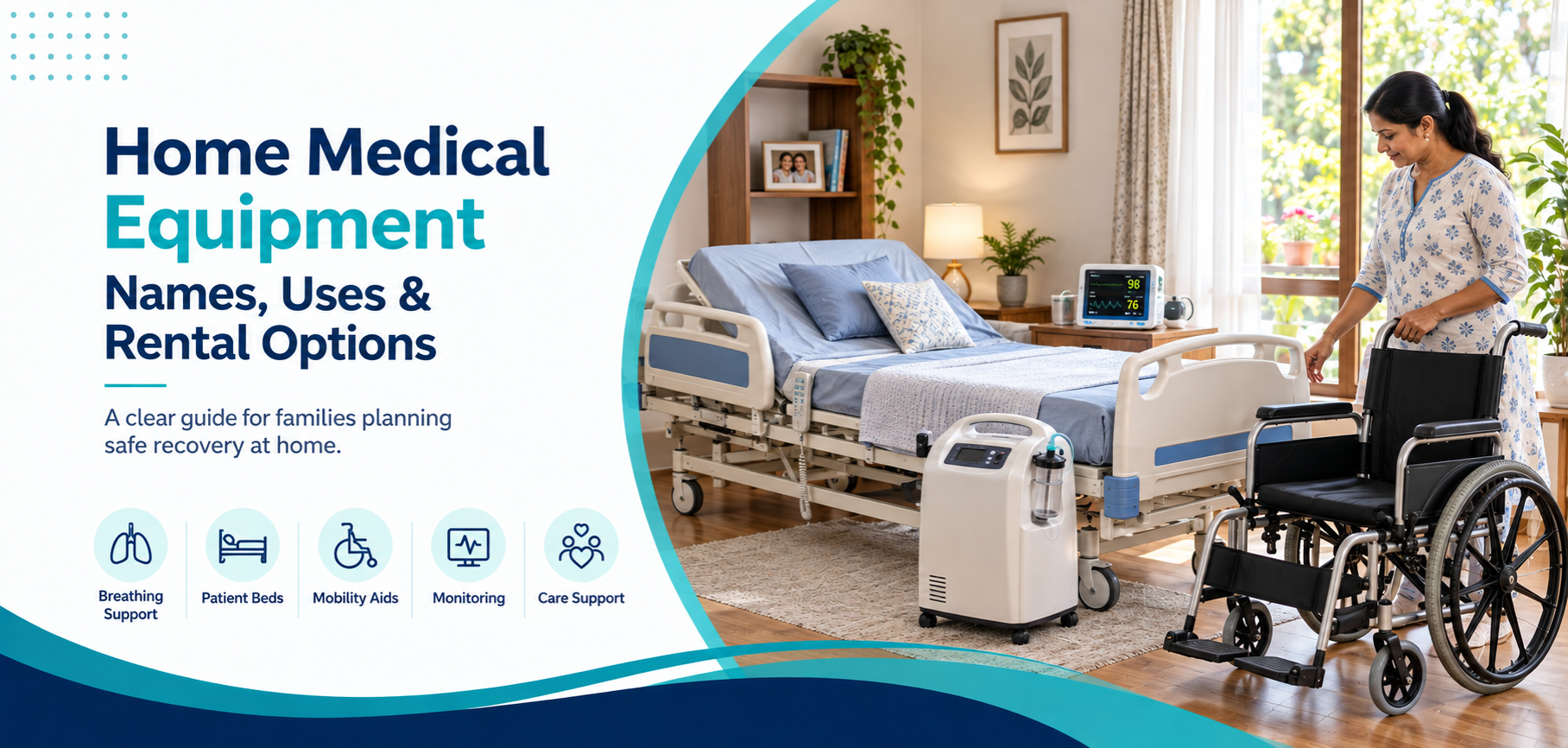
Quick answer: A home medical equipment list should start with the patient’s prescription and daily care needs, then cover five areas: positioning, breathing support, mobility, monitoring and caregiver assistance. Most homes need only a carefully chosen combination, not every device listed below.
When a loved one is coming home after treatment, families often receive several instructions at once. Arrange a suitable bed. Keep the patient mobile. Monitor certain readings. Continue respiratory support if prescribed. The words may be familiar, but the purpose of each device and the order in which to arrange it can still feel confusing.
This home medical equipment list organises the main devices by the problem they solve. It can help you prepare questions for the treating team and find the relevant equipment more quickly. It is an information guide, not a substitute for a prescription, clinical assessment or device-specific training. You can also browse Sanjeevia’s complete medical equipment range while reviewing the care plan.
1. Patient beds and positioning equipment
A medical bed helps a patient change position, sit up for meals, receive bedside care and transfer more safely when the model suits the person and the room. A manual bed uses hand cranks, while an electric bed allows powered adjustments. The right choice depends on the functions prescribed, the patient’s mobility and the caregiver’s ability to assist.
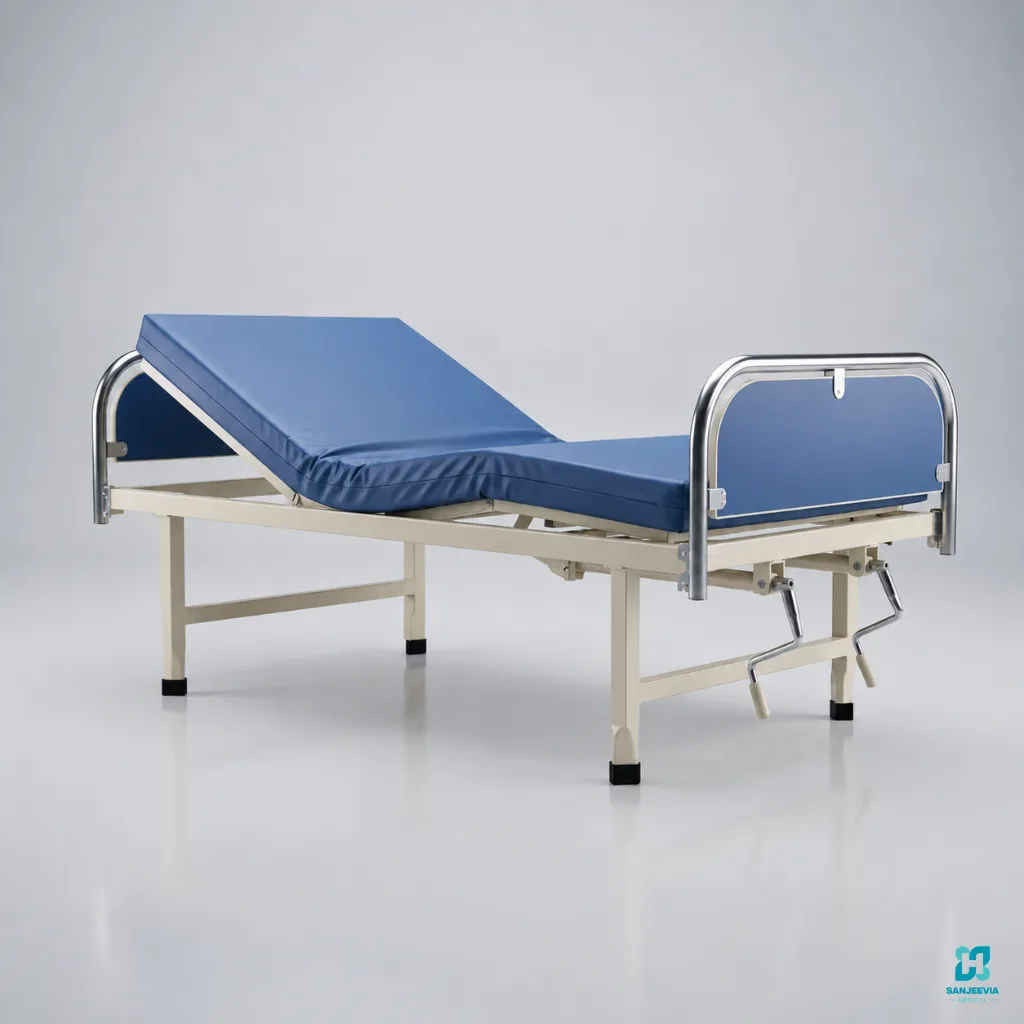
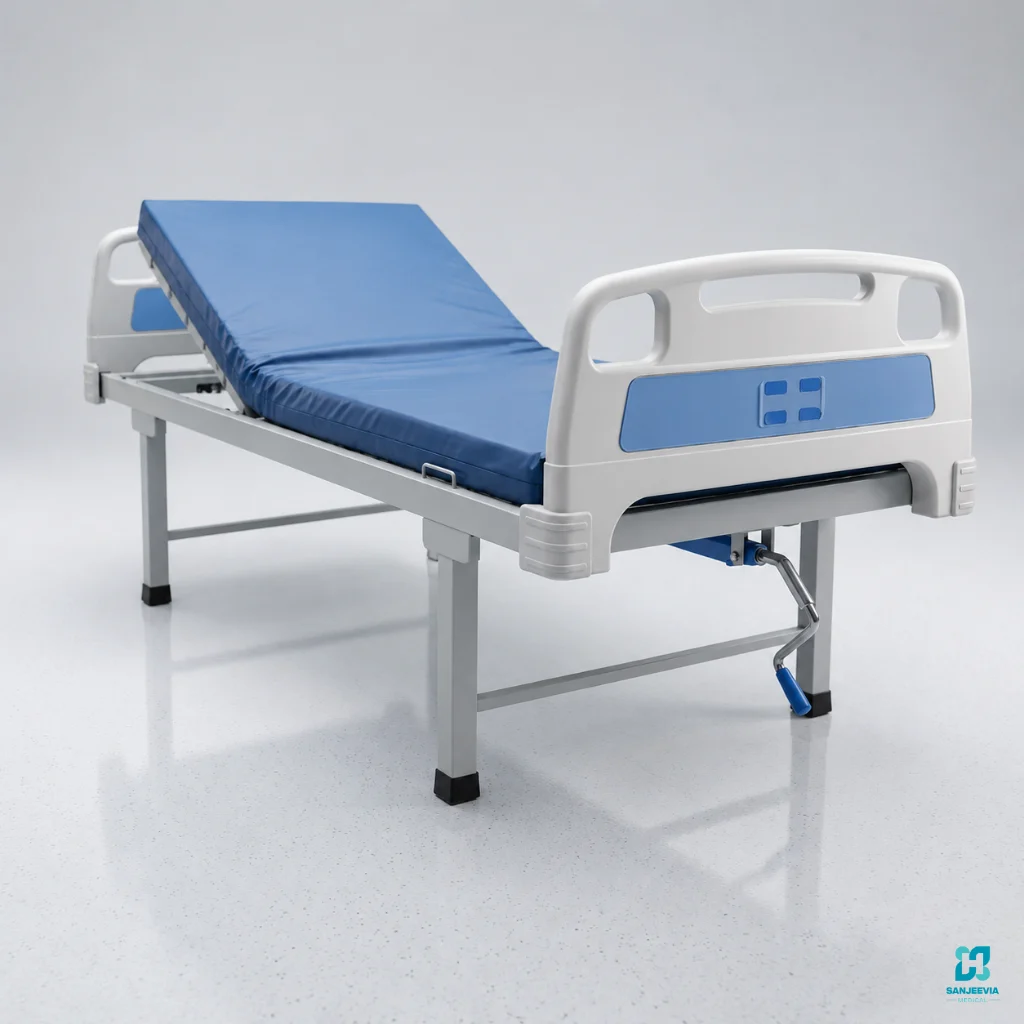
- Semi-Fowler bed: raises the back section and can support basic positioning needs. See the manual Semi-Fowler bed.
- Full-Fowler bed: adjusts the back and knee sections for more flexible positioning. Review the manual Full-Fowler bed.
- Electric medical bed: can reduce repeated manual cranking when frequent adjustments are needed. Compare options in medical beds.
- Pressure-relief mattress: may be recommended for a person with limited movement or elevated pressure-injury risk.
- Bedside accessories: an over-bed table, IV stand or bedside commode may support the prescribed care routine.
Do not choose a bed by the number of functions alone. Measure the room, doorway, lift and turning path before finalising the model. Side rails, brakes and mattress compatibility also need to be demonstrated during handover.

2. Respiratory and sleep-support equipment
Respiratory equipment should match a written prescription or clear medical instruction. Flow rate, pressure settings, mode and interface are clinical decisions. Families should share those details exactly rather than selecting a machine from a diagnosis or an online comparison.
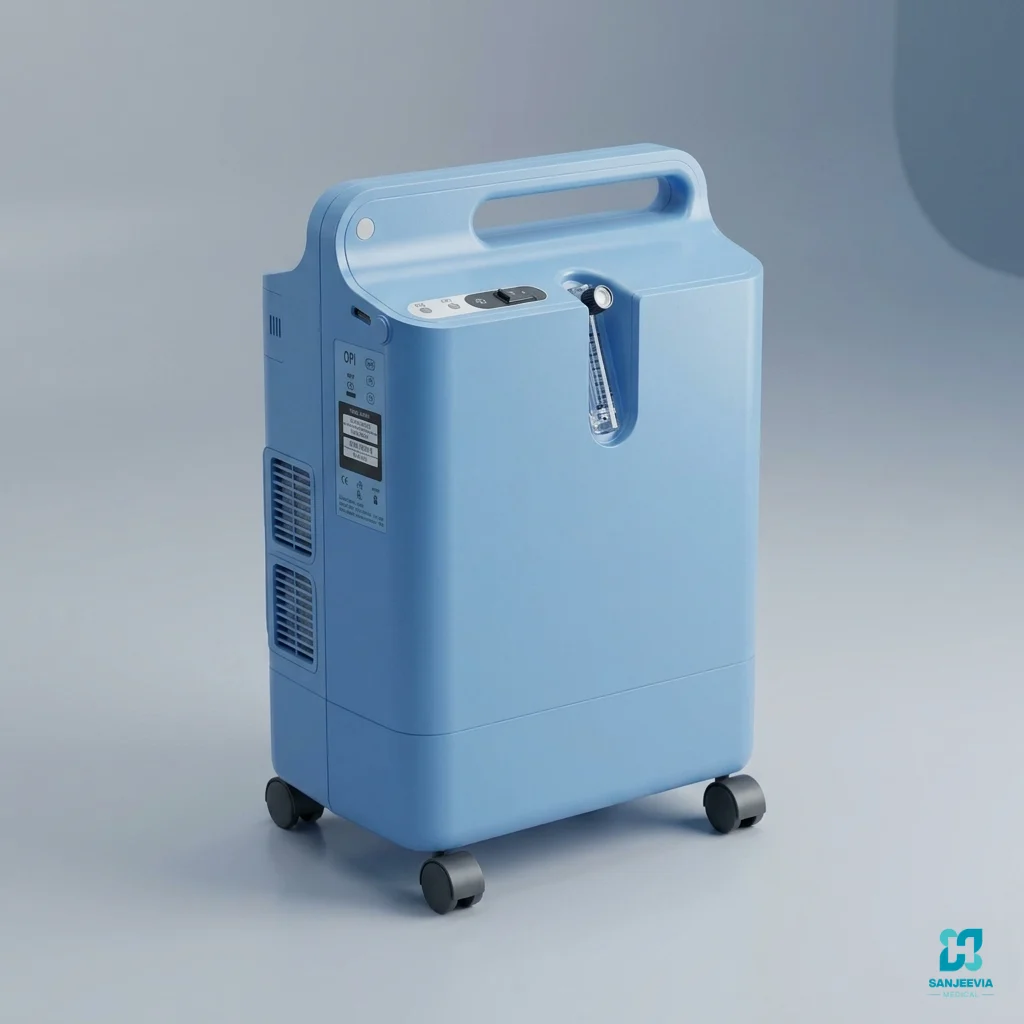
- Oxygen concentrator: produces concentrated oxygen for a patient who has been prescribed home oxygen. The Philips EverFlo 5L oxygen concentrator is one available model, while the broader oxygen-support range helps families compare device types.
- Oxygen cylinder: may be prescribed for a particular use or planned as backup according to the treating team’s instructions.
- CPAP: provides continuous positive airway pressure, commonly for prescribed sleep-apnoea therapy.
- BiPAP: provides different pressure levels during inhalation and exhalation. The exact mode and settings matter. Browse BiPAP, CPAP and ventilator equipment.
- Ventilator: provides advanced breathing support and requires a clinical plan, trained caregivers and emergency preparation.
- Suction machine: may be prescribed for secretion management and must be used only after appropriate instruction.
The World Health Organization’s assistive-technology guidance explains how appropriate products can support functioning and participation. Appropriateness includes assessment, correct fitting, user training and follow-up, not simply owning a device.
3. Mobility and bathroom-support equipment
Mobility equipment should make movement safer without encouraging the patient to attempt activity beyond the care team’s advice. Height, seat width, weight capacity, posture, balance and the home layout all influence the correct choice.
- Wheelchair: useful when walking is limited or unsafe. Standard, reclining, commode and higher-support designs serve different needs.
- Walker: may provide a wider base of support for a person who has been cleared to walk with assistance.
- Crutches or walking stick: require correct sizing and professional advice on gait and weight-bearing.
- Commode chair: can shorten the route to toileting when bathroom access is difficult.
- Patient-lifting or transfer aid: may reduce unsafe manual lifting when selected after an individual assessment.
Explore wheelchairs and other medical equipment, but confirm measurements before booking. The Government of India’s accessibility standards for healthcare also underline the importance of clear circulation and transfer space around beds and examination surfaces.
4. Monitoring and critical-care devices
Monitoring devices collect readings. They do not interpret the patient’s condition on their own. Before arranging one, ask the treating team which parameters to monitor, how often to record them and what action to take when a reading crosses the instructed limit.
- Pulse oximeter: displays oxygen saturation and pulse rate, but readings can be affected by movement, cold hands, nail products and poor placement.
- Blood-pressure monitor: should use a suitable cuff and consistent technique.
- Multi-parameter monitor: can display several prescribed parameters together. Review the 5-parameter monitor for an example.
- ECG machine: records the heart’s electrical activity and should be operated and interpreted by an appropriately trained professional.
- Infusion or syringe pump: controls prescribed fluid or medicine delivery and requires professional setup and supervision.
These devices sit within Sanjeevia’s critical-care and other equipment category. Families arranging several devices can also use the guide to coordinate multiple medical equipment rentals at home.
5. Match equipment to the care plan, not a generic list
| Care need | Equipment to discuss | What to confirm |
|---|---|---|
| Positioning and bedside care | Medical bed, pressure-relief surface, over-bed table | Functions, dimensions, side-rail plan and mattress fit |
| Prescribed breathing support | Concentrator, cylinder, CPAP, BiPAP or ventilator | Prescription, flow or pressure settings, interface and backup plan |
| Limited mobility | Wheelchair, walker, commode or transfer aid | Measurements, weight capacity, route and caregiver assistance |
| Home monitoring | Pulse oximeter, BP monitor or multi-parameter monitor | Parameters, frequency, recording method and escalation instructions |
| Medication or feeding support | Pump, stand or related prescribed device | Who will operate it and how supplies will be managed |
A useful home medical equipment list becomes shorter after a proper discussion. Ask which devices are essential from day one, which may be added later and which should remain under professional operation. Also confirm the expected recovery period, because an uncertain or temporary need may make rental more practical than ownership.
Need help narrowing the list?
If you have the prescription and care summary but are unsure which equipment category matches them, Sanjeevia can help you organise the questions to ask. Browse the equipment catalogue or contact the Sanjeevia team for availability and setup guidance across Delhi NCR.
Frequently asked questions
What medical equipment is commonly needed at home?
Common categories include patient beds, mobility aids, prescribed respiratory devices and monitoring equipment. The actual combination depends on the patient’s condition, mobility, prescription and caregiver support.
Should we rent or buy home medical equipment?
Rental can suit temporary recovery, changing needs or a trial period. Purchase may suit a stable, long-term requirement. Compare expected duration, support requirements and the likelihood that the prescribed specification may change.
Can one supplier arrange several devices together?
Several items can often be coordinated, subject to availability and the required specifications. Share the complete list early so dimensions, electrical needs and handover requirements can be planned together.
Which devices require a prescription?
Respiratory support and other clinical devices often depend on prescribed settings or written medical instructions. If you are uncertain, ask the treating doctor or respiratory team before booking.
What information should we keep ready?
Keep the prescription, discharge summary, patient measurements, room measurements, address, access details and caregiver contact information ready. These details reduce avoidable mismatches during planning.
Next Read
Once you know which devices may be needed, the next step is preparing the space: How to Prepare a Room for Medical Equipment at Home Safely.
Common searches this guide answers
Families often describe the same care need in different ways. These search questions are answered in the guide above:
- “What medical equipment is needed for home care?” Start with the prescription and match each device to positioning, breathing, mobility, monitoring or caregiver support.
- “Hospital bed and oxygen concentrator on rent near me” Compare the prescribed specification first, then review Sanjeevia’s medical beds and oxygen-support equipment.
- “Medical equipment rental in Delhi NCR for a patient at home” Keep the prescription, room measurements and access details ready before you contact Sanjeevia.
- “Which equipment is needed after hospital discharge?” Ask the treating team which items are essential on day one and which may be arranged later as recovery changes.