
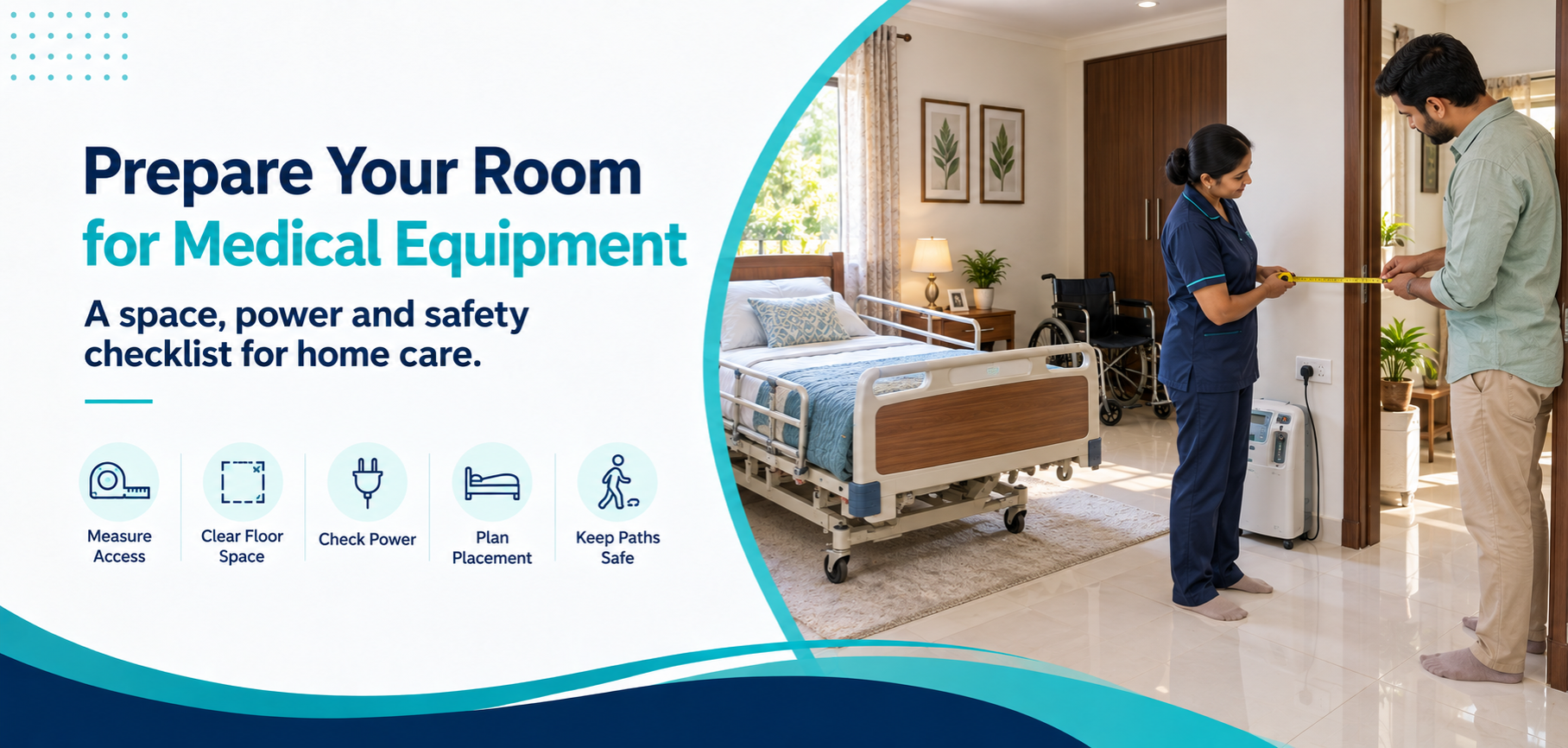
Quick answer: To prepare a room for medical equipment at home, measure the full access route, clear working space around the patient, identify safe power points and decide where each device will sit before it arrives. Confirm the final layout during professional setup and keep exits and caregiver paths unobstructed.
A family may choose the correct medical bed or breathing device and still face a difficult setup if the room has not been prepared. A bed can fit inside the bedroom but fail to turn through the corridor. A wheelchair can suit the patient but not pass through the bathroom door. A powered device may reach the room while its cable creates a trip hazard across the walking path.
Learning how to prepare a room for medical equipment at home helps prevent last-minute rearrangement and makes the handover more useful. This checklist covers access, floor space, power, placement and caregiver movement. For device-specific dimensions and requirements, always check the selected model and follow the manufacturer’s instructions.
Start with the entire access route
Measure from the building entrance to the final position, not only the bedroom. Note the narrowest doorway, sharpest turn, corridor width, lift dimensions, steps and any fixed furniture. If the home is in an apartment building, confirm whether the chosen item can use the lift and turn through the landing.
- Measure the main entrance, lift and bedroom doorway.
- Check corridor turns and the space outside each door.
- Remove loose rugs, low stools and decorative items from the route.
- Plan where packaging can be opened without blocking an exit.
- Keep children and pets away while heavy equipment is being positioned.
Families in apartment buildings can also read medical equipment rental for high-rise apartments. The Government of India’s healthcare accessibility standards provide useful context on circulation, transfer space and accessible routes.
Plan working space around the medical bed
A medical bed needs more room than its mattress dimensions suggest. Side rails open and close. Back and knee sections move. Caregivers may need to stand on either side, change bedding, assist with hygiene or transfer the patient to a wheelchair. Leave enough space for these activities and for the bed to operate without striking a wall, curtain or cabinet.
- Choose a position that allows the caregiver to approach the side used for transfer.
- Keep the bed brakes accessible and confirm that the floor is level.
- Do not place moving sections against curtains, wires or furniture.
- Keep frequently used supplies within reach but away from controls and wheels.
- Confirm that an over-bed table or bedside commode has its own parking space.
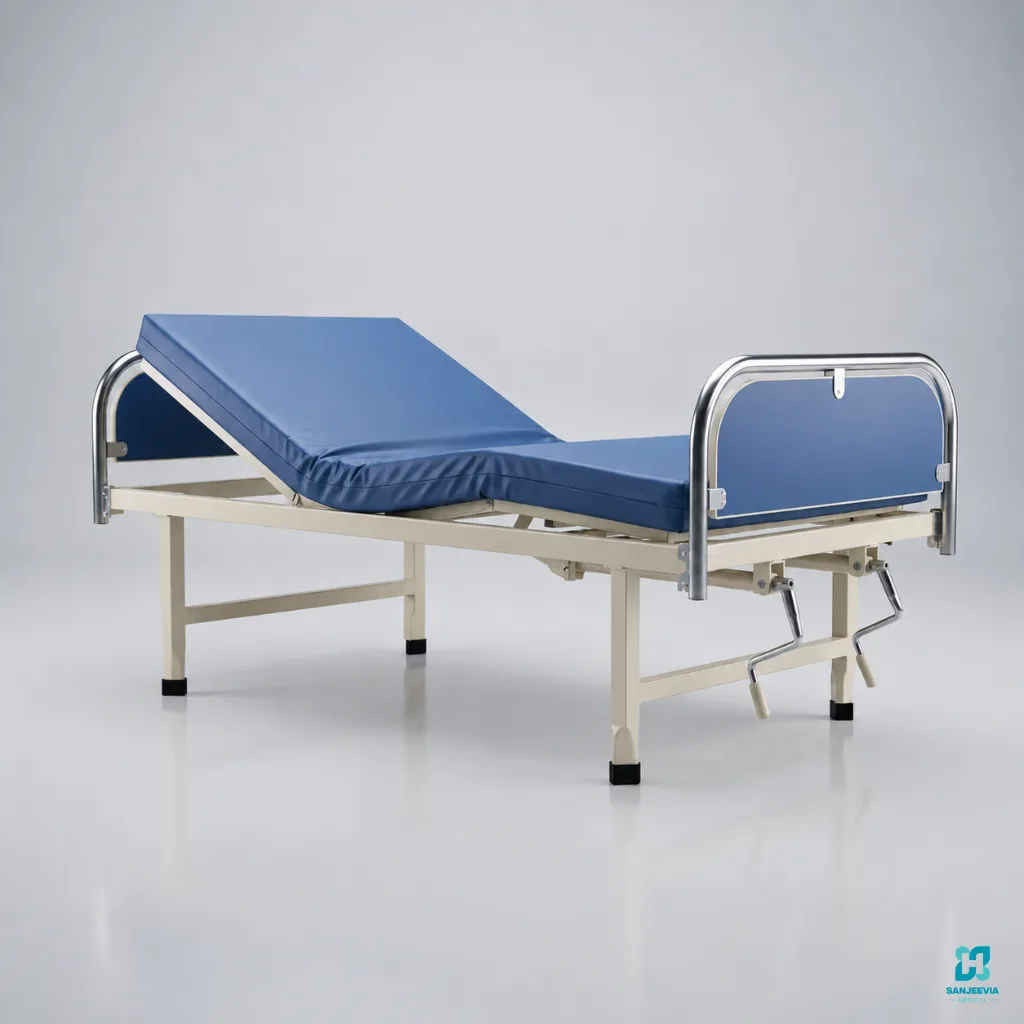
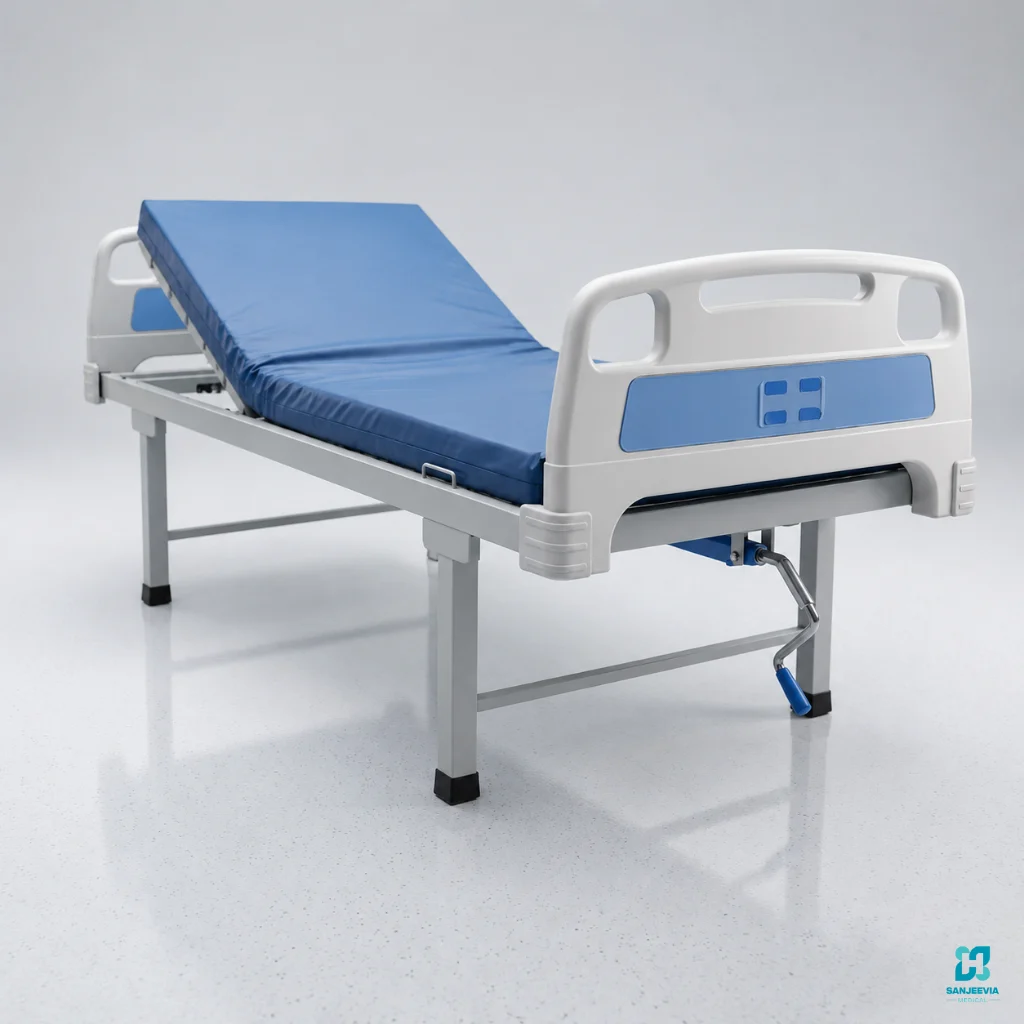
Compare options in hospital beds and medical beds. If only basic manual positioning is required, the dimensions of a Semi-Fowler bed or Full-Fowler bed can guide the first measurement check.

Check electrical supply before powered equipment arrives
Electric beds, oxygen concentrators, BiPAP machines, ventilators and monitors may need continuous or frequent power. Ask what type of outlet each selected model requires, whether a dedicated outlet is recommended and what the approved backup plan should be. Do not create a permanent setup from loose adapters or overloaded extension boards.
- Identify wall outlets that can be reached without stretching cables across a walkway.
- Have damaged or loose sockets inspected by a qualified electrician.
- Keep plugs visible and accessible for routine checks.
- Separate electrical cables from water, wash areas and places where liquids may spill.
- Ask the equipment team and treating team about the backup plan for devices that cannot be interrupted.
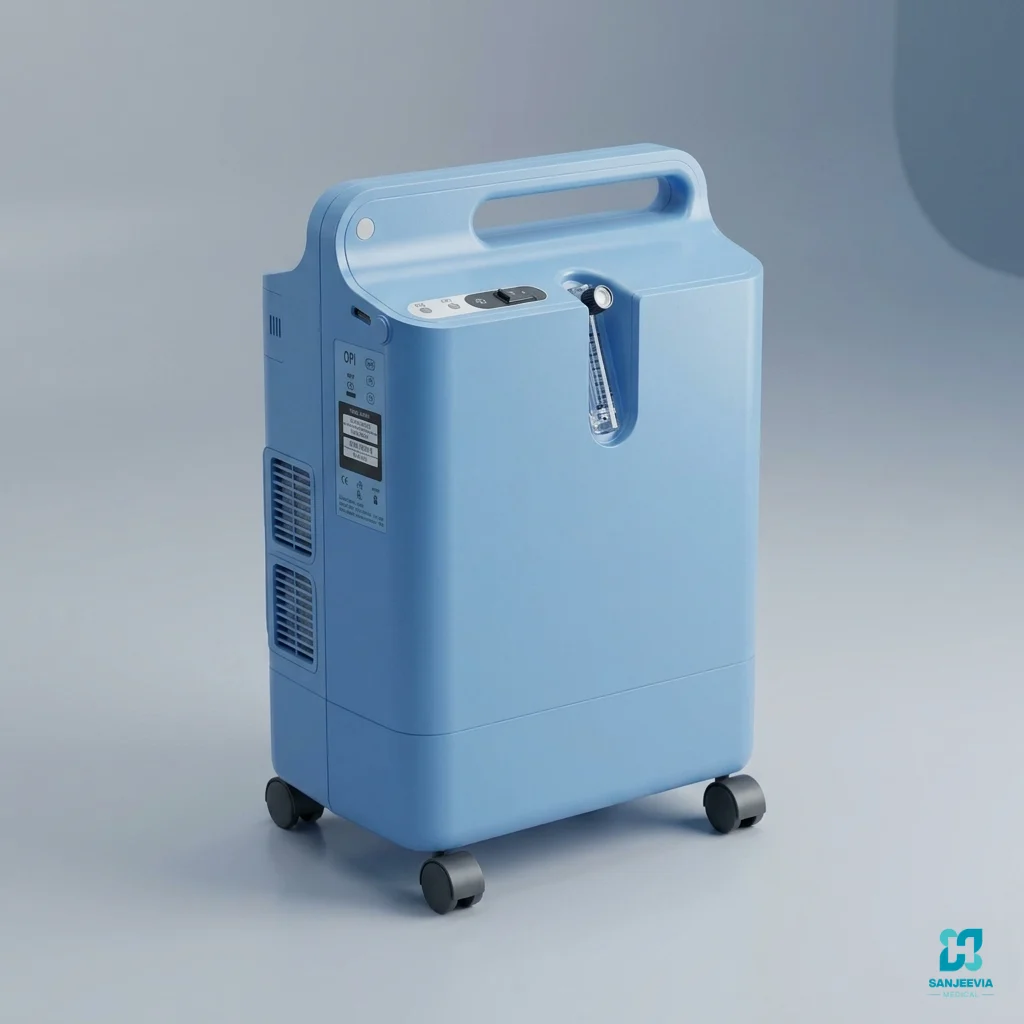
For prescribed breathing support, review the respiratory-care category, oxygen-support equipment and BiPAP, CPAP and ventilator options. Follow the instructions supplied with the exact device. General online advice cannot replace model-specific electrical and safety guidance.
Create safe zones for breathing and monitoring devices
Each device needs a stable position where air can circulate and controls remain visible. Do not cover vents or push equipment tightly against a wall unless the manufacturer permits it. Tubing should follow a route that allows the patient to move as instructed without becoming kinked, pulled or trapped under furniture.
Oxygen requires particular care. Keep the device and tubing away from flames, smoking, incense, sparks and heat sources. The NHS home oxygen guidance also stresses fire safety and following the supplier’s instructions. Your treating team and equipment provider should explain the precautions that apply to the prescribed setup.
A monitor should be visible to the caregiver without forcing them to lean over the patient. If a multi-parameter monitor has been prescribed, review the 5-parameter monitor page and ask who will set alarm limits, what readings should be recorded and whom to contact for a concerning value.
Keep wheelchair and caregiver routes usable
The shortest route is not always the safest route. Walk through the patient’s expected movement from bed to chair, bathroom and main exit. Check whether doors can open fully, whether the wheelchair can turn and whether the caregiver has room to stand in the correct position.
- Park the wheelchair where its brakes and footrests remain accessible.
- Keep transfer zones free from charging cables, buckets and loose floor coverings.
- Provide clear lighting for night-time movement.
- Store equipment so that emergency access to the patient remains possible.
- Do not improvise ramps or lifting techniques without an appropriate assessment.
Wheelchairs, commode chairs and other aids are available under other medical equipment. Measurements should be matched to the patient and the route through the home.
Room-readiness checklist before setup
| Area | Check before arrival | Confirm during handover |
|---|---|---|
| Access | Doorways, lift, turns and steps measured | Equipment reaches the final position without forcing or dismantling unapproved parts |
| Bed space | Caregiver and transfer sides cleared | Rails, brakes and powered or manual functions move freely |
| Power | Suitable outlets identified | Cables, approved backup and shutdown steps explained |
| Respiratory zone | Ventilation and fire-safety risks reviewed | Vents, tubing route and prescribed settings checked |
| Mobility route | Bed-to-bathroom and exit routes cleared | Wheelchair or walking aid can turn and park safely |
Take photographs and measurements of any doubtful doorway or turn before finalising the equipment. If several devices are arriving, create a simple room sketch and label the bed, power points, caregiver side, respiratory devices and clear route. The guide to coordinating multiple medical equipment rentals can help organise the overall sequence.
Preparing a Delhi NCR home?
Share the prescription, selected equipment, room measurements and access details before confirming the setup. Sanjeevia’s team can help you check the relevant equipment category and the information needed for handover. Contact Sanjeevia when your room checklist is ready.
Frequently asked questions
How much space should I leave around a medical bed?
There is no single measurement for every bed and care plan. Use the selected model’s dimensions and leave enough room for rails, moving sections, transfers and caregiver access. Ask for a layout check if the room is tight.
Can an oxygen concentrator be placed beside the bed?
It should be positioned according to the manufacturer’s instructions, with ventilation around the unit and a safe tubing route. Keep it away from flames, smoking, heat and water.
Should powered medical equipment use an extension board?
Follow the instructions for the exact device and have the room’s electrical supply checked if needed. Avoid overloaded, damaged or loose adapters and keep cables out of walking paths.
What should we photograph before booking equipment?
Photograph the building entrance, lift, narrow doors, sharp turns, steps, bedroom and intended equipment position. Include a measuring tape in the image when a dimension may affect access.
Next Read
If treatment is bringing your family to Delhi NCR from another city, read: Medical Equipment on Rent for Outstation Patients in Delhi NCR.
Common searches this guide answers
These are common ways families search for room-preparation help before home medical equipment arrives:
- “How to prepare a room for a hospital bed at home” Measure the bed, doorway and turning route, then keep safe access available on the sides needed for care.
- “How much space is needed around a medical bed?” The answer depends on the model, transfers and caregiver tasks. Confirm the dimensions of the selected medical bed before rearranging the room.
- “Electrical safety for oxygen concentrator or BiPAP at home” Use a suitable power point and follow the manufacturer’s instructions and the treating team’s safety plan. Review the prescribed oxygen equipment or BiPAP and ventilator category.
- “Checklist before medical equipment setup at home” Keep the prescription, measurements, access route, caregiver contact and questions ready, then confirm the setup details with Sanjeevia.