
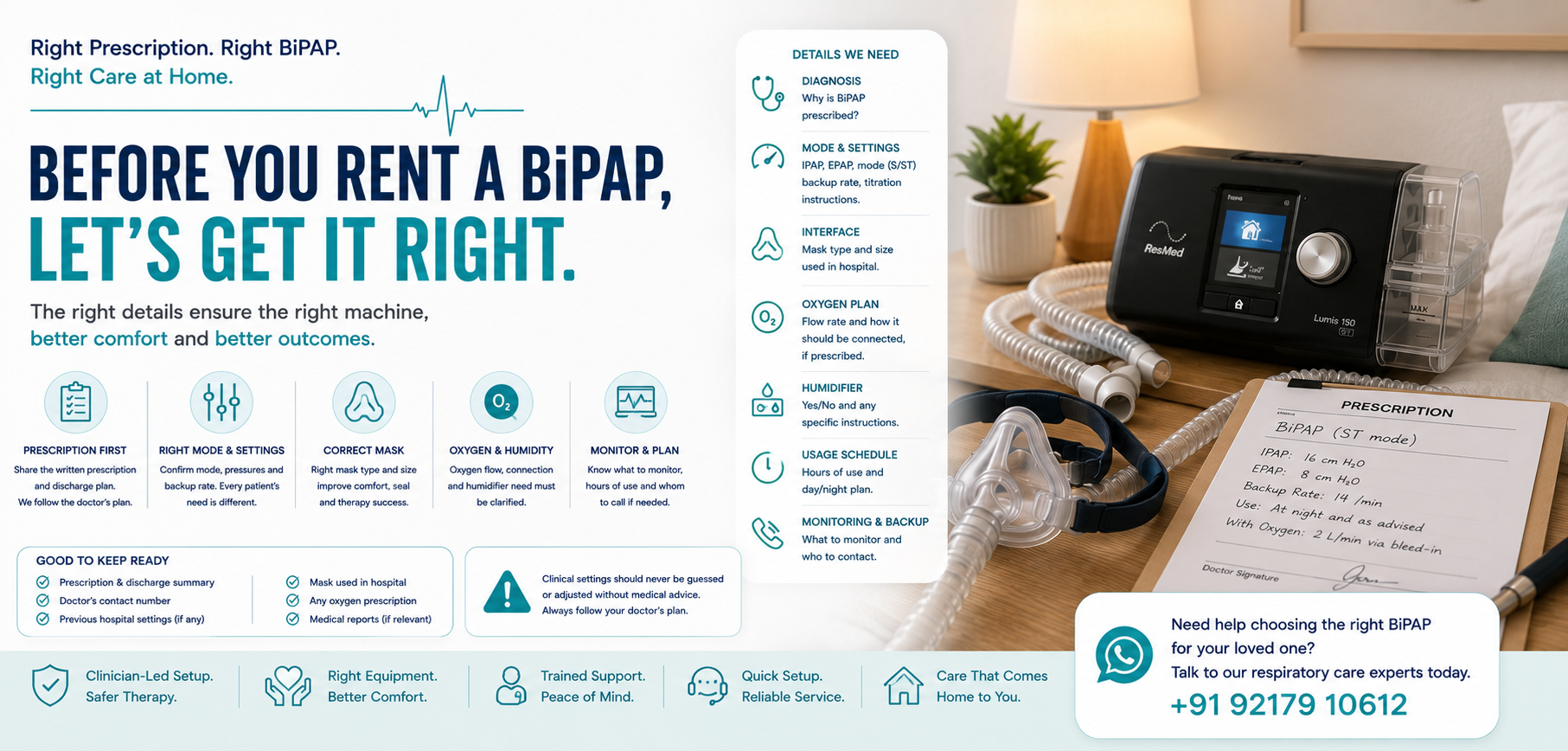
Before renting a BiPAP, share the written prescription and discharge plan. The provider needs the prescribed mode, pressure settings or clinician setup instructions, interface type, humidifier requirement, oxygen plan, usage schedule and any monitoring or backup requirements. A machine should not be selected by brand alone.
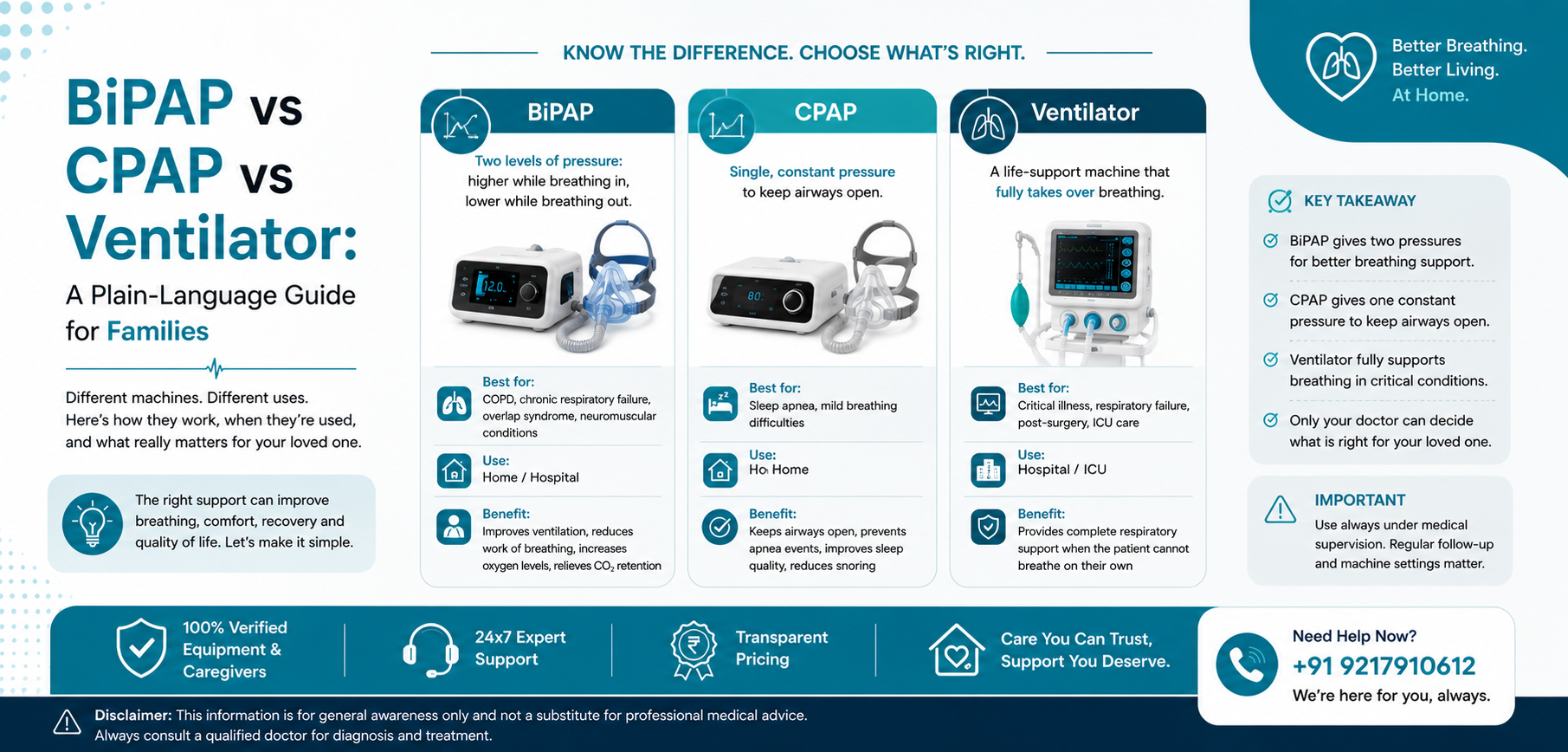
“The doctor only wrote ‘BiPAP at night.’ Is that enough to arrange the machine?” Often it is not. BiPAP devices support different modes and features, and the same brand may have several models. Missing details can delay setup or result in equipment that cannot deliver the prescribed therapy.
At a Glance
- Keep the prescription, discharge summary and treating clinician’s contact route available.
- Confirm mode compatibility before discussing brand preference or price.
- Arrange the correct mask, circuit, humidifier and oxygen connection as one setup.
Details That Identify the Right BiPAP
The prescription may include IPAP and EPAP pressures, backup rate, mode such as S, ST or a volume-assured mode, and instructions for titration. Some patients need a basic bilevel device; others require more advanced non-invasive ventilation.
Ask the clinician to clarify unclear handwriting or incomplete settings. The equipment team should not invent clinical values.
The Mask Is Part of the Prescription-Led Setup
Record whether the patient used a nasal, nasal-pillow or full-face mask in hospital, along with its size. A patient who breathes through the mouth may need a different interface from someone using CPAP for sleep apnoea.
Pressure sores, facial shape, dentures, anxiety and ability to remove the mask should be discussed. A good machine with a poorly fitted mask may still deliver ineffective or intolerable therapy.
Oxygen, Humidification and Monitoring
If oxygen is prescribed with BiPAP, the clinician should state the flow and connection plan. Oxygen should be added only through compatible equipment and trained setup.
Ask whether humidification is required, which water should be used, what values the family should monitor and exactly whom to call if the patient cannot tolerate therapy.
What to Keep Ready
- Diagnosis and reason for BiPAP
- Mode and pressure settings
- Backup rate or volume-assured requirement
- Mask type and size
- Oxygen flow and connection instruction, if prescribed
- Hours of use, humidifier and monitoring plan
Clinical Safety Comes First
Do not copy pressure settings, oxygen connections, modes or alarm limits from another patient or an online video. If breathing worsens, the patient becomes confused or unusually drowsy, lips appear blue or grey, or the prescribed support cannot be delivered, follow the clinician’s escalation plan and seek urgent medical help.
Frequently Asked Questions
Can we rent any BiPAP and enter the same numbers?
No. Models differ in modes, limits, circuits and intended use. Confirm compatibility first.
Is a discharge summary enough?
It may help, but ask for a clear respiratory prescription if essential settings or mode are missing.
Can Sanjeevia decide the pressure?
Clinical settings must come from the treating clinician or authorised respiratory professional.
Should we keep the hospital mask?
If permitted, record the exact model and size because it can help identify the required interface.
Trusted Patient References
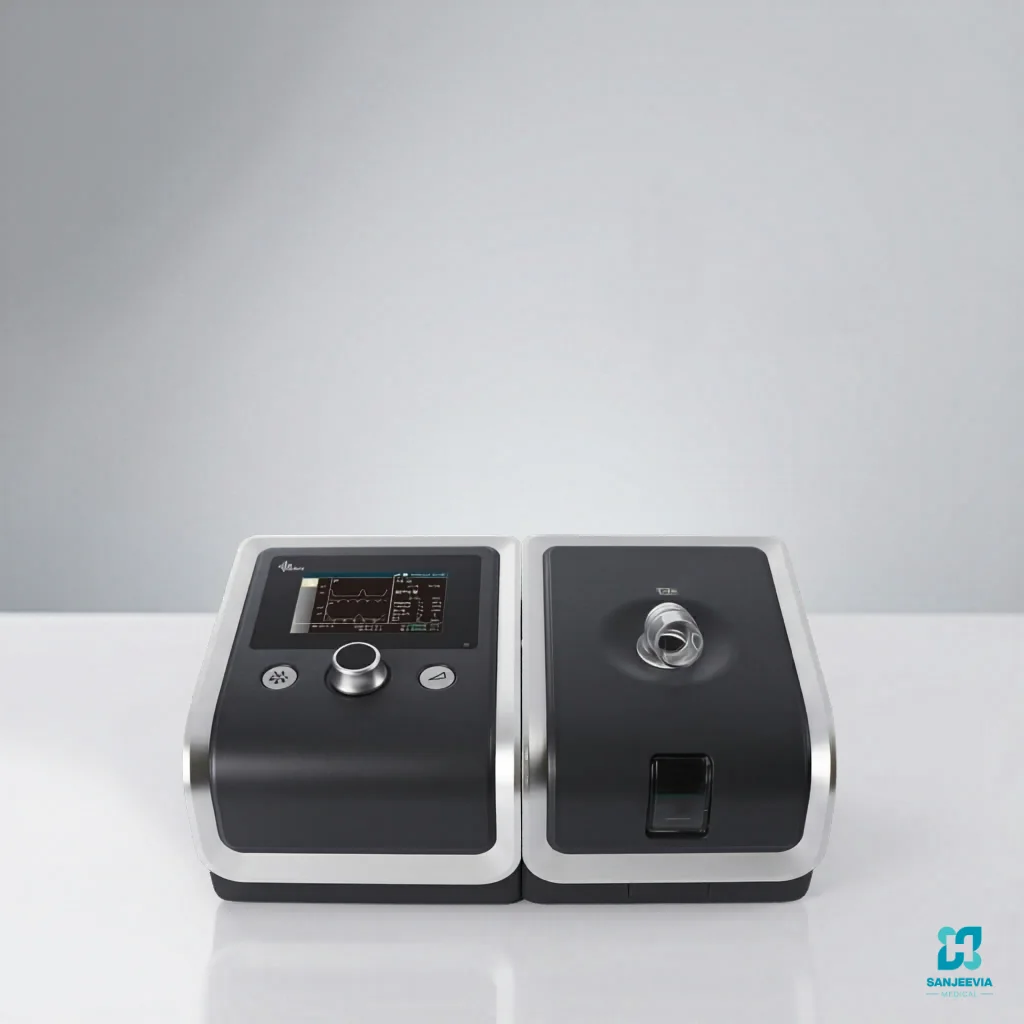
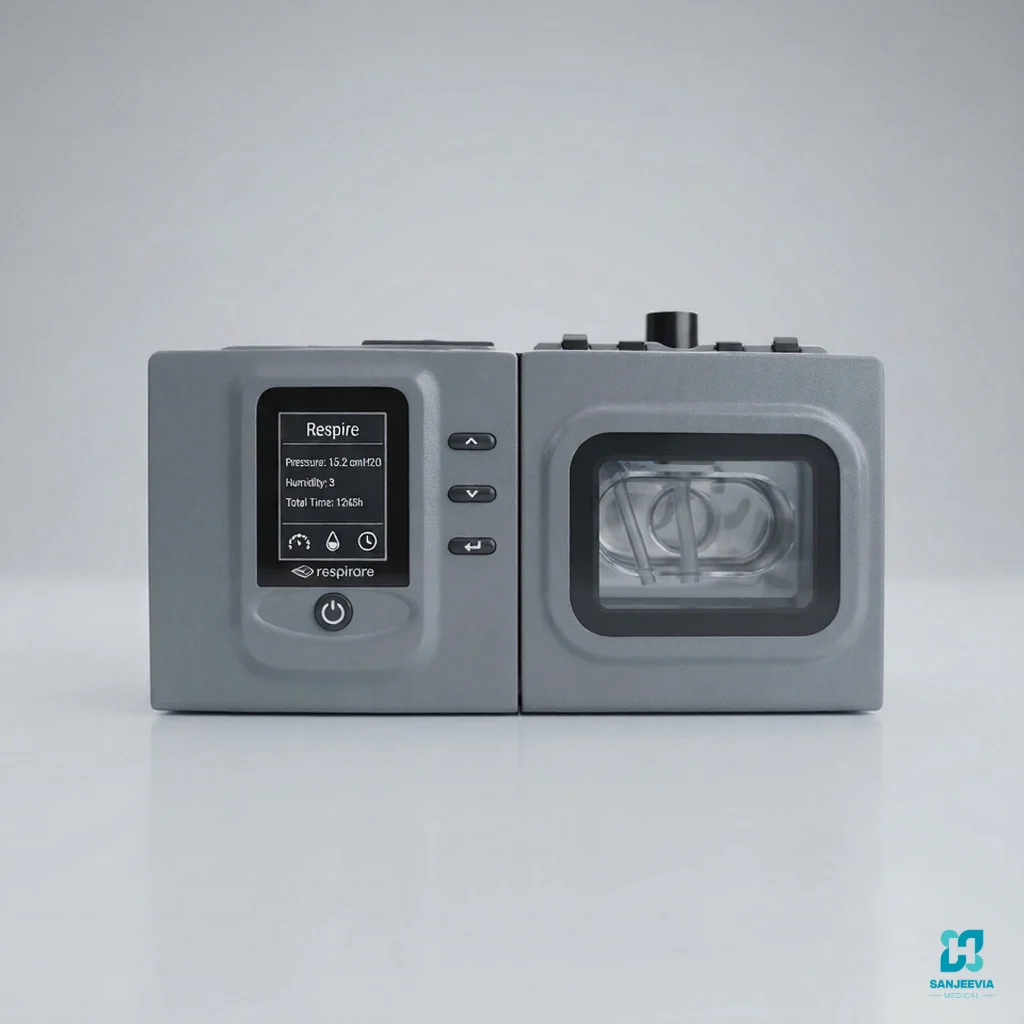
Once the prescription details are clear, check the BiPAP models and supported modes and confirm the exact unit before payment; do not infer a timed backup rate from the word BiPAP alone.
Compare Respiratory-Care Equipment
Keep the prescription and current interface details ready, then browse Sanjeevia’s BiPAP, CPAP and ventilator options. Confirm the exact mode capability, accessories, setup, training, service and current availability before booking.
Related Guidance and Equipment
Respiratory equipment must match the written prescription; these links provide the relevant comparison and exact product specifications.
Continue Reading
- BiPAP vs CPAP vs Ventilator — understand the different types of respiratory support.
- Managing COPD at Home — coordinate oxygen, BiPAP and the daily care routine.
Relevant Product Pages
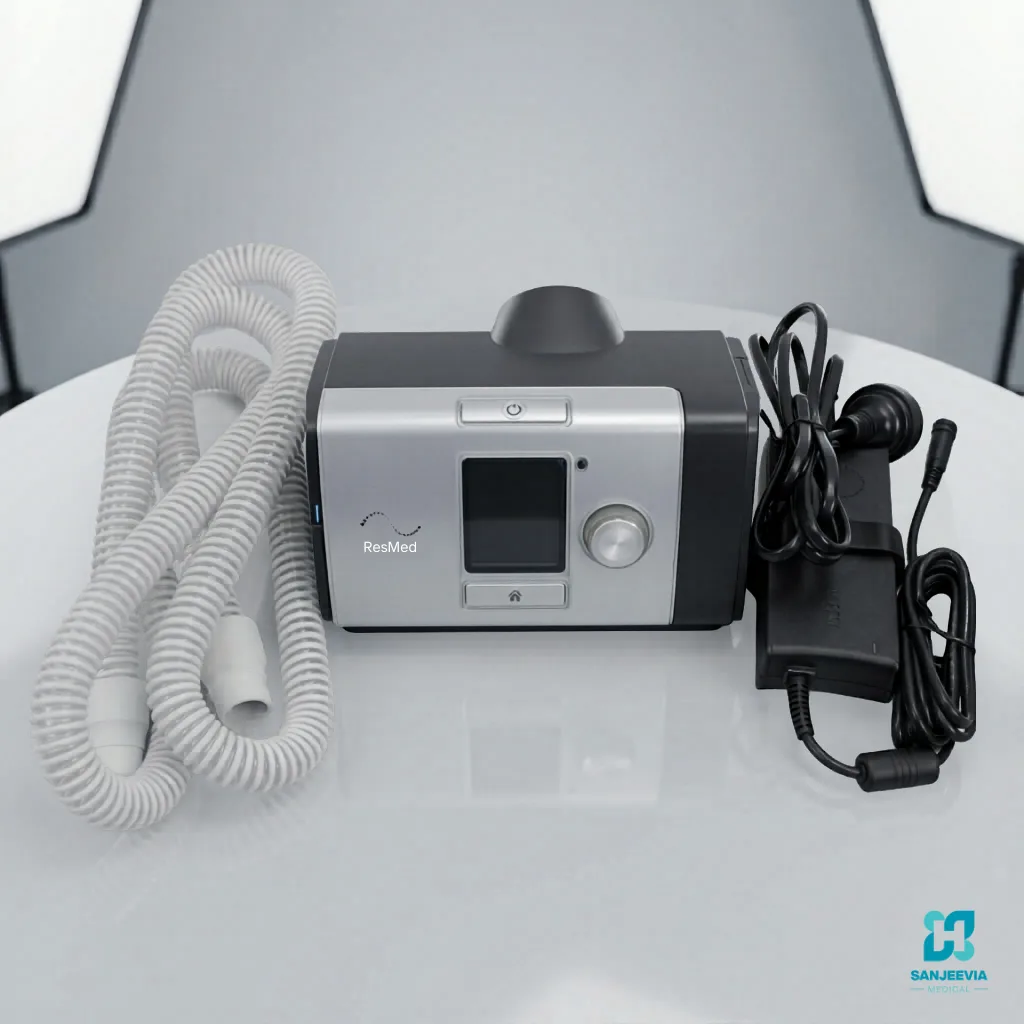
- ResMed Lumis 150 ST BiPAP — review ST-mode capability and product specifications.
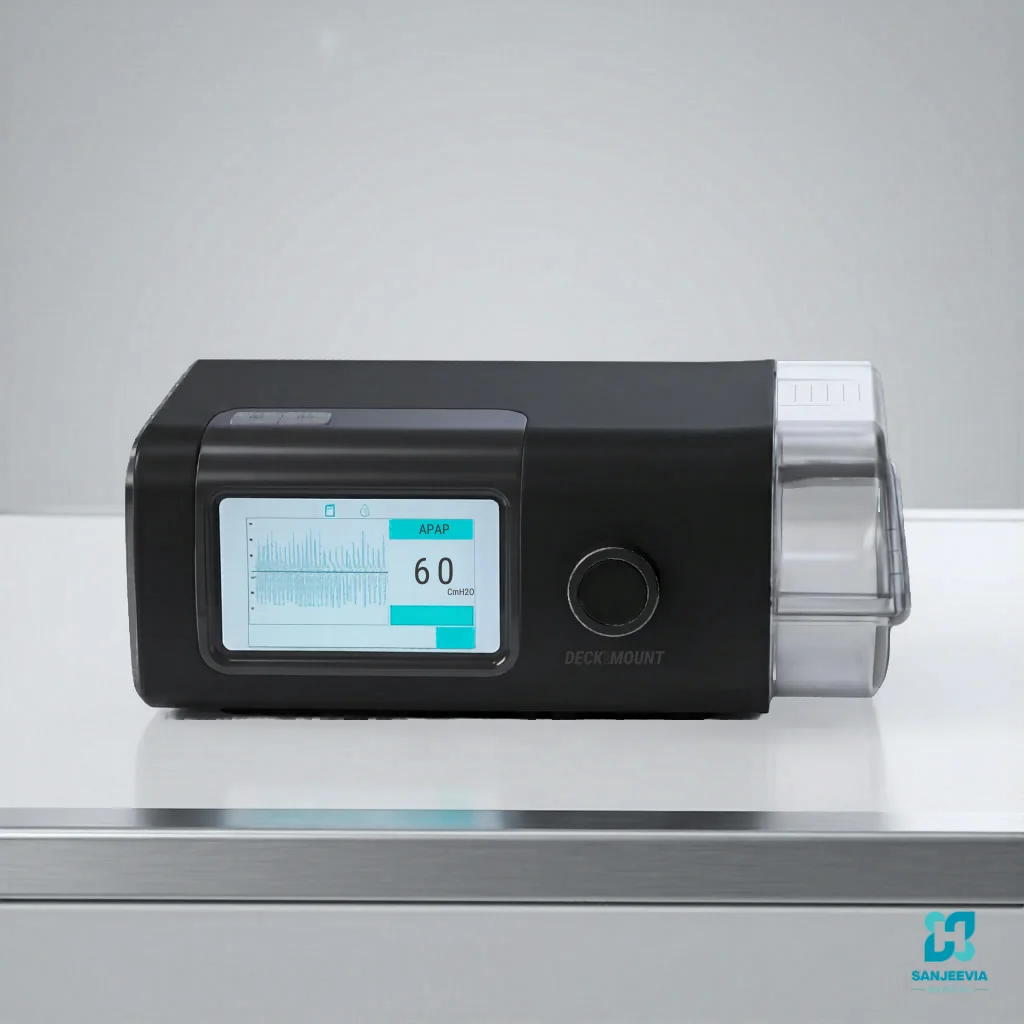
- ST-Mode BiPAP — compare an ST-mode option when that mode is prescribed.
Medical disclaimer: General information only. The treating clinician must prescribe the device, mode, pressures, oxygen plan and monitoring.
Published by Sanjeevia Medical | Delhi NCR