
Heavy-Duty and Jumbo Wheelchairs: Explained
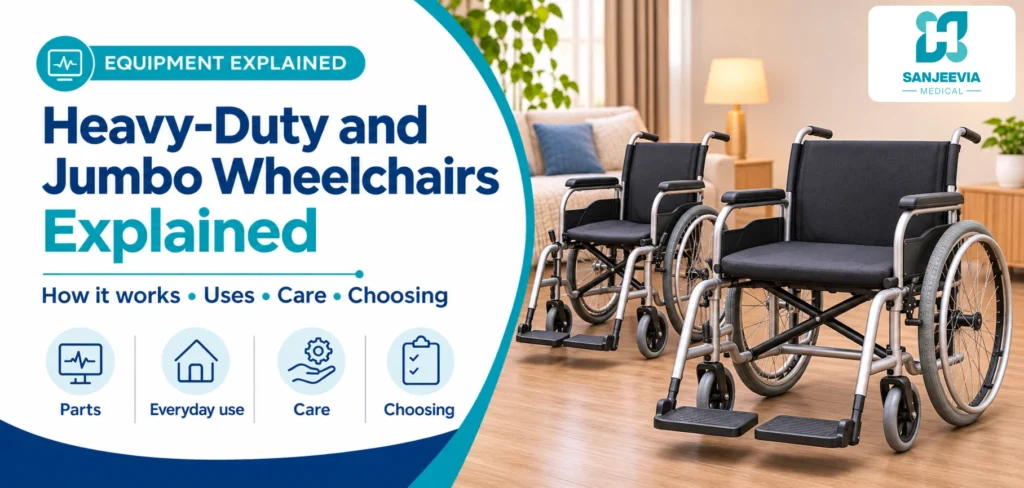
A wider seat is not automatically a safer seat. Too narrow can compress the body; too wide can reduce support, make propulsion harder and let the pelvis slide. “Heavy-duty” and “jumbo” solve different fit problems. Quick answer: Heavy-duty and jumbo manual wheelchairs use reinforced frames and larger seating dimensions, but the exact safe load, seat […]
Walker: Explained

A walker can look simpler than a wheelchair, yet a frame set only a few centimetres too high or low can change balance, arm loading and the way a person steps. Quick answer: A Zimmer frame is a four-point walking aid that provides more support than a stick. The correct type, height and walking sequence […]
Commode Wheelchair: Explained
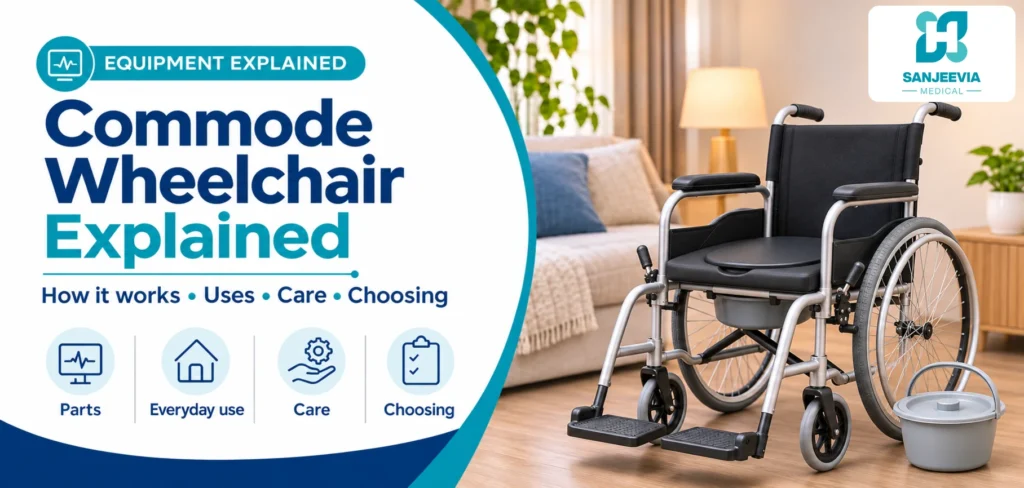
A commode wheelchair can shorten the journey to the toilet, but it does not automatically make the transfer safer. The most important moment is often before the wheels move—when brakes, footrests, clothing and the commode opening must all be managed. Quick answer: A commode wheelchair combines assisted mobility with a removable toileting pan or over-toilet […]
Hospital Bed Mattress: Explained

A hospital-bed mattress must bend where the bed bends. A thick, comfortable-looking flat mattress can bridge an articulated platform, slide during backrest movement and create gaps near rails or sections. Quick answer: Hospital-bed mattresses are matched to the platform dimensions and articulation: one section for a flat bed, two sections for a semi-Fowler bed, and […]
