

A hospital-bed mattress must bend where the bed bends. A thick, comfortable-looking flat mattress can bridge an articulated platform, slide during backrest movement and create gaps near rails or sections.
Quick answer: Hospital-bed mattresses are matched to the platform dimensions and articulation: one section for a flat bed, two sections for a semi-Fowler bed, and commonly four sections for Fowler or ICU-style platforms. Fit, cover condition and pressure-risk needs must all be checked separately.
Explore relevant equipment
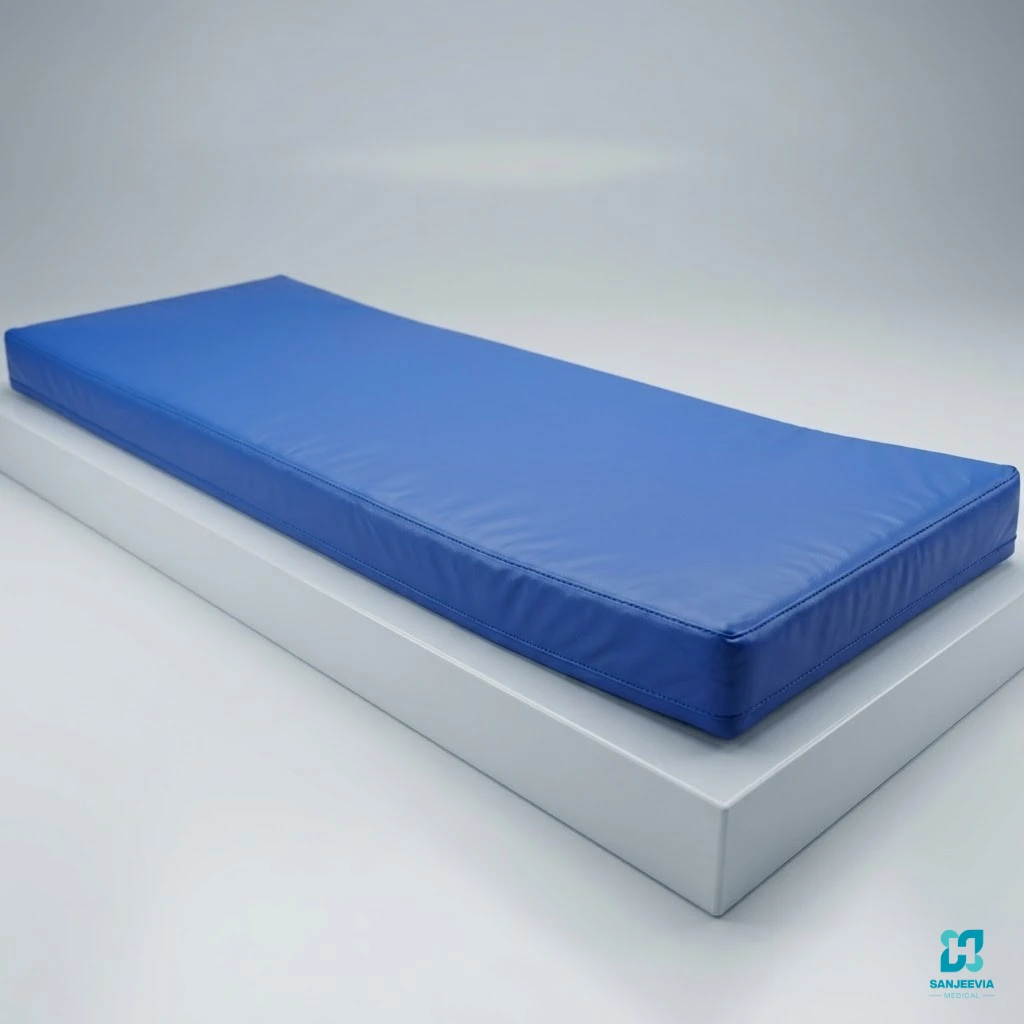
One-Section Hospital Bed Mattress
Review the live listing for the confirmed model, dimensions, supplied parts and current rental or purchase options.
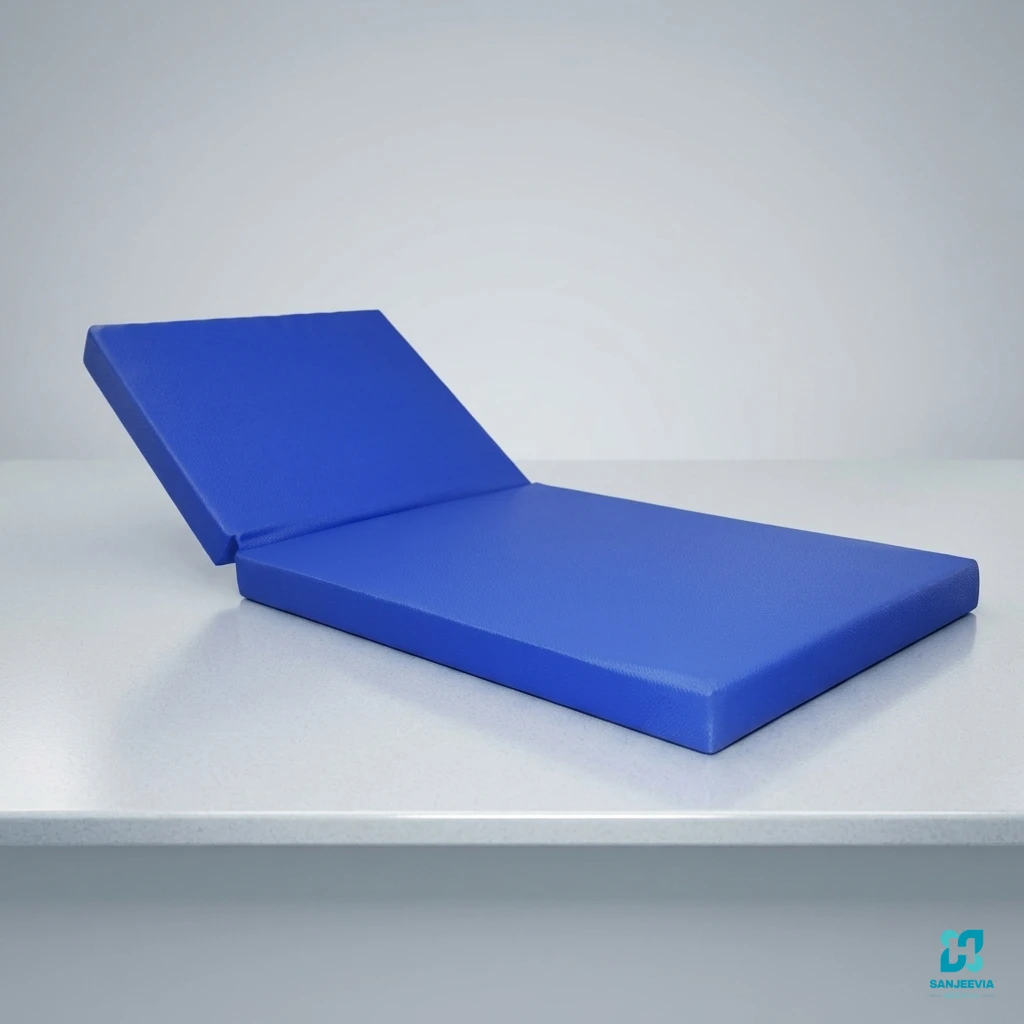
Two-Section Medical Bed Mattress
Review the live listing for the confirmed model, dimensions, supplied parts and current rental or purchase options.
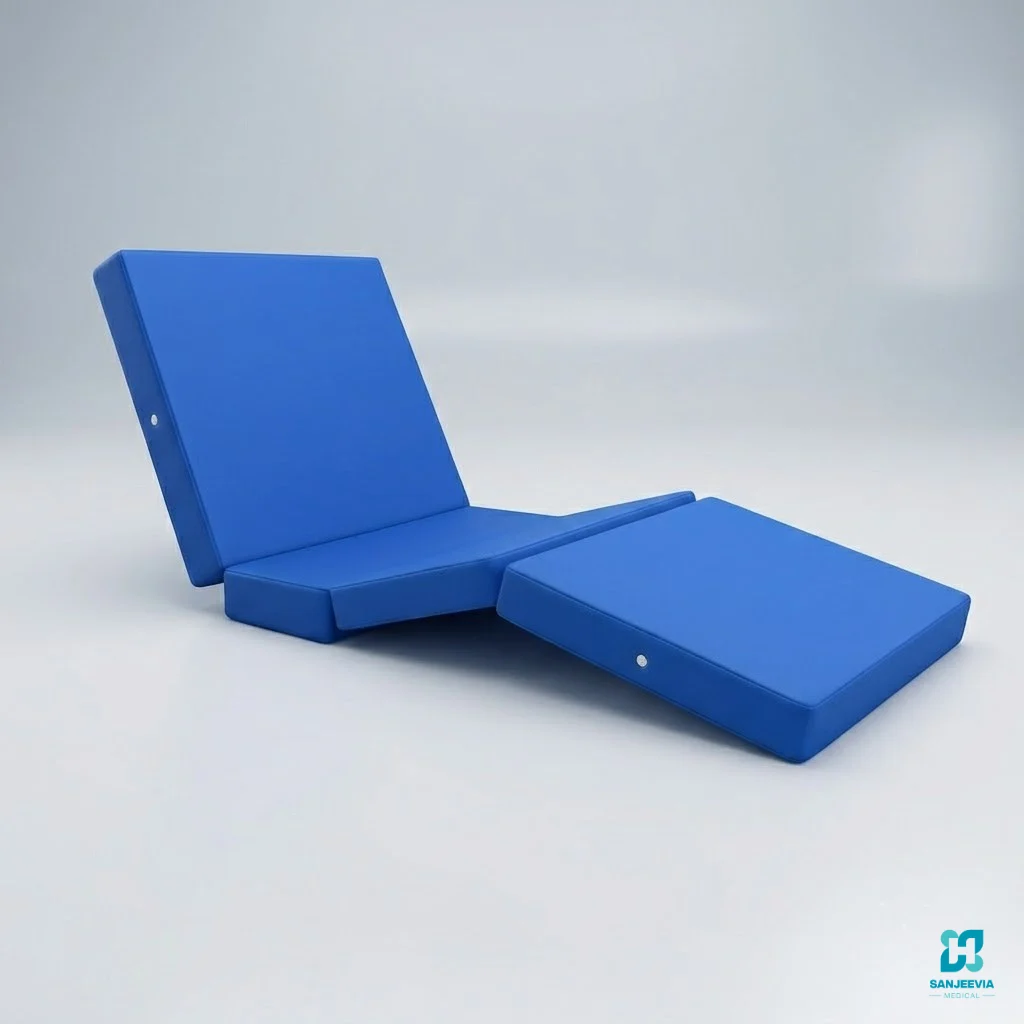
Four-Section ICU Bed Mattress
Review the live listing for the confirmed model, dimensions, supplied parts and current rental or purchase options.
Confirm user fit, exact model, included accessories and delivery access before booking.
Exact-model demonstration and handover
Sanjeevia’s channel does not currently have a verified demonstration dedicated to the hospital bed mattress. Use the supplied model’s instructions and a practical handover for fitting, transfers, controls, brakes, folding or cleaning. The guide below is orientation, not a substitute for individual assessment and training.
Jump to equipment details
Why do hospital mattresses have sections?
A one-section mattress is a continuous foam surface for a plain, non-articulating bed. A two-section mattress has a hinge or separation that follows a semi-Fowler platform when the backrest rises. A four-section mattress flexes with the back, seat, knee and leg sections used on many full-Fowler and ICU beds.
The number of foam pieces does not describe pressure performance. Foam type, density, depth, contour, cover and the patient’s clinical risk are separate questions. A sectioned standard foam mattress should not be marketed as “anti-bedsore” unless its tested pressure-redistribution function and intended use support that claim.
Bed platforms vary. Confirm the exact bed deck length, width, section positions and rail arrangement; “standard hospital bed” is not precise enough.
Fit, articulation and entrapment gaps
The mattress should lie flat within the mattress retainers without curling, excessive compression or side gaps. It must follow bed movement without bunching, bridging, sliding or exposing a hard platform edge. Test all permitted bed positions slowly before the patient uses it.
Check clearance around side rails, head/foot boards and moving joints. Adding a second foam mattress, topper or thick overlay can change rail height and gaps, alter transfer height and interfere with articulation. Do not stack surfaces without assessing compatibility.
Measure the platform, not an old deformed mattress. Confirm overall length, width, thickness and section dimensions with the exact bed model.
Comfort is not the same as pressure redistribution
A standard foam mattress supports ordinary bed use; it may not be adequate for a person at high risk of pressure injury or with an existing wound. NICE recommends high-specification foam for adults assessed at high risk and advises a suitable pressure-redistributing surface as part of an individual plan.
No mattress eliminates the need for skin inspection, repositioning, moisture management, nutrition review and heel offloading where prescribed. An alternating-pressure overlay or replacement system adds pumps, cells and alarms and should be selected separately.
Ask the responsible clinician or nurse to document pressure risk and the required support surface. Avoid choosing solely by softness: a surface that feels soft may bottom out or make transfers difficult.
Cover, fluids and cleaning
The cover protects foam from moisture and contamination. Inspect the top, underside, seams, zip and corners for tears, peeling, staining, odour, fluid ingress and swollen or degraded foam. A wipe-clean claim does not mean every disinfectant is safe.
Follow the cover manufacturer’s dilution and contact time; do not soak foam unless specifically permitted. Dry the surface before replacing linen. Clean immediately after contamination and use a compatible protector when indicated, ensuring it does not create wrinkles or interfere with articulation.
A mattress that cannot be cleaned, has fluid inside the foam or no longer returns to shape should be removed from use. Patient-contact mattresses are generally purchased rather than rented for hygiene reasons.
Common selection and setup errors
- Buying by bed name without measuring the actual platform.
- Using a flat one-piece mattress on a bed that articulates.
- Placing section hinges at the wrong platform joints.
- Stacking mattresses and reducing effective side-rail height.
- Assuming “medical-grade foam” proves pressure-ulcer prevention.
- Continuing to use a torn cover or contaminated foam.
- Allowing sheets or protectors to bunch under the patient.
After setup, raise and lower the bed without the patient first. Confirm the mattress remains located, cables are clear and no new gaps appear.
Need help matching the equipment?
Share the user’s measurements, mobility level, transfer method and delivery access. Sanjeevia can help confirm the model, fit, accessories and current Delhi NCR options.
Questions before buying in Delhi NCR
- What are the exact platform length, width and section positions?
- Is the bed flat, semi-Fowler, full-Fowler or multi-function?
- What foam and cover specification is supplied, and how is it cleaned?
- Has pressure-injury risk been assessed, and is a specialist surface required?
- Will the mattress work with rails, retainers and all bed positions?
- Is a protector included? Are sheets and bed frame separate?
- What is the replacement process if the cover arrives damaged?
Use the hospital bed explanation for platform functions and the anti-bedsore mattress guide for pressure-support questions.
Frequently asked questions
Can a normal home mattress be used on an adjustable hospital bed?
It may not flex safely or fit the retainers and rails. Use a mattress confirmed for the exact platform.
Does four-section mean better pressure relief?
No. It describes articulation. Pressure redistribution depends on the surface design and clinical suitability.
Can two mattresses be stacked?
Only after compatibility and rail/gap assessment. Stacking can alter transfer height and side-rail protection.
Should a soiled foam mattress be cleaned and reused?
If fluid has penetrated the cover or foam cannot be fully decontaminated, remove it from use and follow replacement guidance.
Explore your equipment options
One-Section Hospital Bed Mattress
Review the live listing for the confirmed model, dimensions, supplied parts and current rental or purchase options.
Two-Section Medical Bed Mattress
Review the live listing for the confirmed model, dimensions, supplied parts and current rental or purchase options.
Four-Section ICU Bed Mattress
Review the live listing for the confirmed model, dimensions, supplied parts and current rental or purchase options.
Confirm user fit, exact model, included accessories and delivery access before booking.
Sources and useful reading
Prepared by Sanjeevia’s editorial team. Updated 9 November 2026. This guide explains equipment; suitability, transfers, posture and pressure-care decisions should follow individual assessment by the responsible professional.
