
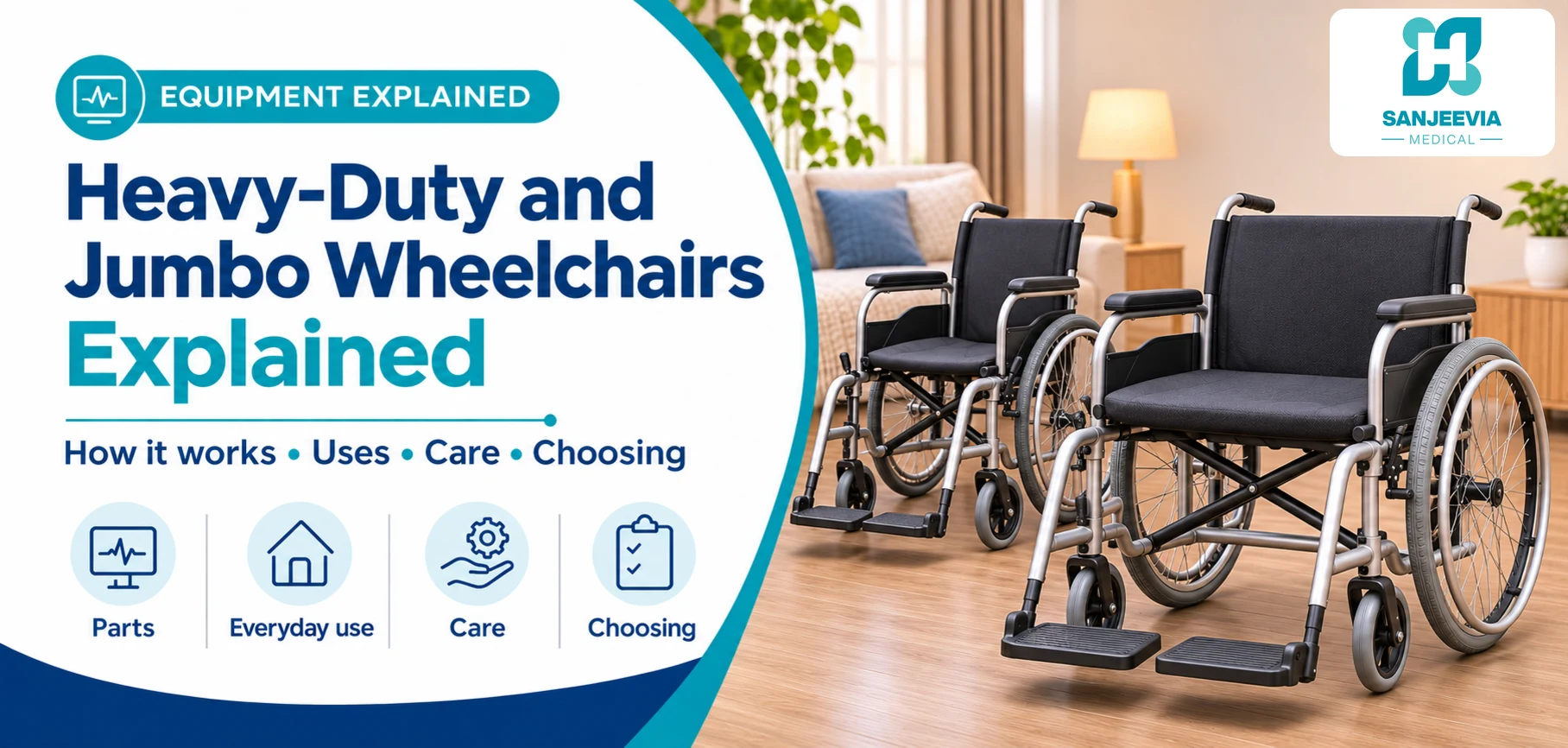
A wider seat is not automatically a safer seat. Too narrow can compress the body; too wide can reduce support, make propulsion harder and let the pelvis slide. “Heavy-duty” and “jumbo” solve different fit problems.
Quick answer: Heavy-duty and jumbo manual wheelchairs use reinforced frames and larger seating dimensions, but the exact safe load, seat width and depth vary. Select from measured body fit, posture, transfer method, caregiver ability and home access—not the label alone.
Explore relevant equipment
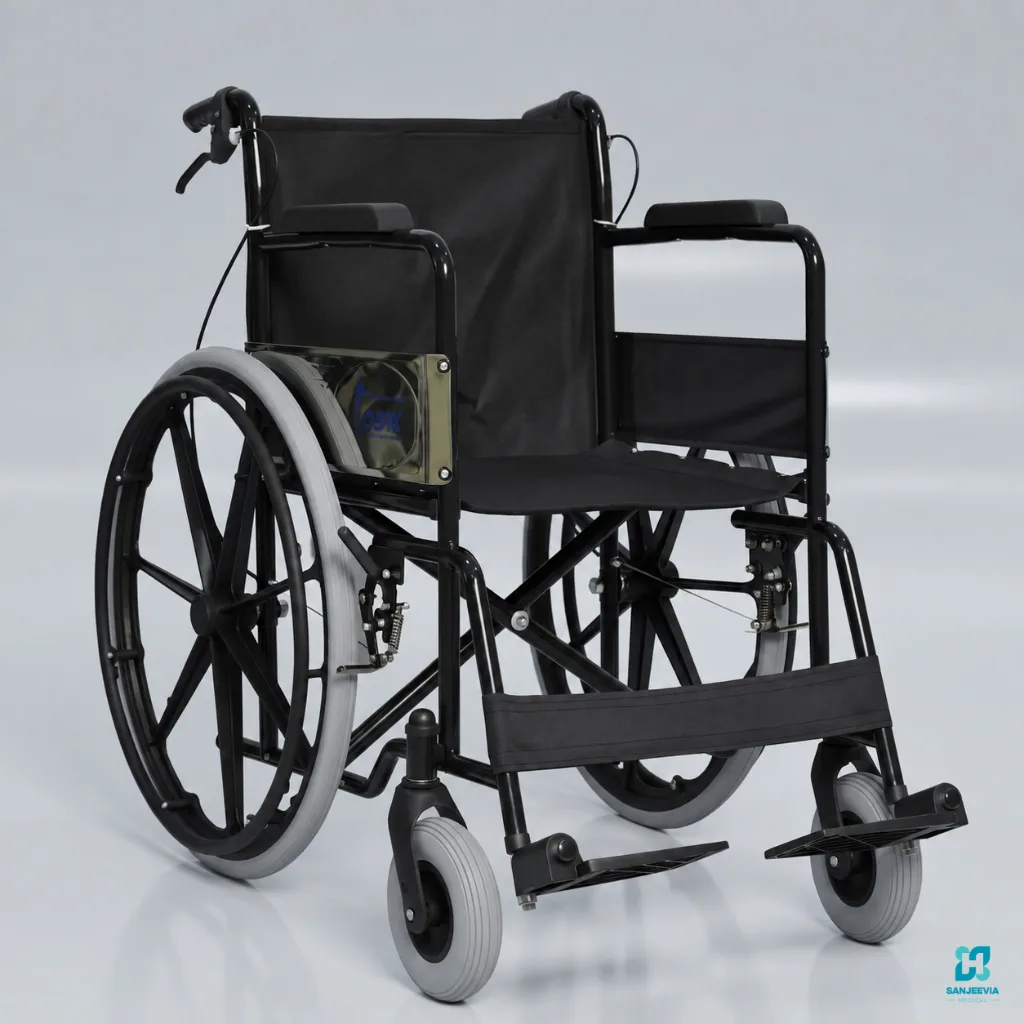
Heavy-Duty Manual Wheelchair
Review the live listing for the confirmed model, dimensions, supplied parts and current rental or purchase options.
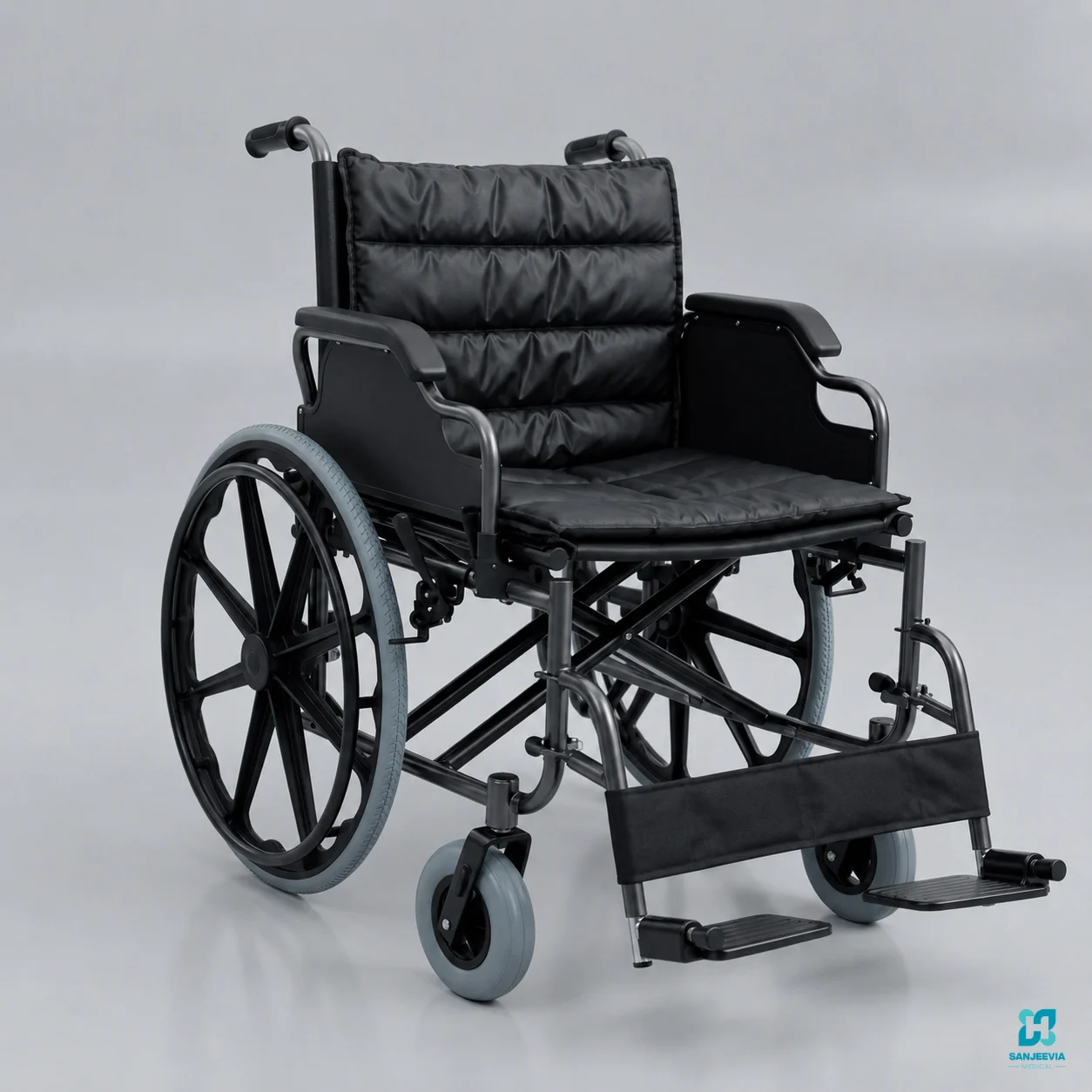
Jumbo Manual Wheelchair
Review the live listing for the confirmed model, dimensions, supplied parts and current rental or purchase options.
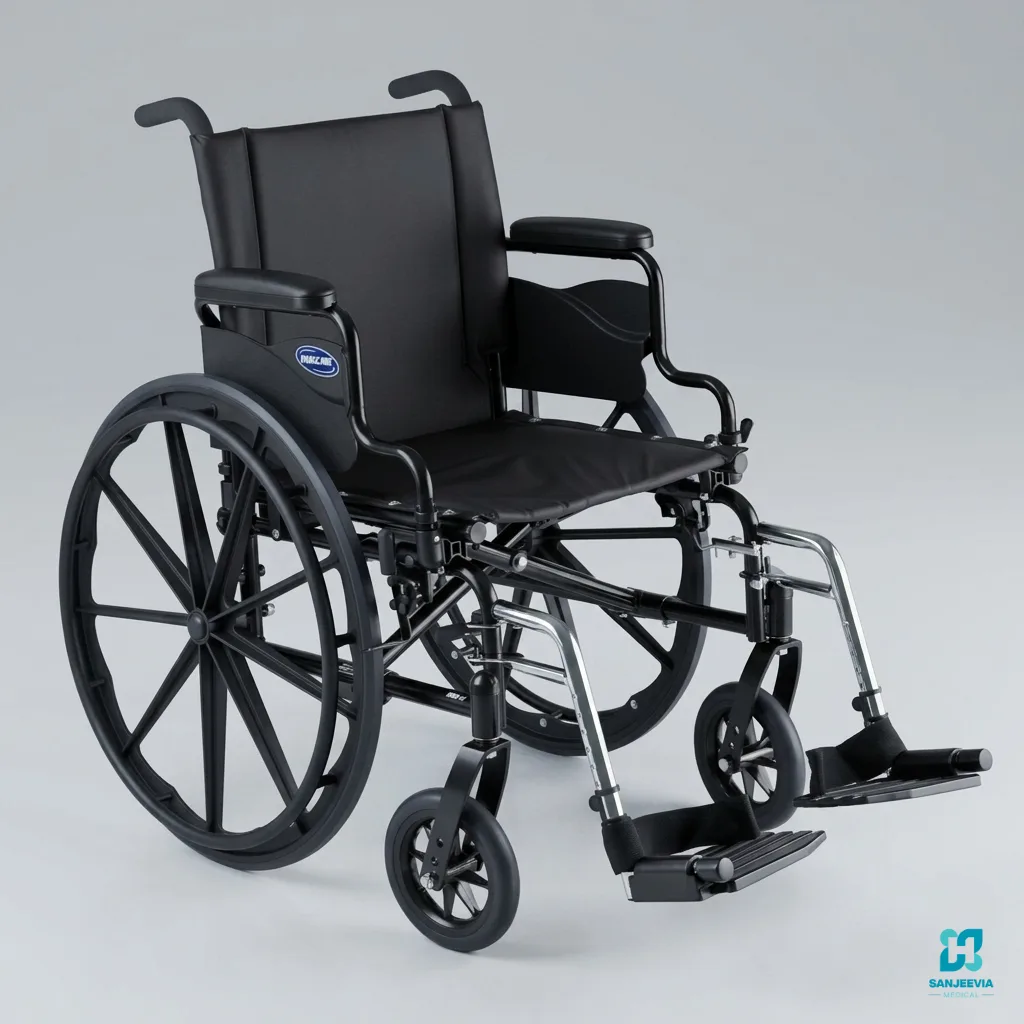
Standard Manual Wheelchair
Review the live listing for the confirmed model, dimensions, supplied parts and current rental or purchase options.
Confirm user fit, exact model, included accessories and delivery access before booking.
Related video: manual-wheelchair handling basics
This verified Sanjeevia video demonstrates general manual-wheelchair parts and handling. It is not an exact heavy-duty or jumbo model demonstration; confirm the supplied chair’s dimensions, restraints and load rating separately.
Jump to equipment details
What do “heavy-duty” and “jumbo” mean?
A heavy-duty chair generally emphasises a reinforced frame and higher safe working load than a standard wheelchair. A jumbo chair generally emphasises a larger seating area and body clearance. In practice, sellers use the terms inconsistently, and both features may overlap.
The only reliable comparison is the confirmed model’s safe user weight, seat width, seat depth, overall width, frame construction, footrest and armrest arrangement, wheel configuration and total chair weight. Sanjeevia confirms these before dispatch rather than applying one specification to every brand.
A standard 18-inch wheelchair may be inappropriate even when the user is below its weight limit if the hips or thighs are compressed. Conversely, a very wide chair can reduce side support and make reaching the wheel rims difficult.
Measure the user, cushion and total load
WHO wheelchair guidance treats assessment and fitting as essential. Seated hip width helps select seat width; thigh length informs depth; lower-leg length informs footrest height. The pelvis should be supported against the backrest, feet supported and the front edge clear of the backs of the knees.
Measure in the intended clothing and with the planned cushion. Add the weight of bags, oxygen or other approved attachments when checking the chair’s load. Do not choose a chair exactly at the maximum user weight without professional consideration of dynamic movement and accessories.
Pressure risk, skin history, posture and the ability to shift weight affect cushion selection. A wide foam cushion is not automatically pressure-relieving, and the cushion must fit the seat without curling or leaving unsafe gaps.
Overall width and home access
A wider seat produces a wider overall chair. Measure the narrowest door opening with handles and stops considered, corridor turns, bathroom entry, lift door, lift interior, bedside space and vehicle boot. Allow room for the caregiver’s hands on push rims and door frames.
Wider chairs may have a larger turning radius and greater folded width and weight. A chair that enters the front door may still fail at the bedroom turn or toilet. Test the planned route before the user arrives home.
Ramps must support the combined user, chair and caregiver load and have a safe gradient, edge protection and landing space. Do not assume a portable ramp rated for a standard chair is adequate.
Transfers, propulsion and caregiver handling
- Apply both brakes, position on level ground and swing footrests away before the trained transfer.
- Never stand on footplates. Confirm whether armrests remove or remain fixed for the transfer method.
- Seat the pelvis fully back, support feet and check clothing and skin are clear of wheels.
- Self-propulsion requires safe reach to the rims without shoulder strain. A very wide seat can make this difficult.
- For attendant pushing, practise stops, turns, thresholds and ramps with the actual loaded chair.
- Do not lift an occupied chair by armrests or footrests. Vehicle loading of a heavier chair may require two people or lifting equipment.
Anti-tip bars, belts, oxygen holders and elevating leg rests are not automatically included. Confirm each assessed accessory.
Need help matching the equipment?
Share the user’s measurements, mobility level, transfer method and delivery access. Sanjeevia can help confirm the model, fit, accessories and current Delhi NCR options.
Inspection, cleaning and follow-up
Check frame welds, cross-brace, wheels, tyres, bearings, hand rims, brakes, castors, footrests, armrests and upholstery. A higher-capacity frame still becomes unsafe if a brake no longer holds or a restraint is loose.
Clean patient-contact surfaces with compatible products and dry the chair fully. Do not hose bearings or paint over cracks. Report veering, wobble, unusual noise, frame movement or difficulty folding.
Follow-up is needed after weight change, swelling, pain, skin redness, altered posture, new transfer problems or caregiver difficulty. The chair must continue to fit, not merely remain mechanically functional.
Questions before booking
- What are the exact safe user weight, seat width, depth and overall width?
- Is the need higher load capacity, wider fit, deeper seating—or all three?
- Will the user self-propel, and can the rims be reached safely?
- Does the chair fit every doorway, turn, lift and vehicle?
- Which cushion, belt, anti-tip and leg support accessories are prescribed?
- Can the caregiver manage the chair’s weight?
- Is the exact model shown and documented before payment?
See Sanjeevia’s heavy-duty versus jumbo comparison and standard versus bariatric equipment guide.
Frequently asked questions
Is jumbo always higher capacity than heavy-duty?
No. Labels are inconsistent. Compare the exact model’s load rating and dimensions.
Should the widest possible seat be chosen?
No. Excess width can reduce support and propulsion efficiency. Fit should follow measurements.
Does a reinforced frame prevent tipping?
No. Tipping depends on weight distribution, slopes, loads, anti-tip features and technique.
Are pressure-relief cushions included?
Not in the listed base packages. Cushion selection should follow pressure and posture assessment.
Explore your equipment options
Heavy-Duty Manual Wheelchair
Review the live listing for the confirmed model, dimensions, supplied parts and current rental or purchase options.
Jumbo Manual Wheelchair
Review the live listing for the confirmed model, dimensions, supplied parts and current rental or purchase options.
Standard Manual Wheelchair
Review the live listing for the confirmed model, dimensions, supplied parts and current rental or purchase options.
Confirm user fit, exact model, included accessories and delivery access before booking.
Sources and useful reading
- WHO wheelchair provision guidelines.
- WHO Wheelchair Service Training Package – Intermediate Level.
- WHO assistive product specifications — wheelchair cushions and bariatric size ranges.
- Sanjeevia heavy-duty wheelchair listing.
- Sanjeevia jumbo wheelchair listing.
Prepared by Sanjeevia’s editorial team. Updated 9 November 2026. This guide explains equipment; suitability, transfers, posture and pressure-care decisions should follow individual assessment by the responsible professional.
