
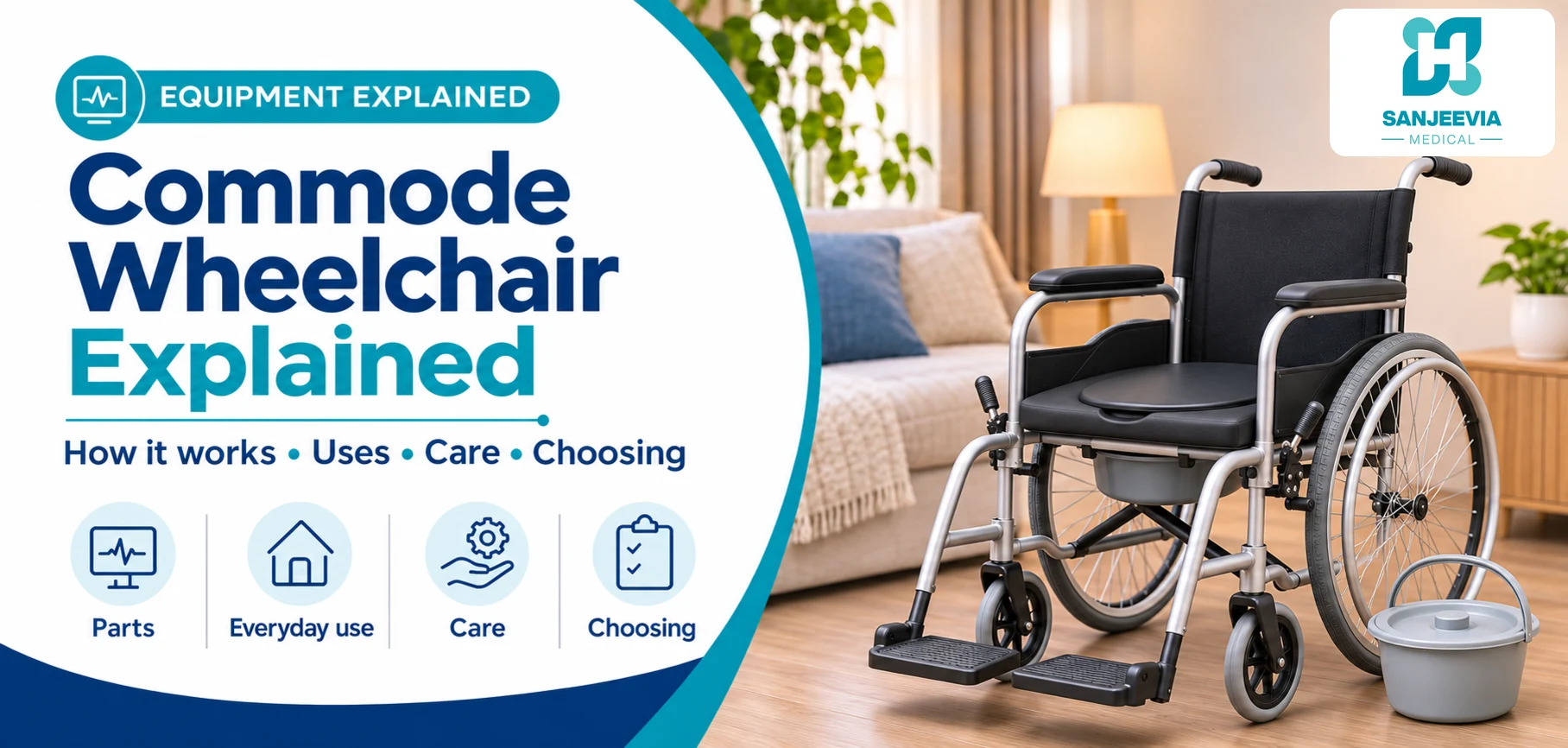
A commode wheelchair can shorten the journey to the toilet, but it does not automatically make the transfer safer. The most important moment is often before the wheels move—when brakes, footrests, clothing and the commode opening must all be managed.
Quick answer: A commode wheelchair combines assisted mobility with a removable toileting pan or over-toilet function. It must fit the user, doorway and toilet area, remain on a dry level surface, and be used with a trained transfer and hygiene plan.
Explore relevant equipment
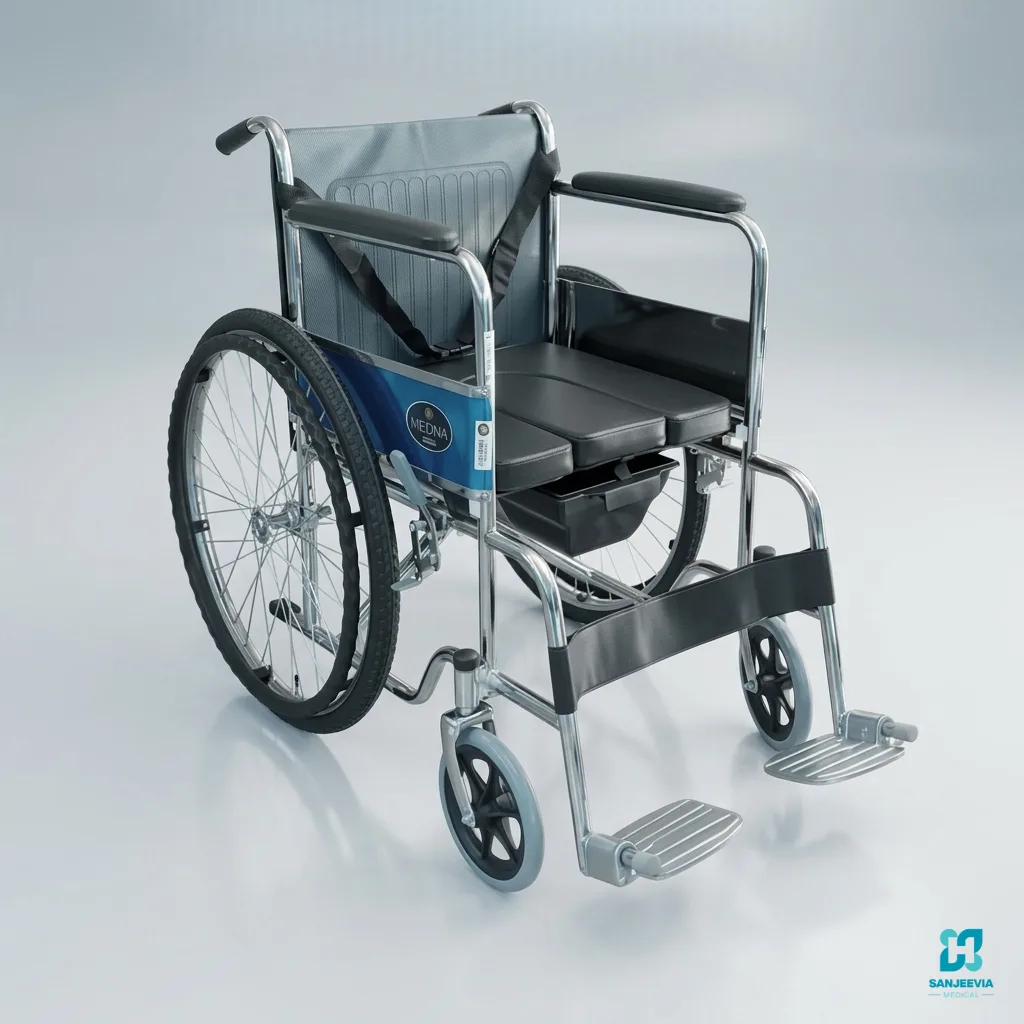
Manual Commode Wheelchair
Review the live listing for the confirmed model, dimensions, supplied parts and current rental or purchase options.
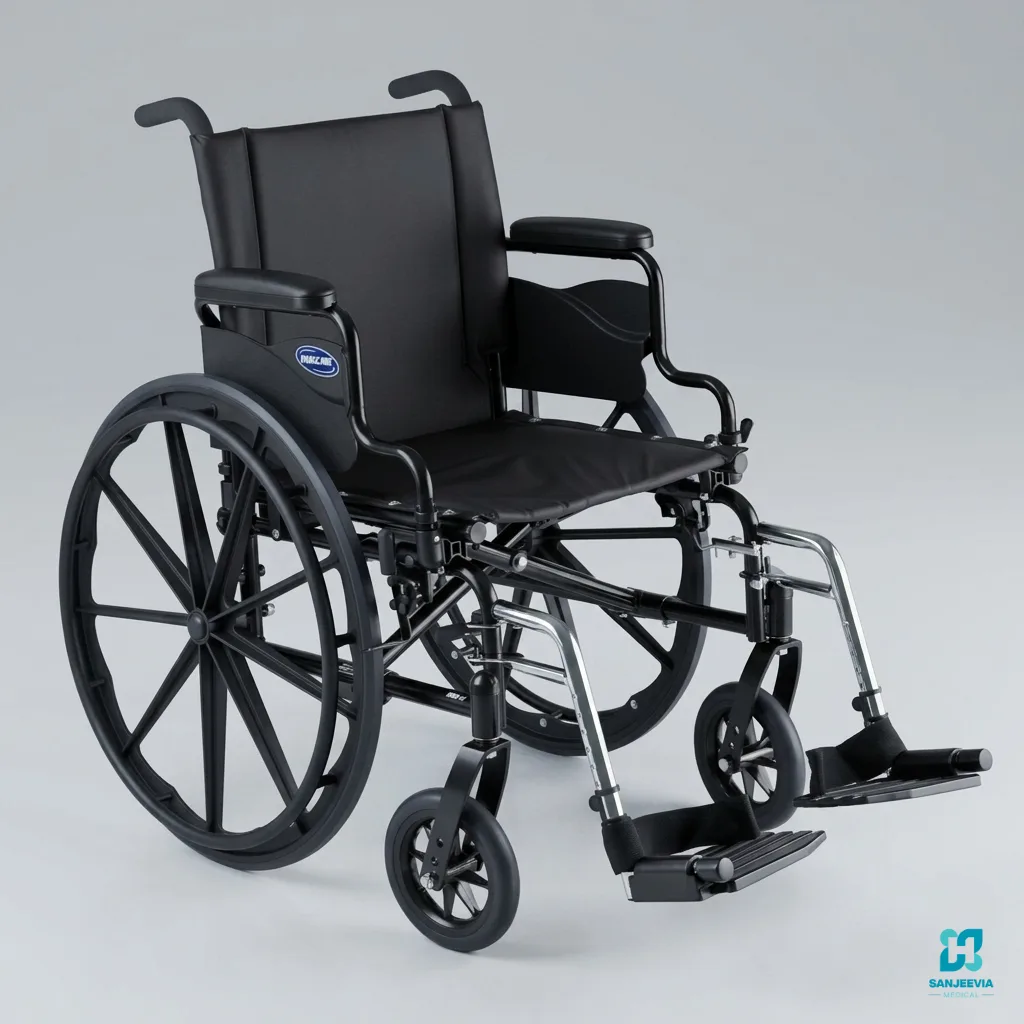
Standard Manual Wheelchair
Review the live listing for the confirmed model, dimensions, supplied parts and current rental or purchase options.
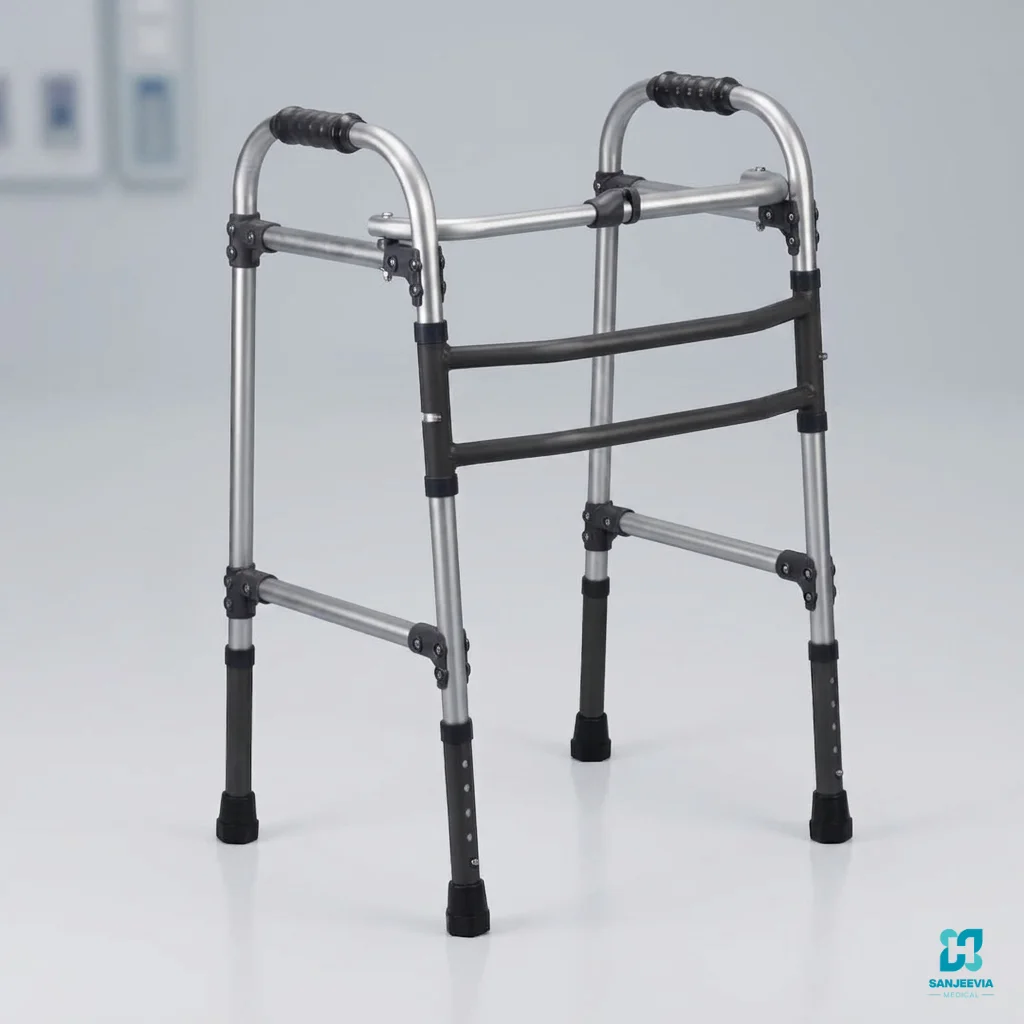
Walker / Zimmer Frame
Review the live listing for the confirmed model, dimensions, supplied parts and current rental or purchase options.
Confirm user fit, exact model, included accessories and delivery access before booking.
Exact-model demonstration and handover
Sanjeevia’s channel does not currently have a verified demonstration dedicated to the commode wheelchair. Use the supplied model’s instructions and a practical handover for fitting, transfers, controls, brakes, folding or cleaning. The guide below is orientation, not a substitute for individual assessment and training.
Jump to equipment details
What is a commode wheelchair?
It is a manual wheelchair with an opening or removable seat section that can be used over a compatible toilet or with a removable commode pan. Large rear wheels may allow self-propulsion, while push handles let an attendant assist. It is intended for people who cannot safely walk to or transfer onto a standard toilet.
This is not automatically a shower chair. Sanjeevia’s listed model is intended for toileting in a dry indoor environment and is not approved under running water. Water can damage bearings, brakes, upholstery and frame components and can increase slipping risk.
The chair does not replace continence assessment, caregiver availability or a safe transfer plan. For some users, a bedside commode, raised toilet seat, hoist or bed-based toileting plan may be safer.
Parts, dimensions and fit
| Part | Function | Confirm |
|---|---|---|
| Seat and commode opening | Supports sitting and provides toileting access. | User fit, skin clearance and compatibility with pan/toilet. |
| Removable pan | Collects waste when not positioned over a toilet. | Fresh/assigned pan, secure fit, lid and emptying route. |
| Brakes | Hold rear wheels for parking and transfers. | Both engage firmly; tyres and brake blocks are sound. |
| Armrests | Support posture and some transfer methods. | Fixed/removable configuration matches the plan. |
| Footrests | Support feet while moving. | Swing away for transfers; never stand on them. |
| Rear wheels and push handles | Enable user or attendant propulsion. | Correct propulsion plan and caregiver control. |
The listed chair has an 18-inch seat and a maximum user weight of 100 kg. Confirm seated hip width, thigh support, footplate position, posture, total load and the home’s narrowest doorway. A pressure-relief cushion may change seat height and commode access.
Transfers, positioning and toileting routine
- Plan privacy, clothing management, hand hygiene, pan handling and who will assist before the transfer begins.
- Place the chair on a dry, level surface close to the transfer point. Apply both parking brakes and swing footrests away.
- Use only the transfer method taught for the person. Do not let the user stand on footplates or pull on an unstable chair.
- Once seated, reposition feet and supports, check skin and posture, and keep hands and clothing away from wheels.
- Move slowly with the pan secured or removed as appropriate. Do not push with brakes partly engaged.
- After toileting, complete hygiene and the return transfer without rushing. Inspect skin if the care plan requires it.
A lap strap is for positioning only when individually assessed; it is not a substitute for supervision and must not be used as an unplanned restraint.
Pan handling, cleaning and infection control
The commode pan is a patient-contact item and should be assigned to one person. Empty it using the household or clinical disposal method advised for the home, avoiding splashes. Wear appropriate gloves, wash hands and clean/disinfect the pan using compatible products and contact times.
Clean the seat opening, armrests, push handles, frame and wheels when contaminated and between users. Do not hose or shower the wheelchair. Dry all components before reuse and check that cleaning has not made the seat or floor slippery.
Replace cracked pans, damaged lids, torn upholstery and parts that cannot be cleaned properly. Store cleaning supplies away from the patient and never mix chemicals.
Common errors and limitations
- Assuming “commode” means shower-safe.
- Ordering by body weight without measuring seat width, depth and doorway clearance.
- Leaving footplates down during transfers or forgetting one brake.
- Using a cushion that blocks the opening or changes transfer height without assessment.
- Moving the chair while the user is poorly positioned or while waste is unsecured.
- Expecting an elderly caregiver to manage a heavy chair and transfer without help.
Stop and reassess after a fall, repeated sliding, skin redness, pain, new weakness or caregiver difficulty. A different toileting method may be safer.
Need help matching the equipment?
Share the user’s measurements, mobility level, transfer method and delivery access. Sanjeevia can help confirm the model, fit, accessories and current Delhi NCR options.
Questions before booking in Delhi NCR
- Will the chair be used over a toilet or with its pan?
- What are the seat, overall width and safe user weight of the exact model?
- Does it pass the bedroom, bathroom and lift doors?
- Are armrests and footrests compatible with the trained transfer?
- Is the commode pan included or purchased fresh separately?
- Who will assist, empty and clean it?
- Is a dry commode chair, shower chair or standard wheelchair actually required?
Compare raised toilet seat versus commode chair and bedpan versus bedside commode.
Frequently asked questions
Can this commode wheelchair go into the shower?
No. The listed model is for dry indoor toileting and is not approved under running water.
Is the removable pan included?
The live listing treats the pan as a hygiene item purchased separately. Confirm the final package before delivery.
Can a user stand on the footplates?
No. Footplates must be moved aside for transfers; standing on them can tip the chair.
Does it eliminate the need for transfer help?
No. Assistance depends on strength, balance, cognition, restrictions and the assessed technique.
Explore your equipment options
Manual Commode Wheelchair
Review the live listing for the confirmed model, dimensions, supplied parts and current rental or purchase options.
Standard Manual Wheelchair
Review the live listing for the confirmed model, dimensions, supplied parts and current rental or purchase options.
Walker / Zimmer Frame
Review the live listing for the confirmed model, dimensions, supplied parts and current rental or purchase options.
Confirm user fit, exact model, included accessories and delivery access before booking.
Sources and useful reading
Prepared by Sanjeevia’s editorial team. Updated 9 November 2026. This guide explains equipment; suitability, transfers, posture and pressure-care decisions should follow individual assessment by the responsible professional.
