
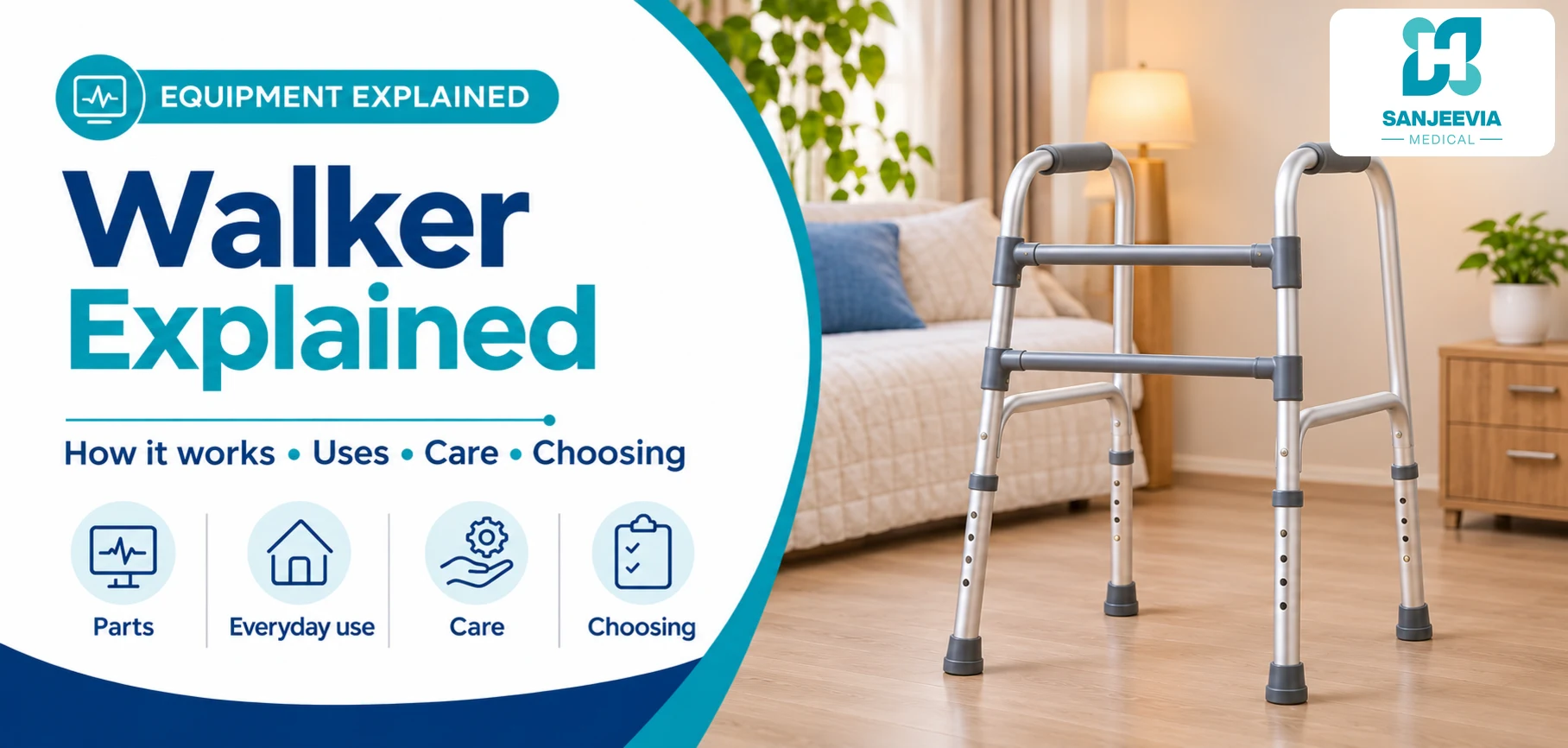
A walker can look simpler than a wheelchair, yet a frame set only a few centimetres too high or low can change balance, arm loading and the way a person steps.
Quick answer: A Zimmer frame is a four-point walking aid that provides more support than a stick. The correct type, height and walking sequence should be assessed and practised; a non-wheeled frame must be lifted and placed safely, so it is not suitable for every user.
Explore relevant equipment
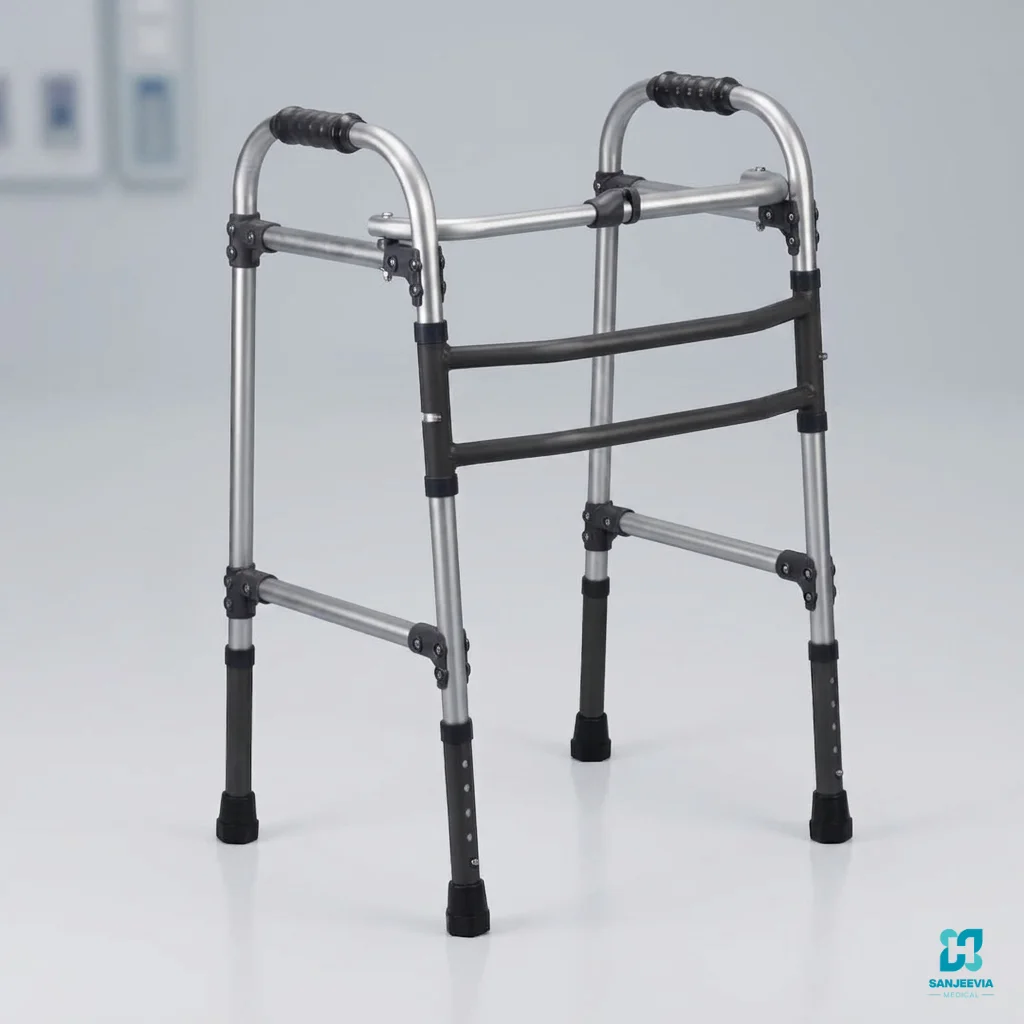
Walker / Zimmer Frame
Review the live listing for the confirmed model, dimensions, supplied parts and current rental or purchase options.
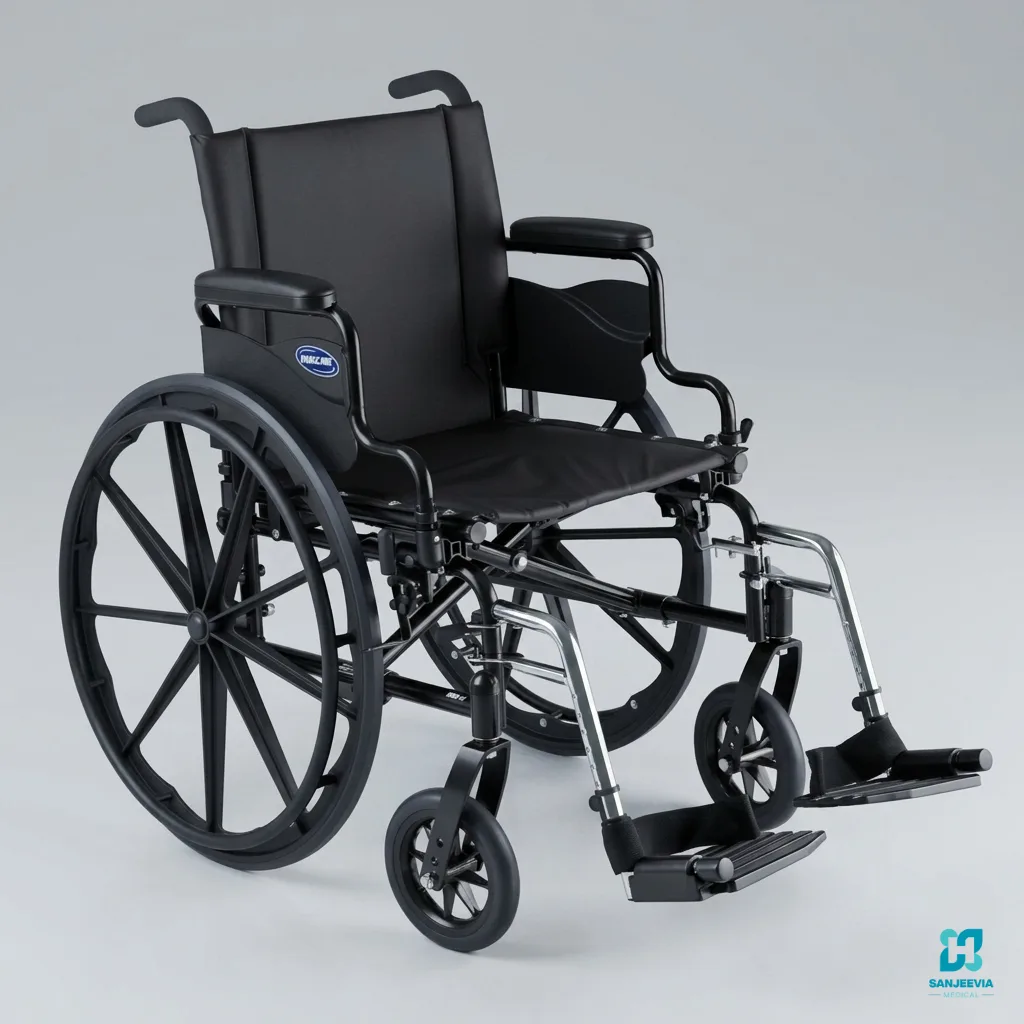
Standard Manual Wheelchair
Review the live listing for the confirmed model, dimensions, supplied parts and current rental or purchase options.
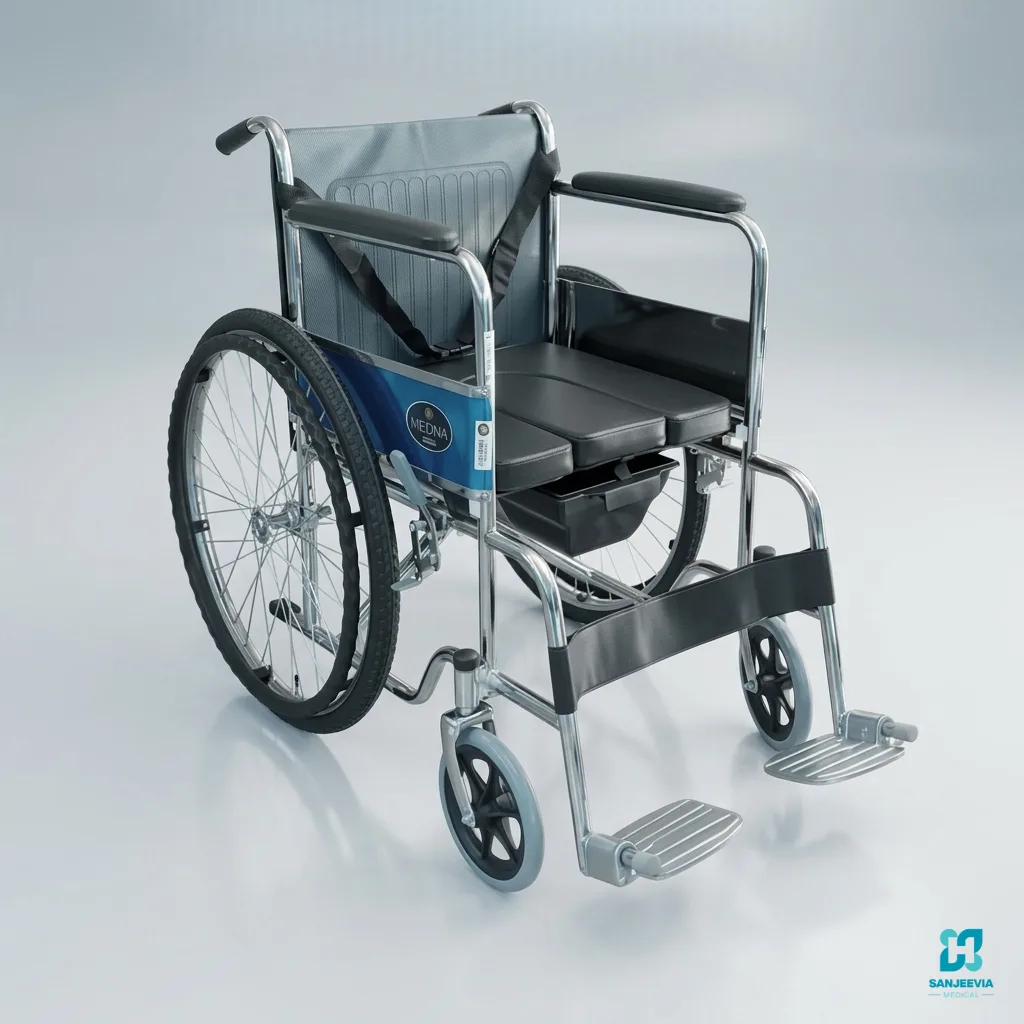
Manual Commode Wheelchair
Review the live listing for the confirmed model, dimensions, supplied parts and current rental or purchase options.
Confirm user fit, exact model, included accessories and delivery access before booking.
Exact-model demonstration and handover
Sanjeevia’s channel does not currently have a verified demonstration dedicated to the walker or Zimmer frame. Use the supplied model’s instructions and a practical handover for fitting, transfers, controls, brakes, folding or cleaning. The guide below is orientation, not a substitute for individual assessment and training.
Jump to equipment details
What kind of walker is this?
The Sanjeevia product is a height-adjustable, four-legged frame without wheels. Rubber ferrules contact the floor at all four corners. This design offers stable support on a flat indoor surface, but the user normally has to lift or advance the frame before stepping.
Other walking aids behave differently. Two-wheel frames roll at the front; rollators use three or four wheels and brakes; reciprocal frames allow alternate sides to move; sticks and crutches provide less surrounding support. The safest choice depends on balance, upper-limb strength, cognition, gait pattern, pain, home surfaces and the ability to operate brakes where present.
A walker does not prevent every fall and should not be used to pull oneself up from a chair unless the therapist has specifically trained that method.
Parts, adjustment and fit
| Part | Purpose | Check |
|---|---|---|
| Hand grips | Provide controlled upper-limb support. | Secure, dry and comfortable; no rotation or splits. |
| Frame and cross-brace | Carry load and maintain shape. | No cracks, bending, loose joints or incomplete locking. |
| Height-adjustment legs | Match handle height to the user. | All pins fully engaged at equal levels unless professionally prescribed otherwise. |
| Rubber ferrules | Improve traction and protect tube ends. | Present, not worn through, split or loose. |
| Folding mechanism | Allows storage on compatible models. | Fully opened and locked before weight is applied. |
Handle height is usually set during assessment with the user standing in appropriate footwear and posture. Do not copy another person’s walker setting or estimate from height alone. Reassessment is needed after surgery, pain, weakness or footwear changes.
Practical use around the home
- Clear loose rugs, cables, water and clutter. Use supportive footwear and adequate lighting.
- Check that the frame is fully open, stable and all ferrules contact the floor.
- Use the sequence taught by the physiotherapist—particularly after hip, knee, fracture or stroke rehabilitation. Do not invent a “weak leg first” rule without training.
- Move the frame only the demonstrated distance; stepping too far inside or leaving it too far ahead can reduce stability.
- Turn using small controlled steps rather than twisting while the feet remain fixed.
- For sitting, approach until the chair can be felt behind the legs, then use the trained transfer method. The walker itself may not be a safe object to pull on.
Stairs, escalators and uneven outdoor surfaces require separate assessment. A standard non-wheeled Zimmer frame is primarily an indoor aid.
Common mistakes and warning signs
- Using a frame that is too high, too low or wider than the clear walking route.
- Unequal adjustment pins, missing ferrules or an unlocked folding joint.
- Sliding a non-wheeled frame instead of lifting it as trained.
- Walking with the frame too far ahead, leaning heavily to one side or carrying items in both hands.
- Using furniture, the walker or towel rails to pull up during transfers.
- Continuing when dizziness, new weakness, pain, breathlessness or repeated near-falls develop.
A change in gait or confidence may mean the aid, technique or care plan needs review—not simply that the user must try harder.
Cleaning and routine inspection
Wipe the frame and grips with a material-compatible cleaner and dry it fully. Do not leave it wet where ferrules can slip. Inspect the frame, fasteners, locking mechanism, height pins and all four ferrules before regular use and after any fall or impact.
Replace worn ferrules as a complete compatible set when advised; uneven wear can make the frame rock. Do not tape over cracks, drill new height holes or improvise wheels. Remove the frame from use if it is bent or unstable.
Label a rented frame so it is not confused with another patient’s differently adjusted aid.
Need help matching the equipment?
Share the user’s measurements, mobility level, transfer method and delivery access. Sanjeevia can help confirm the model, fit, accessories and current Delhi NCR options.
Questions before renting or buying in Delhi NCR
- Has a physiotherapist assessed the walker type and walking sequence?
- Can the user lift a non-wheeled frame safely?
- Does the adjustment range suit the user in normal footwear?
- Will the frame pass the narrowest doorway and fit beside the bed and toilet?
- Are all ferrules, pins and folding locks intact?
- Is a wheeled frame, rollator, wheelchair or caregiver assistance more suitable for longer distances?
- What is included in delivery, setup and return?
See the wheelchair explanation when walking is unsafe or too tiring, and the toileting-aid comparison for bathroom planning.
Frequently asked questions
Is a Zimmer frame safer than a rollator?
Not universally. A non-wheeled frame is stable but must be lifted; a rollator moves more easily but requires brake control. Assessment decides.
Can family members adjust the height themselves?
They should use the setting demonstrated for that user and confirm every pin is secure. New adjustment should follow professional advice.
Can it be used on stairs?
Not without specific equipment and training. A standard frame should not be improvised on stairs.
What should be replaced most often?
Ferrules and grips wear, but any damaged structural or locking part also needs prompt service.
Explore your equipment options
Walker / Zimmer Frame
Review the live listing for the confirmed model, dimensions, supplied parts and current rental or purchase options.
Standard Manual Wheelchair
Review the live listing for the confirmed model, dimensions, supplied parts and current rental or purchase options.
Manual Commode Wheelchair
Review the live listing for the confirmed model, dimensions, supplied parts and current rental or purchase options.
Confirm user fit, exact model, included accessories and delivery access before booking.
Sources and useful reading
- NHS: walking aids, wheelchairs and mobility scooters.
- ALIMCO: Foldable Walker (Aluminium) — official Indian product reference.
- WHO wheelchair provision guidelines — assessment, fitting, training and follow-up principles for mobility provision.
- Sanjeevia Walker / Zimmer Frame listing.
- NHSRC: Materiovigilance Programme of India.
Prepared by Sanjeevia’s editorial team. Updated 9 November 2026. This guide explains equipment; suitability, transfers, posture and pressure-care decisions should follow individual assessment by the responsible professional.
