

A hospital appointment can involve more than the consultation: getting out of the home, reaching the correct building, waiting and returning afterwards. If your loved one needs assessed mobility support, wheelchair rental for hospital visits is best planned around that complete journey. A chair waiting at reception may not address the route from your own front door.
This guide is for planned visits in Delhi NCR where wheelchair use and the travel arrangement are appropriate. It covers seven booking checks for the family and equipment provider. It does not determine fitness to travel, provide a transfer technique or replace an ambulance or other medically necessary transport arrangement.
Quick answer: what should we confirm before booking?
Confirm the person’s wheelchair and assistance needs, then check seat fit, user-weight capacity, home and hospital access, folded dimensions and vehicle storage. Allow for the actual appointment and waiting time, and complete the equipment handover before leaving. Ask the hospital about its assistance arrangements rather than assuming a chair or escort will be available.
Choose by assessed fit and the supplied model’s specifications, not by a name such as standard, heavy-duty or jumbo. Availability and rental arrangements are confirmed for the enquiry.

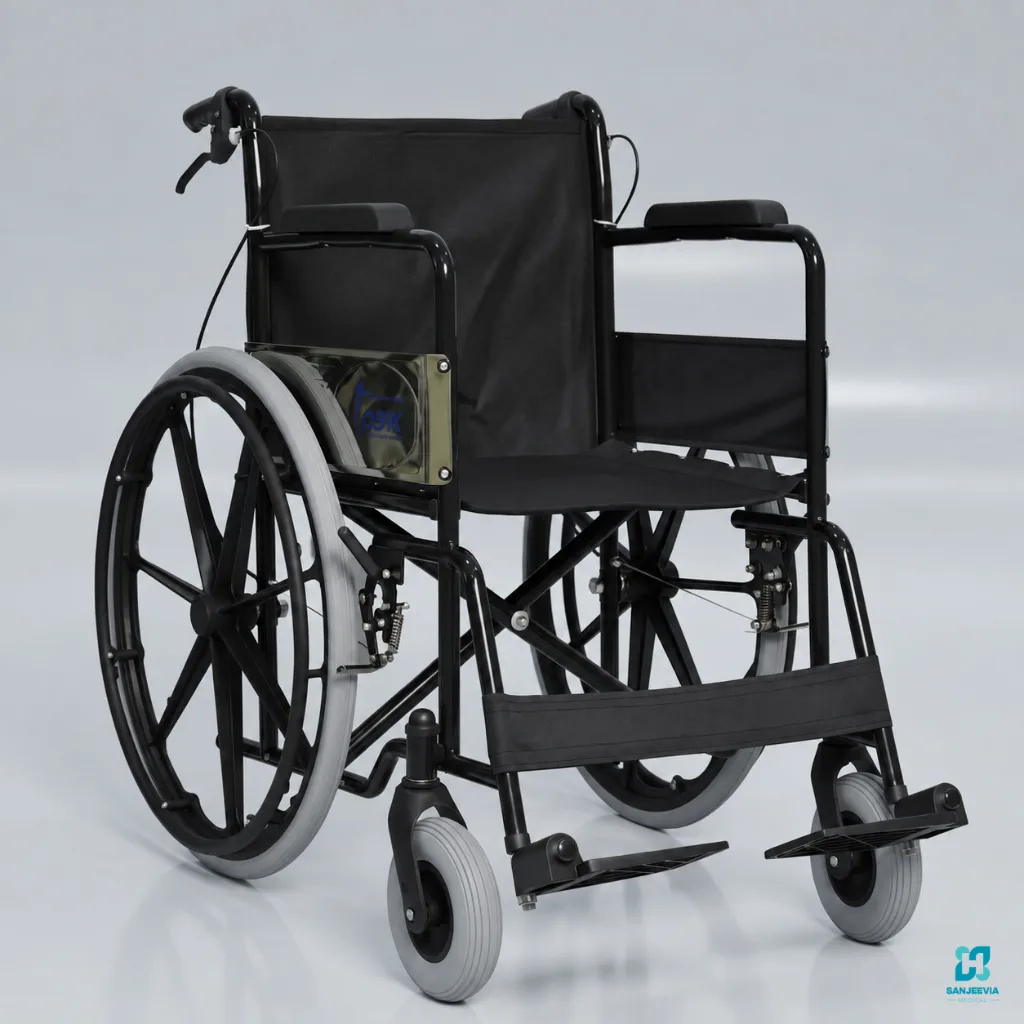
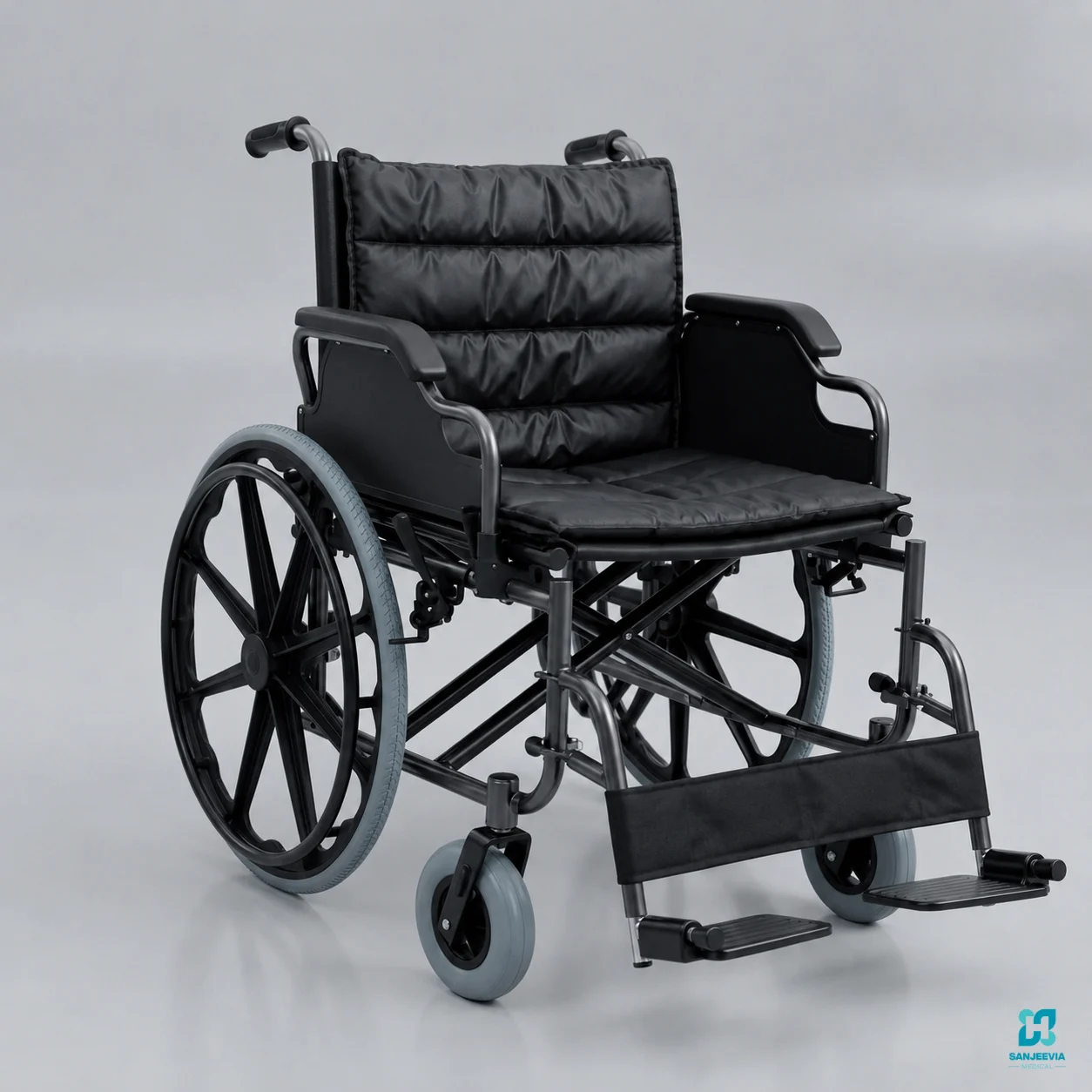
Wheelchair rental for hospital visits: 7 booking checks
1. What support is needed for the whole appointment?
Discuss the planned visit with the treating team if there are mobility restrictions, positioning requirements or concerns about travelling. Explain the route and the expected time away from home. Confirm whether the person can sit in the proposed chair and vehicle arrangement, and what assistance is needed.
Separate wheelchair use from transfers and transport. Being able to sit in a wheelchair does not prove someone can enter a car with the available help. The WHO wheelchair provision guidelines emphasise individual assessment, fitting, training and follow-up. Use a product enquiry to communicate an assessed requirement, not to make that assessment.
2. Does the exact wheelchair fit the person?
Confirm seat width and depth, maximum user weight, foot support, armrests and the required sitting support. Mention a cast, prescribed leg position or any special seating requirement to the assessor and provider. A standard chair does not automatically include elevating leg rests, a cushion or other accessories.
The Standard Manual Wheelchair currently lists an 18-inch seat and maximum user weight of 100 kg. Confirm the supplied model before booking. If that configuration is unsuitable, compare the heavy-duty wheelchair and jumbo wheelchair with their exact dimensions and limits. A bigger chair is not automatically a better fit. Our heavy-duty versus jumbo guide explains the questions to ask.
3. Who will assist, and can they manage the chair?
Name the person helping with the visit. Confirm whether the wheelchair will be self-propelled or pushed by an attendant, and whether additional help is required. Check that the intended helper can manage the supplied chair’s controls and weight for the tasks expected of them. Do not assume a reception worker can accompany the person throughout the visit.
The NHS wheelchair-selection overview also highlights whether the person will propel the chair or be pushed, and where it will be used. Its UK service-access arrangements should not be assumed to apply in India.
Ask a qualified professional to explain any needed transfer assistance. This is different from an equipment demonstration. Do not carry an occupied wheelchair on stairs or improvise a transfer because an appointment is approaching. Our transfer-assessment questions help families prepare that separate discussion.
4. Can the chair reach the vehicle and the correct hospital department?
Check both ends of the journey. At home, include the doorway, corridor, lift and exit route. At the hospital, confirm the building entrance, accessible route, lift access where needed and where the appointment is actually held. A main entrance and a particular department may have different access arrangements.
Call the hospital to ask whether a wheelchair or porter service is available, how it is requested and where the handover happens. Do not assume a service at one hospital applies elsewhere. Use the wheelchair size and access guide to prepare measurements. If stairs are involved at home, our no-lift access guide explains why the route needs planning before delivery.
5. Will the unoccupied folded chair fit in the chosen vehicle?
Ask for the supplied chair’s folded length, width, height and weight. Compare those measurements with the storage opening and space in the actual vehicle. A chair can be described as folding and still be too large or difficult for the planned helper to load. Boot capacity in litres does not answer every clearance question.
Confirm which components can be removed according to the manufacturer’s instructions, who will load the empty chair and how it will be secured as luggage. This check concerns storing an unoccupied chair. Do not assume a rental wheelchair is approved as a passenger seat in a moving vehicle. If the person needs to remain in a wheelchair during travel, discuss an appropriate accessible-transport arrangement and its requirements with the relevant professionals.
6. Does the rental arrangement cover the real appointment window?
Allow for arriving early, waiting, tests, movement between departments and the journey home. Confirm the equipment receipt and return arrangements without assuming a short clinic appointment means a short total outing. Ask what happens if the appointment is rescheduled or takes longer than expected.
For Delhi NCR, share the location, appointment date, equipment requirement and planned use with Sanjeevia. Availability, serviceability and rental duration are confirmed for the enquiry. The rental agreement checklist helps clarify responsibilities and support. This article does not promise a same-day booking or a particular minimum rental period.
7. Has the handover happened before the visit?
Inspect the chair and accessories against the confirmed requirement. Ask for a demonstration of brakes, folding parts, footrests and any adjustment the intended user or helper is expected to make. Keep the manufacturer’s instructions and support contact available. Resolve a missing accessory, unsuitable fit or faulty component before setting out.
Check that everyone knows which parts are meant to lock or move. Do not repair a brake or add an unrelated cushion, belt or attachment to make an unsuitable setup work. For an equipment concern, contact the provider. For a health concern, use the treating team’s advice or urgent medical help as appropriate; a rental enquiry is not an emergency-care channel.
A one-page appointment plan for the family
| Write down | Confirm before the day |
|---|---|
| Person and equipment | Assessed need, confirmed model, fit and accessories |
| Helper | Who assists with the chair and any separately assessed transfers |
| Home route | Doorway, lift, entrance and vehicle access |
| Hospital route | Department, entrance and assistance arrangements |
| Empty-chair storage | Folded dimensions, weight and secure storage |
| Schedule | Receipt, appointment window and return arrangement |
| Contacts | Hospital, clinical team and equipment support separately |
For repeat appointments, keep this record and update what changes: the person’s support needs, the department, the vehicle or the accompanying helper. Do not assume the last successful visit establishes suitability for every future trip. Report any change affecting seating or mobility to the assessing professional.
Standard, heavy-duty or jumbo: what determines the choice?
Start with the person’s fit and the exact model’s specification. A standard chair may suit some assessed requirements, while a heavy-duty or jumbo configuration may be considered when a different capacity or seating area is needed. Confirm the total chair width and folded size as well as the seat. Those details affect doorways, turns and storage.
Use the standard, heavy-duty and jumbo product pages to prepare questions. The names alone do not establish clinical suitability. If a specialised seating or positioning requirement cannot be met, ask the care team and provider about an appropriate alternative instead of accepting the closest available chair.
Frequently asked questions
Should we rely on the hospital’s wheelchair?
Ask the hospital what it provides and how to request it. Consider the journey from your home too; a chair inside the hospital does not cover every part of that route.
Does a folding wheelchair fit in every car?
No. Confirm the exact folded dimensions and weight against the storage opening and space in the selected vehicle. The planned helper must also be able to manage the empty chair.
Can someone remain seated in the rental wheelchair during car travel?
Do not assume that is permitted. Passenger travel while seated in a wheelchair needs an appropriate vehicle and equipment arrangement confirmed by the relevant professionals.
Can Sanjeevia arrange a wheelchair for a planned appointment?
Share the assessed requirement, location and date through the equipment enquiry page. The team will confirm available options and rental arrangements; this article does not advertise patient transport or an appointment escort service.
Can we book the same chair again for another appointment?
Confirm that the person’s needs and the planned route remain suitable, then ask about availability. Reuse the written specification rather than relying only on the previous product name.
Source links checked on 6 October 2026. This guide concerns planned wheelchair-equipment enquiries, not fitness-to-travel or transfer assessment.
Next Read
Before sending the enquiry, read Wheelchair Size Guide: Doorways, Seat Width and Fitting Questions to prepare the person and access measurements.