
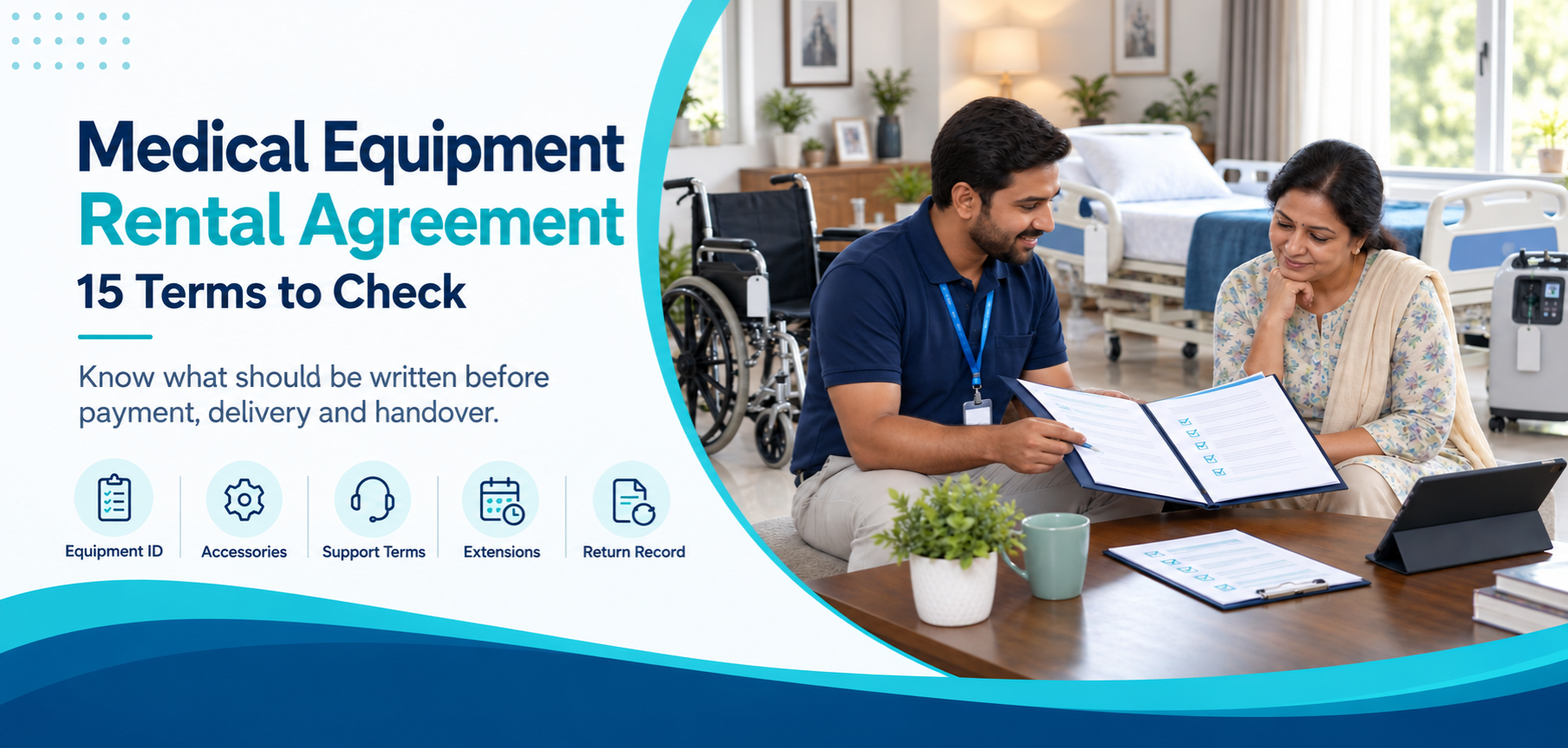
A medical equipment rental agreement should tell the family exactly what is being supplied, for how long, in what condition, with which accessories, and what happens if the equipment needs service, exchange, extension or return. Clear written terms prevent avoidable confusion at a time when the family may already be managing a hospital discharge or a change in care.
Before paying, compare the agreement with the product and service that were actually discussed. The following 15 terms apply to many home medical equipment rentals, from hospital beds and wheelchairs to prescribed respiratory devices.
Quick answer: what should a rental agreement include?
At minimum, it should identify both parties; the equipment, model, serial number and accessories; the rental start and duration; all agreed charges and payment timing; the deposit and refund process; delivery, setup and training responsibilities; maintenance and breakdown support; damage rules; extension, exchange and return terms; and the complaint contact. Keep the signed agreement, invoice, payment record and return acknowledgement together.
1. The provider and customer details
The agreement should show the provider’s legal or trading name, contact details and the customer’s name and address. If the equipment will be used at a different address, record that location too. Identify the person authorised to request an extension, exchange or pickup so instructions from different relatives do not conflict.
2. The exact equipment description
“Hospital bed” or “oxygen machine” is not precise enough. The document should state the equipment type, brand where relevant, model, key function or capacity, and whether the unit is new or previously used when that distinction was part of the offer. For prescribed equipment, compare the description with the clinician’s specification before accepting delivery.
3. Serial number or another unique identifier
A serial or asset number connects the agreement to the physical unit in the home. Check that the number on the document matches the label on the equipment. Photograph the label at handover without including the patient in the image. This record is especially useful if a unit is exchanged later.
4. Included accessories and consumables
List every supplied part: handset, mattress, power cable, battery, humidifier bottle, wheelchair footrests, charger, mask or other accessory as applicable. The agreement should also distinguish reusable rental components from consumables that the customer must obtain or replace. Count and inspect accessories during handover.
5. Condition at the start of the rental
Record visible scratches, dents, stains, missing covers or other existing marks before accepting the unit. Use a written handover note and time-stamped photographs. For reusable equipment, ask what cleaning or reprocessing was completed and what can be safely cleaned by the user. Our rental hygiene questions can be used during inspection.
6. Rental start, duration and billing cycle
Check the exact start date, minimum rental period if any, renewal method and the point at which another billing cycle begins. The agreement should explain whether the rental ends when the family requests pickup, when the provider collects the unit, or on another defined event. Avoid relying on an informal phrase such as “one month” when the start and end dates are not recorded.
7. Charges, taxes and payment timing
The agreement or invoice should state the charges that apply to the chosen equipment and service, applicable taxes, when payment is due and which services are included. If a charge can arise later, the triggering condition and method of calculation should be explained in writing. Ask for a receipt or invoice for every payment.
8. Security deposit and refund process
If a deposit applies, check the amount in the actual quotation, the accepted payment method, when it may be deducted, how the return inspection is recorded, and the refund process and timeline. The customer should receive written acknowledgement when the provider collects the equipment and accessories.
9. Delivery, placement and installation responsibilities
Clarify what the provider will do at the home and what the family must prepare in advance. For a bed, this may include access, assembly and positioning in the prepared room. For powered equipment, it may include an operational check at an appropriate power point. Building entry, lift access and the authorised receiver should be confirmed before delivery. Use the room-preparation checklist to avoid access problems.
10. Demonstration, instructions and user responsibilities
The agreement should state what demonstration or operating information will be provided. The family should understand normal controls, brakes, adjustments, routine visual checks, cleaning permitted for the user and the meaning of basic indicators. Therapy settings and clinical use must follow the treating team’s direction. Ask for the model-specific manual or instructions where available.
11. Maintenance and scheduled service
Identify which maintenance tasks belong to the provider and which simple care tasks belong to the customer. The agreement should give a contact for service and explain access requirements if a technician needs to visit. The customer should not open a casing, modify the unit or arrange an unauthorised repair.
12. Breakdown, replacement and escalation process
Ask which support channel to use, the information needed to report a fault, available support hours, and how repair or replacement decisions are made. A commercial response process is separate from the patient’s clinical contingency plan. If interruption could affect prescribed therapy or immediate safety, the family should follow the treating team’s backup instructions and seek appropriate medical help.
13. Loss, damage, misuse and normal wear
The agreement should distinguish reasonable wear from chargeable damage and explain how any deduction is assessed. Look for rules about moving the equipment to another address, using unapproved accessories, exposure to water or smoke, tampering, overloading and loss of parts. Vague wording should be clarified before signing.
14. Extension and exchange terms
Recovery needs can change. Check how much notice is required, how an extension is confirmed, what happens if the requested model is unavailable, and whether a clinician’s revised specification is needed for an exchange. Do not assume that keeping the equipment automatically extends the agreement on the same terms. See our guide to extensions, exchanges and returns.
15. Return, inspection, complaint and dispute process
The document should explain how pickup is requested, who must be present, how the final condition and accessories are recorded, and when a return acknowledgement is issued. It should also name the provider’s complaint or escalation contact.
Indian consumers can review the Department of Consumer Affairs’ Consumer Protection information. The government’s National Consumer Helpline consumer-rights page is another authoritative starting point for understanding consumer rights and available grievance channels.
What to check at the door before accepting the equipment
- Match the product and model to the written order.
- Match the serial or asset number to the agreement.
- Count the listed accessories.
- Photograph and record the starting condition.
- Confirm that assembly and basic operation have been checked.
- Receive the demonstration and ask the caregiver to repeat key steps.
- Save the provider’s support and escalation contact.
- Collect the agreement, invoice and payment acknowledgement.
Product pages to review before confirming a model
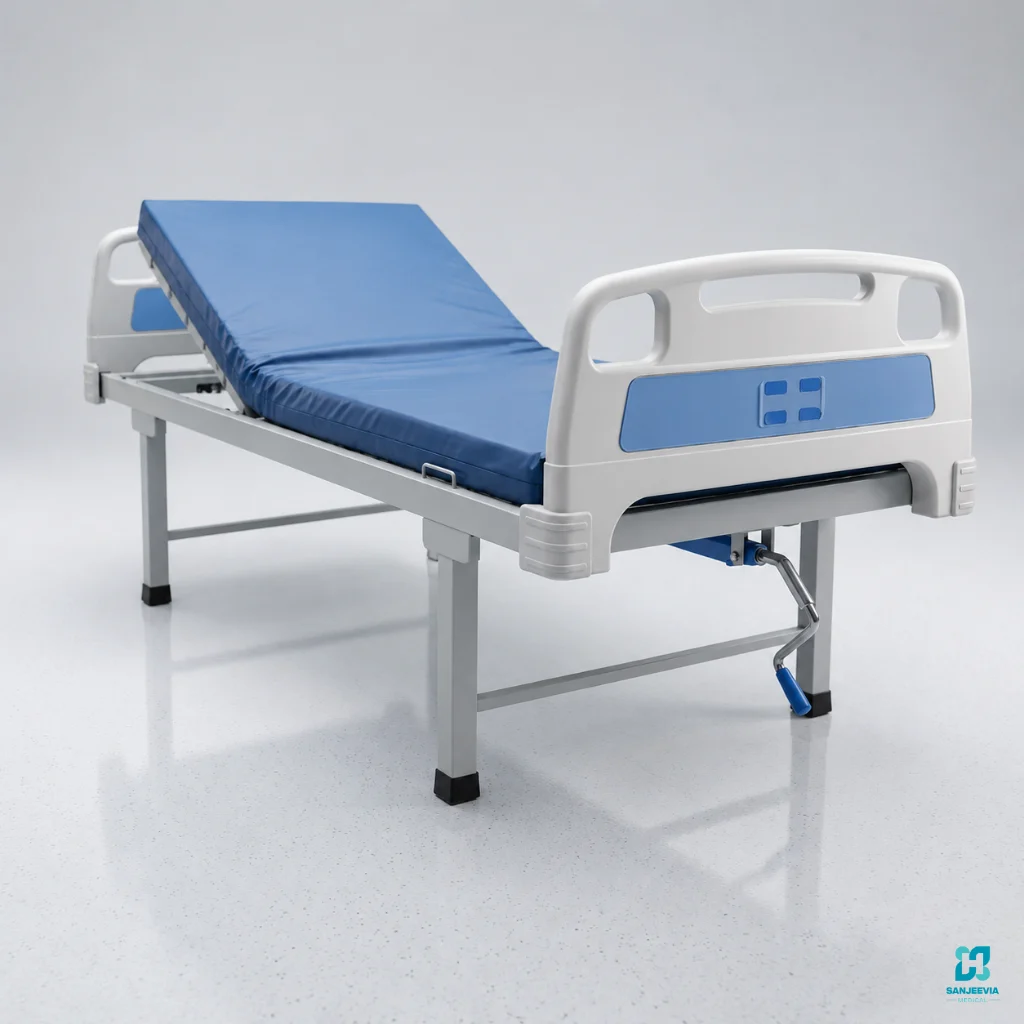
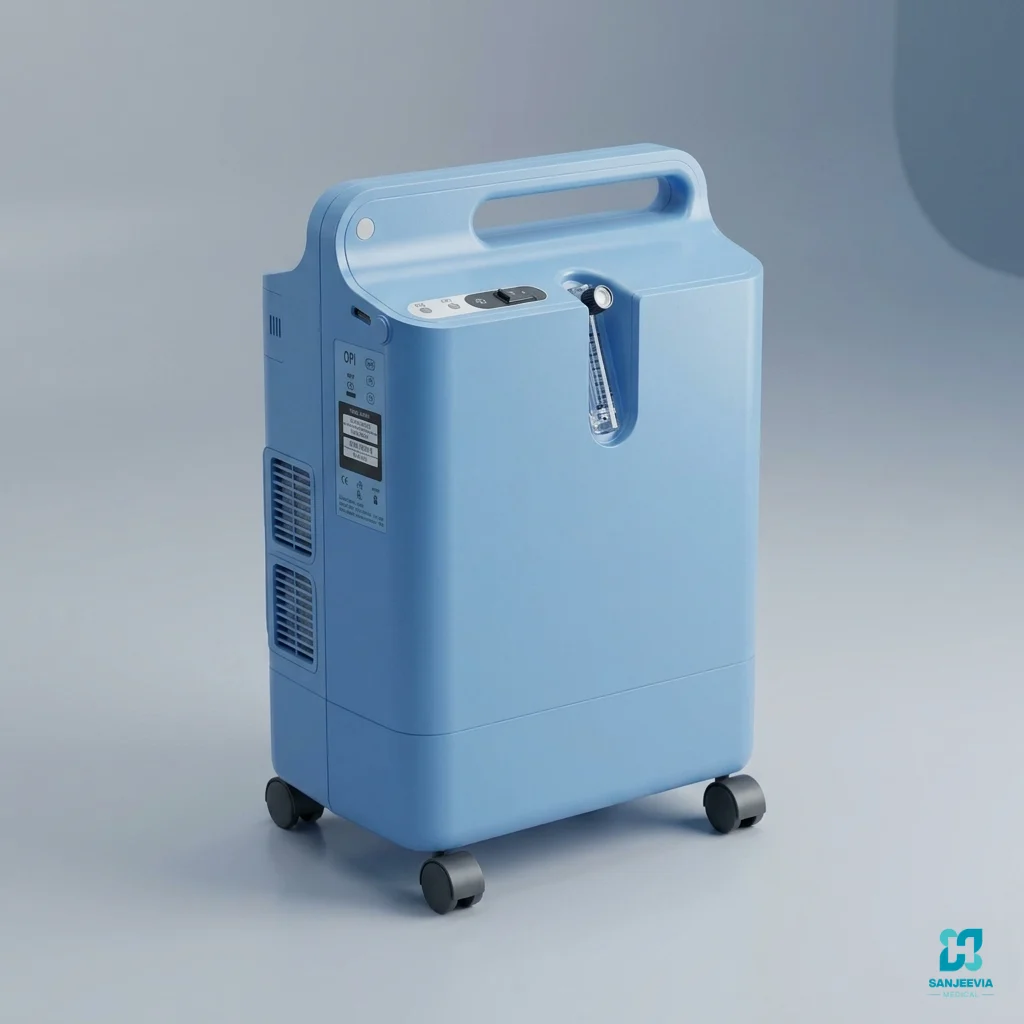
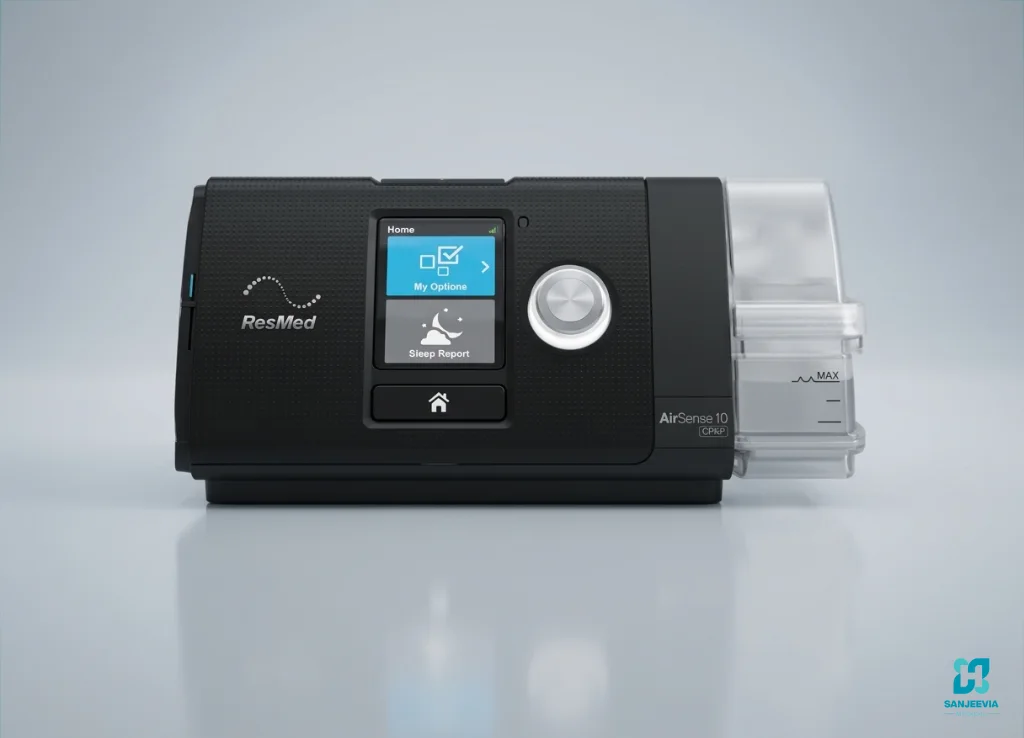
Use product pages to compare functions and identify the exact model you want written into the order. Final selection should follow the clinical specification where applicable.

How to use this checklist with Sanjeevia
When discussing a rental with Sanjeevia, share the requested model or clinical specification, the delivery address and the intended rental period. Compare the final written order with the delivered unit and keep the handover record. Families arranging several items can also use the guide to coordinating multiple equipment rentals at home.
Frequently asked questions
Should the serial number appear on a medical equipment rental agreement?
It should appear on the agreement or handover record whenever the unit has a serial or asset identifier. This links the paperwork to the specific item delivered.
What proof should I keep after returning rented equipment?
Keep a dated pickup or return acknowledgement showing the equipment, accessories and recorded condition, along with any final payment or refund record.
Can a rental agreement be extended by phone?
You can ask by phone, but obtain written confirmation of the revised period and applicable terms. This gives both parties the same record.
Who decides the settings on rented medical equipment?
Clinical or therapy settings must follow the treating clinician’s prescription or instructions. A rental agreement governs the equipment and service; it does not replace medical direction.
Legal note: This checklist provides general consumer information and is not legal advice. Contract terms and rights depend on the facts and applicable law. For a dispute, use official consumer resources or obtain qualified legal advice.