
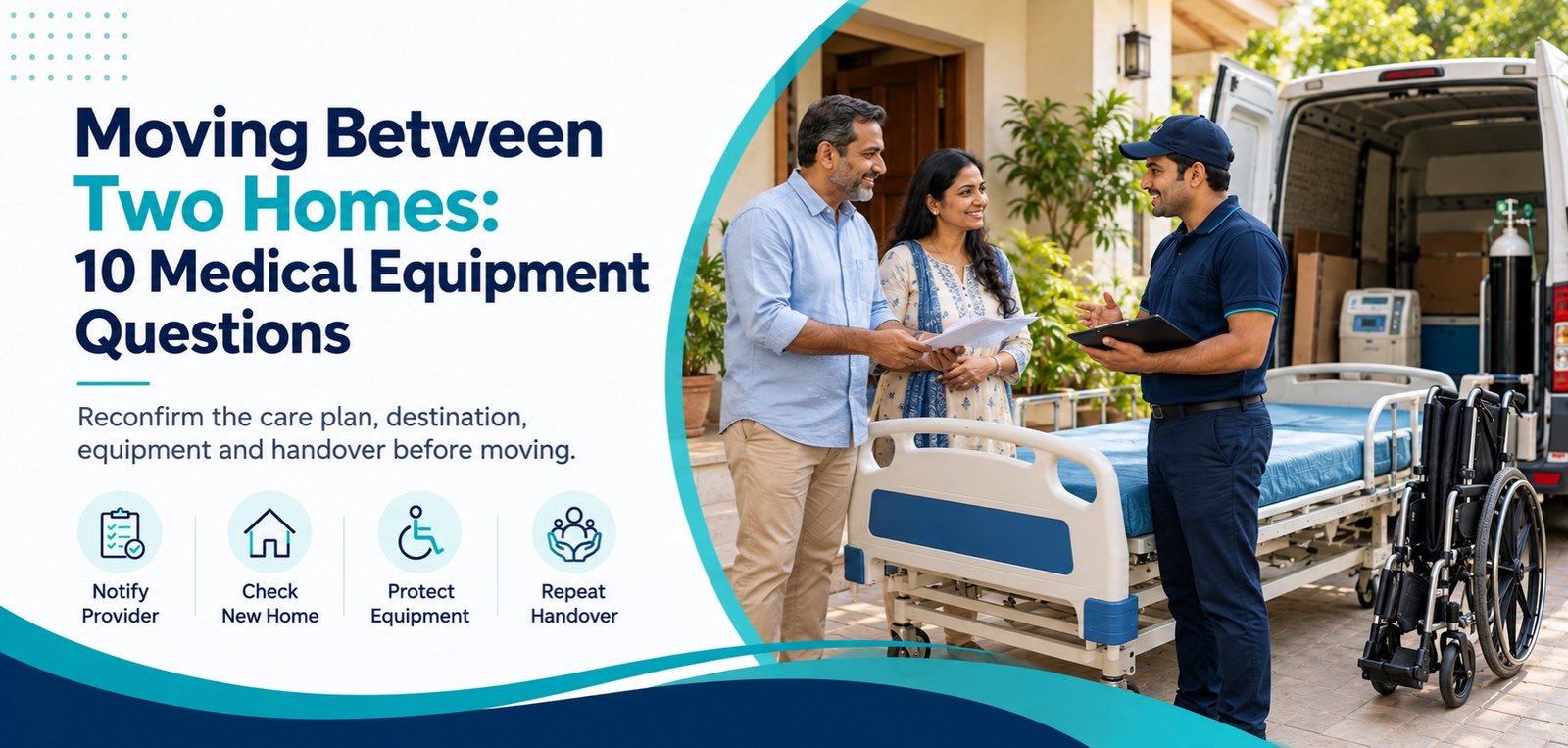
A patient may recover at an adult child’s home for a few weeks and then return to the family residence. The care plan may stay similar, but the second address can have different stairs, doorways, electrical points, room dimensions and caregivers. Moving rented medical equipment between homes therefore needs more than arranging a vehicle.
Quick answer
Before moving rented medical equipment, tell the provider, reconfirm the patient’s current clinical requirement and assess the second home separately. Obtain instructions for disconnection, handling and setup, protect the equipment and accessories, and repeat the handover with the caregiver at the new address. Do not move, dismantle or restart a device through guesswork.
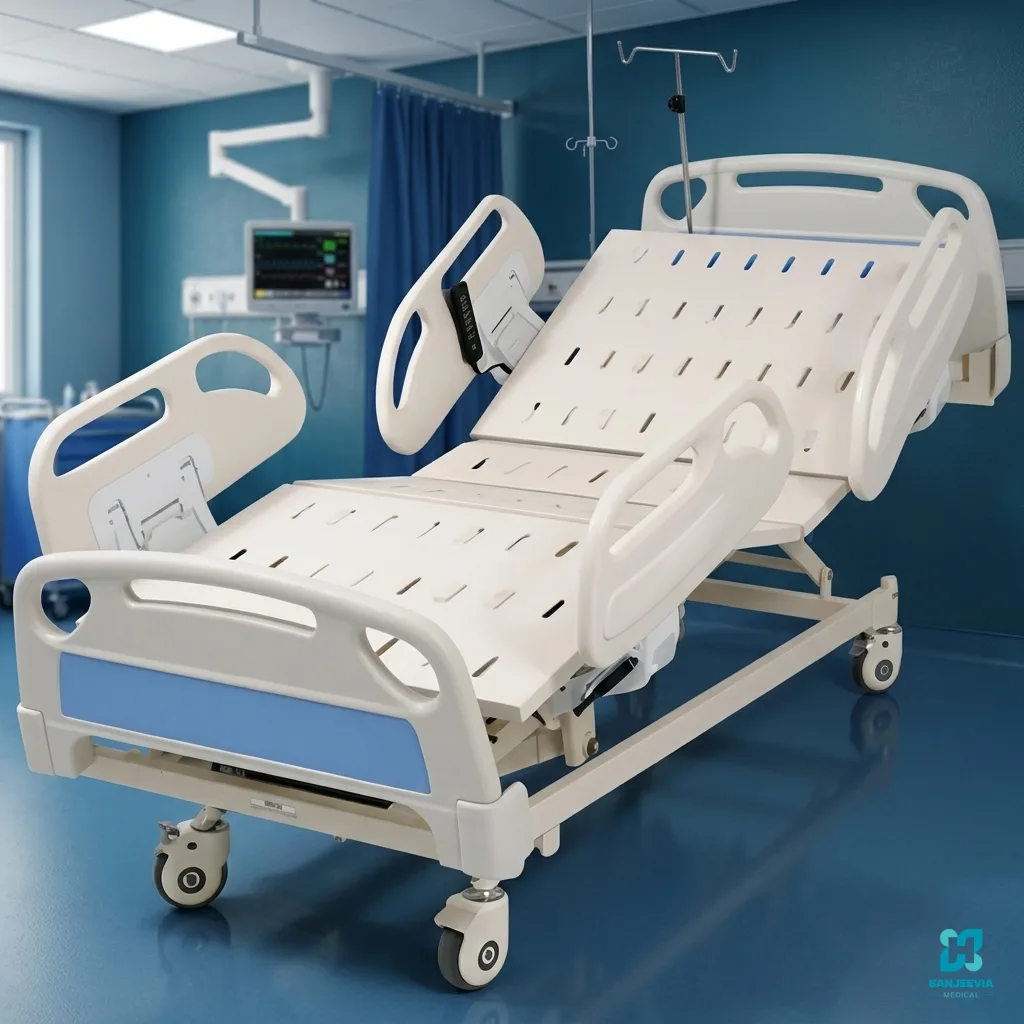
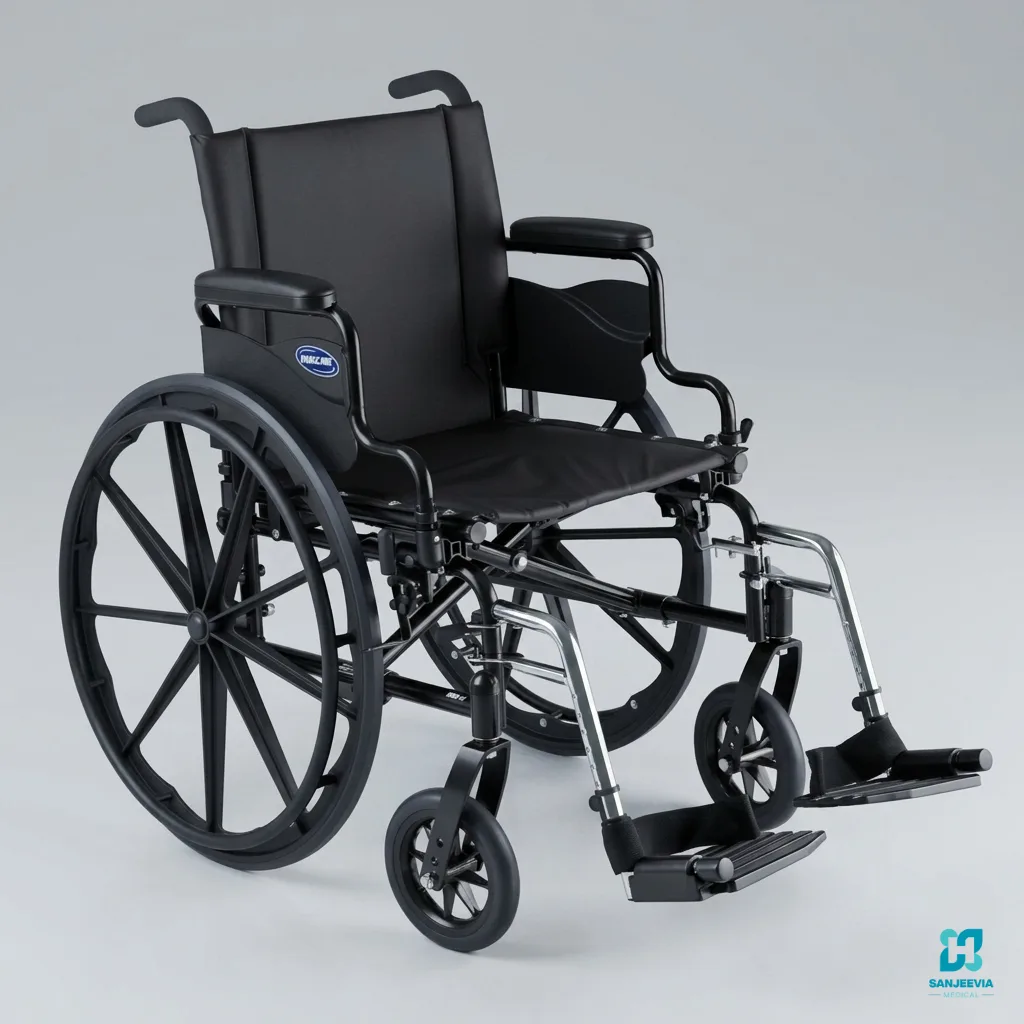
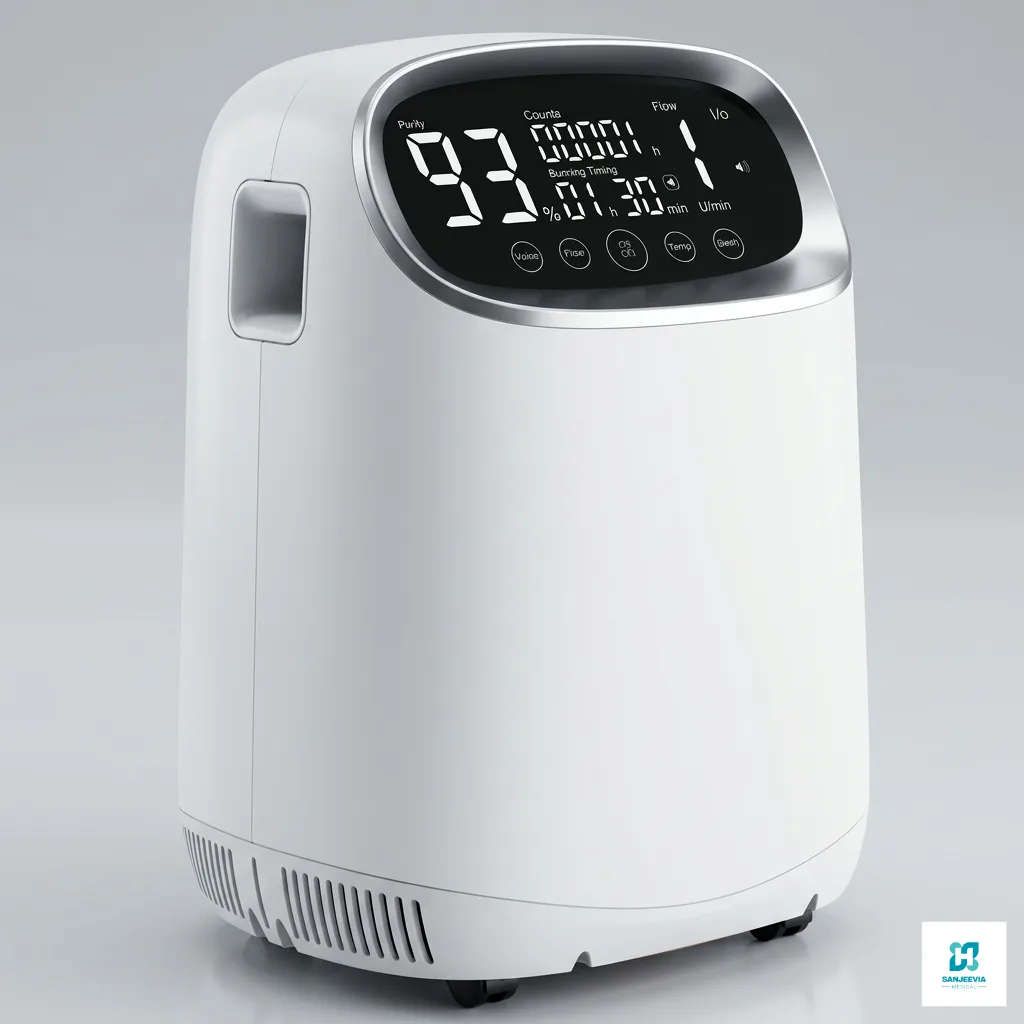
Large, powered and prescribed equipment requires different handling. Confirm the actual model, both addresses and the patient’s updated care plan before any move.
Why the second home needs a fresh check
A device that worked safely at one address may not fit or operate the same way at another. The FDA home medical-device checklist specifically asks users to check stairs, doorways, wiring and whether a device can be used safely at another location.
Treat the move as a new setup. Keep the patient’s clinical needs, rental agreement and destination assessment together so the family does not solve one problem by creating another.
Ten questions before moving the patient and equipment
1. Has the clinical requirement changed?
Ask whether the patient still needs the same functions, settings, positioning or mobility support. A change in condition requires clinical review before the equipment plan is copied to another home.
2. Has the provider approved the relocation?
Check the rental terms and share the second address. Ask who is authorised to disconnect, fold, lift, move and reinstall the actual unit. Do not dismantle equipment because it appears simple.
3. Who is coordinating the move?
Name one family contact for the provider, treating team and both households. Record the planned date, addresses, equipment list and people responsible for receiving the patient and each device.
4. Can the equipment reach the new room?
Measure the entrance, hallway, lift, staircase, turns and final room. Use operating and movement dimensions, including rails or parts that cannot be removed. Review the existing guide for a patient who cannot use stairs.
5. Is the second room suitable?
Check space around the equipment, ventilation, lighting, dry storage and a clear caregiver path. Our room-preparation guide provides a practical checklist for a new location.
6. Are power and backup arrangements equivalent?
Confirm compatible outlets and the approved backup plan. FDA guidance on unique risks in the home highlights lighting, noise, dust, moisture, power and fire hazards. Do not assume an extension board or household backup is suitable for a medical device.
7. How will the unit and accessories be protected?
Follow the provider’s instructions for switches, batteries, detachable parts and protective packaging. Keep accessories labelled with the main unit. Prevent impact, moisture, heat and loose movement.
8. Are consumables and documents moving too?
Carry the instructions, handover record, contacts and compatible patient supplies as directed. Keep sealed items protected and list quantities. Use the guide to medical equipment consumables and replacement items.
9. Who will repeat the setup and handover?
The regular caregiver at the second home should understand normal operation, permitted checks, alarms, cleaning and escalation. A family member who watched the first demonstration should not assume everyone else has the same knowledge.
10. What happens if the move is delayed?
Tell the provider when the date changes and reconfirm the booking and support arrangement. The guide to a changed hospital discharge date uses the same principle: update the clinical requirement, destination and written record together.
Two-home planning record
| Record for each home | Confirm |
|---|---|
| Access | Doorways, lift or stairs, turns and final room |
| Utilities | Approved power, lighting, ventilation and backup |
| People | Coordinator, recipient, regular caregiver and clinical contact |
| Equipment | Model, accessories, instructions and support route |
| Patient plan | Current requirement, settings and escalation instructions |
Frequently asked questions
Can we move rented medical equipment ourselves?
Do not assume so. Check the rental terms and contact the provider before disconnecting, folding, lifting or relocating any rented device.
Does the patient need a new assessment at the second home?
The treating team should confirm whether the care plan remains suitable. The second home also needs its own space, access, power and caregiver checks.
Can the same caregiver instructions be used at both homes?
Only if the equipment and clinical plan are unchanged. Every regular caregiver should understand the actual model, permitted actions, alarms and escalation plan.
What if the equipment does not fit through the second home’s door?
Pause the move and share accurate measurements with the provider. Do not dismantle rented equipment or attempt unsafe lifting to force access.
Should consumables move with the main device?
Confirm which supplies are required, how they should be protected and whether fresh patient-specific items are needed. Keep model and size details with the supply record.
Relocation requirements vary by device, agreement, addresses and patient condition. Confirm the plan before disconnecting or moving equipment.
Next Read
For a move to a family member’s home, continue with Temporary Recovery at a Relative’s Home: 10 Medical Equipment Questions Before Delivery.
