
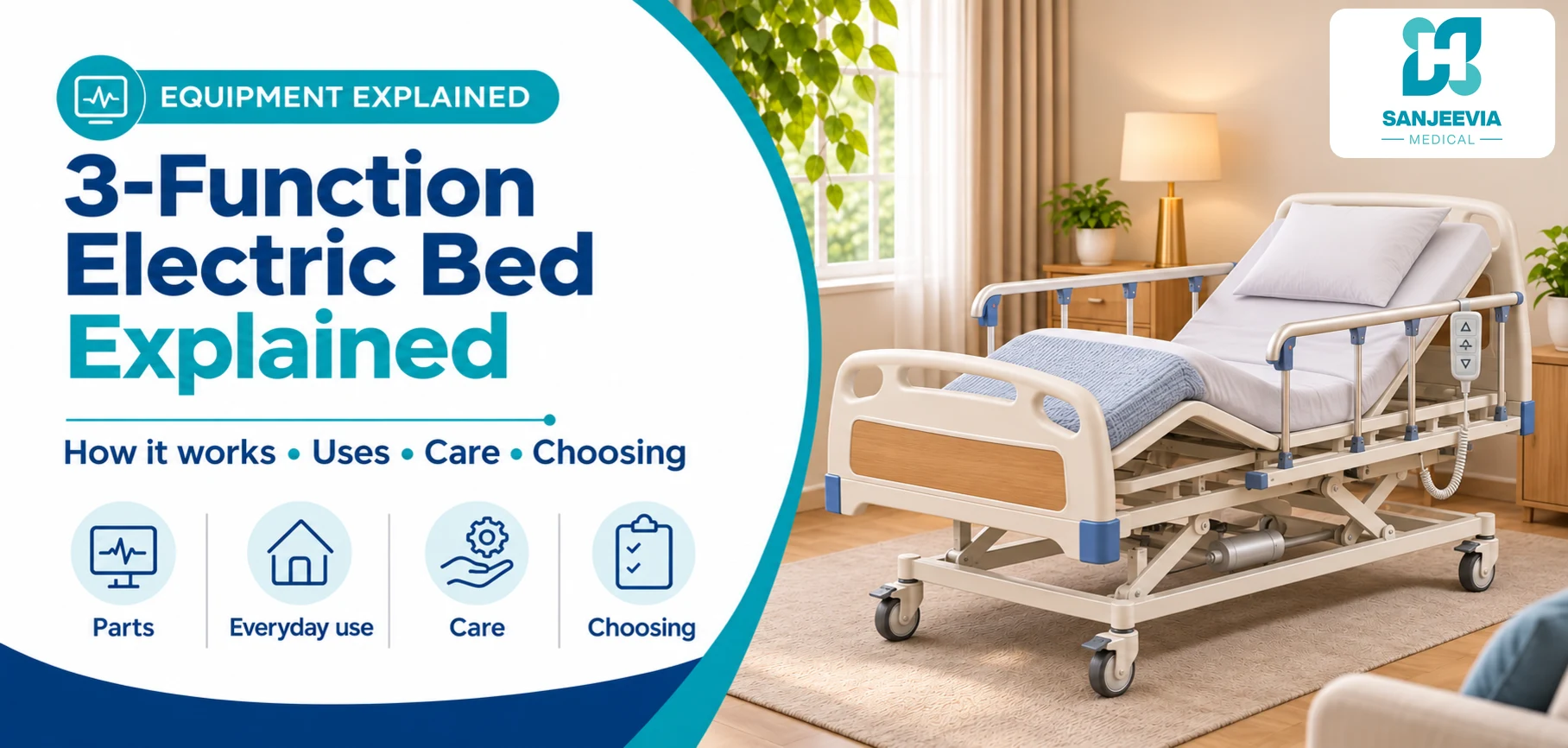
The third function is easy to overlook in a photograph: the entire mattress platform moves up and down. That can matter more to a caregiver than another button on the remote. A 3-function electric bed typically powers the backrest, knee section and whole-bed height. Sanjeevia lists ABS-panel and stainless-steel-railing versions with these movements. Height adjustment supports a planned care or transfer routine; it is not a patient hoist. This guide explains what changes, what stays the same and what to check before bringing one home.
Explore relevant equipment
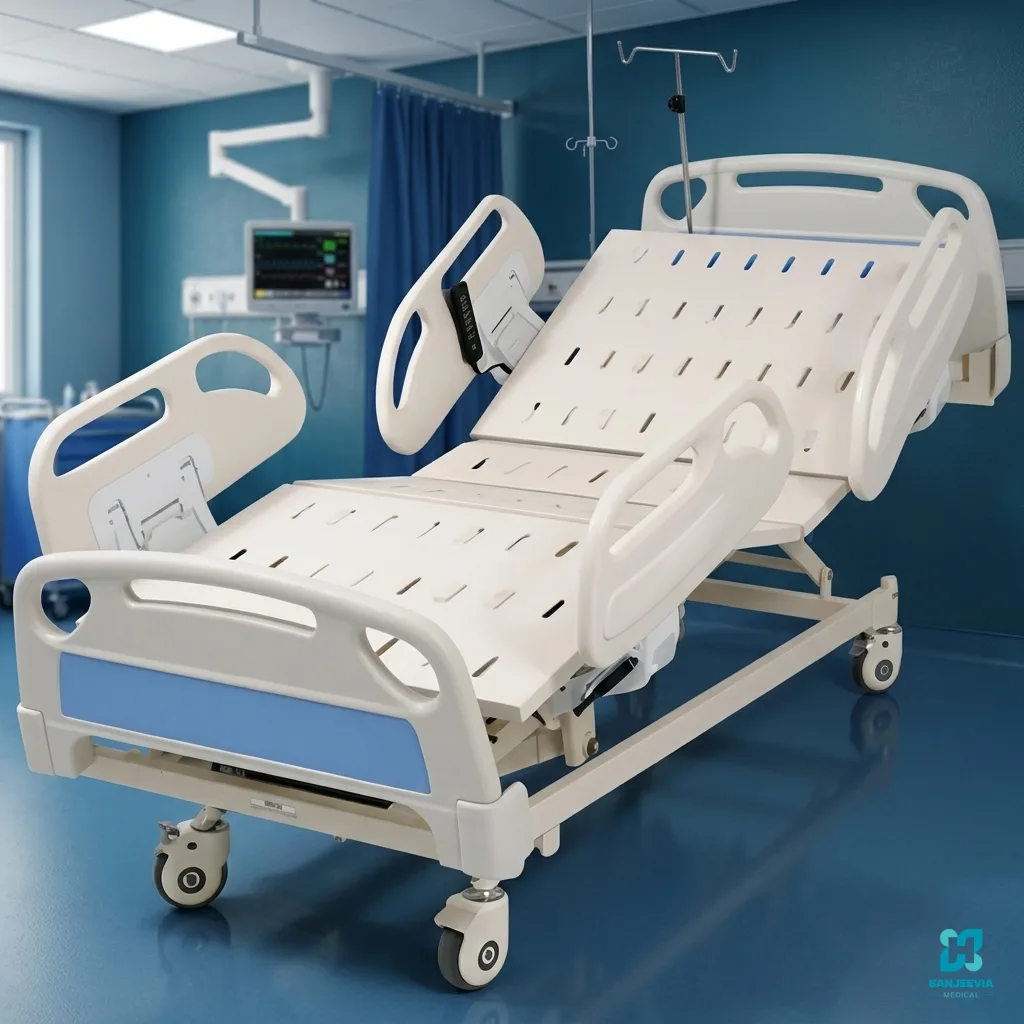
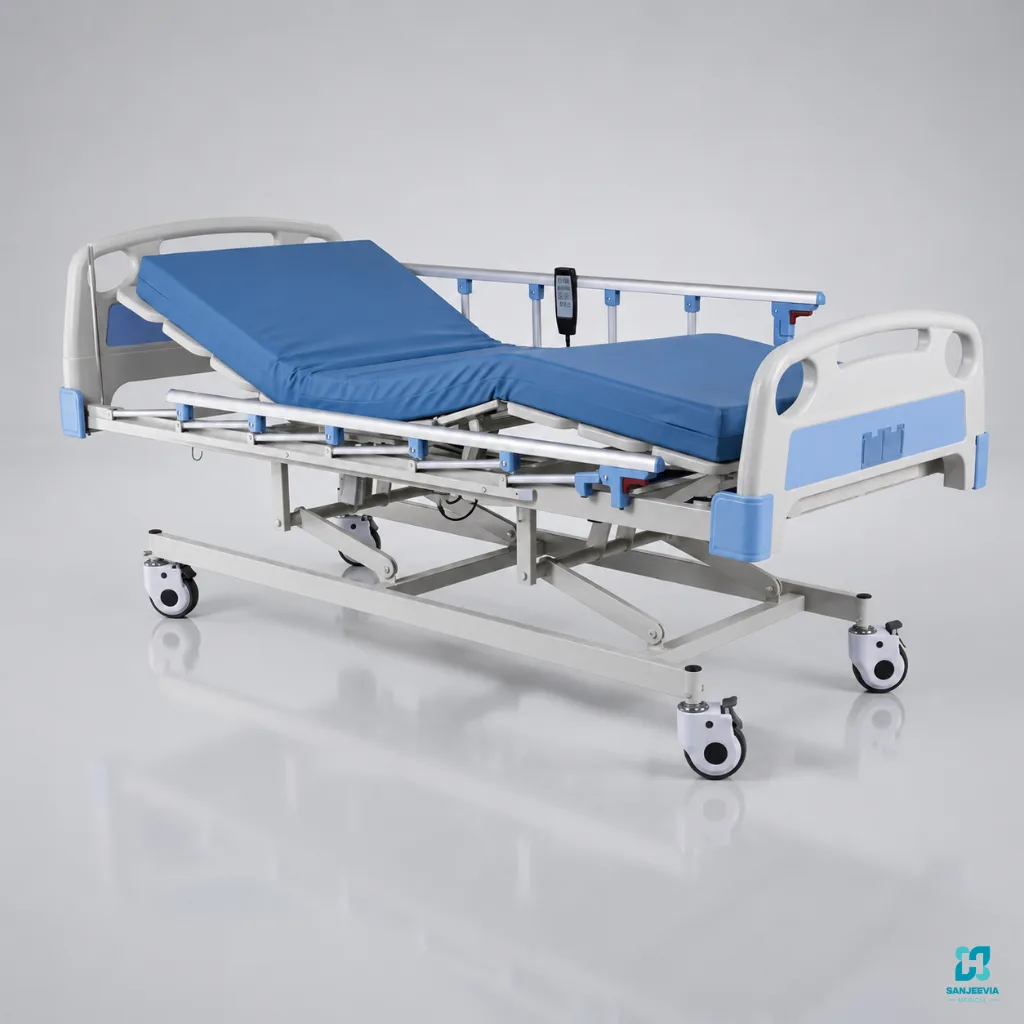
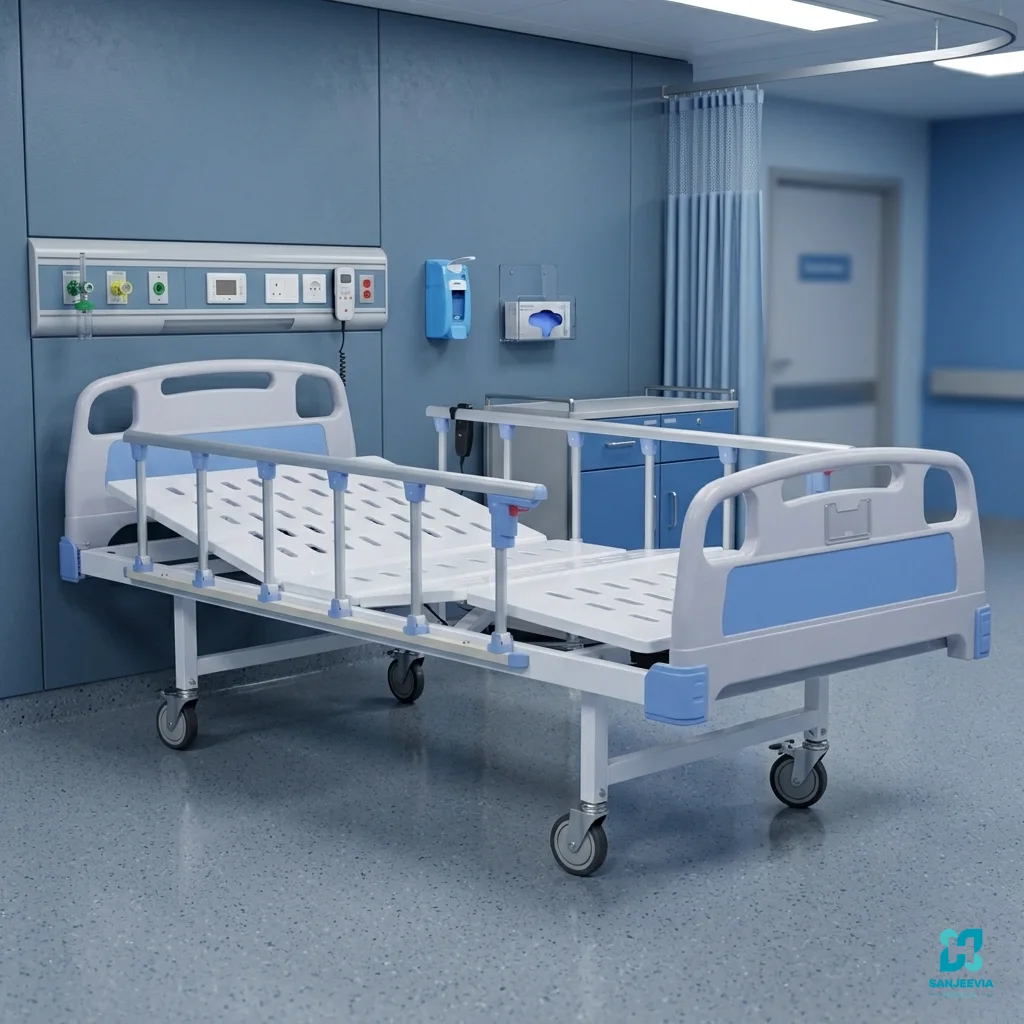
Watch Sanjeevia’s equipment demonstration
See the 3-function electric bed example and its controls. Confirm the exact supplied configuration at handover; this video does not prescribe patient positions.
Jump to equipment details
- Three movements, three different jobs
- Meet the parts and read the numbers correctly
- ABS panels versus stainless-steel rails
- Will adjustable height solve your daily problem?
- How to operate it during everyday care
- Prepare the room, power and cleaning routine
- Renting, buying and reassessing the setup
- Frequently asked questions
Three movements, three different jobs
The backrest changes the upper-body support angle. The knee function bends the articulated platform at the knee section. Height adjustment raises or lowers the whole platform relative to the floor, rather than simply lifting the head end. Electric actuators drive these movements through the bed frame. Use the icons shown on the supplied handset; the layout is not universal.
Height can be useful when a caregiver needs a working level for a task and the patient needs a different level to get in or out. The correct level depends on the person, mattress and transfer method. Do not use a generic height or angle from a video as a clinical instruction.
These beds do not normally provide whole-platform head-down or foot-down tilt simply because they have three functions. Ask for a movement demonstration rather than inferring capabilities from an “ICU” label.
Meet the parts and read the numbers correctly
The system includes the articulated platform, lifting frame, actuators, control box, handset, power cable, boards, rails, mattress retainers and castors. Six directional buttons may control three movements. A central brake pedal and individual wheel brakes are different arrangements; identify which the delivered bed has and how to check it is secure.
Dimensions in millimetres or centimetres may refer to the external frame or the mattress platform. They are not interchangeable when measuring a doorway. Floor-to-platform height excludes mattress thickness. Angle readings use degrees. Safe working load and maximum patient weight are separate limits: ask how the mattress and fitted accessories count.
Keep the model and serial number with the instructions and service contact. This helps the provider identify compatible parts and the correct operating procedure.
ABS panels versus stainless-steel rails
Sanjeevia lists a 3-function bed with ABS panels and a version with SS railings. ABS is a moulded plastic material; SS means stainless steel. These labels describe construction, not a guaranteed difference in safe load, transfer suitability or patient outcomes.
Compare the actual rail layout, latch operation, access when lowered, gap compatibility with the mattress, cleaning requirements and hand clearance. Someone who climbs, slides or becomes confused needs an individual risk assessment. Rails must not substitute for supervision or be used as a restraint by default.
Our ABS versus SS comparison helps frame the discussion. Ask for the precise supplied configuration, because a photograph may show optional accessories.
Will adjustable height solve your daily problem?
Start with real tasks: sitting at the edge, transferring to a wheelchair, changing bedding and providing personal care. Check these with the patient’s treating team or therapist. Raising the bed does not make a difficult transfer safe, remove a two-person assistance requirement or replace an assessed lifting aid.
Measure the wheelchair seat and the occupied mattress surface as relevant to the prescribed transfer. A thick pressure-care surface can change the final sitting height and rail relationship. Use a compatible mattress that flexes with the platform; see hospital bed mattresses explained.
A 2-function bed may suffice when fixed height already works. More advanced tilt functions only add value when the care plan calls for them. A bed does not supply monitoring, oxygen treatment or trained staff.
How to operate it during everyday care
- Explain the task, apply the brakes as instructed and check the patient’s position.
- Move tables and furniture clear. Check beneath the bed as well as beside it before changing height.
- Keep limbs, bedding, handset cable, drainage bags and treatment lines clear of moving parts.
- Select the identified movement and observe the person throughout. Release the control at the permitted position.
- Check comfort and line slack again. Return to the agreed resting height and rail arrangement after care.
Need help choosing suitable equipment?
Share your care requirements, room measurements and expected duration. Ask Sanjeevia about compatible options and current rental or purchase terms in Delhi NCR.
Never lower the frame onto stored items, a pet, a caregiver’s foot or equipment beneath the bed. Do not rest the handset where the patient can accidentally lie on it. Use any control-locking feature only as taught for that model.
The embedded Sanjeevia video demonstrates an ABS-panel example. The Sanjeevia side-rail bed demonstration shows another configuration; neither establishes the exact parts fitted to every rental unit.
Prepare the room, power and cleaning routine
Check building access and the assembled footprint before delivery. Leave working room on the sides required by the transfer plan, and enough space for the frame’s full travel. Use a suitable electrical connection; keep the lead away from wheels, hinges, liquid and walking routes. Ask the provider to route cables and demonstrate the full permitted range safely.
Backup power is model specific. Confirm whether there is a battery, its service condition, which movements it supports and the approved response during a power cut. Do not connect an unsuitable inverter or improvise manual lowering. See the electric-bed outage checklist.
Inspect brakes, rails, latches, mattress cover and visible wiring. Clean frequently touched controls and rails with approved products and isolate electricity as instructed. Avoid soaking joints and electrical housings. A new rattle, loose rail, damaged lead or unintended movement needs technical review before continued use of the affected equipment.
Renting, buying and reassessing the setup
Ask for an itemised Delhi NCR quote identifying the bed model, rail type, mattress, load limits, installation, handover, service process, exchange terms and collection. Confirm optional items separately. Do not choose solely by function count or assume the product title establishes battery backup, CPR release or medical staffing.
Have every regular caregiver practise the controls and brakes with the provider. Review the setup after a fall, new confusion, changed mobility, new mattress or altered transfer plan. Rental may suit changing requirements; ownership needs a continuing maintenance arrangement. Seek medical help for acute symptoms rather than repeatedly experimenting with bed positions.
Frequently asked questions
Does the third function lift the patient out?
No. It changes bed height. Transfers still need the assessed technique, assistance and any prescribed aid.
Are SS rails stronger than ABS rails?
Material alone cannot establish the load rating or safety of the complete bed. Compare the exact tested system and patient fit.
Can it tilt the whole platform?
Do not assume this. The listed three movements are backrest, knee section and height; verify any additional function.
Should it always stay at its lowest height?
Use the agreed resting and transfer arrangement. Care tasks may require a different height; reassess when the patient or mattress changes.
Explore your equipment options
Sources and further reading
Manufacturer instructions apply to the exact supplied model. International safety resources below support general equipment principles; they are not Indian prescribing rules.
- Paramount Bed: A5 family, model groups and official manuals (manufacturer example for electric-bed terminology, not the manual for an unbranded Sanjeevia listing).
- Paramount A5 electric-bed instruction manual: controls, precautions, cleaning and model-dependent features.
- MHRA: bed rails, compatibility, individual assessment and safe use
- NHSRC, India: Biomedical Equipment Management and Maintenance Programme and technical resources
- Sanjeevia catalogue: 3 Function Electric Bed – ABS Panels — current listing; verify the assigned unit at handover.
- Sanjeevia catalogue: 3 Function Electric Bed – SS Railings — current listing; verify the assigned unit at handover.
Educational information: Follow the person’s clinical care, transfer and emergency plan and the exact equipment instructions. Equipment does not replace professional assessment or required care staff. Sources and catalogue checked November 2026.
