
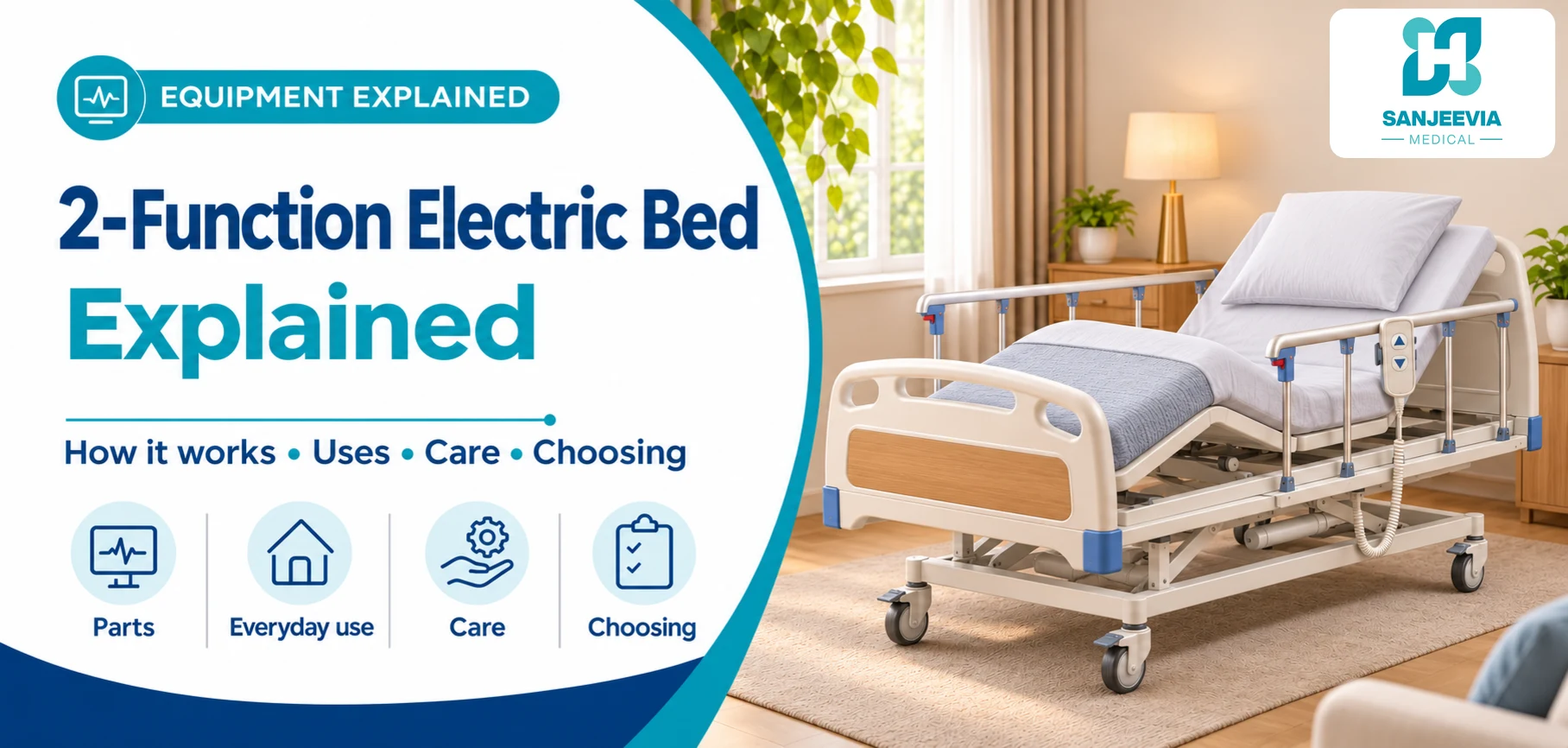
Two beds can both lift the backrest, yet feel very different during a midnight change of position. The difference is often who operates the controls—and whether the bed height can change. A 2-function electric bed uses powered controls to adjust the backrest and knee section. Sanjeevia’s listed model has a fixed platform height. It can simplify planned positioning, but it does not lift someone out of bed, prevent pressure injuries on its own or replace a caregiver. Here is what those two functions mean in everyday home care.
Explore relevant equipment

Watch Sanjeevia’s equipment demonstration
See the 2-function electric bed example and its controls. Confirm the exact supplied configuration at handover; this video does not prescribe patient positions.
Jump to equipment details
- What the two functions actually do
- Parts and terms worth recognising
- Who it may suit—and when height matters more
- Before the first night: fit the bed to the room
- A practical routine for using the controls
- Common mistakes, cleaning and power planning
- Questions before renting or buying
- Frequently asked questions
What the two functions actually do
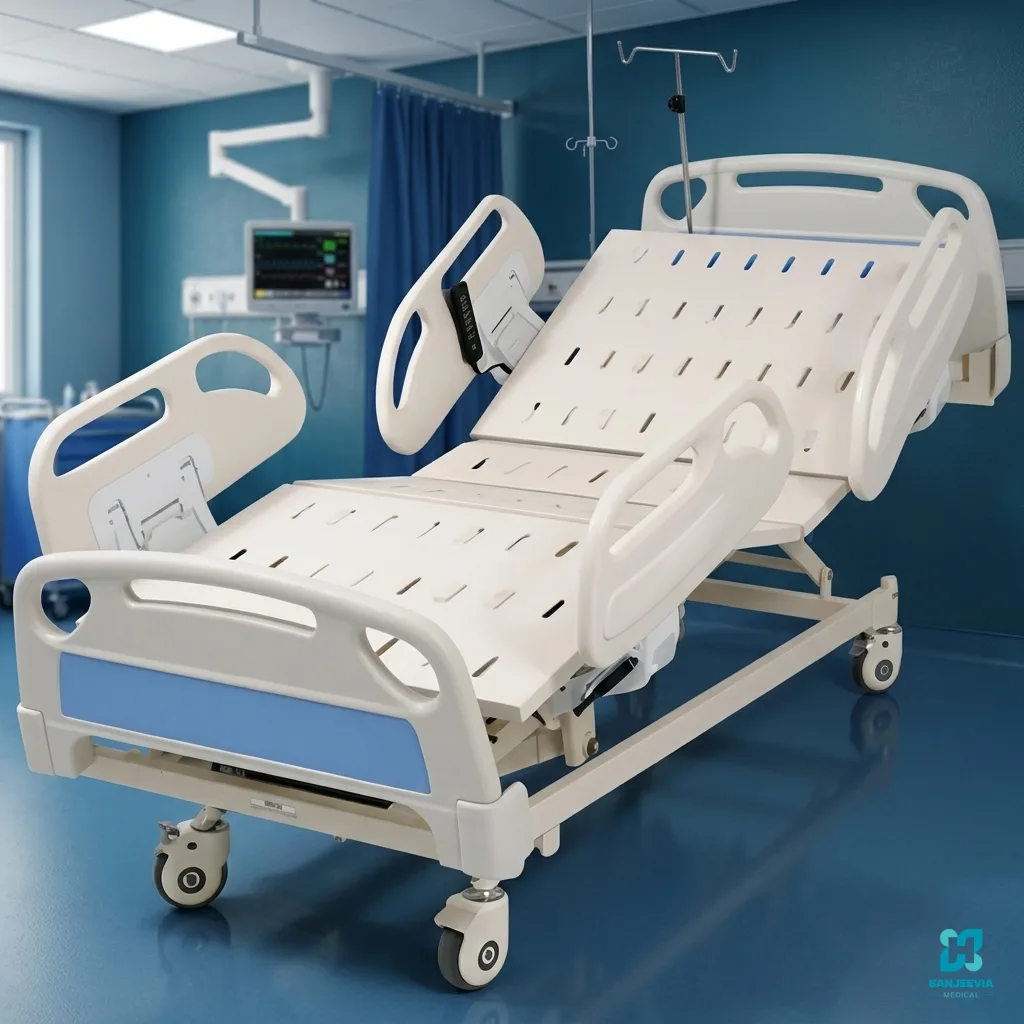
The backrest raises the upper section of the mattress platform. The knee function bends the platform around the knees; it is not simply a motor that lifts the feet straight up. Electric actuators convert motor movement into controlled changes of the platform. The flexible mattress follows those changes. Releasing the appropriate control normally stops movement; confirm the exact handset operation at handover.
On the listed 2-function electric bed, these are the two powered movements. The whole mattress platform does not rise and lower. Four arrow buttons can still represent two functions: one direction raises a section, the other lowers it. Button count and motor count are not reliable substitutes for a written movement list.
Use the position advised for this patient and task. There is no universal angle for meals, sleep or recovery. A raised backrest does not make swallowing safe for someone with a swallowing problem.
Parts and terms worth recognising
Look for the sectional platform, mattress retainers, backrest and knee actuators, handset, control box, power lead, headboard, footboard, rails and castors. The handset tells the control system which movement to operate. It is not a call bell or patient monitor. Ask which controls, if any, can be locked against accidental use.
Platform height is measured from the floor to the mattress support; the mattress adds to the sitting height. Millimetres or centimetres describe dimensions, degrees describe angles and kilograms describe load. Safe working load is not automatically the maximum patient weight: the manufacturer may include mattress and accessories in that total. Get both limits for the supplied frame.
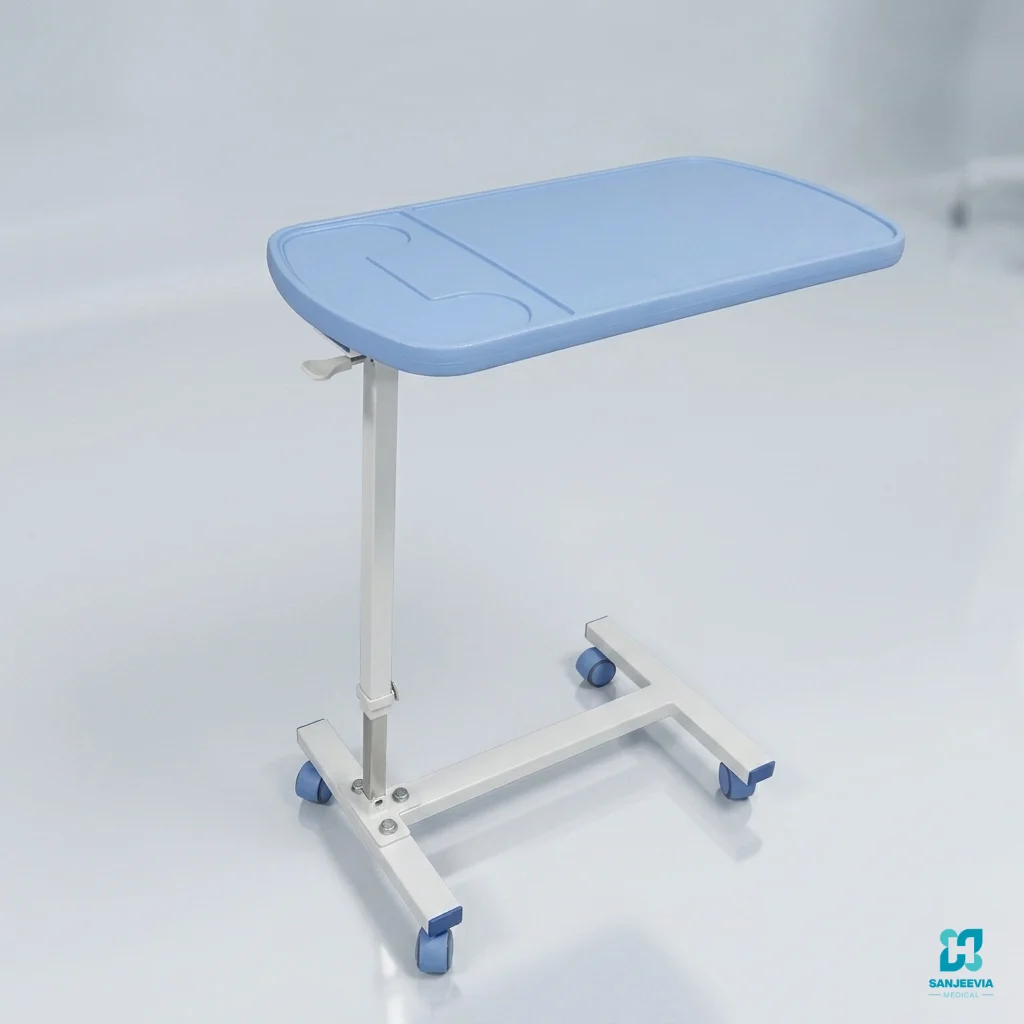
Check what is included rather than assuming the photograph is a package list. A mattress, IV pole, table, pressure-care overlay and battery can each be separate items.
Who it may suit—and when height matters more
This format may suit a person whose care plan calls for regular backrest and knee adjustments, where the fixed bed height works for transfers and caregivers. A patient who understands the handset may have more control over permitted position changes. Confusion, weak hands or difficulty seeing button symbols can make independent operation unsuitable.
Think through getting out of bed before choosing. Can the person sit at the edge with appropriate foot support? Does the wheelchair transfer plan work at this fixed height? Can caregivers perform necessary care without awkward bending? If these tasks require different heights, compare a 3-function electric bed. Extra backrest convenience cannot solve a height mismatch.
A manual Full Fowler bed offers a different operating method. It may be worth comparing when a caregiver can reliably use cranks and powered adjustment is not needed.
Before the first night: fit the bed to the room
Measure the entrance, lift, corridor turns and bedroom access, then ask how the bed is delivered and assembled. Leave space for the planned transfer aid and caregiver access, not just the frame footprint. Keep a suitable socket within safe cable reach and remove loose rugs. The power lead must remain clear of castors and moving links.
Use the mattress specified as compatible with the frame and rails. A mattress that is too thick, short or soft can change gaps and effective rail height. Do not add an ordinary household mattress or improvised gap fillers. The hospital mattress guide explains why platform sections and mattress fit need to match.
Rails need individual assessment. They can introduce entrapment or climbing risks, and are not automatically a safe standing handle. Ask the provider to demonstrate each latch and verify it has engaged.
A practical routine for using the controls
- Explain the planned movement and check the patient is comfortably supported.
- Apply the bed brakes for care or transfer, following the supplied instructions.
- Move the over-bed table away. Check fingers, feet, bedding, tubing and cables around all moving sections.
- Use the identified control briefly, watch the person and the platform, and release it when the permitted position is reached.
- Recheck comfort, body alignment, line slack and the agreed rail arrangement. Store the handset safely.
Need help choosing suitable equipment?
Share your care requirements, room measurements and expected duration. Ask Sanjeevia about compatible options and current rental or purchase terms in Delhi NCR.
Stop if movement causes pain, distress or new symptoms. Do not hold a button while trying to free trapped bedding or push against a stalled section. Never put hands under an occupied moving platform to investigate. If two caregivers or a hoist are required for a transfer, powered bed positioning does not remove that requirement.
At delivery, each regular caregiver should practise this sequence and know how to summon help. A demonstration watched once is less useful than a supervised return demonstration.
Common mistakes, cleaning and power planning
Common errors include leaving the handset beneath the patient, using rails as lifting handles, storing bags under the mechanism and assuming the bed can change height. Keep controls available only to someone able to use them safely. A bed is not an occupied transport trolley unless the manufacturer expressly permits that use.
Inspect rails, brakes, visible cables, mattress cover and fasteners regularly. Clean hand-contact surfaces and remove spills promptly using the manufacturer’s approved method. Isolate power as instructed before cleaning; do not spray electrical parts or hose the frame. Damaged covers, loose latches, unusual noise, heat or unintended motion require provider attention.
Ask whether this specific unit has a working battery or approved emergency lowering method. Do not assume either. Confirm any inverter compatibility with the provider and record whom to call during an outage. Never force the platform down or open the control box. Our power-cut planning guide helps organise the questions.
Questions before renting or buying
Share the required movements, patient dimensions, transfer method, expected duration and room measurements when requesting a Delhi NCR quote. Ask for the exact model, fixed height, approved mattress, rail configuration, load limits, delivery and installation details. Confirm maintenance, fault reporting, exchange, collection, deposit and other charges in writing; this article does not promise stock or service timings.
Rental can accommodate a temporary or changing need; buying requires a plan for long-term servicing. Review suitability when mobility, skin condition, cognition or caregiver availability changes. Positioning equipment supports the care plan; it does not diagnose illness or supply nursing care.
Frequently asked questions
Is a 2-function bed height adjustable?
Not the listed Sanjeevia model: its powered functions are backrest and knee adjustment. Confirm the supplied specification before ordering.
Can it prevent bedsores?
No bed alone guarantees this. Use the pressure-care, skin inspection, repositioning and mattress plan advised for the person.
Can the patient operate it alone?
Only if the care team considers this safe and the person can understand, reach and release the controls reliably.
Is battery backup included?
Do not assume so. Ask about the exact supplied unit and practise its approved outage procedure.
Explore your equipment options
Sources and further reading
Manufacturer instructions apply to the exact supplied model. International safety resources below support general equipment principles; they are not Indian prescribing rules.
- Paramount Bed: A5 family, model groups and official manuals (manufacturer example for electric-bed terminology, not the manual for an unbranded Sanjeevia listing).
- Paramount A5 electric-bed instruction manual: controls, precautions, cleaning and model-dependent features.
- MHRA: bed rails, compatibility, individual assessment and safe use
- NHSRC, India: Biomedical Equipment Management and Maintenance Programme and technical resources
- Sanjeevia catalogue: 2 Function Electric Bed — current listing; verify the assigned unit at handover.
Educational information: Follow the person’s clinical care, transfer and emergency plan and the exact equipment instructions. Equipment does not replace professional assessment or required care staff. Sources and catalogue checked November 2026.
