
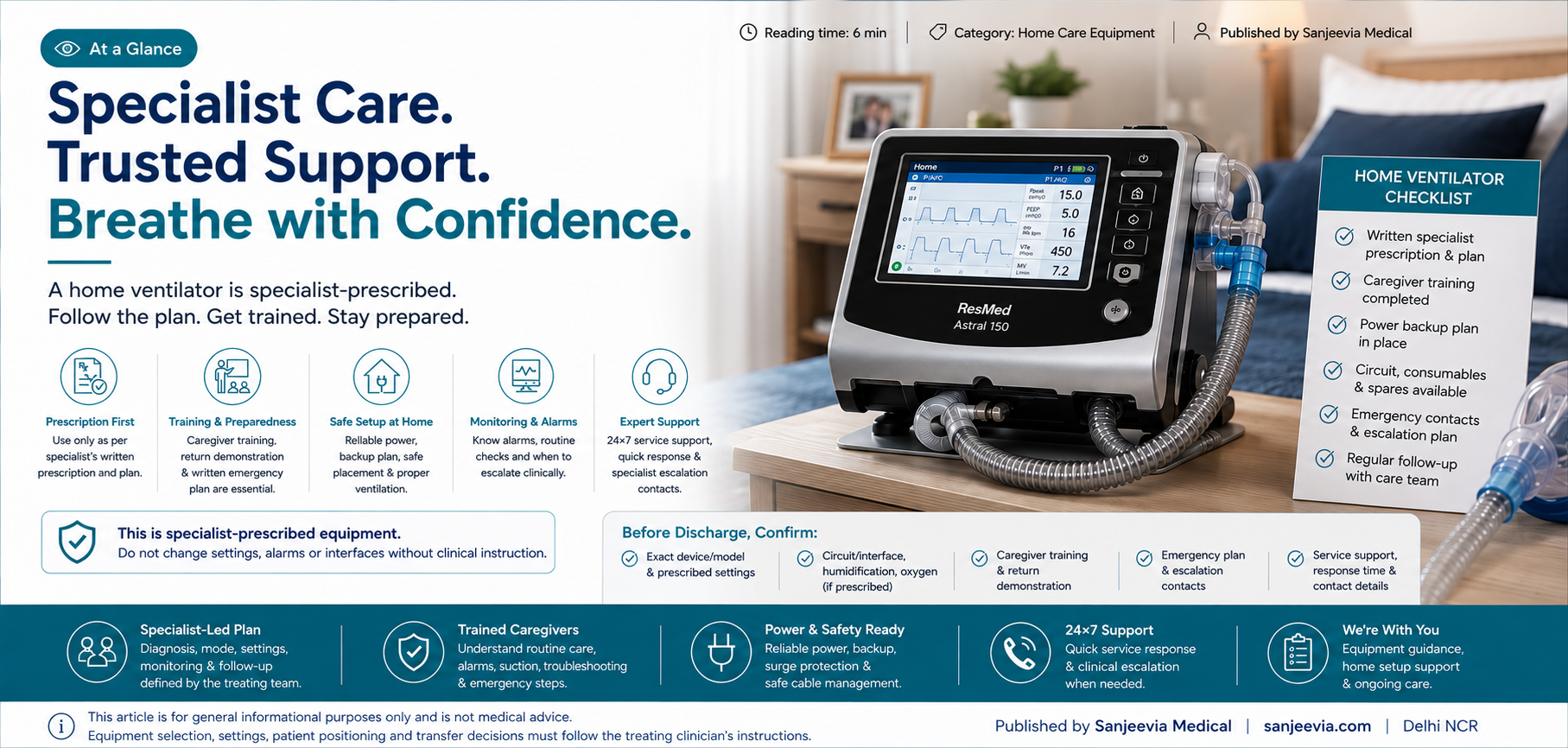
At a Glance
- A home ventilator is specialist-prescribed equipment. The family should arrange the exact setup, training, backup planning and escalation support specified by the treating team.
- Compare the exact equipment, setup and service scope before you rent or buy.
- Follow the treating clinician’s instructions for patient care, settings and transfers.
Reading time: 6 min | Category: Home Care Equipment | Published by Sanjeevia Medical
Quick Answer
A home ventilator is specialist-prescribed equipment. The family should arrange the exact setup, training, backup planning and escalation support specified by the treating team.
A ventilator at home is never a standard consumer rental decision. Before discharge, the family needs a written specialist plan covering the device, interface or circuit, settings, monitoring, caregiver training, power backup and emergency escalation.
Start with the Right Decision
Different home ventilators serve different prescribed needs. The provider should supply and demonstrate the exact model ordered by the specialist, while the hospital team coordinates clinical training and care responsibilities. Do not change settings, alarms or interfaces without the supervising clinical team’s instruction.
What to confirm before booking
- the written specialist prescription and exact device/model requirement
- caregiver training, written emergency plan and clinical escalation contacts
- power supply, backup arrangements and safe placement of the machine
- included circuit/interface, consumables, service contact and response process
Should You Rent or Buy?
Rental can make sense for specialist-directed home support when the care timeline is uncertain or equipment may need review. It is appropriate only when the care team, provider and family have a clear plan for installation, training, monitoring and emergencies.
A Practical Booking Checklist
- Keep the prescription, discharge instructions or therapist recommendation ready where equipment is clinically prescribed.
- Ask for the exact model and included accessories in writing.
- Confirm the delivery route, room setup, handover and service contact before the booking is finalised.
- Ask about the current rental period, extension process, collection terms and purchase option where relevant.
What Must Be Ready Before the Patient Comes Home
The discharge plan should identify the prescribed mode and settings, circuit and interface, humidification, oxygen connection if ordered, monitoring plan and the person responsible for each part of care. The family should know which alarms require an equipment check and which symptoms require immediate clinical escalation. Keep the treating team’s written plan beside the machine.
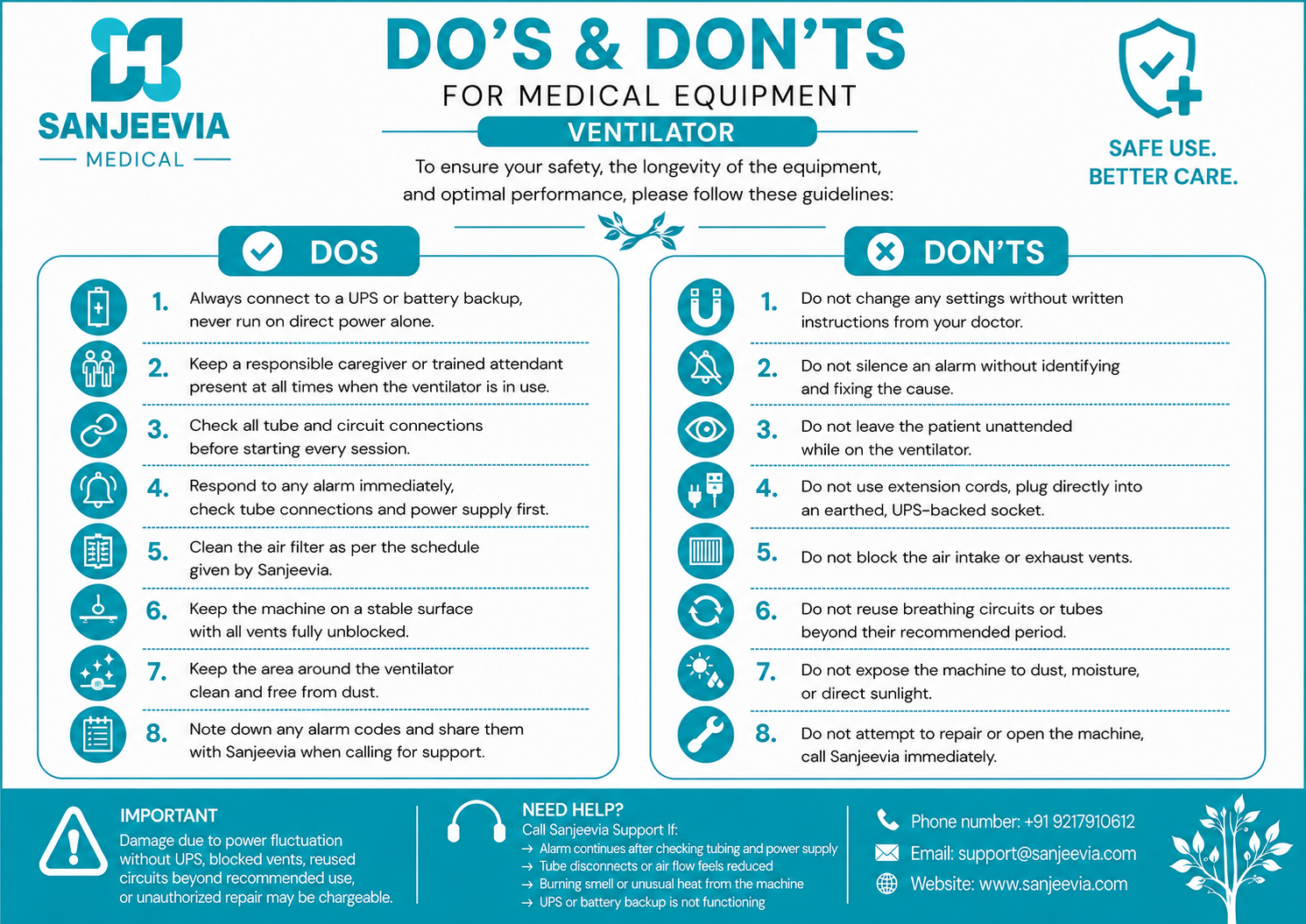
- Arrange reliable power, safe cables and prescribed backup.
- Have trained caregivers return-demonstrate the routine.
- Keep spare consumables and support numbers available.
- Plan transport and escalation for device or power failure.
Frequently Asked Questions
Can a family arrange a home ventilator without hospital guidance?
No. A home ventilator requires specialist prescription, clinical planning and caregiver training. Coordinate the equipment through the treating team and qualified provider.
Who should teach caregivers to use the ventilator?
The hospital or supervising clinical team should direct clinical training and emergency procedures. The equipment provider can demonstrate the supplied device and service process.
Discuss the right option for your home-care plan: Home Ventilator | respiratory-support guide | contact Sanjeevia for current availability and delivery details in Delhi NCR.
How to Compare Quotes and Support
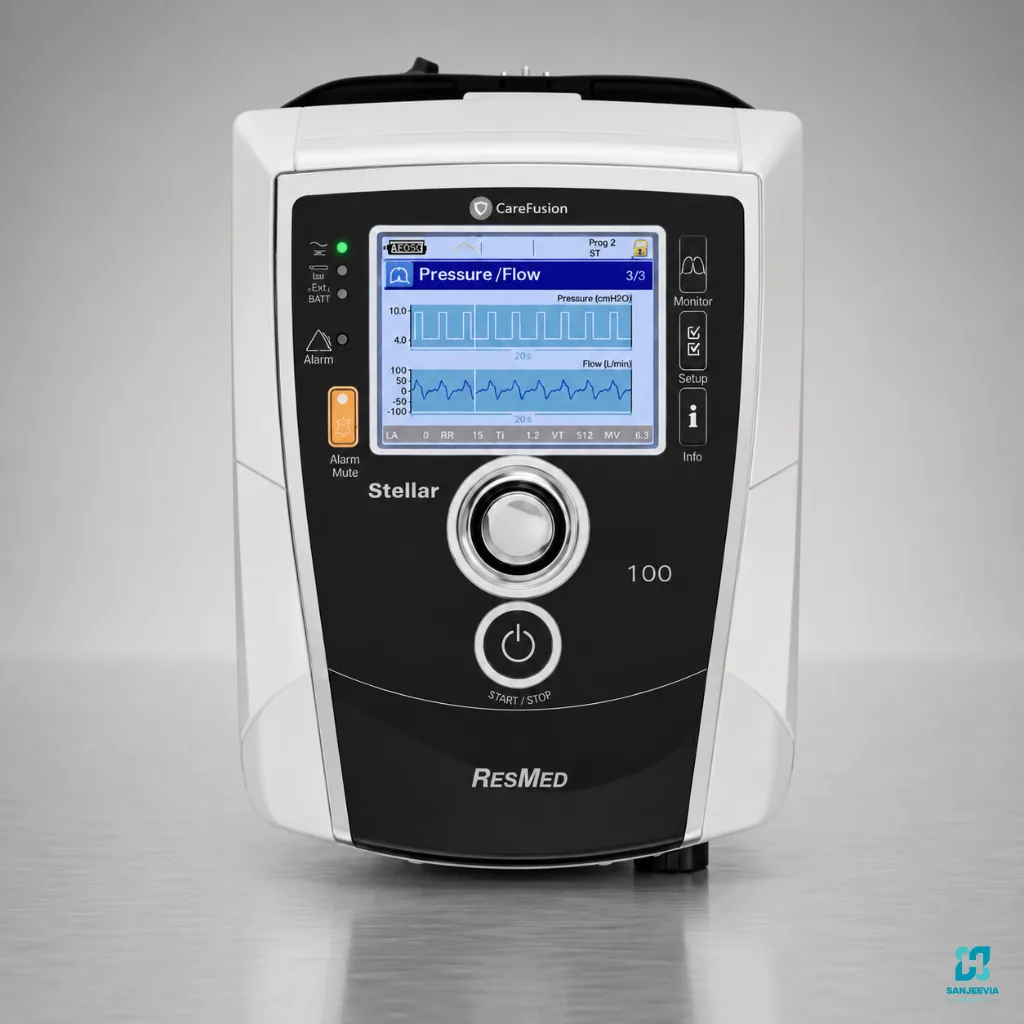
A home-ventilator quote must identify the exact prescribed device and configuration, included circuits or interfaces, installation scope, service response route and current availability. Equipment supply is only one part of a complete specialist-directed home-ventilation plan.
When to Involve the Care Team
The supervising clinical team should define emergency escalation and changes in the patient’s condition. In an emergency, follow the hospital’s written plan and seek emergency help.
- Keep the prescribed emergency contacts accessible.
- Maintain the agreed power-backup and equipment-safety plan.
- Never change settings, alarms or interfaces without clinical instruction.
Medical Disclaimer
This article is for general informational purposes only and is not medical advice. Equipment selection, settings, patient positioning and transfer decisions must follow the treating clinician’s instructions.
Published by Sanjeevia Medical | sanjeevia.com | Delhi NCR
Related Guidance and Equipment
Home ventilation requires a discharge-led setup; these links explain the respiratory-support differences and point to the exact ventilator pages.
Continue Reading
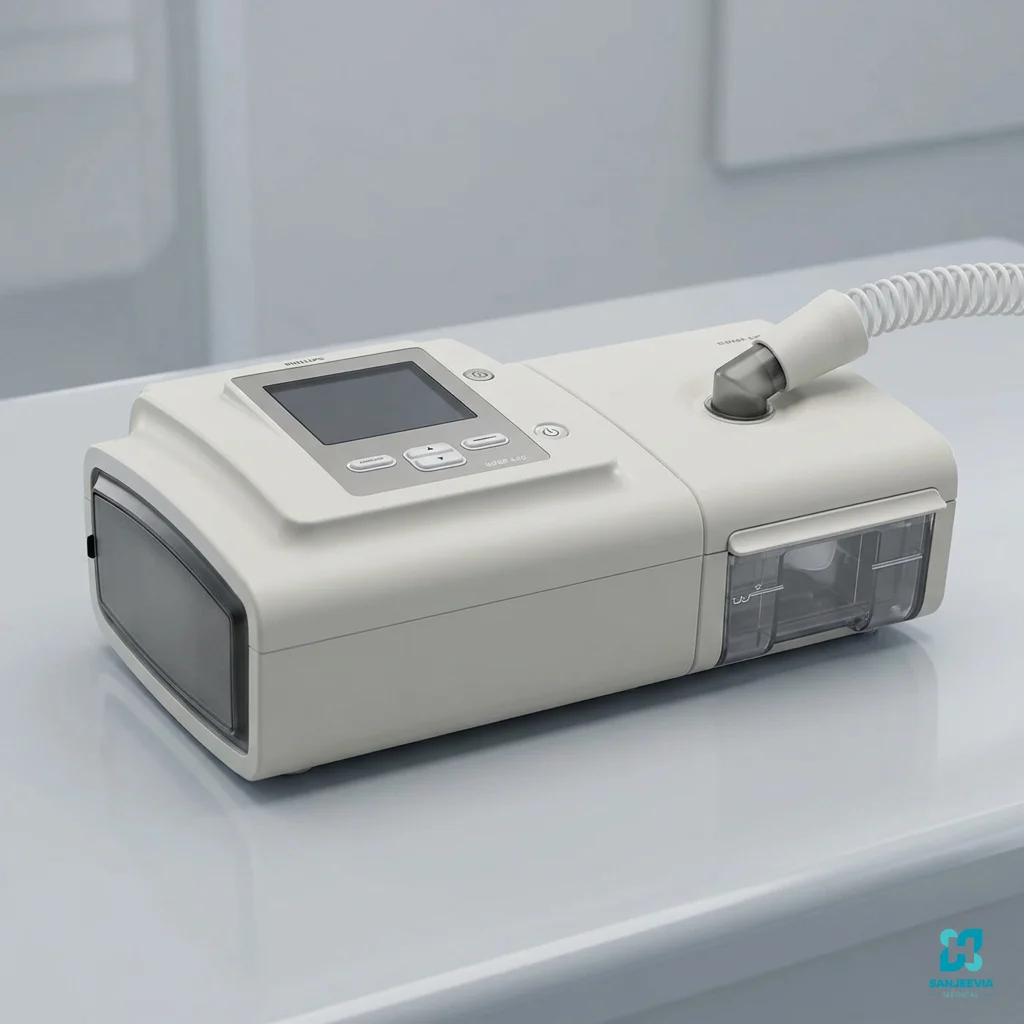
- BiPAP vs CPAP vs Ventilator — understand the different types of respiratory support.
- Bringing an Elderly Parent Home from ICU — plan equipment and caregiving before discharge.
Relevant Product Pages
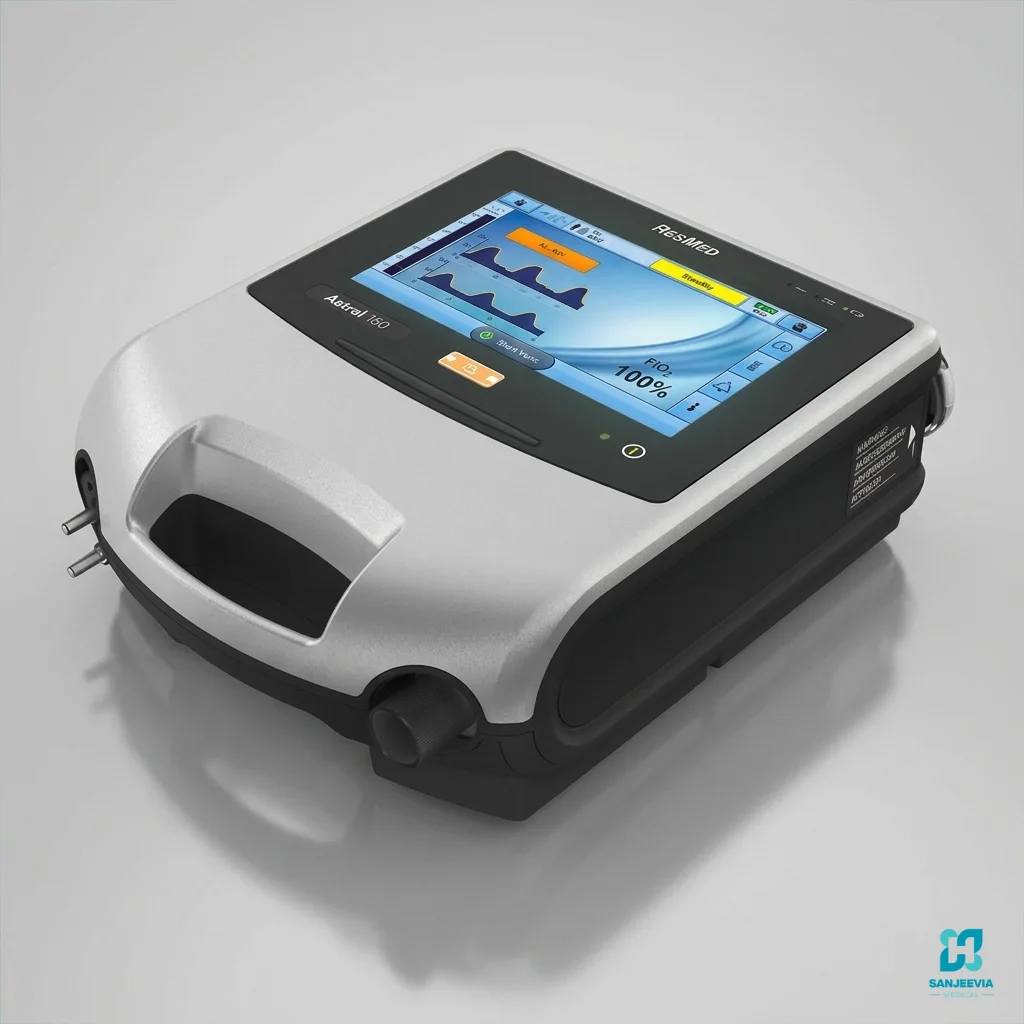
- ResMed Astral 150 Home Ventilator — review a portable home-ventilator option against the discharge plan.
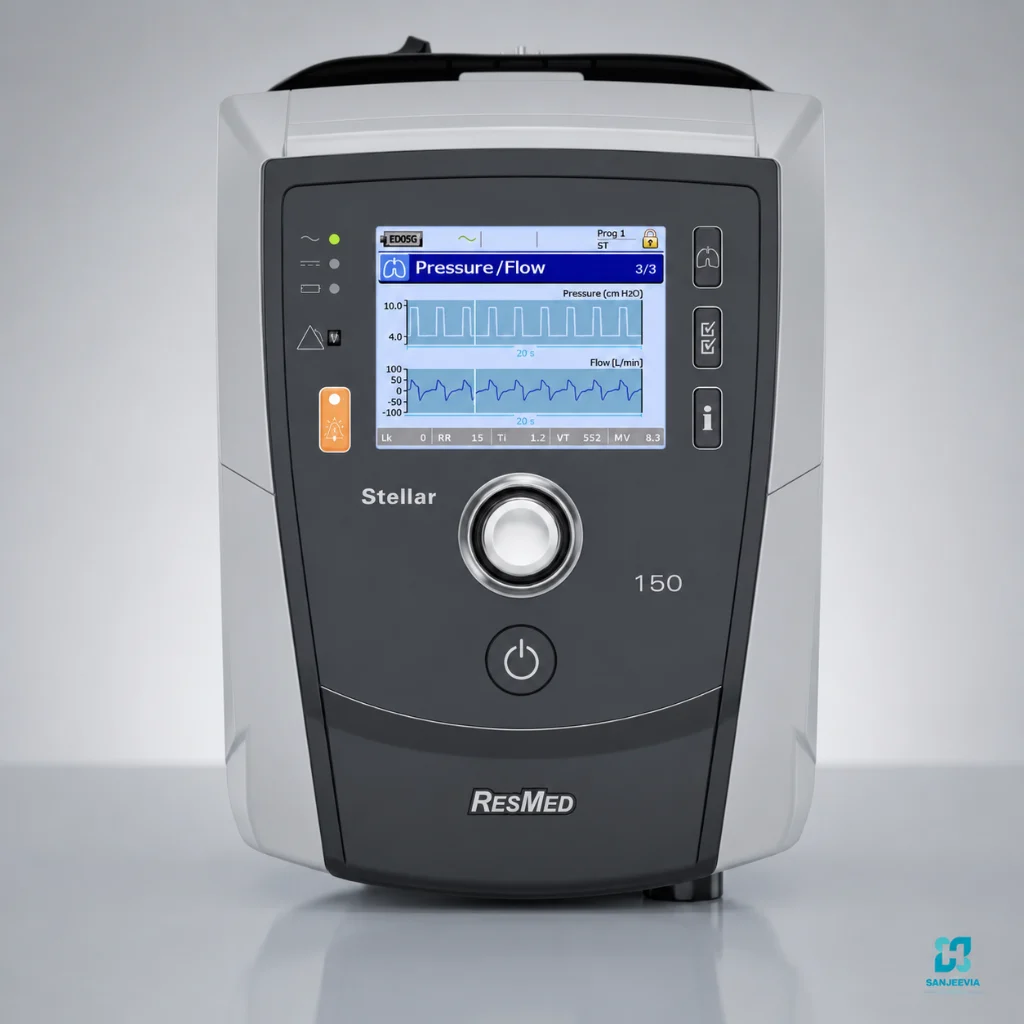
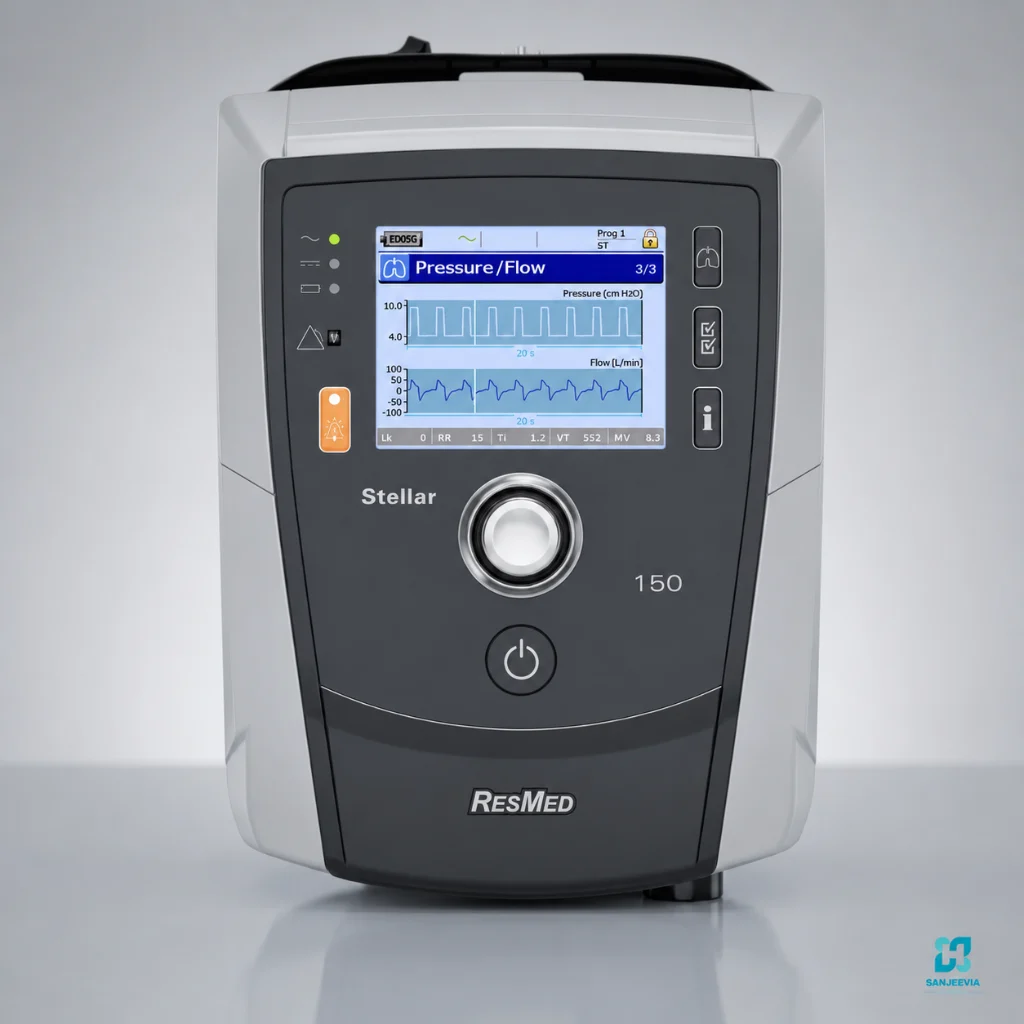
- ResMed Stellar 150 Ventilator — compare another prescribed non-invasive ventilation option.