
Quick answer: When considering ventilator battery planning, use a clinician-approved ventilation and emergency plan. Confirm trained caregiver coverage, exact settings and circuit, alarms, power and backup ventilation, monitoring, service response and emergency escalation before home use.
Power planning for ventilator battery planning
List mains power, internal battery, external approved battery and an independent backup ventilator or manual method if prescribed. Runtime must be calculated at the actual settings and accessories, with ageing and transport considered.
Test transition between power sources during training. Do not silence alarms, reduce support or disconnect humidification to extend battery without the clinical plan.
Clinical plan and caregiver training
The discharge team should document diagnosis, ventilation mode and settings, hours of use, interface or airway, humidification, oxygen connection, secretion plan, monitoring, alarm limits, backup method and emergency thresholds. Caregivers need hands-on training and return demonstration for normal use, circuit connection, alarms, power changeover and emergency response.
Clarify whether a trained caregiver must remain continuously available and how care is covered during sleep, bathing and travel. Keep clinical contacts, equipment support and emergency services clearly separated. Review the plan after hospital readmission, infection, new secretions, interface changes or altered breathing.
Equipment, circuit and room setup
Confirm the primary ventilator, prescribed backup, circuit, interface, humidifier, filters, battery, charger, monitor if ordered, suction equipment when prescribed, manual resuscitation equipment when prescribed and spare consumables. Every component must match the configured system; an apparently compatible tube or filter can change resistance, leak or alarm behaviour.
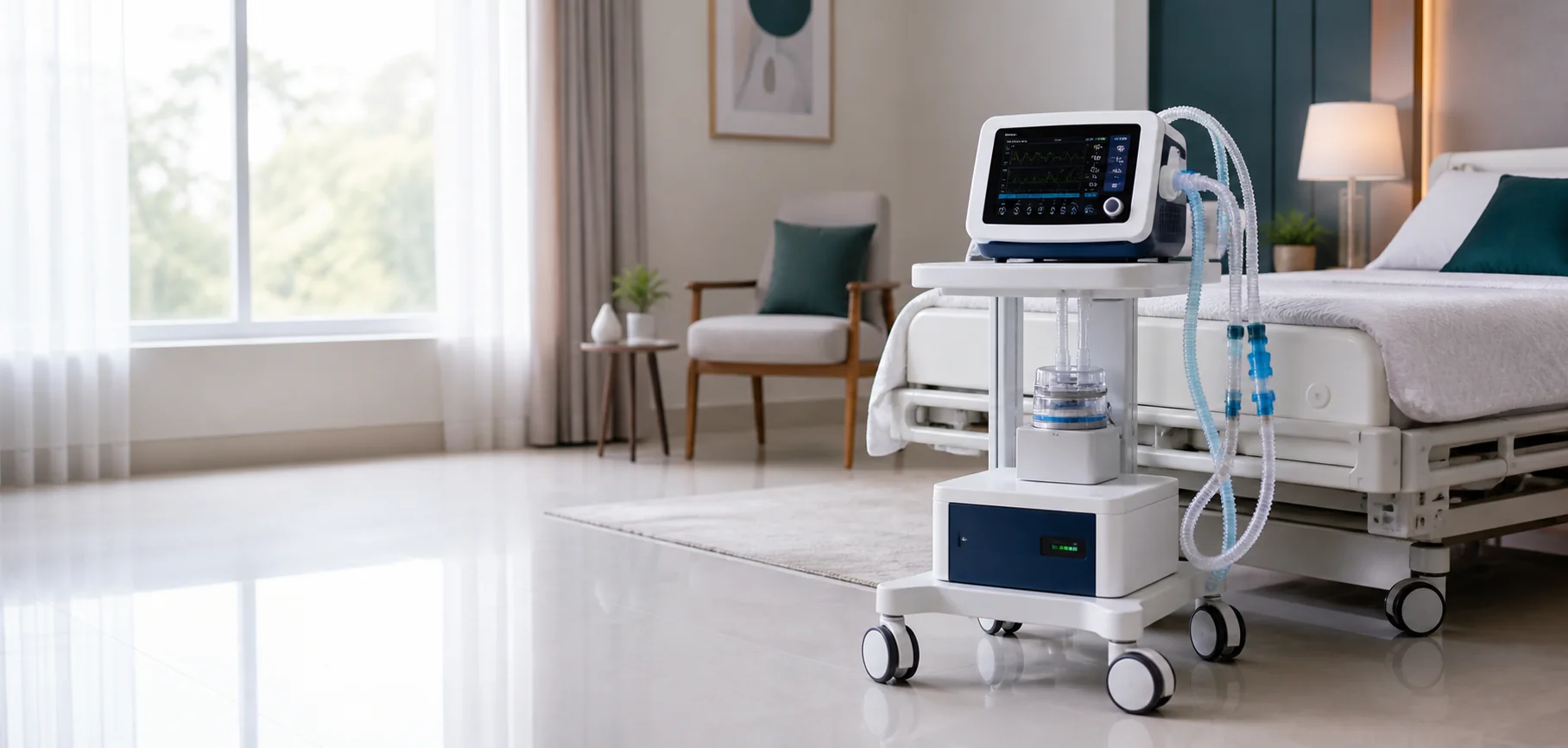
Place equipment on a stable trolley with screen and alarms visible, ventilation openings clear, circuits supported and cables protected. Keep the route to the patient unobstructed. Control dust, heat, moisture, smoke and background noise so caregivers can hear alarms. Sanjeevia’s home ventilator rental checklist outlines handover questions.
Alarms, monitoring and daily checks
At each shift or caregiver handover, verify patient condition, settings profile, circuit connections, interface or airway security, humidification, filters, power source, batteries, alarm audibility, backup readiness and emergency bag. Record checks in the format requested by the clinical team.
For any alarm: assess the patient first, call for help when needed, then check circuit and device using the trained algorithm. Do not repeatedly silence an unresolved alarm. Severe breathing difficulty, colour change, collapse, inability to ventilate, displaced airway or another emergency in the plan requires immediate backup action and emergency services.
Power failure and emergency preparedness
Map every power layer and its tested runtime at actual settings: mains, internal battery, approved external supply and independent backup. Batteries degrade and runtime changes with accessories and temperature. Keep chargers connected as instructed, rotate tests, and plan for outages longer than any single battery.
Conduct supervised drills for power loss, circuit disconnection, blocked circuit, equipment failure, evacuation and caregiver illness. Know how to move to backup ventilation and where to go if the home becomes unsafe. Never change ventilator settings or alarm limits to save power.
Rental, maintenance and replacement support
The provider should document model, asset number, software or configuration profile, preventive-maintenance status, battery age, accessories, delivery test and replacement response. Clarify 24-hour support, emergency replacement, travel coverage, consumable schedule and pickup or exchange terms.
Clean and replace components exactly as instructed. Keep liquid away from electronics and do not open the case, lubricate fittings or repair circuits with tape. Report unusual smell, heat, sound, damage, repeated alarms or performance change immediately.
Caregiver handover and documentation
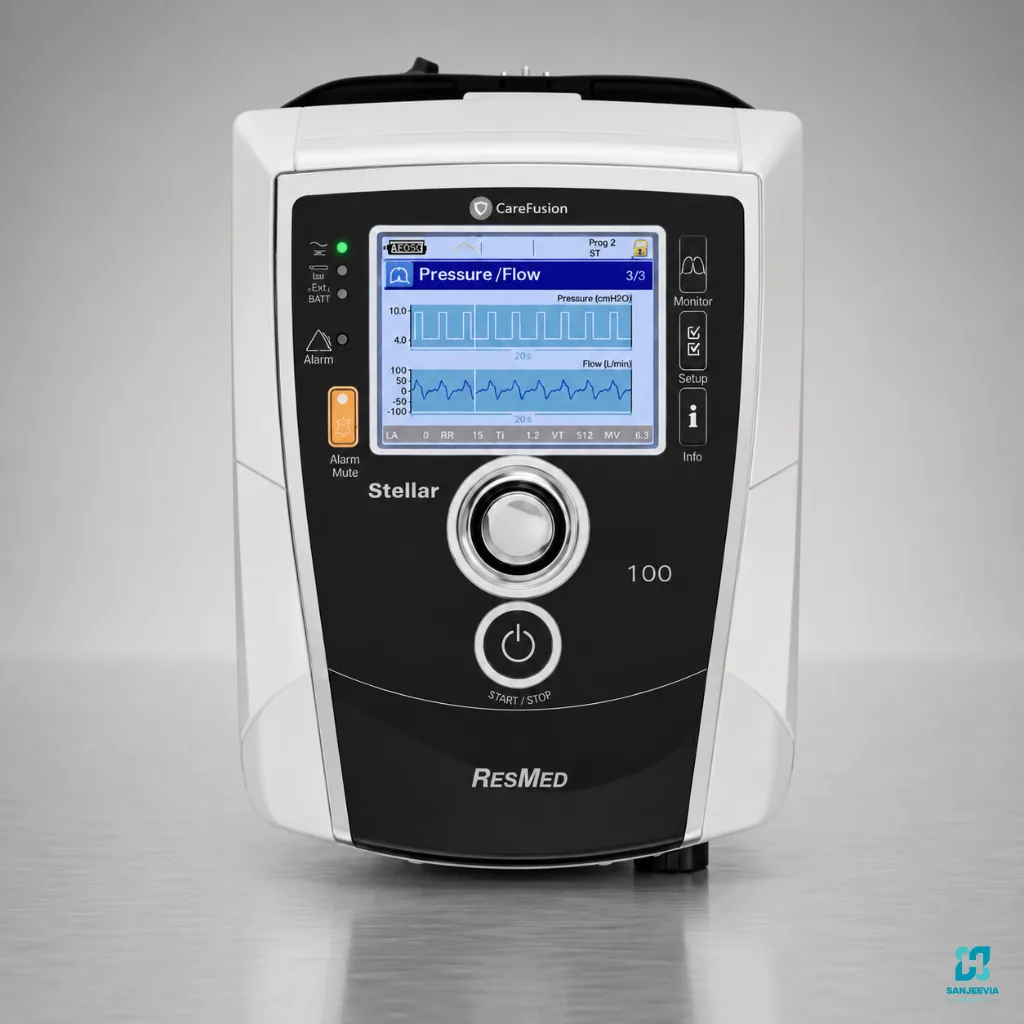
Use a structured handover at every change of caregiver. Confirm current patient condition, prescribed ventilation schedule, active settings profile, interface or airway status, secretion concerns, oxygen connection when prescribed, monitor trends, alarms since the last handover, battery state and backup readiness. Avoid relying on memory or informal messages.
Keep the latest discharge summary, prescription, equipment inventory, circuit diagram, alarm-response algorithm, medication and secretion plan, emergency contacts and maintenance log together. Mark superseded instructions so an old setting sheet is not followed after a clinical change. Review documentation after every hospital visit or equipment exchange.
Infection control, consumables and supply resilience
Perform hand hygiene before handling the circuit, interface, humidifier or airway equipment. Separate clean and used supplies, protect connectors from floor contact and follow the clinical team’s technique for any airway or secretion-care task. Fever, changed secretions, new breathing effort or reduced alertness requires clinical assessment under the patient’s plan.
Maintain a dated stock list of prescribed circuits, filters, interfaces, humidification supplies and other single-use items. Store them dry, sealed and away from heat or pests. Check expiry dates and reorder before the emergency reserve is opened. A second device without the correct circuit, settings and charged power source is not a complete backup.
Evacuation and community coordination
Plan how the patient, primary ventilator, backup device, batteries, emergency bag and trained caregiver will leave the home during fire, flood, lift failure or prolonged outage. Measure lift and stair constraints, identify an accessible vehicle, and decide which medical facility can receive a ventilator-dependent patient. Do not wait for an emergency to discover that equipment cannot be moved together.
When advised by the treating team, inform local emergency services and the electricity provider that critical home medical equipment is in use. Keep the address, floor, entry instructions and equipment dependency accurate. Practise a calm, timed drill with the clinical team’s approval and correct any gap in battery duration, transport restraint, caregiver coverage or communication.
Frequently asked questions
Is a home ventilator the same as BiPAP?
No. Some devices share non-invasive modes, but intended use, monitoring, alarms, circuits and life-support capability differ. Use the exact prescribed system.
Can caregivers change settings?
Only within a written clinician-approved protocol. Otherwise contact the respiratory team.
Is one battery enough?
Not necessarily. Backup must match dependency, outage risk, actual runtime and evacuation plan.
Can an alarm be muted at night?
Do not disable or reduce alarms outside the clinical plan. Alarms must remain audible to the responsible caregiver.
Sources and further reading
- U.S. FDA: Home-Use Device Considerations
- U.S. FDA: Home Healthcare Medical Devices Checklist
- U.S. FDA: Home-Use Ventilator Classification
Medical boundary notice: Home ventilation is complex medical support. This article is general education and cannot replace the prescribing team’s settings, training, monitoring or emergency plan.
Need help arranging prescribed equipment? Contact Sanjeevia Medical with the prescription, interface, discharge date, power and backup plan, caregiver coverage and location to discuss compatible rental support in Delhi NCR.
Published by Sanjeevia Medical.