
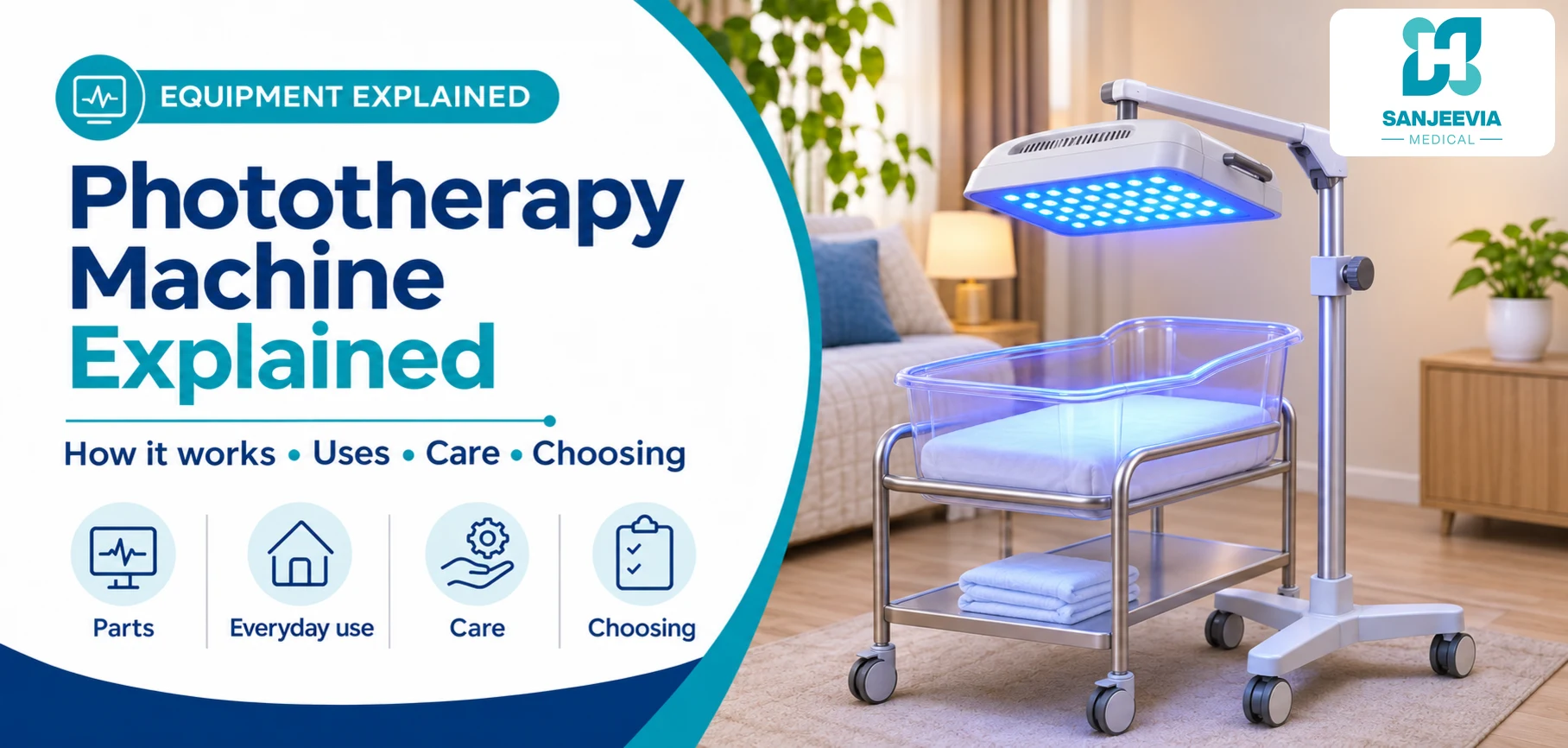
A newborn can look only mildly yellow while the bilirubin level is still changing. That is why phototherapy is guided by a measured bilirubin result and the baby’s age—not by judging skin colour under room light.
Quick answer: A neonatal phototherapy machine exposes the baby’s skin to therapeutic blue-spectrum light, helping the body convert bilirubin into forms that can be eliminated. It is prescribed against age-specific treatment thresholds and requires bilirubin follow-up, feeding and hydration support, temperature checks and eye protection.
Explore relevant equipment
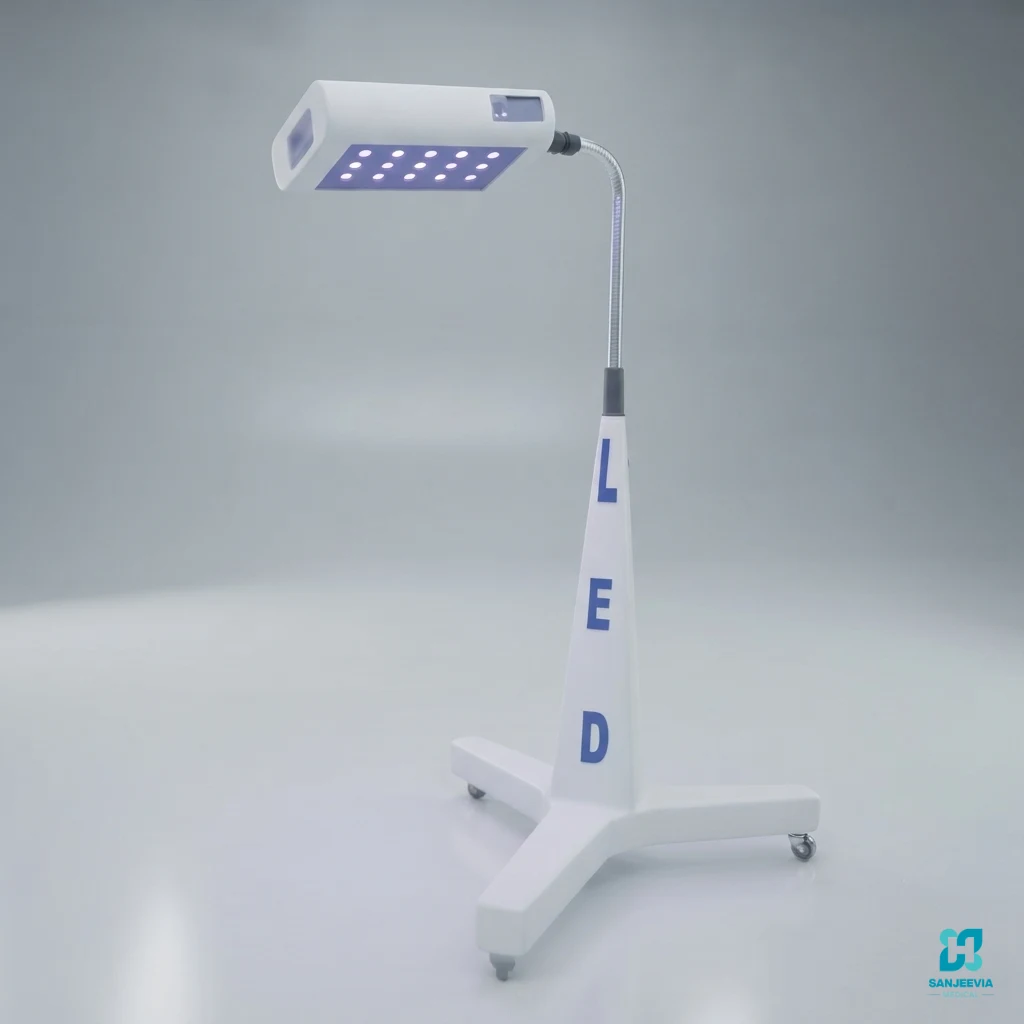
Phototherapy Machine
Single-surface LED phototherapy unit for clinician-directed treatment. Confirm measured irradiance, treatment distance and the monitoring plan before delivery.
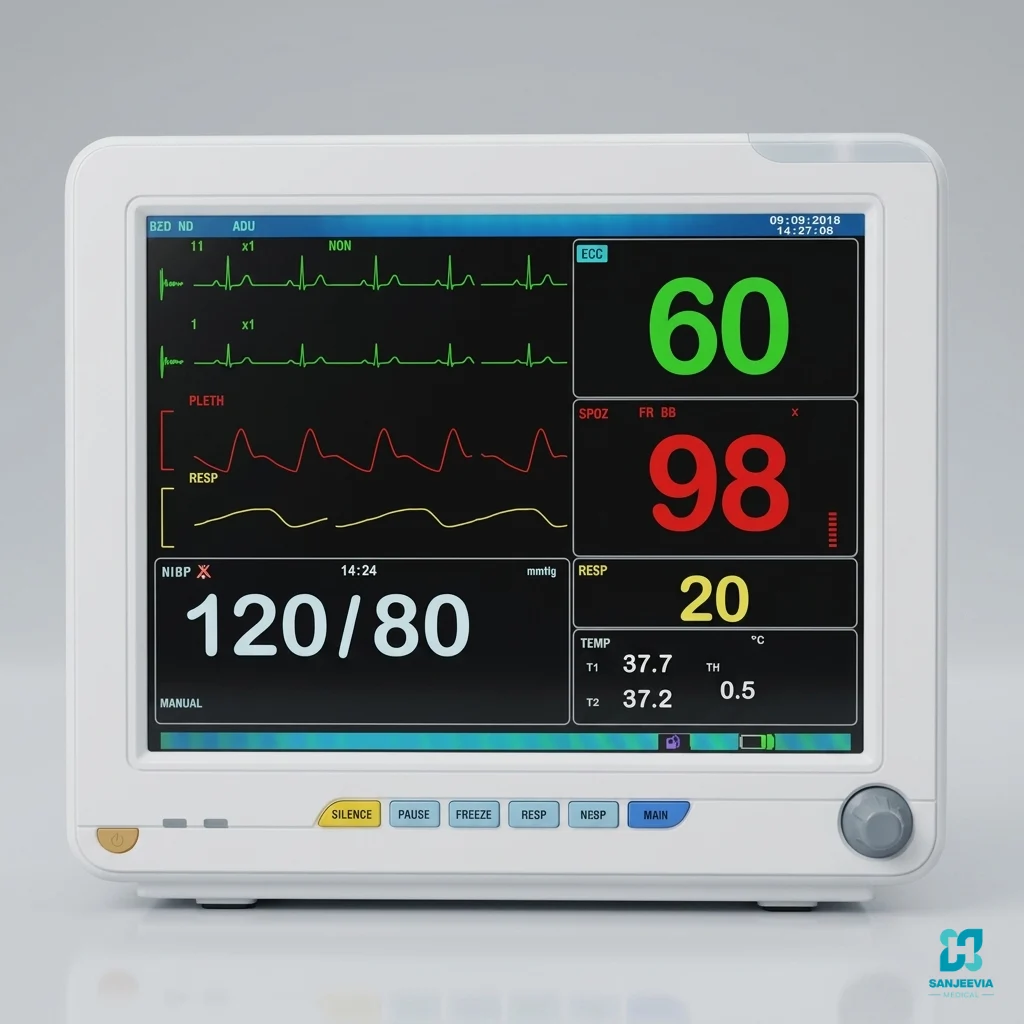
3-Parameter Patient Monitor
Separate monitoring equipment only when the paediatric team requests it. The listed package uses adult accessories; neonatal-compatible sensors and cuffs must be confirmed separately.
Open each product page for the current rental or purchase options and package details. Confirm the exact supplied model, compatible accessories and delivery availability for your PIN code.
Watch Sanjeevia’s how-to-use video
This video introduces Sanjeevia’s phototherapy unit, positioning and home-use checks. It does not decide whether a newborn is eligible for home treatment or set the bilirubin-testing schedule.
How to Use a Phototherapy Machine for Newborn Jaundice | Sanjeevia — watch on YouTube
Use the demonstration with the instructions for the supplied model and the patient’s written clinical plan. Controls, accessories and allowed settings can differ.
Jump to equipment details
How can light change bilirubin?
Bilirubin is a yellow pigment produced as red blood cells are broken down. A newborn’s liver may not yet clear it efficiently. Phototherapy uses an artificial light source with an appropriate spectrum and irradiance to change bilirubin in the skin into forms that are easier to remove.
The important equipment terms are wavelength, irradiance, treatment area and distance. Irradiance describes the light energy reaching the skin. Distance and angle affect delivery, so the stand should not be moved closer or farther from the baby unless the written setup or responsible clinician permits it.
This is therapeutic blue light, not ordinary room light and not sunlight. NICE specifically advises against using sunlight as treatment. A blue-looking lamp is not automatically a clinically effective phototherapy unit.
Who decides whether home phototherapy is suitable?
Treatment decisions use the baby’s bilirubin result, age in hours, gestational age, clinical condition and risk factors. The American Academy of Pediatrics describes home LED phototherapy as an option only for carefully selected babies who can receive the device promptly and have reliable daily bilirubin measurement.
Home equipment is inappropriate when the paediatric team is concerned about rapid bilirubin rise, neurotoxicity risk, feeding or hydration, illness, unreliable follow-up or the family’s ability to provide treatment. A delivery company cannot replace that assessment.
Ask for the treatment start instruction, bilirubin-testing schedule, feeding plan, permitted breaks and the exact signs that require hospital assessment. Read Sanjeevia’s home-phototherapy questions for parents before discharge.
What should arrive with the machine?
| Item | Purpose | What to verify |
|---|---|---|
| LED light head and stand | Provide and position the treatment light. | Exact model, stable height adjustment and prescribed distance. |
| Power cable and controls | Power the lamp and show operating status or time, depending on model. | Correct supply, readable controls and no cable damage. |
| Infant eye shield | Protect the eyes during exposure. | Correct fit, clean/new patient-contact item and eye-care instructions. |
| Bassinet or cot | Provide the treatment surface. | It is not included in Sanjeevia’s listing; the paediatric team must approve the arrangement. |
| Irradiance check | Confirms light output across the treatment area. | Ask when and how the delivered unit was measured. |
The product listing includes the unit, eye shield, power cable and handover card. It does not include the neonatal cot, paediatric consultation, bilirubin tests, nursing or emergency assessment. Confirm every item in writing.
What does safe daily use involve?
- Use the unit only after the paediatrician has confirmed eligibility, provided the plan and arranged bilirubin follow-up.
- Place and lock the equipment as demonstrated. Set the prescribed distance and orientation; keep vents and the treatment area unobstructed.
- Use the supplied eye protection and expose the skin as directed while maintaining safe temperature and positioning. Never leave the baby unattended.
- Follow the feeding and permitted-break instructions. Record treatment times, feeds, wet nappies, temperature observations and any concerns for the clinical team.
- Attend every planned bilirubin check. The lamp’s timer and the baby’s skin colour do not replace a blood test when one is required.
NICE advises monitoring temperature and hydration, supporting feeding and using eye protection with routine eye care. The treating team decides whether and how long breaks are allowed. Do not add white curtains or reflective material unless the exact protocol requires it.
What should make parents seek help?
Contact the paediatric team promptly if the baby is difficult to wake, feeds poorly, has fewer wet nappies, develops an abnormal temperature, becomes more yellow, has unusual movements or the equipment cannot be used as planned. Follow the written escalation instructions rather than waiting for the next routine visit.
If bilirubin rises or approaches an escalation threshold, hospital treatment may be needed. Home phototherapy must not delay inpatient care. After treatment stops, the clinician may arrange a repeat test because bilirubin can rebound.
If the lamp fails, shifts position or shows damage, stop relying on it and contact the equipment provider and clinical team. Do not substitute sunlight, a decorative blue lamp or a different machine without approval.
Rental and delivery questions in Delhi NCR
Ask Sanjeevia to identify the exact manufacturer and model, confirm the measured irradiance at the prescribed distance, and list the included accessories. Confirm the delivery PIN code, transport charge, daily rental period, extension process and collection timing.
Keep the paediatric prescription, bilirubin reports, equipment identity and support numbers together. The family should know who answers clinical questions and who handles equipment faults; these are different responsibilities.
The phototherapy rental guide explains the current booking process and package. Use it alongside the written paediatric plan rather than treating a checkout page as permission to begin treatment.
Frequently asked questions
Can sunlight replace the machine?
No. NICE advises not to use sunlight to treat neonatal hyperbilirubinaemia.
Can parents decide when to stop because the baby looks less yellow?
No. Stopping and follow-up depend on bilirubin measurements and the paediatric plan.
Does the rental include bilirubin testing or a nurse?
No. Sanjeevia’s listing separates equipment rental from bilirubin testing, paediatric consultation, nursing and emergency care.
Is a patient monitor always needed?
No. Use separate monitoring equipment only if the paediatric team requests it and confirms neonatal-compatible accessories and settings.
Explore your equipment options
Phototherapy Machine
Single-surface LED phototherapy unit for clinician-directed treatment. Confirm measured irradiance, treatment distance and the monitoring plan before delivery.
3-Parameter Patient Monitor
Separate monitoring equipment only when the paediatric team requests it. The listed package uses adult accessories; neonatal-compatible sensors and cuffs must be confirmed separately.
Open each product page for the current rental or purchase options and package details. Confirm the exact supplied model, compatible accessories and delivery availability for your PIN code.
Sources and useful reading
- NICE: Jaundice in newborn babies under 28 days — Treatment thresholds, phototherapy care, monitoring, eye protection and equipment use.
- AAP: Hyperbilirubinemia clinical guideline — Criteria and safeguards for selected home LED phototherapy.
- AAP: Hyperbilirubinemia resources — Current guideline hub and implementation resources.
- Sanjeevia: Phototherapy machine listing — The specific rental package referenced in this guide.
- CDSCO: Medical devices and diagnostics — Official Indian medical-device information; this is not an endorsement of an individual listing.
- NHSRC: Materiovigilance Programme of India — Information about reporting suspected medical-device adverse events in India; urgent care comes first.
Prepared by Sanjeevia’s editorial team. Updated 7 November 2026. This guide explains equipment; diagnosis, treatment, settings and patient-specific suitability must come from the responsible clinical team.
