
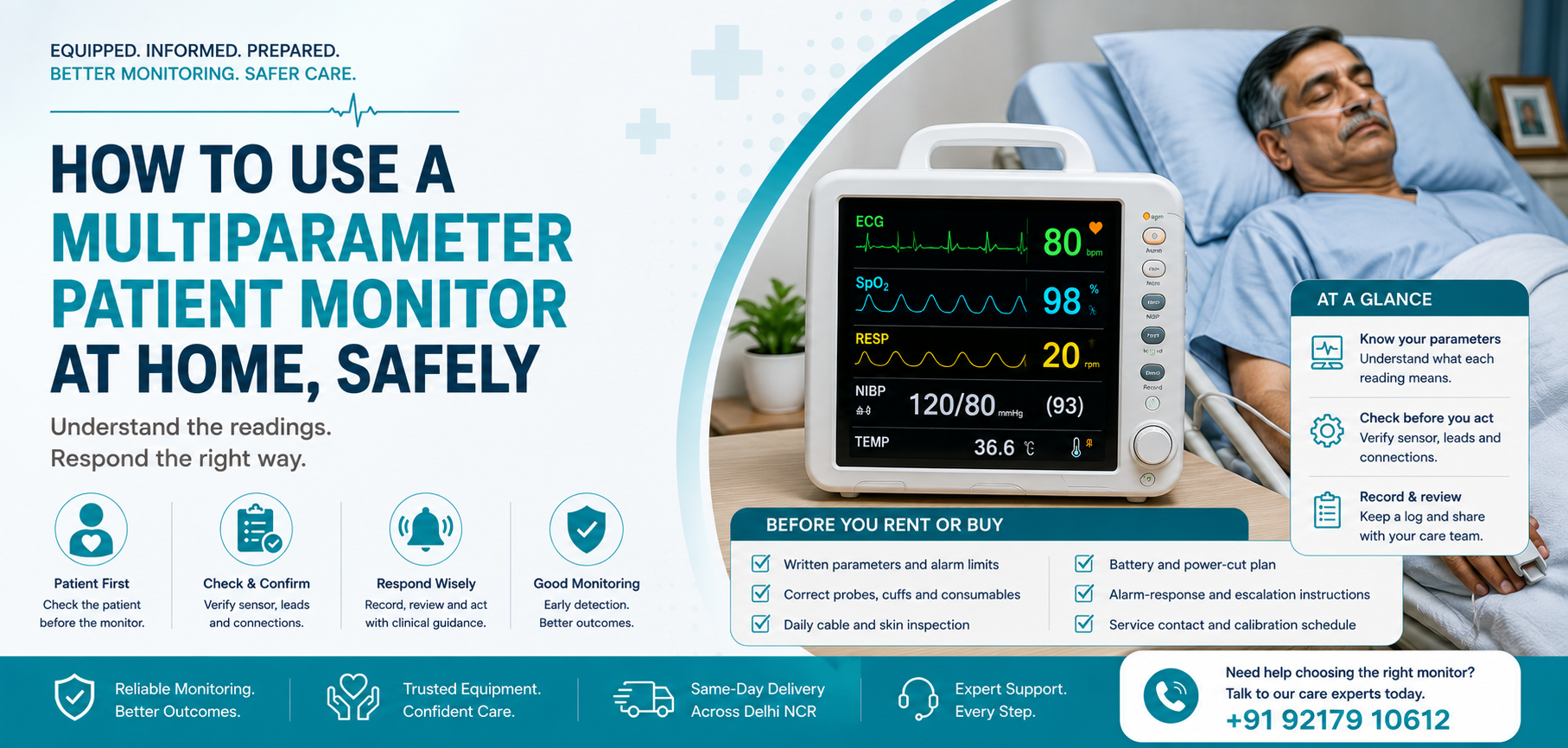
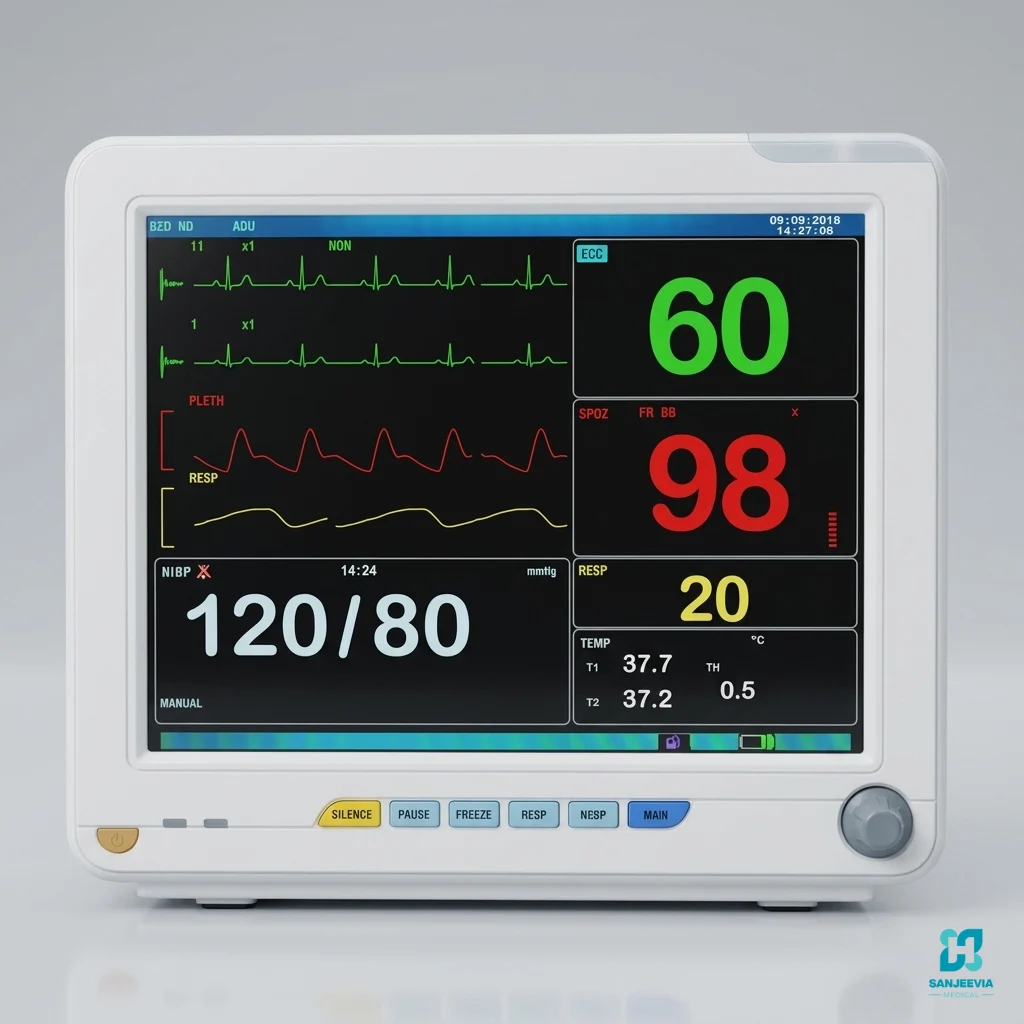
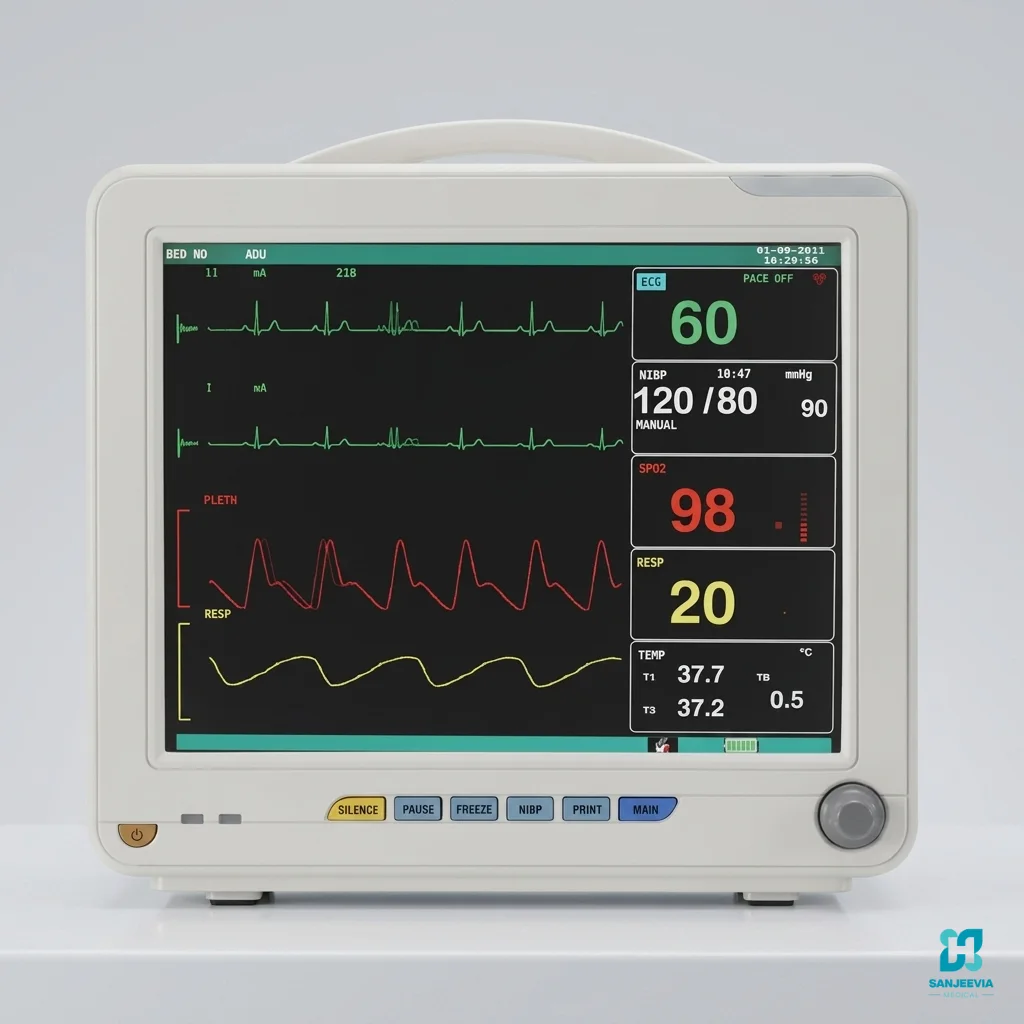
A multiparameter patient monitor can display heart rate or ECG, oxygen saturation, blood pressure, respiratory rate and temperature depending on connected modules. It does not diagnose the cause of an abnormal value. Alarm limits must be prescribed or set by qualified professionals, and the patient’s symptoms always matter.
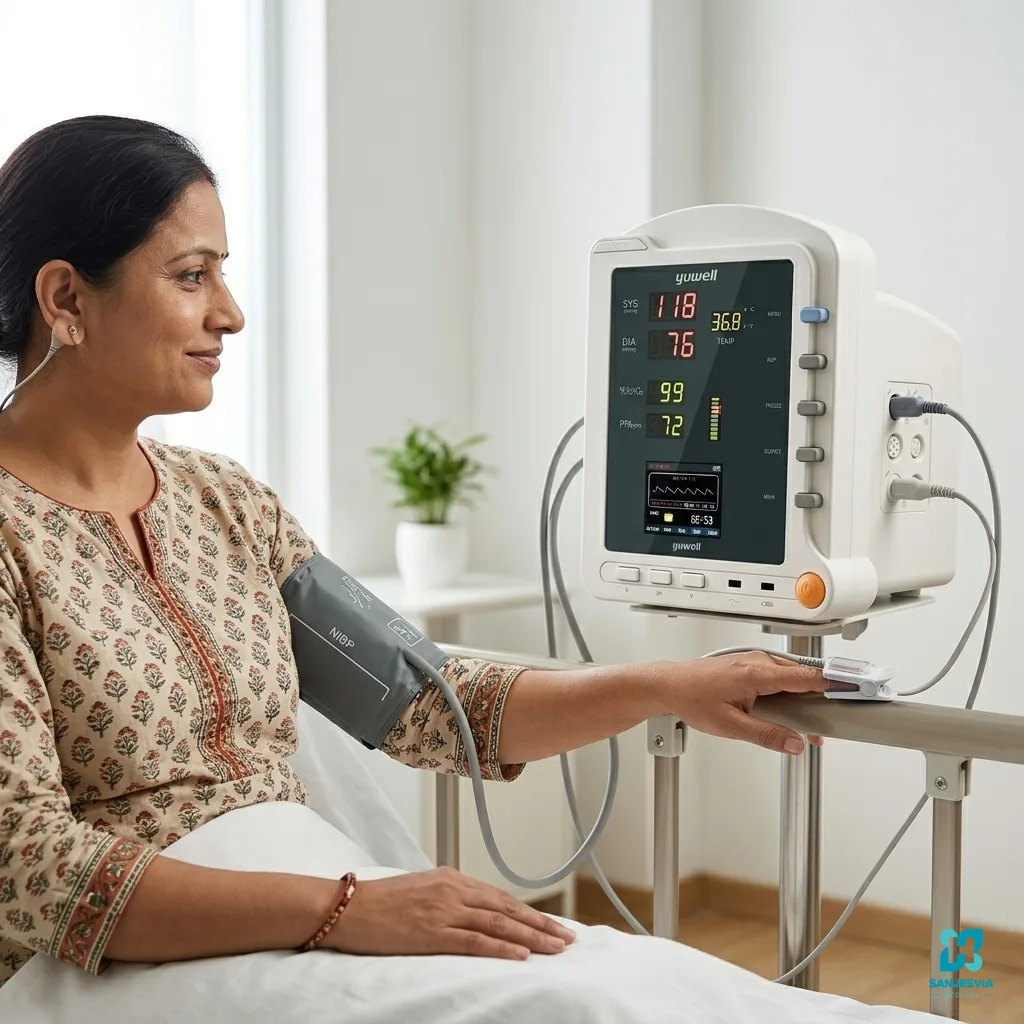
“The monitor keeps beeping, but the patient looks fine. Can we reduce the alarm?” Repeated alarms may come from movement, a loose probe or an actual change. Silencing or widening limits without review can hide deterioration.
At a Glance
- Know which parameters are actually connected and reliable.
- Check the patient first, then the sensor, lead and cuff.
- Record recurring alarms for clinical review; do not disable them for convenience.
What the Common Parameters Represent
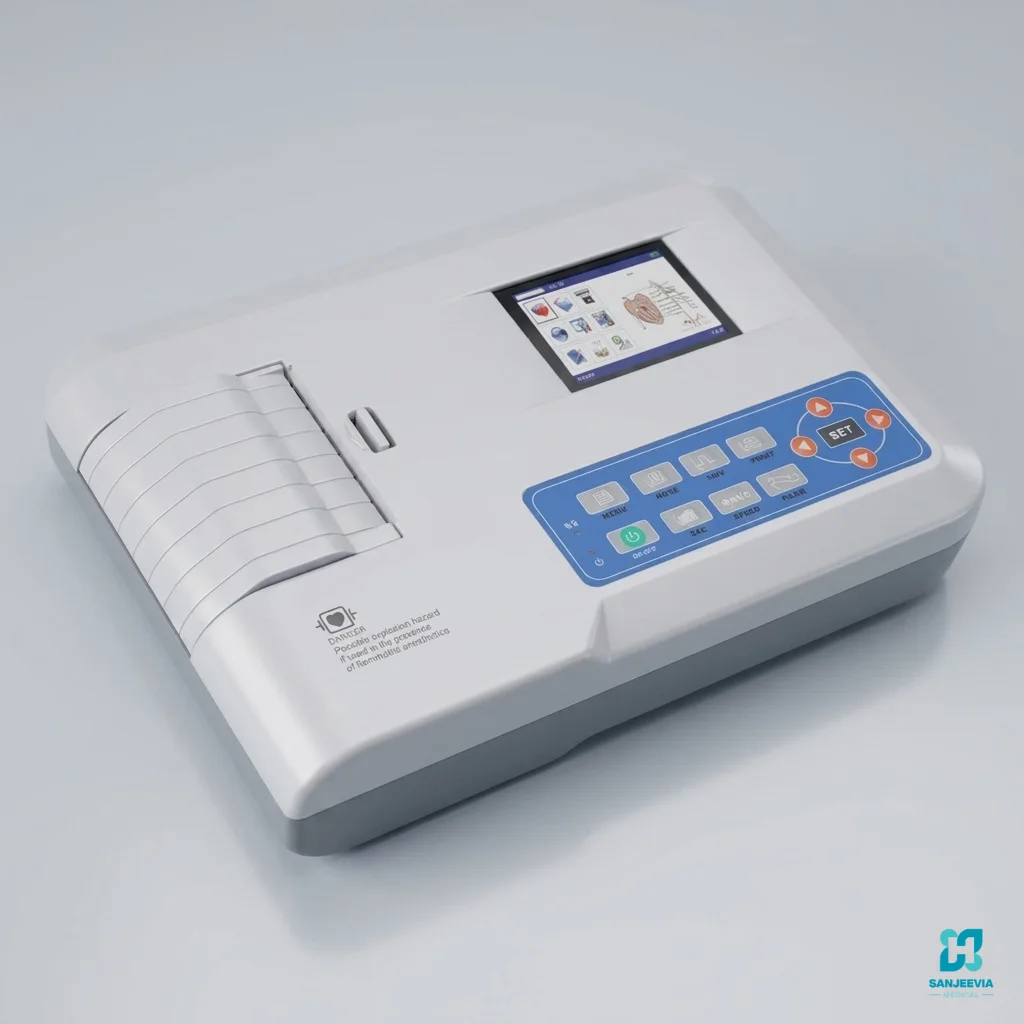
ECG electrodes can display heart rhythm and a calculated heart rate. A pulse-oximeter probe estimates oxygen saturation and pulse. A blood-pressure cuff measures intermittently unless configured otherwise.
Respiratory rate may be derived from chest impedance and can be sensitive to lead position or movement. Temperature requires the correct compatible probe.
A Safe Alarm Response
Look at the patient’s breathing, colour, alertness and symptoms. If the patient appears seriously unwell, follow the emergency plan even if you suspect a loose lead.
Check whether the displayed waveform is clean, the sensor is attached, the cuff fits and cables are intact. Do not keep restarting the monitor to erase an alarm.
Avoid Alarm Fatigue
Ask the clinician to set appropriate limits for the individual patient. Limits that are too narrow may alarm constantly; limits that are too wide may fail to alert early.
Keep an alarm log with time, parameter, symptoms, sensor condition and action taken. This helps the care team distinguish technical artefact from a clinical pattern.
Before You Rent or Buy
- Written parameters and alarm limits
- Correct probes, cuffs and ECG consumables
- Daily cable and skin inspection
- Battery and power-cut plan
- Alarm-response and escalation instructions
- Service contact and calibration schedule
Frequently Asked Questions
Is the monitor reading the same as a diagnosis?
No. It displays measurements that require clinical interpretation.
Can movement cause false alarms?
Yes, but never assume an alarm is false before checking the patient.
Can we use an adult cuff on a thin patient?
Cuff size affects accuracy. Use the clinically appropriate compatible cuff.
Should the monitor stay connected all day?
Only according to the care plan; unnecessary monitoring can cause skin issues and alarm burden.
Trusted Patient References
Home-Care Equipment in Delhi NCR
Keep the clinician’s recommendation and home-access details ready, then browse Sanjeevia’s wheelchair, monitoring and other home-care equipment. Confirm the exact model, included accessories, demonstration, service and current availability before booking.
Related Guidance and Equipment
The safest mobility or monitoring choice depends on the patient’s function and care plan; these links continue that decision with verified product pages.
Continue Reading
- Renting vs Buying Medical Equipment — compare short-term rental with long-term purchase.
- Bringing an Elderly Parent Home from ICU — plan equipment and caregiving before discharge.
Relevant Product Pages
- 5-Parameter Patient Monitor — review the available ECG, SpO2, blood-pressure and other parameters.
- 3-Parameter Cardiac Monitor — compare a simpler monitoring configuration.
Medical disclaimer: General information only. Equipment selection, transfers, monitoring limits and suction technique must follow the treating healthcare professional.
Published by Sanjeevia Medical | Delhi NCR