
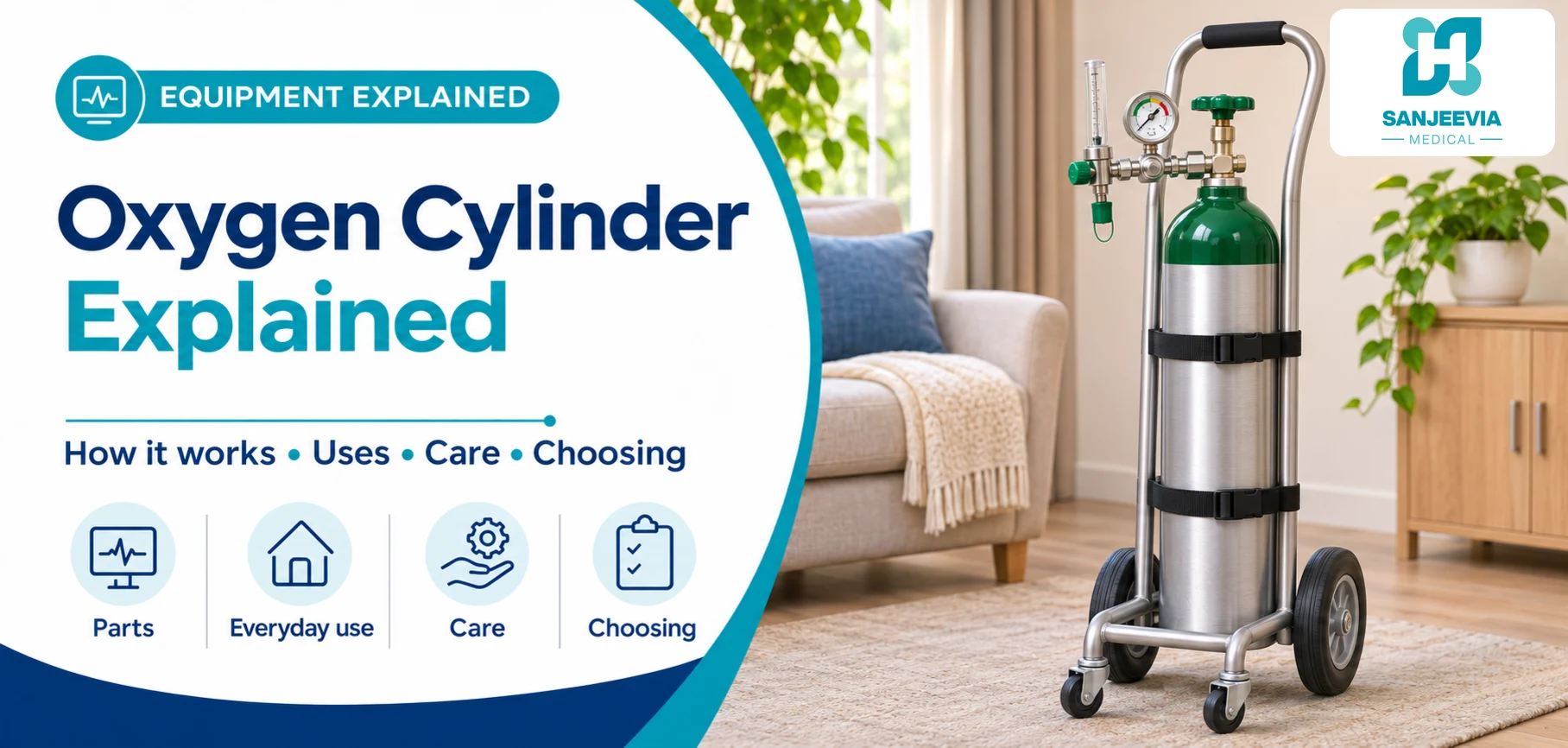
A “10-litre oxygen cylinder” can contain much more than ten litres of usable gas. That single detail explains why cylinder sizes, pressure gauges and oxygen flow are so often confused—and why the smallest cylinder is not always the most practical backup.
Quick answer: A medical oxygen cylinder stores a finite supply of compressed oxygen. A compatible regulator reduces its pressure, and a flowmeter controls the prescribed flow to the patient. It can supply oxygen without mains electricity, but it needs refilling or exchange when its usable supply runs low.
Explore relevant equipment
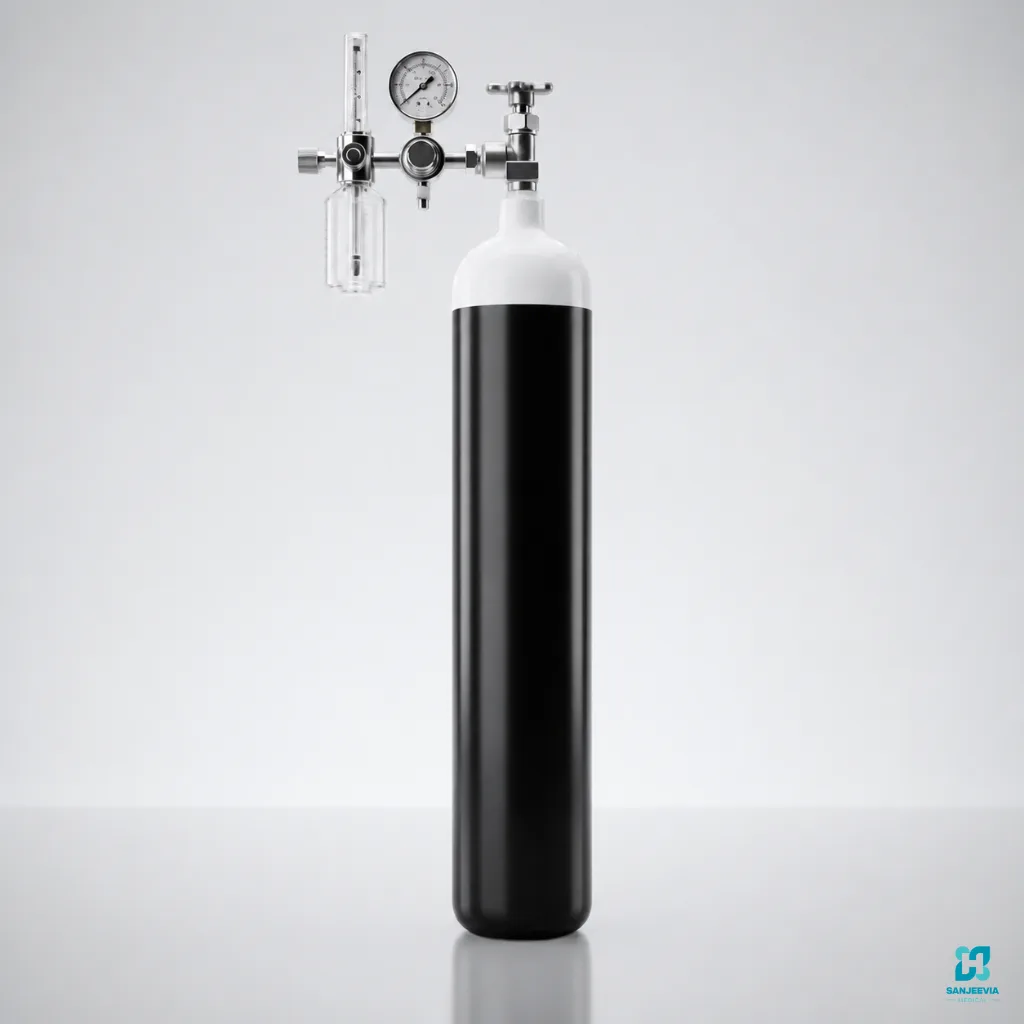
Oxygen Cylinder 10L
A smaller cylinder; calculate usable duration from the actual fill pressure and prescribed flow.
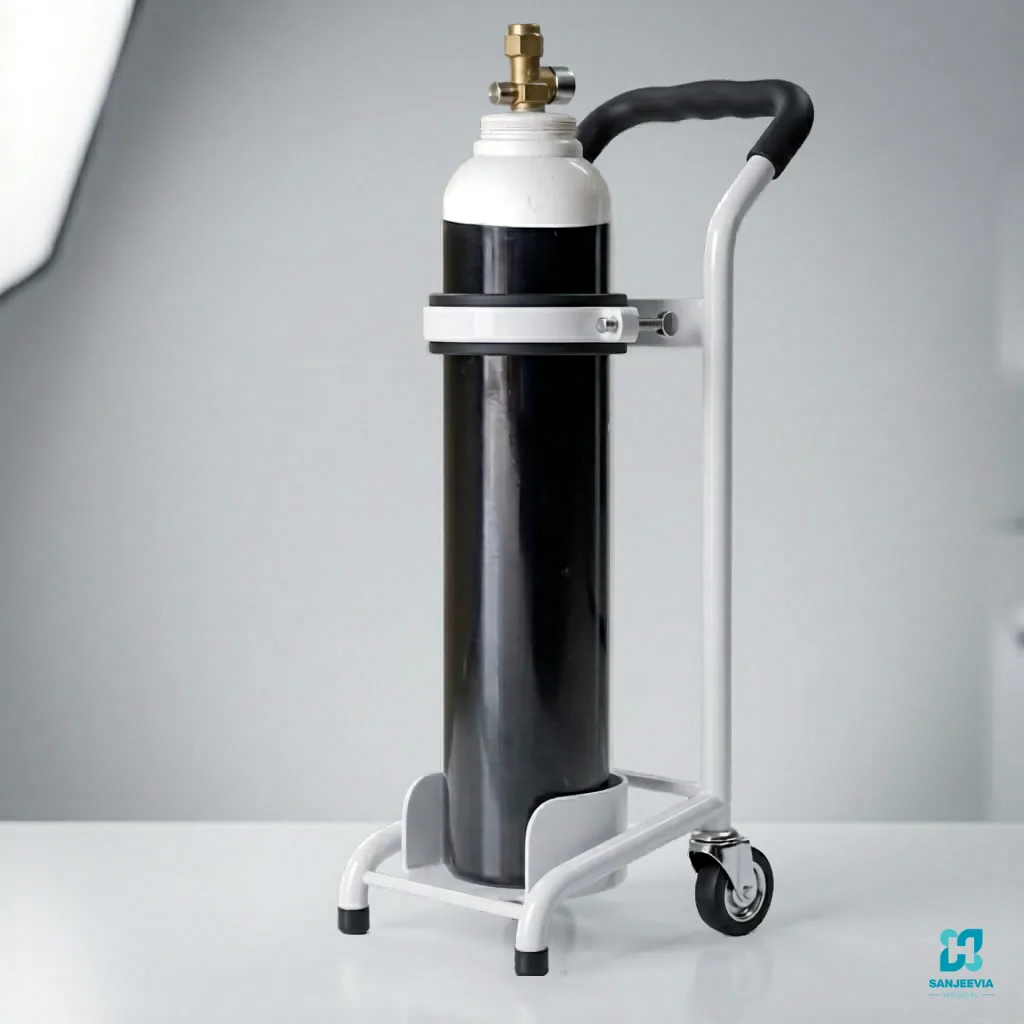
Oxygen Cylinder 47L
A larger cylinder; plan secure storage, handling and replenishment.
Check the linked product page for current prices, rental availability, accessories and terms. Confirm the assigned model and delivery PIN code before booking.
Watch Sanjeevia’s how-to-use video
Watch the cylinder, regulator and delivery accessories being introduced in Sanjeevia’s general equipment demonstration. Have a trained supplier demonstrate your own cylinder and fittings.
How to Use Oxygen Cylinder at Home | Step-by-Step Guide | Sanjeevia — watch on YouTube
Use this demonstration alongside the instructions for your supplied model and the patient’s care plan. Controls and accessories can differ.
Jump to equipment details
Follow the oxygen: the parts of a cylinder setup
| Part | Job | Important distinction |
|---|---|---|
| Cylinder and valve | Store oxygen under high pressure and control release from the cylinder. | Use medical oxygen from an appropriate documented source. |
| Pressure regulator and gauge | Reduce cylinder pressure; the gauge indicates remaining cylinder pressure. | The gauge is not the oxygen-flow setting. |
| Flowmeter | Sets the prescribed flow in litres per minute (LPM). | Follow the exact reading method for that flowmeter. |
| Tubing and mask or cannula | Carry oxygen to the patient through the prescribed interface. | Masks and cannulas are not interchangeable for every flow or situation. |
| Humidifier, if prescribed and compatible | Adds moisture in a suitable setup. | It is not compulsory for every prescription; follow the device and clinical instructions. |
| Securing stand or trolley | Supports and restrains the cylinder. | A trolley is not automatically included with the cylinder. |
A cylinder-only price is not necessarily a ready-to-use oxygen package. Check every component, its compatibility and whether it is included. Ask a trained supplier to install and demonstrate the regulator; do not improvise adapters or attempt repairs.
What 10L and 47L mean
The litre figure commonly describes the cylinder’s internal water capacity, not the amount of oxygen delivered at room pressure. Stored gas quantity also depends on fill pressure. A 10L cylinder at a nominal 150 bar contains approximately 1,500 litres of gas at atmospheric pressure; a 47L cylinder at that nominal pressure contains approximately 7,050 litres. These are simplified planning estimates.
B-type and D-type labels are often used in Indian listings, but the stamped capacity, approved working pressure, current fill pressure and valve specification are more useful than a letter alone. Check these details on the actual cylinder and paperwork. Never identify the contents solely by paint colour.
The practical difference is capacity versus handling. A larger cylinder can provide a longer supply at the same flow, but it is heavier and needs a suitable access route and secure position. A small cylinder can be easier to move but requires more frequent replenishment.
How long will an oxygen cylinder last?
An approximate continuous-flow calculation is: duration in minutes = water capacity in litres × (starting pressure − planned reserve pressure in bar) ÷ prescribed flow in LPM. The supplier and clinical team must choose the reserve and backup plan; do not assume the cylinder should be run completely empty.
For illustration only, using a nominal 150-bar starting pressure and a 20-bar planning reserve gives:
| Example cylinder | Approximate usable gas | At 2 LPM | At 5 LPM |
|---|---|---|---|
| 10L water capacity | 1,300 litres | 10 hours 50 minutes | 4 hours 20 minutes |
| 47L water capacity | 6,110 litres | 50 hours 55 minutes | 20 hours 22 minutes |
These figures are not a guaranteed runtime or a recommended prescription. Real fill pressure, temperature, regulator behaviour, leaks and reserve requirements change the result. Arrange replenishment before the reserve is reached, with enough margin for transport and delays.
Cylinder, concentrator or both?
A cylinder stores gas; a concentrator separates oxygen from room air and normally needs electrical power. A clinician may plan cylinder oxygen for a defined requirement or as an independent backup for a concentrator. A backup is useful only if it lasts long enough and a trained caregiver can switch to it as instructed.
For ongoing daily use, compare refill logistics with a concentrator’s flow capability and electricity requirements. No option is automatically better for every patient. Read oxygen cylinder versus oxygen concentrator and the 10L versus 47L planning guide for related questions.
How to use it: what your handover should cover
- Show the written prescription: flow, interface, hours of use, target range and escalation plan.
- Have the supplier check the cylinder identity, test status, valve, compatible regulator and actual fill pressure.
- Secure the cylinder upright using the correct stand or trolley and keep the valve protected from impact.
- Ask for a live demonstration of the pressure gauge, prescribed flow setting, leak checks, safe start/stop sequence and changeover to backup.
- Keep tubing clear of kinks and walking routes. Check the supply and patient as taught, and record pressure or replenishment needs.
- Book the next refill or exchange early enough to maintain the prescribed supply.
Keep oxygen away from cigarettes, flames, incense, diyas, cooking appliances and spark sources. Oxygen is not a fuel, but it makes materials burn much more readily. Never put oil or grease on oxygen fittings. Do not use a damaged or leaking setup.
Refill, exchange and buying checks in India
A refill means your accepted cylinder is filled and returned; an exchange means an accepted empty cylinder is swapped for an inspected filled cylinder. Confirm size, ownership or deposit terms, regulator responsibility, medical-oxygen source and the expected turnaround before booking.
Ask for the cylinder’s identity and applicable test status, and confirm that the filling source is authorised for the relevant work. PESO publishes official cylinder and oxygen-related information. Do not attempt to refill at home, decant oxygen yourself, or substitute industrial gas.
For Delhi NCR arrangements, compare Sanjeevia’s refill versus exchange guide and the medical oxygen refill or exchange service. Confirm delivery and refill availability for your address. Severe breathing difficulty or reduced responsiveness needs emergency medical care, not a wait for equipment delivery.
Frequently asked questions
Does a 10L cylinder contain only ten litres of oxygen?
No. The label usually indicates water capacity. Gas quantity also depends on pressure.
Does an oxygen cylinder need electricity?
The cylinder supplies compressed gas without mains power, although other equipment in the patient’s care setup may still need electricity.
Is the regulator included?
Not necessarily. Sanjeevia’s linked cylinder listings separate the cylinder from several accessories. Confirm the complete package in writing.
Can I increase oxygen when the patient feels breathless?
Follow the prescribed oxygen and emergency plan. Breathlessness can have several causes; do not use this article to change treatment or delay urgent assessment.
Explore your equipment options
Oxygen Cylinder 10L
A smaller cylinder; calculate usable duration from the actual fill pressure and prescribed flow.
Oxygen Cylinder 47L
A larger cylinder; plan secure storage, handling and replenishment.
Check the linked product page for current prices, rental availability, accessories and terms. Confirm the assigned model and delivery PIN code before booking.
Sources and useful reading
- WHO: Oxygen Cylinder Safety — Medical oxygen handling and fire-safety principles.
- PESO: oxygen-related information — Official Indian information about oxygen cylinders, filling sources and related approvals; some resources were issued during COVID-19.
- PESO: cylinder colour-identification circular — Indian cylinder-identification reference; always check the label and actual cylinder details.
- Sanjeevia: 47L cylinder — Listed nominal capacity, fill pressure and separate accessories used in the planning examples.
Prepared by Sanjeevia’s editorial team. Updated 6 November 2026. This equipment guide is educational; individual treatment and device settings come from the treating clinical team.
