
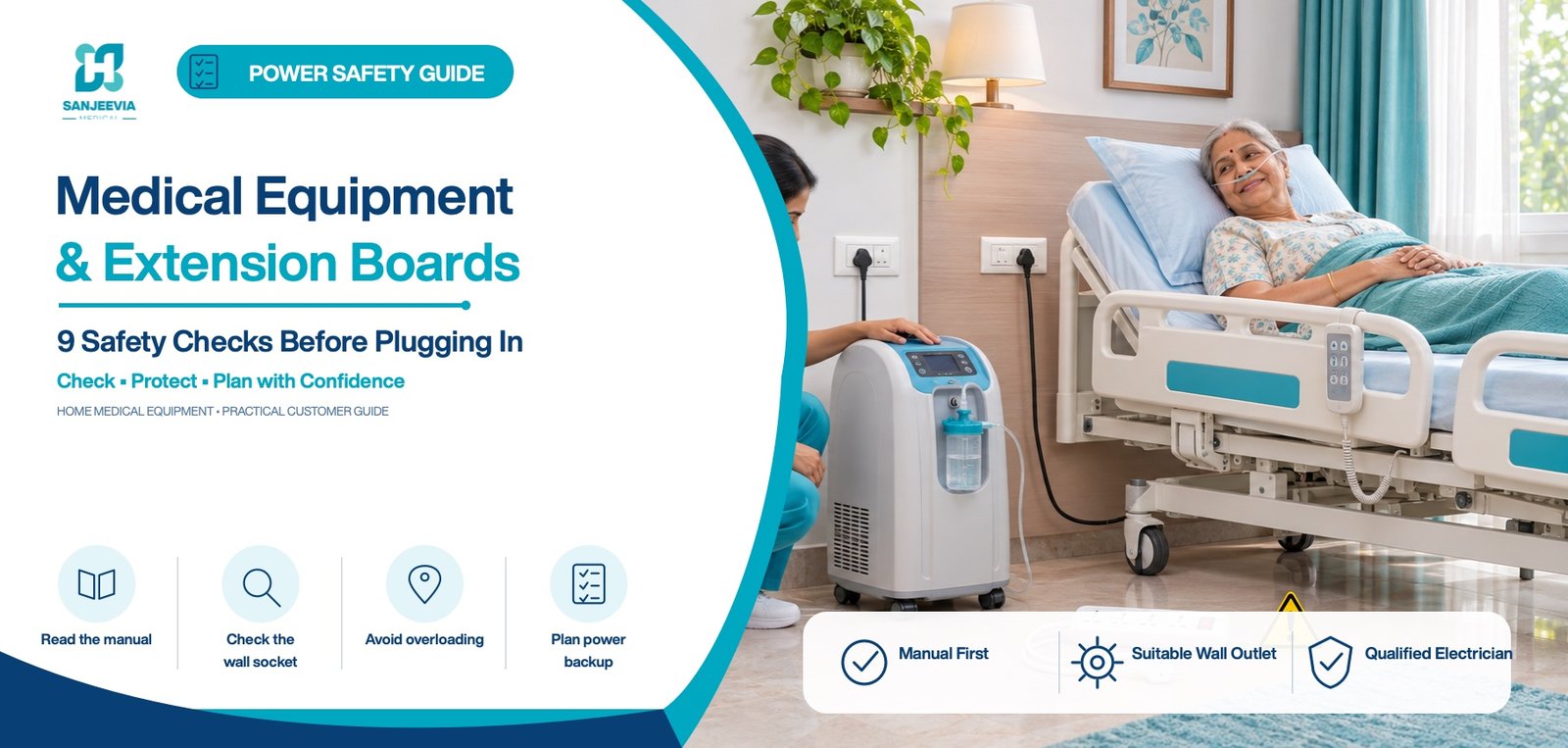
Families often ask a simple question after arranging an oxygen concentrator, electric hospital bed, BiPAP or monitor: can the device be connected to an extension board? The safe answer depends on the exact model. A convenient socket strip is not automatically suitable for medical equipment, and a high-looking ampere label does not cancel a manufacturer warning.
Equipment families commonly ask about
These cards help you check the actual model and its supplied power arrangement. They are not a substitute for reading the manual that comes with the unit delivered to your home.
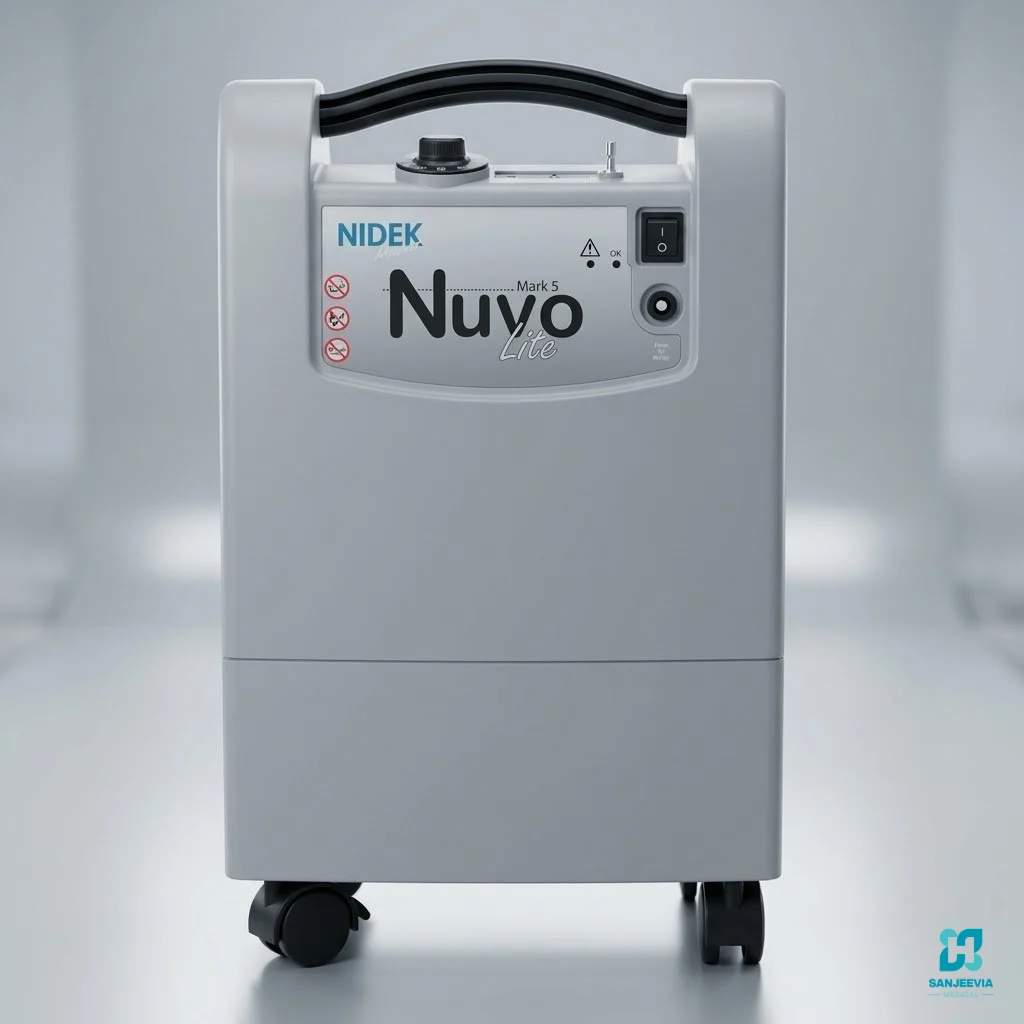
Nidek Nuvo Lite 5L
Confirm the exact manual, wall socket and backup plan before setup.
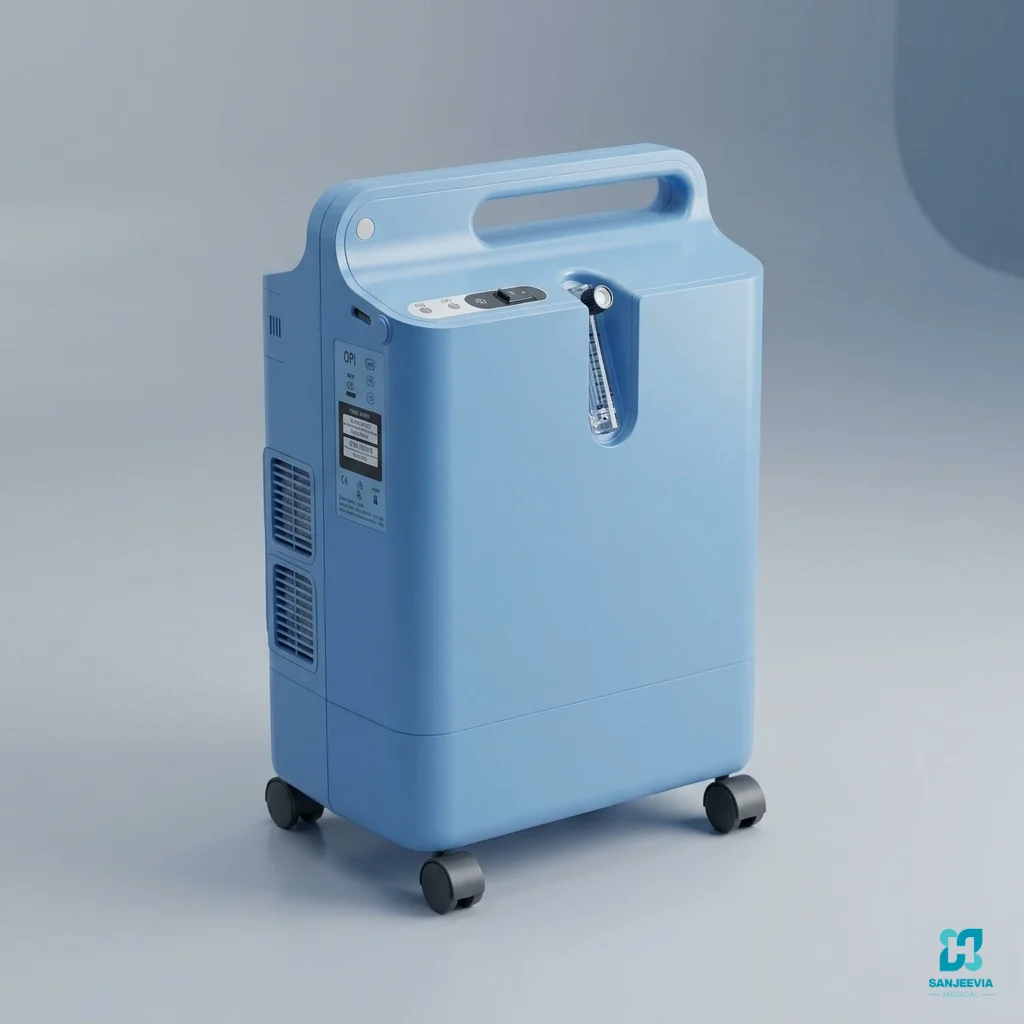
Philips EverFlo 5L
Review the manufacturer power instructions before connecting the device.
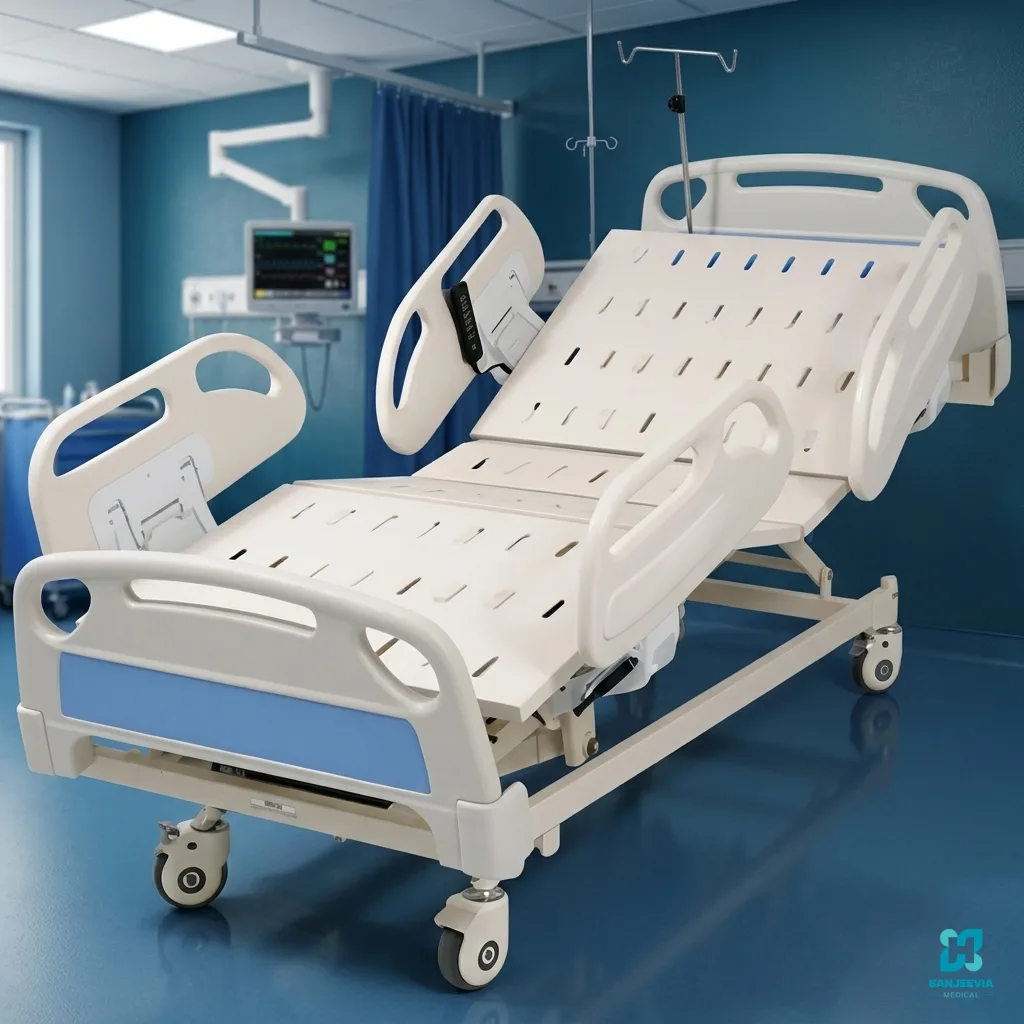
3 Function Electric Bed
Plan a reachable socket without creating a trip or cable-pull hazard.
9 safety checks before plugging medical equipment into an extension board
1. Read the exact model manual
Brand families can contain models with different power requirements. Use the model number on the rating plate and the manual supplied with that unit. Look for the sections titled electrical requirements, power supply, warnings, electromagnetic compatibility and approved accessories. If the manual says no extension cord or adapter, stop there. A retailer recommendation or a general online checklist cannot override it.
2. Check the wall outlet, earthing and plug fit
The plug should fit firmly without wobbling, exposed metal or improvised conversion. The outlet should match the device requirements and have the protection required by the manufacturer. India’s Department of Consumer Affairs explains correct plug, socket and earthing principles in its consumer guide to electrical plugs and sockets. If the outlet is loose, cracked, warm or visibly damaged, do not keep using it. Arrange assessment by a qualified electrician.
3. Do not estimate the load by appearance
Different devices draw power differently during starting, normal operation, alarm conditions and battery charging. The total load is not safely calculated by counting sockets or comparing device size. Use the ratings and instructions supplied by the manufacturers. Families using several devices in one room can also review our guide to space, power and caregiver checks for multiple medical devices.
4. Never daisy-chain boards or adapters
Do not connect one extension board into another, place a multi-plug on top of a board or use a chain of converters to make a plug fit. Additional connection points can loosen, heat up or be pulled accidentally. The Delhi Fire Service electrical safety guidance warns against overloading electrical points and using temporary wiring as a permanent arrangement.
5. Inspect for heat, smell, noise and damage
Stop using the connection if you notice unusual warmth, burning smell, discoloration, buzzing, sparking, repeated tripping or an intermittent device restart. Switch off safely if the device instructions permit and move the patient to the documented backup plan. Do not tape a damaged cable, bypass a fuse or continue because the device appears to work again.
Need help checking a home setup?
Share the device name, model and city. A Sanjeevia coordinator can help you identify the manual and the supplied accessories. Electrical alterations and load assessment should be handled by a qualified electrician.
6. Keep cables dry, visible and free from pressure
Do not run power cables under rugs, mattresses, bed wheels, doors or furniture. Keep connections away from water, wash areas and places where cleaning liquids can collect. Route the cable so the patient, caregiver and equipment wheels cannot pull or crush it. Our room-preparation guide for home medical equipment covers access, floor space and cable planning.
7. Apply extra caution around oxygen
Oxygen does not burn by itself, but it can make other materials burn more readily. Keep oxygen equipment away from smoking, flames, heat and spark sources, following the manufacturer’s separation and ventilation instructions. A loose plug, switching spark or damaged socket is not acceptable near an oxygen setup. Never apply oil or grease to oxygen fittings.
8. Treat backup power as a separate clinical plan
An extension board does not provide backup power. If interruption could affect breathing support, monitoring or another essential function, ask the clinician and equipment provider for a written outage plan. Confirm what the device can use, how long any internal battery lasts, how alarms behave and whom to call. Do not select a UPS or inverter solely from a generic wattage calculator.
9. Confirm the arrangement during handover
At installation, ask the person handing over the equipment to show the approved power connection, startup sequence, alarms, emergency stop steps and model-specific warnings. Keep the manual and support number where every caregiver can find them. If the home socket arrangement does not match the manual, pause the setup and correct the electrical issue before routine use.
What should you use instead?
| Situation | Safer next step |
|---|---|
| The manual requires a direct wall outlet | Use a suitable, correctly installed wall outlet. Do not add an extension board. |
| The cable does not reach safely | Reposition the equipment if permitted, or ask a qualified electrician about a compliant outlet location. |
| You need backup during a power cut | Use only a backup arrangement compatible with the exact device and approved by the relevant manufacturer or supplier. |
| You need several devices in one room | List every model, map separate outlets, check the circuit with a qualified electrician and avoid improvised multi-plug chains. |
| The socket becomes warm or loose | Stop using it and arrange electrical inspection. Do not continue testing it with the medical device. |
Frequently asked questions
Can an oxygen concentrator be used with an extension board?
Do not assume so. Several concentrator manuals advise against extension cords or adapters. Check the exact model manual and use a suitable wall outlet when the manufacturer requires it.
Is a surge-protected extension board automatically safe for medical equipment?
No. Surge protection does not cancel limits on load, earthing, plug fit, cable routing or a manufacturer prohibition. It also does not provide backup power unless the product is specifically a compatible backup system.
Can one board run a hospital bed and oxygen concentrator together?
Do not make that decision from the number of sockets. Check both manuals, the circuit and each device’s requirements. Separate suitable wall outlets are often the clearer arrangement when manuals require direct connection.
What if a medical device restarts when another appliance turns on?
Treat it as a power-supply problem. Follow the device’s safe-stop and backup instructions, remove nonessential loads if safe, and have the circuit assessed. Repeated restarts can interrupt therapy or monitoring.
Who should check the home electrical point?
A qualified electrician should assess the outlet, earthing, protective device and circuit. The equipment provider should confirm the medical device’s model-specific requirements. Both checks serve different purposes.
For general education only. Follow the treating clinician’s plan, the exact equipment manual and qualified electrical advice. For any alarm, breathing difficulty or urgent change in the patient’s condition, seek appropriate medical help immediately.
