
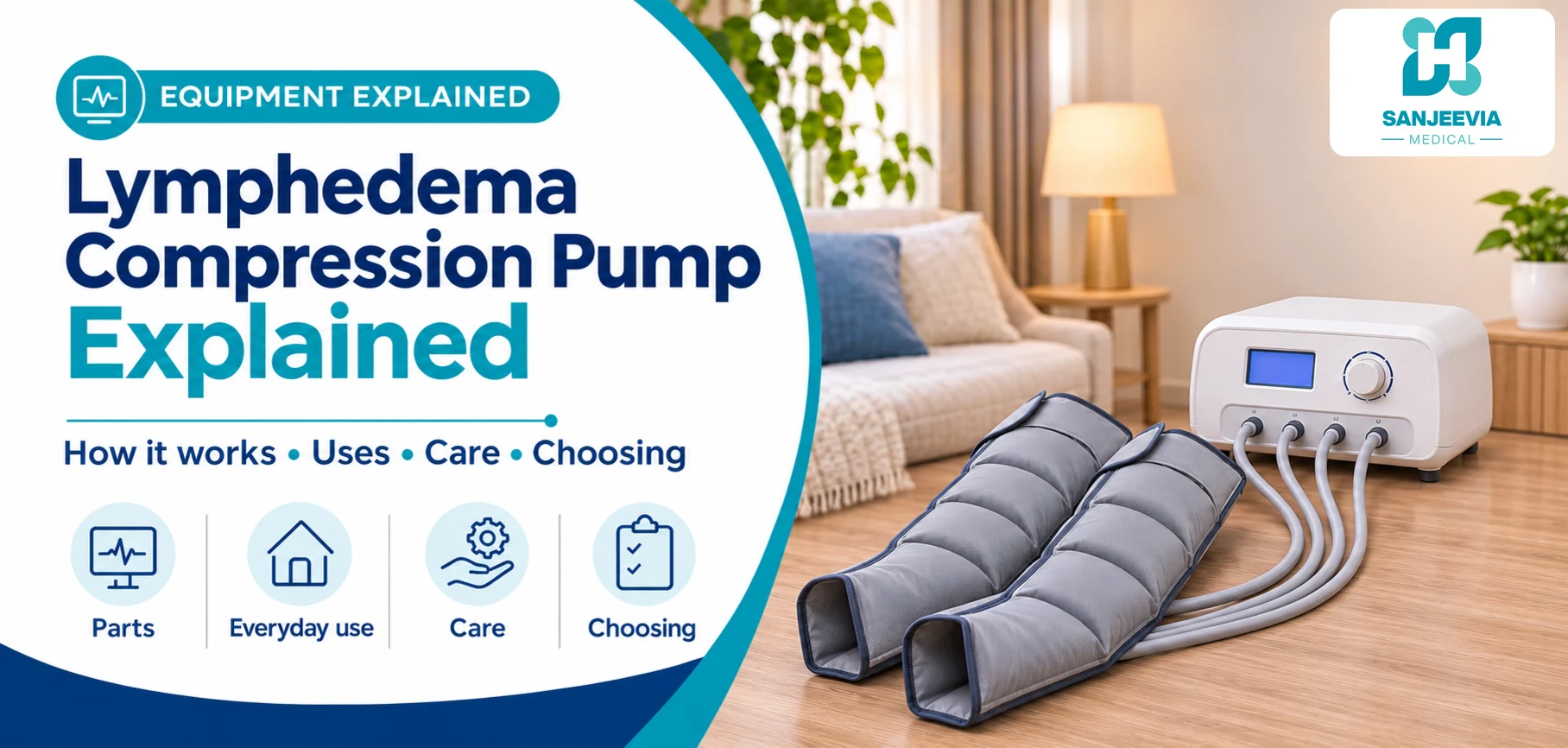
A lymphedema pump and a DVT pump may both inflate leg sleeves, but that similarity can be misleading. The intended condition, garment design, chamber sequence and treatment plan determine what the equipment is actually for.
Quick answer: A lymphedema compression pump uses an inflatable multi-chamber garment to apply sequential pressure along a limb. It may support selected lymphedema-management plans after specialist assessment. It does not cure lymphedema and should not replace skin care, exercise, compression garments or other prescribed therapy.
Explore relevant equipment
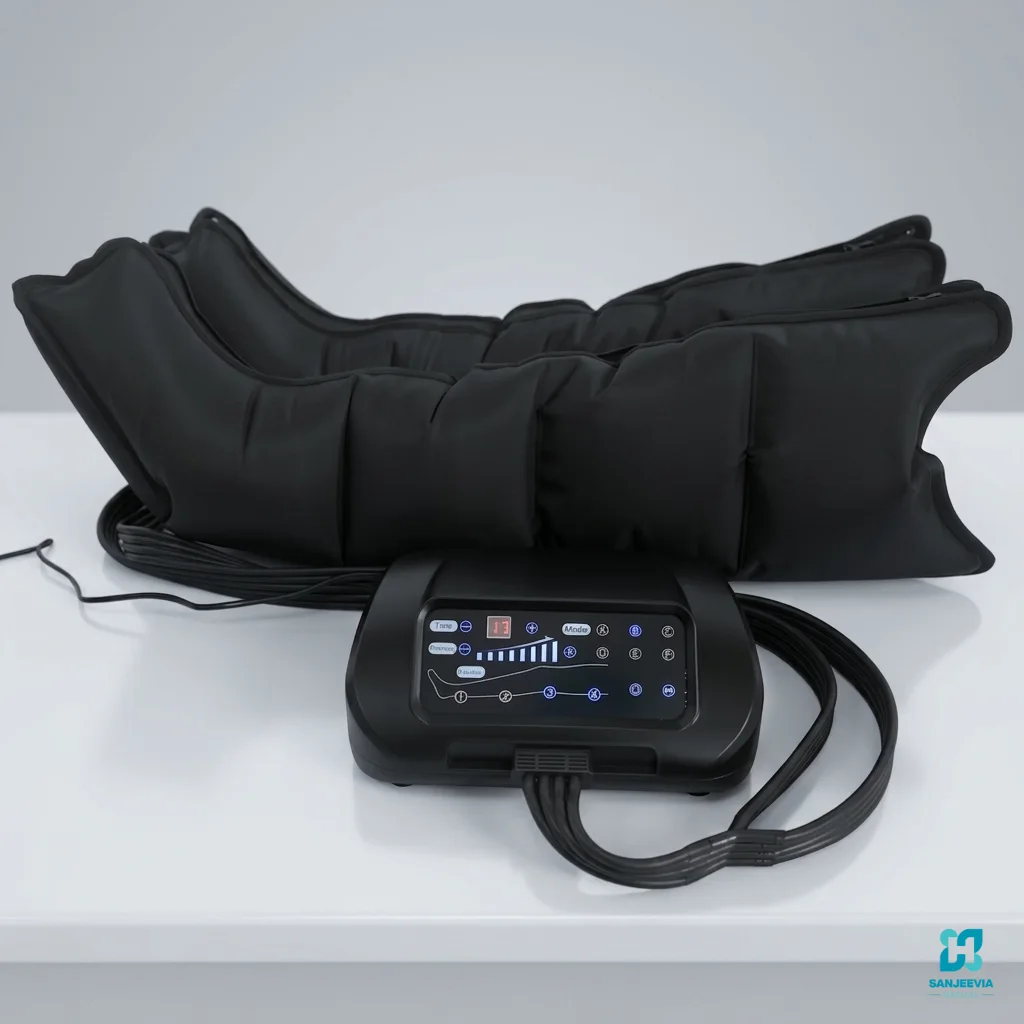
4-Chamber Lymphedema Compression Pump
Four-chamber sequential compression device for a clinician-led lymphedema plan. Confirm garment site, size, programme and separate patient-contact items.
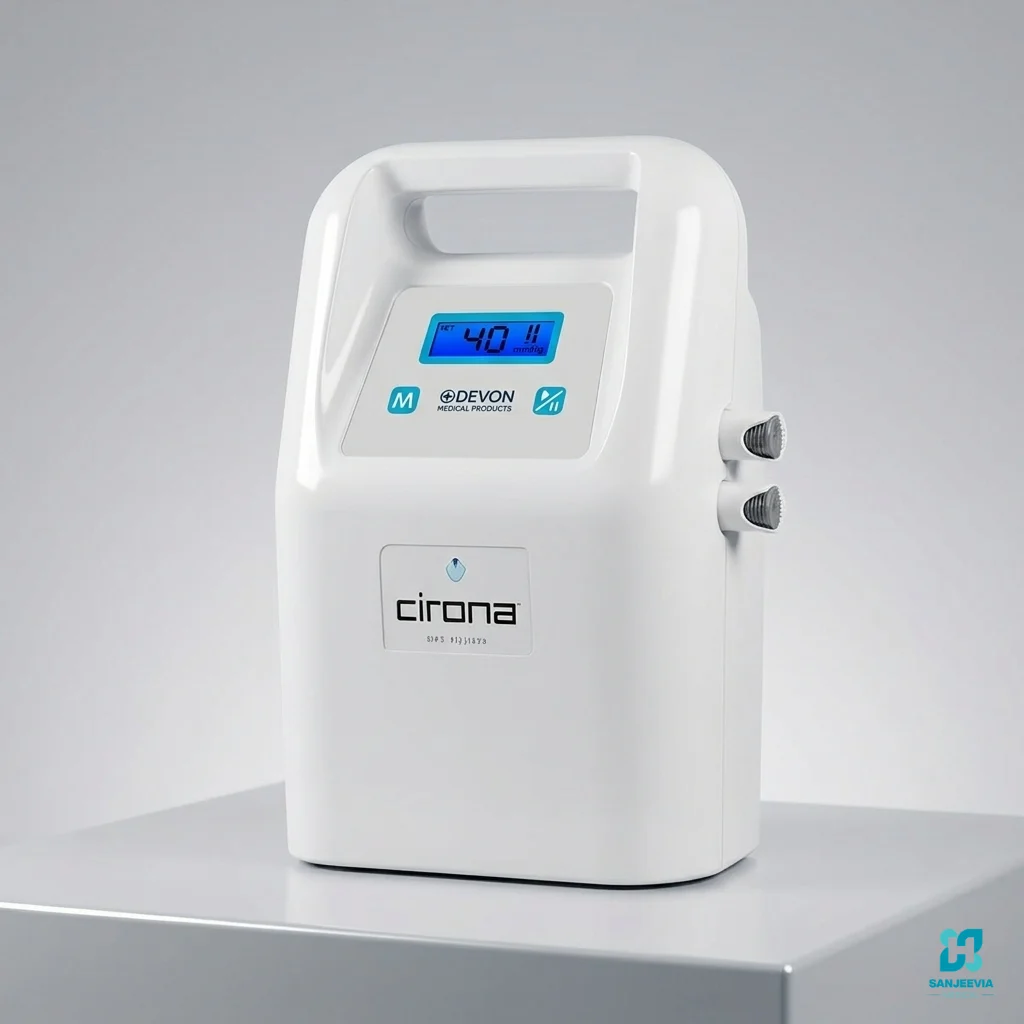
DVT Pump – Standard
DVT-prevention IPC option shown for comparison. It has a different primary purpose and must not be substituted for a lymphedema pump without clinical approval.
Open each product page for the current rental or purchase options and package details. Confirm the exact supplied model, compatible accessories and delivery availability for your PIN code.
Watch Sanjeevia’s how-to-use video
This Sanjeevia demonstration introduces the four-chamber pump, sleeves and controls. The appropriate limb, pressure, session duration and frequency must come from the lymphedema clinician.
How to Use Lymphedema Compression Pump at Home | Sanjeevia — watch on YouTube
Use the demonstration with the instructions for the supplied model and the patient’s written clinical plan. Controls, accessories and allowed settings can differ.
Jump to equipment details
What is lymphedema—and what can a pump do?
Lymphedema is persistent swelling caused by impaired lymph drainage. The NHS describes decongestive lymphatic therapy as a programme involving compression, skin care, exercise and specialised massage. A pneumatic pump may be an additional tool for selected patients, not the entire programme.
The pump moves air, not body fluid. Its garment applies external pressure that changes from chamber to chamber, helping encourage fluid movement along the limb. The response depends on the diagnosis, skin, circulation, garment fit and broader treatment plan.
A reduction in swelling during a session does not mean the condition is cured. Maintenance may still require prescribed garments, movement and ongoing review.
What do four chambers and “sequential” mean?
The sleeve is divided into connected air chambers. In a sequential programme, chambers inflate in an ordered pattern, commonly beginning farther from the body and progressing upward. The exact sequence, overlap and release pattern depend on the device and garment.
Pressure is often displayed in mmHg, but the number alone does not define safe or effective treatment. The garment area, chamber design, limb shape, session time and the person’s circulation all matter. Use only the clinician-approved programme for the supplied model.
More chambers can allow a more graduated pattern, but a larger chamber count is not automatically better. Match the device to the plan rather than choosing by the biggest number on a listing.
The equipment and what is personal to the patient
| Part | Purpose | What to confirm |
|---|---|---|
| Pump and controller | Generate and control the pressure sequence. | Exact model, programme, pressure units and locked clinical settings. |
| Garment or sleeve | Transfer pressure to the limb. | Arm or leg, length, circumference range, chamber count and patient-specific use. |
| Air hoses and connectors | Connect each chamber to the pump. | Correct order, secure fit and no kinks or damage. |
| Power supply | Operate the controller. | Mains requirements and whether any battery feature is actually included. |
Sanjeevia’s listing is for a four-chamber system. Confirm whether the required garment is included, new or separately purchased, and whether one or two limbs are being treated. A garment that is too small, folded or incorrectly connected can create uneven pressure.
Why assessment and skin checks matter
Compression can be inappropriate or require caution with suspected or untreated DVT, acute cellulitis, severe arterial disease, decompensated heart failure, pulmonary oedema, open wounds, fragile skin or reduced sensation. The lymphedema service must assess these issues before use.
Inspect the skin as instructed before and after a session. Stop and seek advice for new pain, numbness, colour or temperature change, skin injury, sudden swelling or a garment that causes marked discomfort. Sudden chest pain or breathlessness requires urgent medical care.
A pump is not a diagnostic test. If one limb becomes newly swollen, do not assume it is simply lymphedema and start compression without assessment.
How is a home session organised?
- Follow the written plan for the limb, garment, programme, pressure, duration, frequency and other compression to use before or after the session.
- Inspect the skin and garment. Position the limb as taught, apply the sleeve smoothly and connect the numbered hoses in the correct order.
- Place the pump on a stable surface, start the approved programme and keep the controller accessible. The person should be able to report discomfort.
- Observe the limb and machine throughout. Do not sleep through an unattended session unless the specialist plan and device instructions explicitly allow it.
- After use, remove the garment carefully, recheck the skin and follow the prescribed next step, such as applying a compression garment. Record concerns for review.
Cleaning follows the exact pump and garment instructions. Patient-contact garments may have different reuse and laundering rules. Never immerse the pump or use a disinfectant not approved for the material.
Lymphedema pump or DVT pump?
A DVT pump is primarily used for venous-thromboembolism prevention during reduced mobility. A lymphedema pump is selected for a swelling-management plan. Both use pneumatic compression, but that shared mechanism does not make their garments, cycles or clinical purposes interchangeable.
Ask the prescriber to state the condition being treated, body site, garment type, chamber arrangement and programme. The four-chamber lymphedema rental guide compares these roles, while the stockings versus pump guide explains why one does not automatically replace the other.
Before renting in Delhi NCR, confirm the exact model, garment package, patient-contact-item policy, demonstration, power supply, cleaning, fault support, deposit and delivery PIN code. Clinical assessment and ongoing therapy are separate from equipment delivery.
Frequently asked questions
Does the pump cure lymphedema?
No. It may support symptom management in a broader plan, but lymphedema commonly requires ongoing compression, skin care, exercise and review.
Can I use a DVT pump instead?
Do not substitute one because both inflate sleeves. The clinician must approve the device, garment and programme for the intended condition.
Can I increase pressure when swelling is worse?
Do not change the prescribed programme independently. New or worsening swelling may need reassessment.
Are sleeves shared between patients?
Confirm the supplier’s patient-contact policy. Garments must be compatible, correctly sized and prepared or supplied according to infection-control and manufacturer instructions.
Explore your equipment options
4-Chamber Lymphedema Compression Pump
Four-chamber sequential compression device for a clinician-led lymphedema plan. Confirm garment site, size, programme and separate patient-contact items.
DVT Pump – Standard
DVT-prevention IPC option shown for comparison. It has a different primary purpose and must not be substituted for a lymphedema pump without clinical approval.
Open each product page for the current rental or purchase options and package details. Confirm the exact supplied model, compatible accessories and delivery availability for your PIN code.
Sources and useful reading
- NHS: Lymphoedema treatment — The components of decongestive lymphatic therapy and the role of compression, skin care and exercise.
- West Suffolk NHS: Intermittent pneumatic compression — Assessment, contraindications and reasons to stop treatment.
- Sanjeevia: Four-chamber compression pump — The product configuration referenced in this guide.
- Sanjeevia: DVT pump comparison listing — A different IPC category used to explain the non-interchangeability.
- CDSCO: Medical devices and diagnostics — Official Indian medical-device information; this is not an endorsement of an individual listing.
- NHSRC: Materiovigilance Programme of India — Information about reporting suspected medical-device adverse events in India; urgent care comes first.
Prepared by Sanjeevia’s editorial team. Updated 7 November 2026. This guide explains equipment; diagnosis, treatment, settings and patient-specific suitability must come from the responsible clinical team.
