
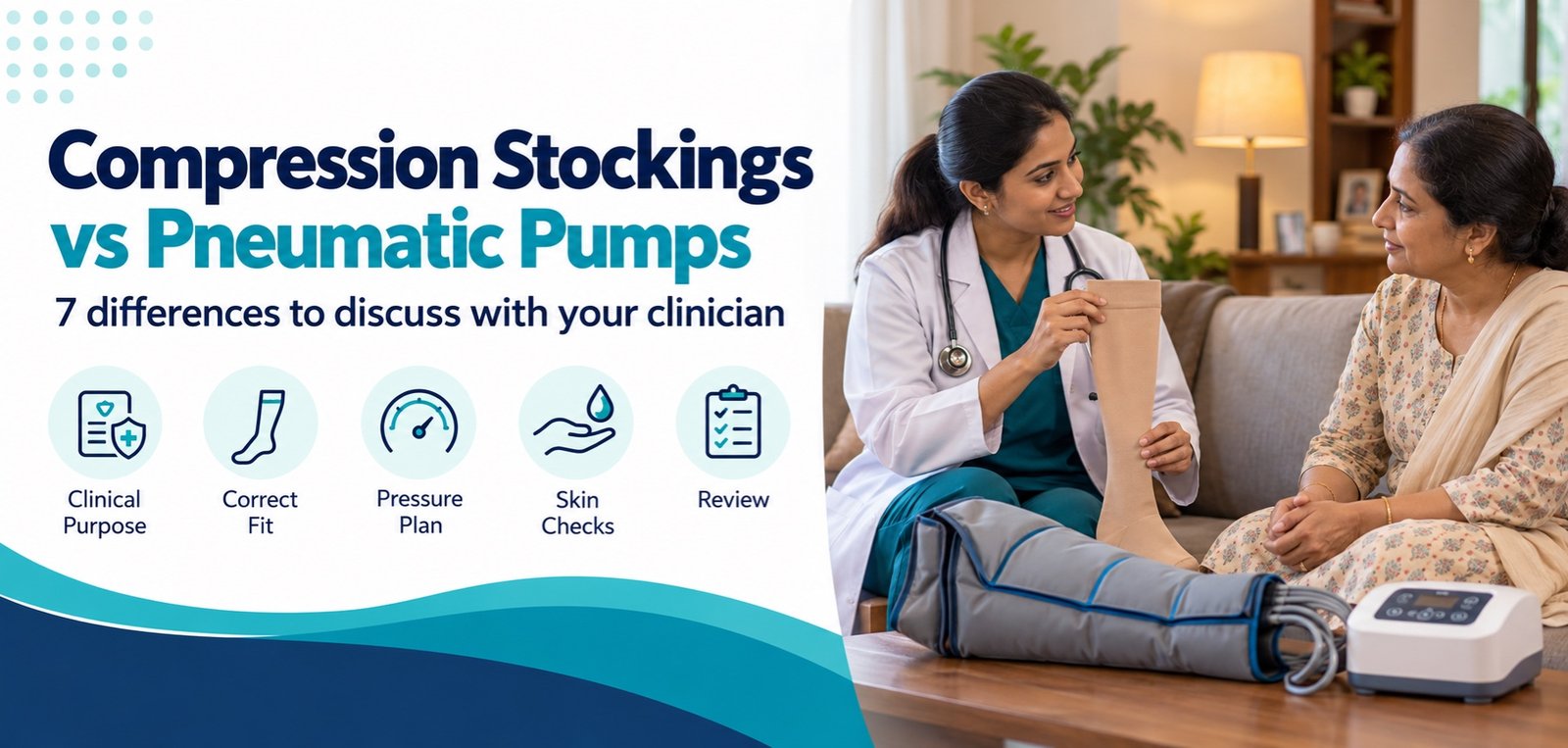
Compression stockings and pneumatic compression pumps are often discussed together because both apply pressure to a limb. They are not interchangeable. The correct product depends on the clinical purpose, diagnosis, circulation, skin, limb measurements, mobility and treatment plan. Stockings also vary by type and compression level, while pumps use sleeves or garments that inflate in cycles under prescribed settings.
Quick answer
Compression stockings provide ongoing external pressure through a fitted garment. An intermittent or sequential pneumatic compression pump inflates chambers around the limb in cycles. Neither is automatically stronger, safer or better. Ask the clinician which problem is being treated or prevented, whether arterial circulation and skin have been assessed, the exact garment or sleeve, when to use it and what symptoms mean it should be removed or stopped.
Compression products serve different clinical purposes and are not interchangeable. Use a pump only with the prescribed garment, settings and schedule, after appropriate assessment.
Compression stockings vs pneumatic pumps at a glance
| Difference | Compression stockings | Pneumatic compression pump |
|---|---|---|
| How pressure is applied | By an elastic garment while it is worn | By one or more inflatable chambers controlled by a pump |
| Selection | Requires the correct type, size, length and prescribed compression | Requires the correct pump, sleeve, limb fit, programme and prescribed settings |
| Power | No electrical power | Usually needs power and an intact hose and controller |
| Movement | Some types are intended to be worn during parts of the day or activity, according to the plan | Generally used during defined sessions with the person positioned as instructed |
| Monitoring | Skin, comfort, fit and rolling or bunching need checks | Skin, sleeve fit, tubing, pressure, session response and device alarms need checks |
| Clinical uses | Depend on the stocking type and diagnosis | Depend on the pump type, sleeve and clinical indication |
| Can one replace the other? | Only if the treating clinician revises the plan. Do not substitute independently. | |
NICE guidance on reducing venous thromboembolism risk shows why exact terminology matters: anti-embolism stockings and intermittent pneumatic compression are selected according to the clinical situation, measurements, contraindications and monitoring. A lymphedema garment or pump may follow a different plan from hospital thrombosis prevention.
Seven differences to discuss with your clinician
1. Start with the clinical purpose
Ask whether the aim is lymphedema management, venous disease, post-operative swelling, thrombosis prevention or another problem. Similar-looking products may be designed for different uses. Do not choose from a search result before the diagnosis and aim are clear.
If a clot is suspected, compression equipment is not a home diagnostic test or substitute for urgent assessment. Follow the clinician’s emergency advice for symptoms such as new one-sided swelling, pain, chest pain, breathing difficulty or collapse.
2. Stockings apply pressure continuously while worn
A stocking applies pressure through its material and fit. Its type, length and compression must match the prescription. A garment that is too loose may not work as intended, while one that is too tight, folded or rolled can create harmful local pressure.
Measurements should be taken using the method and timing advised by the clinical service. Re-measure when swelling, body size or the garment condition changes. Do not borrow another person’s stocking.
3. A pump delivers timed cycles
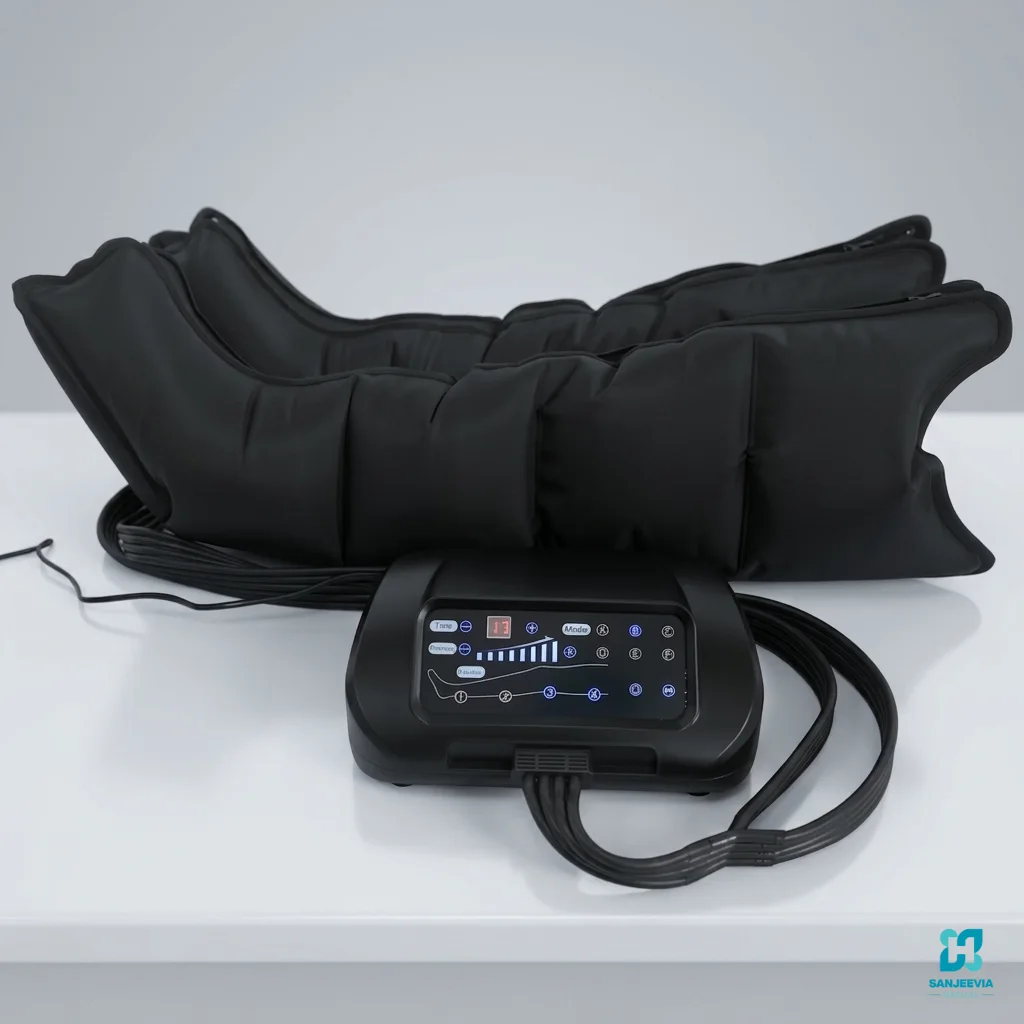
Pneumatic devices inflate and deflate a sleeve or garment. Some have a single chamber; others inflate several chambers in sequence. Chamber count alone does not make a device suitable. The sleeve area, sequence, pressure, cycle, duration and frequency must match the clinical plan and actual device.
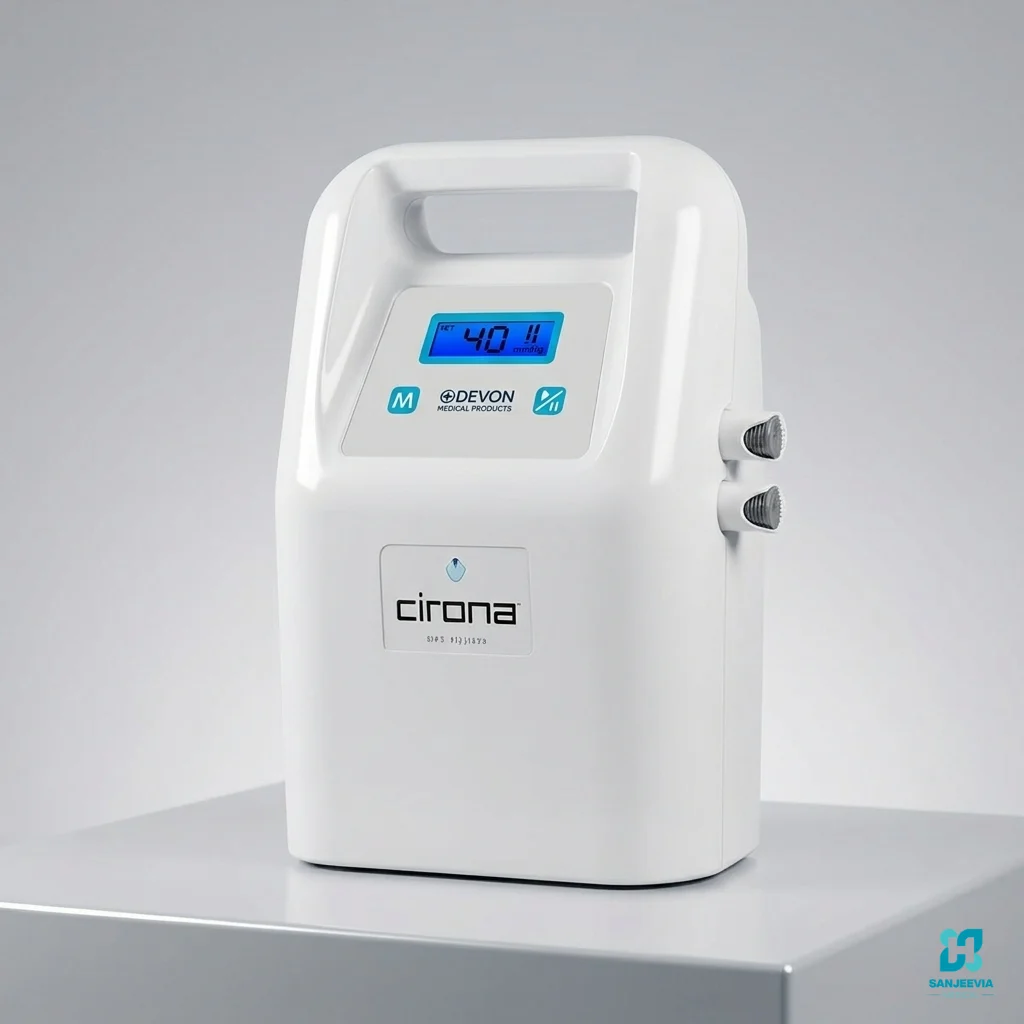
Sanjeevia lists a four-chamber sequential compression device and a DVT pump. These listings represent different product categories. Confirm the intended use, supplied sleeves and instructions before arranging either one.
4. Fit problems look different
A stocking can crease, roll, slip or concentrate pressure at its top edge. A pump sleeve can overlap incorrectly, shift during inflation, pull at tubing or fail to fit the limb. The skin should be checked as instructed before and after use, especially where sensation or communication is limited.
Ask what marks, colour change, coldness, numbness, pain or skin damage require removal and clinical review. Do not add padding or alter a sleeve unless the manufacturer and treating clinician approve it.
5. Contraindications and precautions require assessment
Compression can be unsafe or need modification in some people with circulation, heart, skin, infection, nerve or limb conditions. A family cannot screen these reliably from a general checklist. Tell the clinician about all relevant diagnoses, recent symptoms, wounds, procedures and implanted devices.
NICE advises assessment and ongoing skin checks when anti-embolism stockings are used. Use the same principle of individual assessment and documented monitoring for any compression plan.
6. Daily practicality differs
Stockings may be difficult to put on or remove when hand strength and mobility are limited. Pumps require a session location, power access, space for tubing and someone who can fit the sleeve correctly. Ask who will perform each step and what happens if the main caregiver is unavailable.
For a rented pump, confirm cleaning responsibilities, whether the sleeve is reusable or patient-specific, and what is included. Items that contact skin may have separate hygiene requirements. Do not share a garment unless it is specifically designed and processed for that purpose.
7. Monitoring and review are different
The clinical team should say when to review limb measurements, symptoms and the continuing need for compression. A pump’s display or successful cycle does not prove that the underlying condition is improving. A stocking that still looks intact may no longer fit correctly.
Keep a simple record only if the clinician recommends it, such as session completion, skin observations and symptoms. Do not change pump pressure or stocking class in response to the record without professional advice.
Questions to ask before arranging compression
- What is the confirmed diagnosis and treatment goal?
- Which exact stocking, sleeve or pump has been recommended?
- Who will measure and fit it, and when should measurements be repeated?
- What pressure, schedule and body position are prescribed?
- Which symptoms mean the product must be removed or stopped?
- How should skin be checked and protected?
- What cleaning and replacement routine applies?
- When will the clinician review whether it is helping?
For more product-specific questions, read Lymphedema Compression Pump on Rent: 4-Chamber vs DVT Pump. It should be used alongside the current prescription and the actual model instructions.
Frequently asked questions
Is a pneumatic compression pump better than stockings?
Not universally. They apply pressure differently and may serve different purposes. The treating clinician should decide which, if either, fits the individual plan.
Can I use a DVT pump for lymphedema?
Do not substitute devices. DVT-prevention and lymphedema systems may differ in sleeves, programmes and intended use. Confirm the exact prescription and model.
Can compression equipment treat a suspected blood clot at home?
No. Suspected DVT or pulmonary embolism needs urgent medical assessment. Do not self-treat new symptoms with stockings or a pump.
Who should choose the stocking size or pump pressure?
An appropriately qualified clinician should assess the patient, and trained personnel should measure and fit the prescribed product. Do not estimate size or settings.
Does Sanjeevia’s pump rental include diagnosis or treatment monitoring?
No. Equipment rental and handover do not include diagnosis, clinical assessment or ongoing monitoring. Keep the treating team involved.
Educational comparison reviewed against NICE guidance on 23 October 2026. It does not replace vascular, lymphedema or post-operative assessment.
Next Read
Compare the available device categories in Lymphedema Compression Pump on Rent: 4-Chamber vs DVT Pump.