
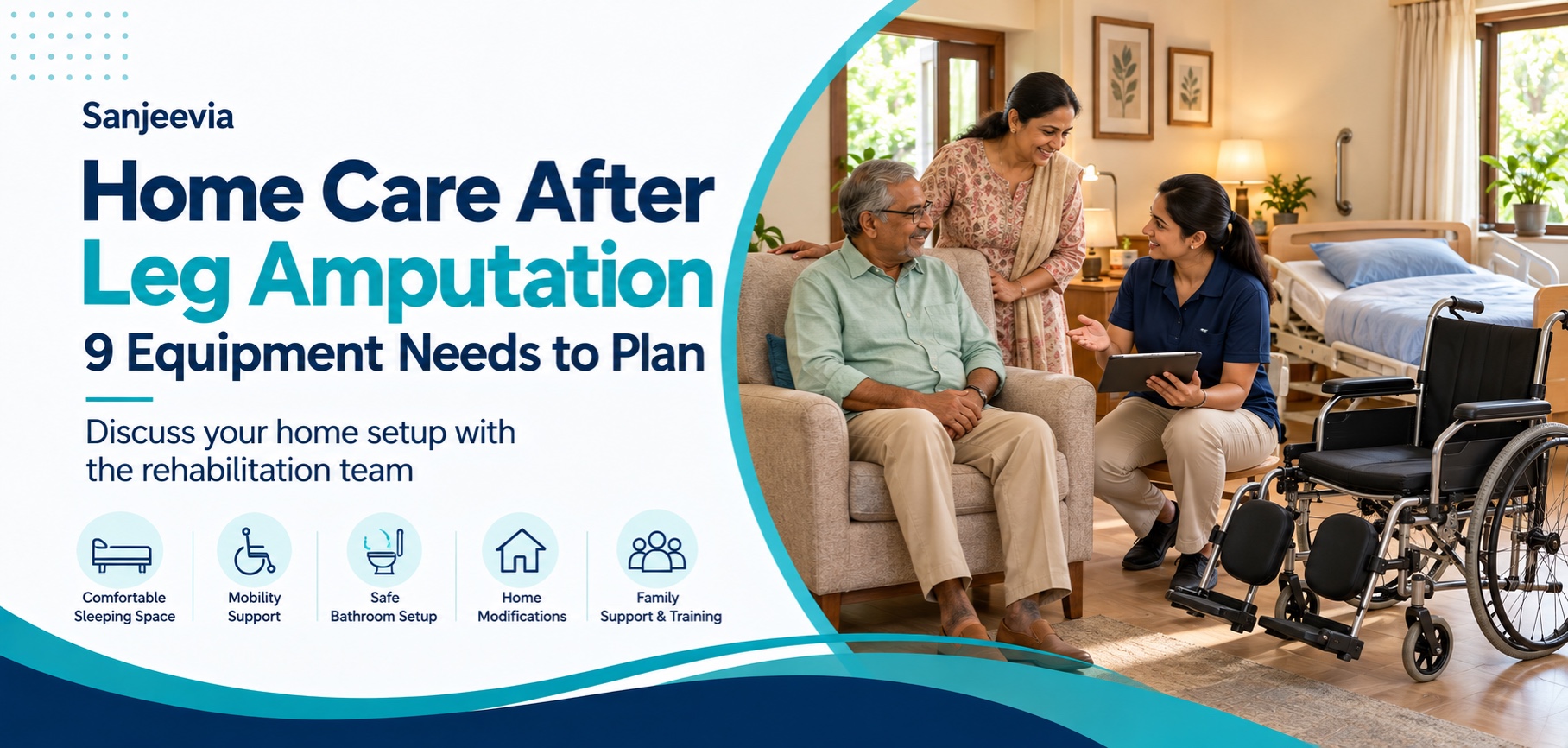
After a leg amputation, returning home can bring questions that a hospital room does not answer. Can the wheelchair reach the bedroom? What will toileting look like at night? Will the existing bed work with the transfer method you have been taught? Planning home care after leg amputation means taking those specific tasks to the rehabilitation team before ordering equipment.
This guide sets out nine equipment and home-setup needs to discuss before discharge. It is not a shopping package: some people will need only selected items, while others require specialist equipment that a standard rental does not provide. The level of amputation, remaining limb, health, surgical instructions and assessed function all influence the plan.
Quick answer: what equipment should we plan?
Ask the rehabilitation team to specify mobility and seating, any residual-limb support, the transfer method, bed and mattress requirements, toileting and washing arrangements, home access, permitted walking aids and follow-up support. Confirm compatibility before booking. A standard wheelchair or adjustable bed is not automatically a complete or suitable post-amputation setup.
No standard package is implied. Specialist residual-limb support and prescribed accessories must be confirmed separately; a listed product may not meet every requirement.

Before ordering: define movement, seating and transfers
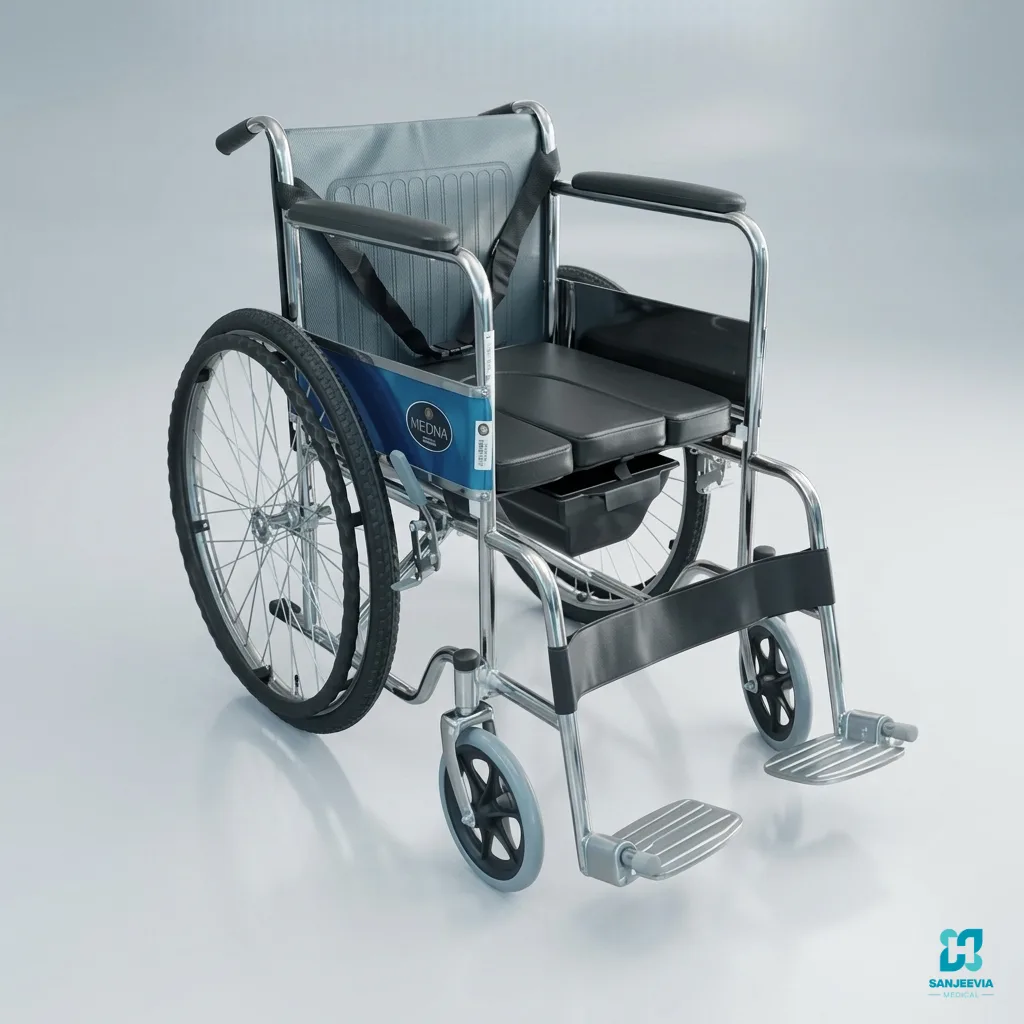
1. A wheelchair that meets the actual seating requirement
Ask the therapist which chair configuration is needed for the person’s current function and home environment. Record seat dimensions, capacity, back and foot support, and whether the person or an attendant will propel it. Include any prescribed cushion, leg support or other component in the specification rather than assuming it comes with a standard rental.
The NHS amputation guide describes individual rehabilitation and possible wheelchair provision. Its UK service information is not an entitlement or booking route in India. Use the standard wheelchair product page only as a starting point for checking the assessed requirement.
2. Prescribed support for the residual limb
Do not assume an ordinary footplate, elevating leg rest, pillow or loose board can substitute for the support recommended by the therapist. Ask exactly what is required, how it attaches to the chair and who will verify the fit. If a specialist component cannot be supplied, resolve that gap before using the chair as the planned seating arrangement.
Guy’s and St Thomas’ recovery guidance describes therapist-assisted wheelchair use and residual-limb support for particular amputation levels. That illustrates why the specification must be individual. Sanjeevia’s standard manual wheelchair listing does not establish that a prescribed stump board or specialist support is included.
3. Transfer equipment matched to a taught method
Ask the physiotherapist or occupational therapist to document the method for bed, chair and toilet transfers, the assistance needed and any prescribed equipment. Do not add a transfer board, belt or lifting device simply because it appears in a general recovery list. The person and caregiver need instruction in the method selected for them.
Bring measurements and photographs of the actual home furniture to that discussion. Identify any height or access mismatch before delivery. Our caregiver transfer-plan guide helps organise the questions; it does not teach a transfer technique.
At home: organise rest, toileting, washing and access
4. A bed and mattress arrangement consistent with the plan
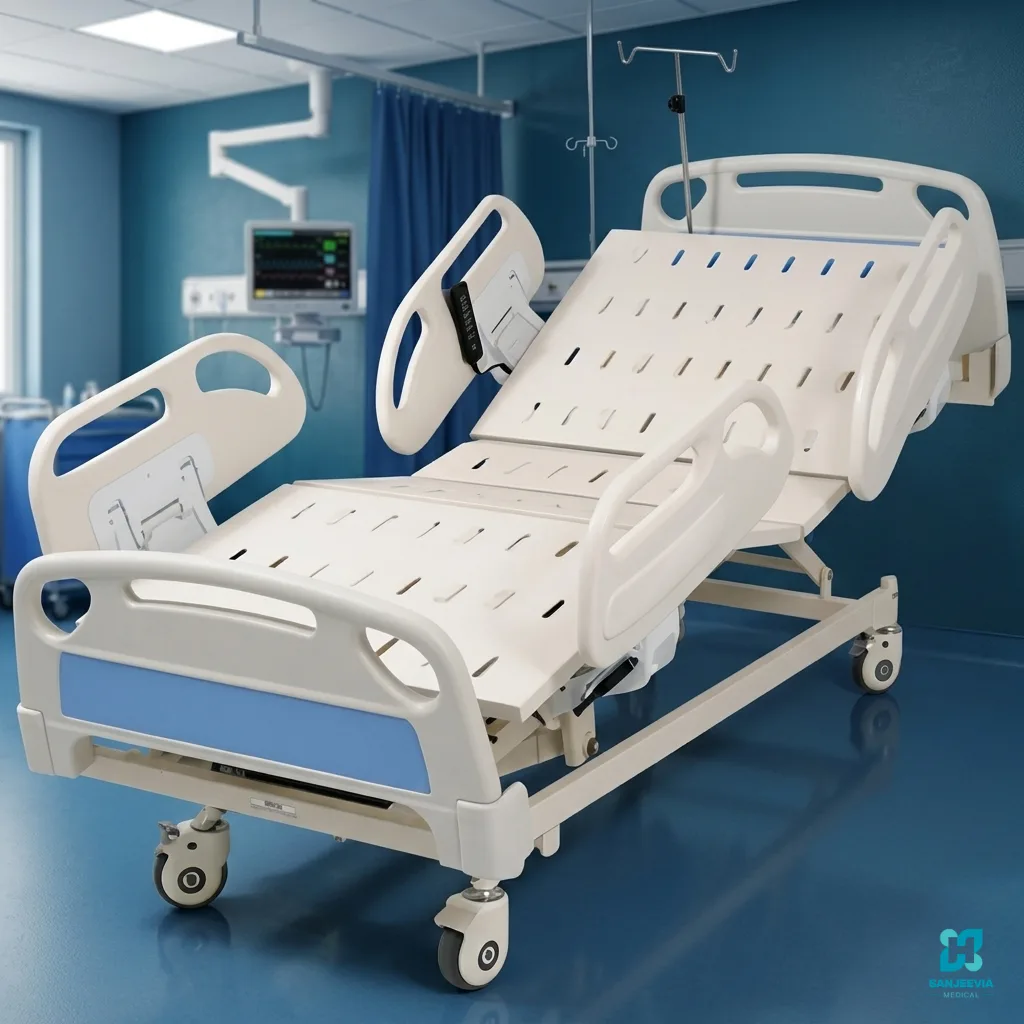
Ask whether the existing bed is suitable, whether adjustable height or other functions are needed, and which mattress and accessories are compatible. Discuss the prescribed resting positions and permitted bed adjustments directly with the team. Do not treat an electric bed’s available movements as instructions to use every function.
Positioning after an amputation can require specific advice. The Guy’s and St Thomas’ resource includes restrictions for some below-knee patients, so families should not improvise knee elevation or support. If a 3-function electric bed is being considered, confirm its intended settings and accessories with the clinician and provider before booking. An adjustable bed is not automatically required after every amputation.
5. A toileting arrangement that works day and night
Discuss whether the person can use the bathroom with the assessed assistance or needs a bedside option. Measure the doorway, approach, toilet area and space for a helper. If a commode is recommended, confirm whether the requirement is for a static chair, a wheeled commode or another design; they are not interchangeable.
A manual commode wheelchair should be checked against the seating and transfer requirements before it is selected. Ask who will help at night and where cleaning supplies will be kept. Equipment beside the bed does not, by itself, make the transfer safe or remove the need for help.
6. Washing equipment and a clear wound-care arrangement
Ask the treating team what washing method is permitted, how the dressing should be protected and whether a shower or bathing aid needs assessment. Do not assume a commode wheelchair is shower-safe. Confirm the exact manufacturer’s intended use and the bathroom layout before considering it for washing.
Keep wound-care instructions and prescribed supplies separate from the equipment order. A rental booking does not arrange nursing, change the dressing plan or determine when the wound can get wet. Use the equipment-cleaning guide to organise device instructions, while personal and wound care follow the clinical plan.
7. A usable route through the home
Map the journey from the building entrance to the bedroom, toilet and washing area. Include lift access, thresholds, turns and the space around furniture. Ask the occupational therapist whether a home assessment or adaptations are required. A chair fitting through the entrance does not prove that the person can use the home independently.
The NHS home-adaptations guide explains the role of assessing everyday tasks and the home. In India, arrange advice through the treating team or an appropriate local professional. Do not improvise a steep ramp or plan to carry an occupied wheelchair over stairs. Share measurements using Sanjeevia’s room-preparation checklist.
For the next stage: training, follow-up and changing needs
8. Walking aids only when the rehabilitation team recommends them
A walker, crutches or a prosthesis should not be treated as an automatic next step or a fixed-date milestone. Ask the team what mobility is currently permitted and which aid, if any, has been selected and fitted. Do not practise hopping or standing from a general equipment blog.
Where a walking frame is actually recommended, compare the prescribed design with the listed Zimmer frame and confirm suitability with the therapist. Ask how to recognise that the current arrangement needs review. Sanjeevia’s equipment enquiry does not replace prosthetic assessment, physiotherapy or gait training.
9. A handover record and a review plan
Keep one record showing the recommended items, exact supplied models, accessories, instructions, assistance needs and contact details. Ask the care team who will review seating, mobility, the remaining foot and limb, and the home arrangement. Ask whom to contact if pain, skin concerns, changing function or difficulty with the agreed method develops.
Separate clinical questions from equipment faults. The provider can discuss the supplied device and its operating support; the rehabilitation team decides whether the clinical requirement has changed. For extensions or exchanges, use the rental review and return guide after clarifying the ongoing care requirement.
A short specification to send with your equipment enquiry
| Area | Details to confirm |
|---|---|
| Seating | Chair type, measurements, support and prescribed accessories |
| Transfers | Assessed method, equipment and trained assistance |
| Rest and toileting | Bed arrangement, permitted adjustments and exact toileting design |
| Home access | Entrance, lift, doors, turns and final placement |
| Handover | Usual caregiver, operating instructions and separate clinical/support contacts |
Contact Sanjeevia with the assessed equipment list and Delhi NCR location so the team can confirm listed options and availability. Share only the information needed for the enquiry. If a prescribed specialist component is unavailable, discuss an appropriate alternative with the rehabilitation team before substituting a general-purpose product.
Frequently asked questions
Does everyone need a hospital bed after a leg amputation?
No. The team should assess the existing bed, required positions, transfers and caregiver access. A hospital bed is one possible equipment option, not a universal requirement.
Can we rent any standard wheelchair after amputation?
Do not assume that. Confirm the seating prescription, residual-limb support, compatibility and assistance needs first. A standard model may not meet every requirement.
Is an elevating leg rest the same as a stump board?
Do not treat them as equivalent. Ask the therapist to identify the required support and confirm the actual accessory and attachment with the provider.
When should we buy a walker or prosthetic limb?
Follow the rehabilitation team’s assessment and timing. This guide does not prescribe walking aids, a prosthesis or a recovery schedule.
Can Sanjeevia manage the full rehabilitation programme?
This page concerns enquiries for listed medical equipment. It does not advertise prosthetic fitting, wound care, nursing or a complete rehabilitation service. Arrange those services through the appropriate treating professionals.
Educational home-equipment planning guide. Sources and catalogue links checked on 15 October 2026. Clinical decisions, wound care, positioning, transfers and rehabilitation require individual professional advice. Cover image is illustrative.
Next Read
Before the home handover, read Safe Patient Transfer at Home: Questions for a Physiotherapist and record the method selected for the person.