
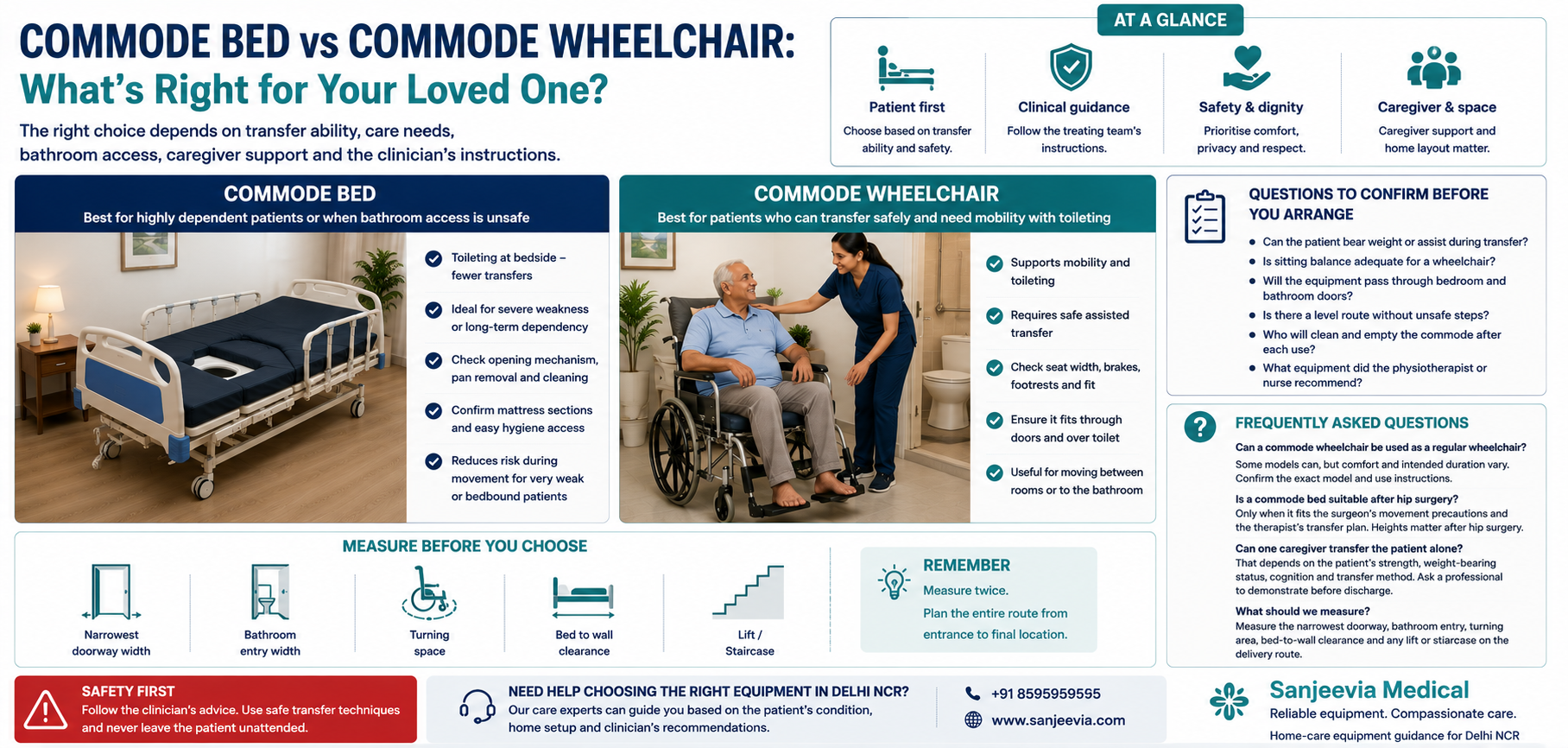
A commode bed can reduce the need to move a highly dependent patient away from the bed, while a commode wheelchair can combine assisted mobility and toileting for someone who can transfer safely. The better option depends on transfer ability, bathroom access, caregiver support and the clinician’s instructions.
“The patient cannot walk to the bathroom—should we get a bed with a commode or a wheelchair with a commode?” Families often face this decision hours before discharge. The key question is whether moving from bed to chair is safe and realistic several times a day.
At a Glance
- A commode bed focuses on bedside toileting for a highly dependent patient.
- A commode wheelchair requires a safe transfer but may help move the patient between rooms.
- Measure doorways, bathroom entry and turning space before choosing.
Choose Around the Transfer, Not the Product Name
If the patient cannot bear weight, follow commands or maintain sitting balance, a transfer may require trained assistance or a lifting device. A commode wheelchair should not be selected simply because it looks more versatile.
If the patient can complete an assisted pivot transfer under professional guidance, a commode wheelchair may support both mobility and toileting. The therapist should explain who assists, where hands are placed and whether a transfer belt or other aid is needed.
When a Commode Bed May Be More Practical
A commode bed can reduce movement when the patient is confined to bed or when the bathroom route is unsafe. It may be relevant during early recovery, severe weakness or long-term dependency, but hygiene and skin care still require a clear caregiver routine.
Confirm how the commode section opens, how the collection pan is removed, what mattress sections are supplied and how the bed is cleaned without exposing the patient to a fall.
When a Commode Wheelchair May Be More Practical
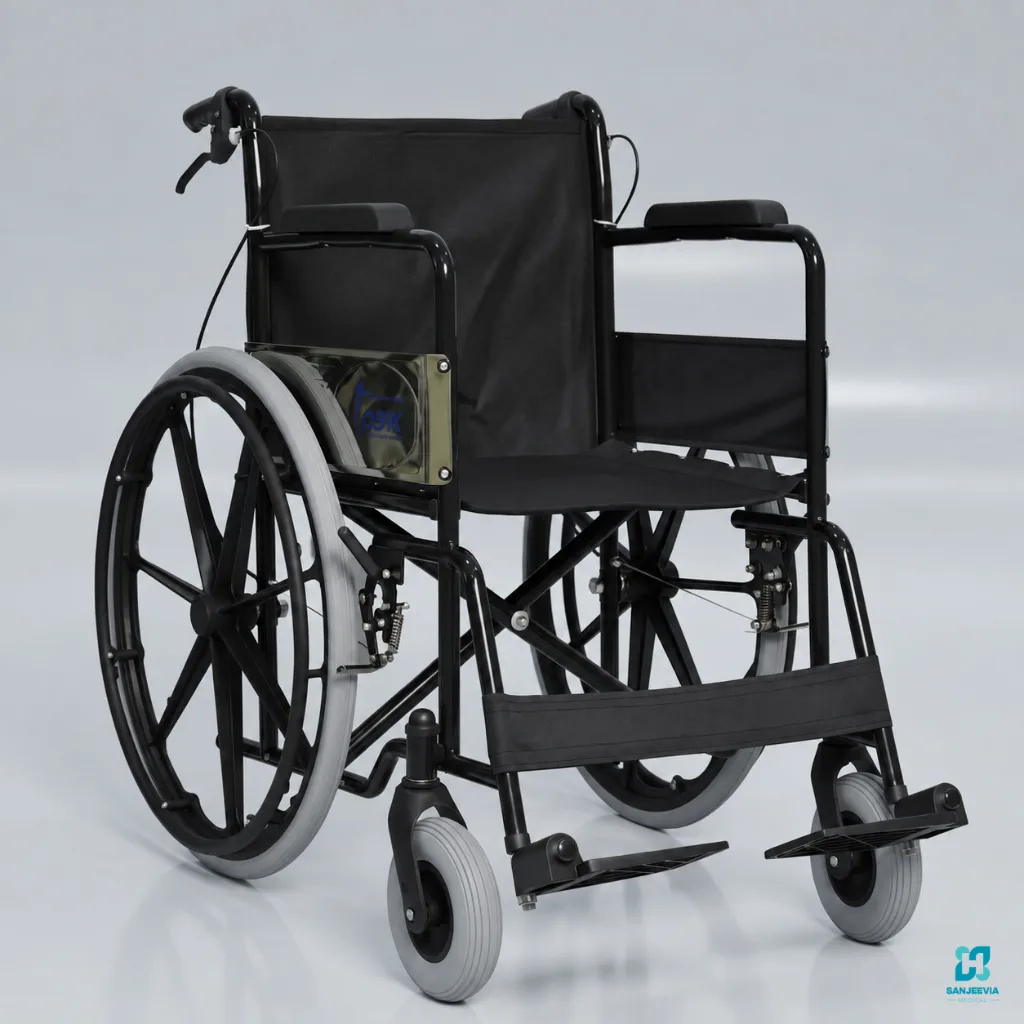
A commode wheelchair may help a patient reach an accessible bathroom or sit out of bed when clinically appropriate. Check seat width, footrests, brakes, armrests, wheel type and whether it fits over the toilet if that is the intended use.
Never push the chair with loose footrests, unlocked components or the patient’s feet dragging. The caregiver should receive a demonstration for brakes, folding parts and safe positioning.
Questions to Confirm Before You Arrange the Equipment
- Can the patient bear weight or assist during transfer?
- Is sitting balance adequate for a wheelchair?
- Will the chair pass through bedroom and bathroom doors?
- Is there a level route without unsafe steps?
- Who will clean and empty the commode after each use?
- What equipment did the physiotherapist or nurse recommend?
Frequently Asked Questions
Can a commode wheelchair be used as a regular wheelchair?
Some models can, but comfort, wheel design and intended duration vary. Confirm the exact model and use instructions.
Is a commode bed suitable after hip surgery?
Only when it fits the surgeon’s movement precautions and the therapist’s transfer plan. Seat and bed heights matter after hip surgery.
Can one caregiver transfer the patient alone?
That depends on the patient’s strength, weight-bearing status, cognition and transfer method. Ask a professional to demonstrate before discharge.
What should we measure?
Measure the narrowest doorway, bathroom entrance, turning area, bed-to-wall clearance and any lift or staircase on the delivery route.
Need Help Choosing a Medical Bed in Delhi NCR?
Keep the discharge summary or clinician’s instructions ready, then compare Sanjeevia’s medical-bed options. Confirm current availability, exact functions, accessories, delivery access, rental terms and demonstration before booking.
Related Guidance and Equipment
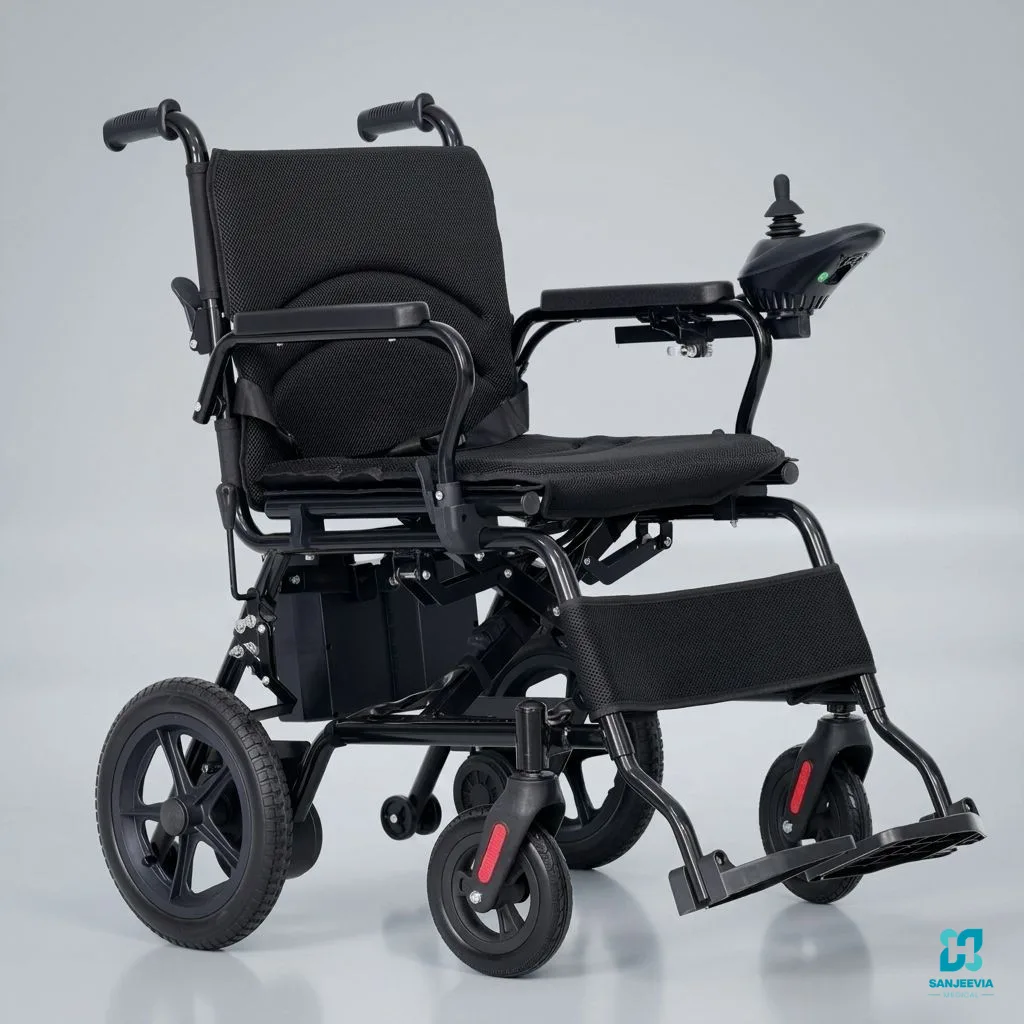
The safest mobility or monitoring choice depends on the patient’s function and care plan; these links continue that decision with verified product pages.
Continue Reading
- Renting vs Buying Medical Equipment — compare short-term rental with long-term purchase.
- Bringing an Elderly Parent Home from ICU — plan equipment and caregiving before discharge.
Relevant Product Pages
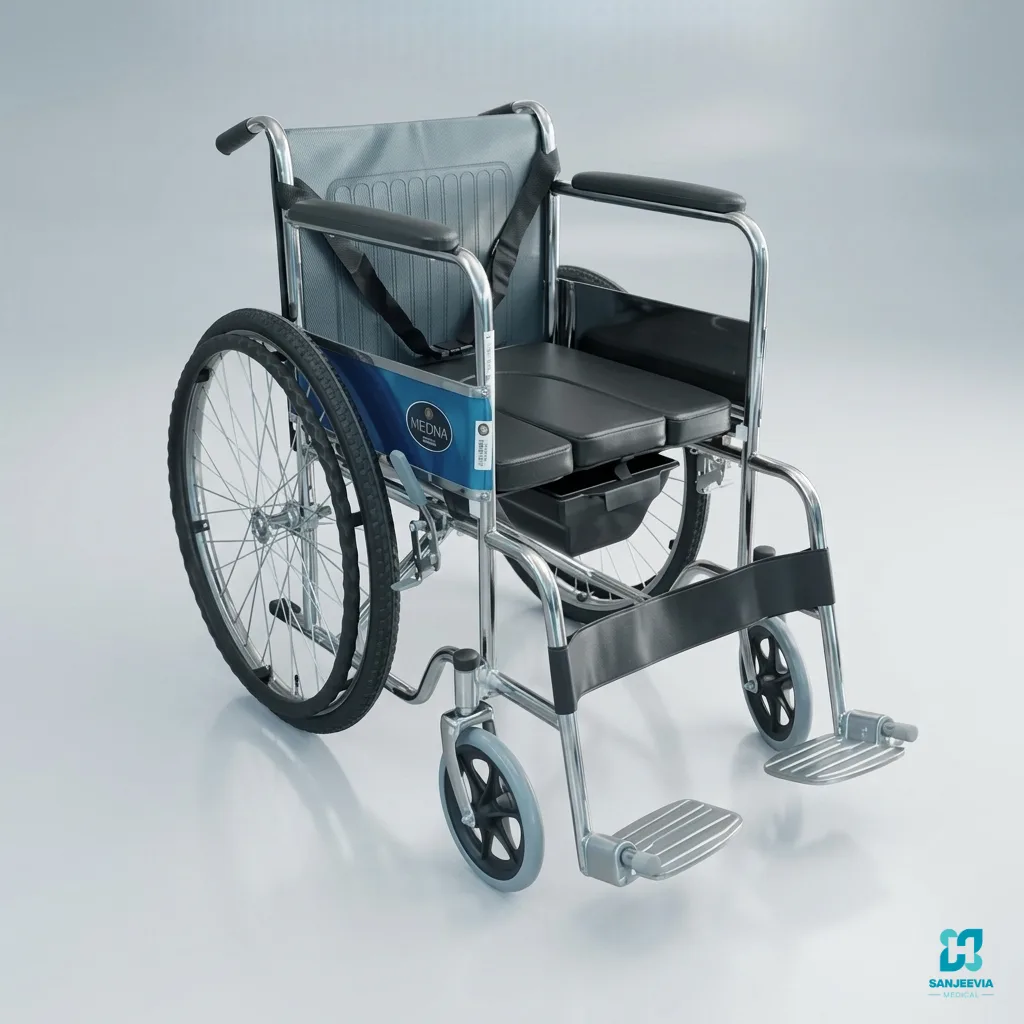
- Commode Wheelchair — review a wheelchair option that supports toileting needs.
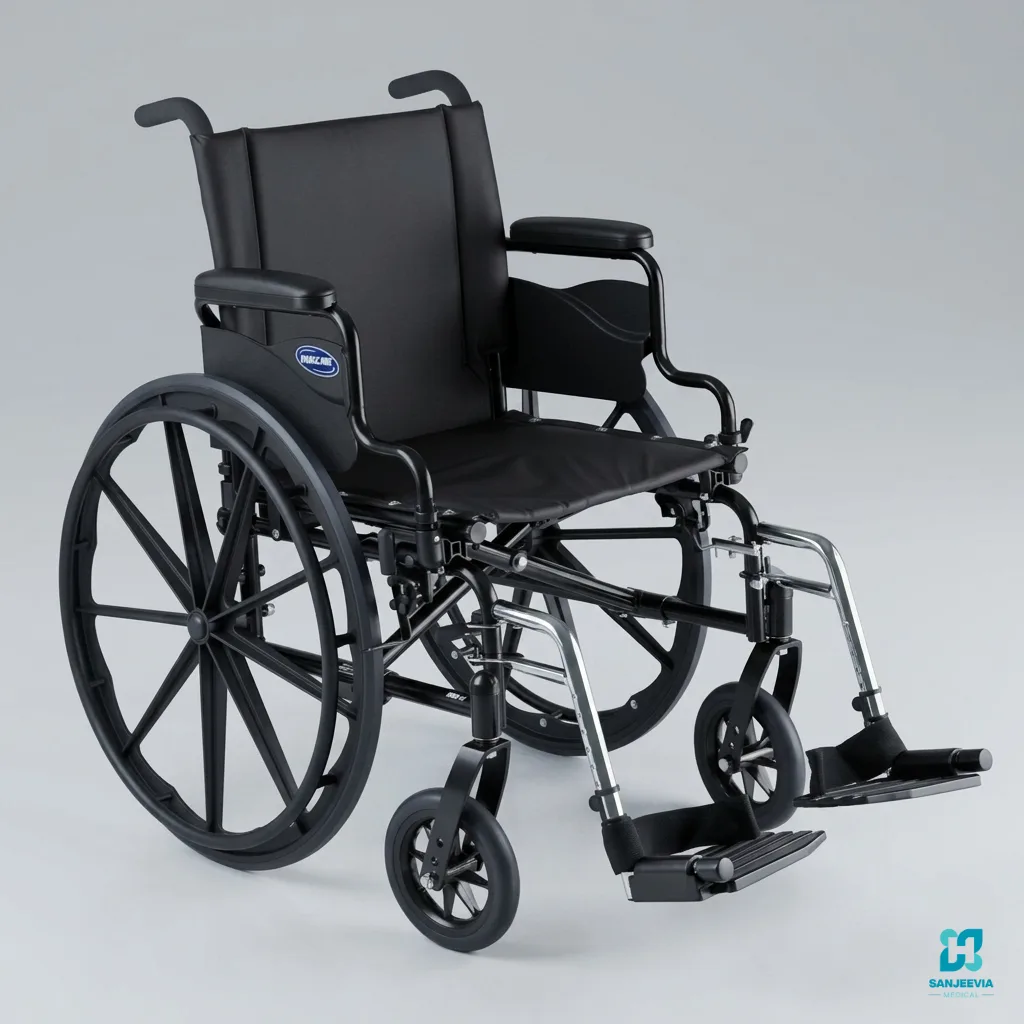
- Standard Manual Wheelchair — review dimensions and features of a standard manual wheelchair.
Medical disclaimer: This article provides general information and is not medical advice. Bed type, positioning, transfer technique and side-rail use should follow the treating doctor, nurse, physiotherapist or occupational therapist’s instructions.
Published by Sanjeevia Medical | Home-care equipment guidance for Delhi NCR