
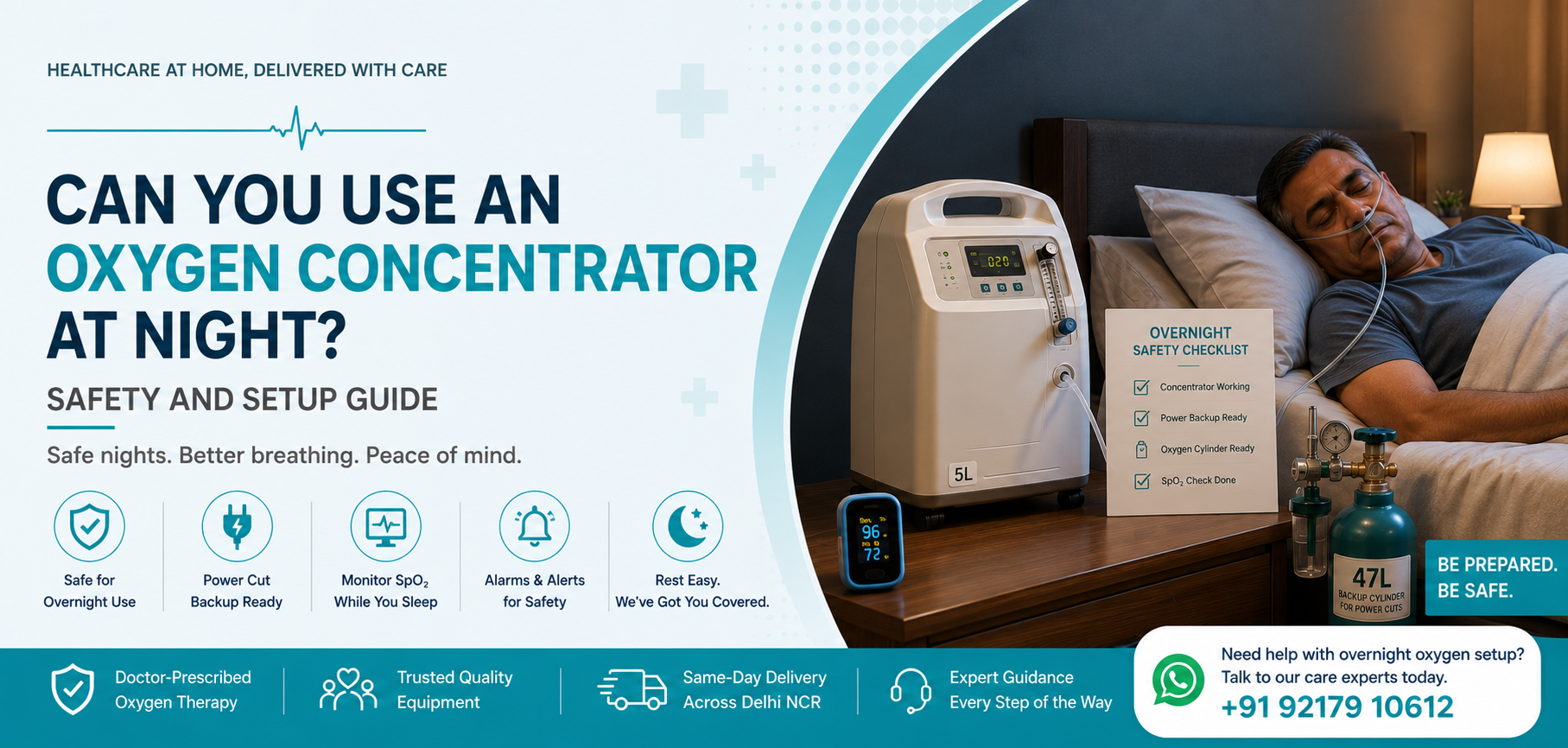
Quick answer: An oxygen concentrator may be used at night when overnight oxygen has been prescribed and the exact machine is suitable for the prescribed continuous flow. Safe use requires the written oxygen plan, correct setup, a response plan for alarms or power loss and instructions for when to seek medical help.
Do not start overnight oxygen, change the flow or create a generic monitoring schedule from an online article. The treating team should document the required flow, target range and escalation instructions for sleep.
For a prescribed overnight setup, review the oxygen concentrator models and confirm continuous or pulse delivery, required flow, alarms and the outage plan for the assigned unit.
Before using a concentrator overnight
Confirm these points with the treating team and equipment provider:
- Overnight oxygen is included in the prescription.
- The flow for sleep is clearly written; it may differ from daytime use.
- The exact concentrator maintains its manufacturer-specified oxygen concentration at that flow.
- The prescribed cannula, mask or connection is compatible with the device.
- The family understands the model’s alarms and the steps in its manual.
- A patient-specific plan exists for a power cut, machine fault or worsening symptoms.
The American Thoracic Society’s oxygen guidance notes that flow requirements may differ during rest, activity and sleep.
Place and operate the exact model according to its manual
Wall clearance, ventilation, tubing length, filter care and alarm behaviour vary between models. Use the instructions supplied with the exact concentrator rather than a universal distance or cleaning schedule.
General precautions include:
- keep the air inlet and outlet unobstructed;
- place the unit on a stable surface in a well-ventilated area;
- keep it away from curtains, bedding and enclosed cupboards;
- route tubing to reduce kinks, compression, trips and entanglement;
- use the electrical arrangement specified by the manufacturer;
- keep oxygen away from smoking, flames, sparks, oil and grease; and
- do not improvise accessories or secure tubing to the patient with an unapproved method.
Power cuts and backup planning
A power interruption can stop a mains-powered concentrator. The clinical effect depends on the patient and cannot be predicted simply from the length of the outage.
The contingency plan should state:
- how dependent the patient is on continuous oxygen;
- what backup source or compatible power solution is approved;
- how long the backup must cover, including an appropriate reserve;
- who is trained to use it;
- the equipment-support number; and
- when to contact the clinician or emergency service.
There is no single cylinder size or UPS duration suitable for every overnight user. If a cylinder is part of the plan, it must be secured and used with the correct regulator. A power system should be checked for compatibility with the concentrator’s starting and running requirements.
Read more: oxygen cylinder vs oxygen concentrator.
Monitoring overnight oxygen
Monitoring frequency and target saturation should come from the patient’s written plan. A general morning-and-evening schedule is not appropriate for everyone. Do not increase the flow in response to one reading unless a clinician or emergency plan specifically instructs this.
Pulse oximeters can be affected by movement, cold fingers, circulation, nail products and device limitations. Use readings together with symptoms and professional advice. See the FDA guidance on pulse oximeters.
What to do if the concentrator alarms
- Check the patient first and follow the written escalation plan.
- Read the alarm indicator and follow the exact model’s manual.
- Check for a power failure, disconnected tubing or an obvious kink only if it is safe to do so.
- Use the approved backup arrangement when the plan requires it.
- Contact equipment support for a device fault and medical support for symptoms or readings outside the plan.
Do not repeatedly restart a machine or continue using damaged equipment contrary to the manual.
When to seek urgent medical help
Follow the patient-specific emergency instructions. Seek urgent help for severe or rapidly worsening breathlessness, blue or grey lips, chest pain, collapse, new confusion, unusual difficulty waking or another emergency sign identified by the treating team.
Relevant Sanjeevia pages
- Philips EverFlo 5L oxygen concentrator
- Nidek Nuvo Lite 5L oxygen concentrator
- 10L oxygen concentrator options
- How to read a prescribed oxygen flow rate
Frequently asked questions
Is an oxygen concentrator designed to run through the night?
Many models are rated for continuous operation, but check the exact manufacturer manual and ensure the unit meets the prescription.
Does every overnight user need a 47L cylinder in the bedroom?
No. Backup requirements and placement are individual. Use the documented clinical and equipment plan and the applicable fire and storage instructions.
Can the family change the flow if the reading is low?
Use the prescribed setting and escalation plan. Contact the treating team or emergency service as directed rather than independently changing therapy.
Medical note: This article covers equipment safety and planning. It does not replace the prescription, clinician’s monitoring plan or emergency instructions.