
Prepared for Indian institutional buyers, clinics, dealers and distributors. Updated 8 November 2026.
Medical equipment standardisation becomes a practical purchasing issue when a healthcare business opens its second or third location. Branches may use different monitors, cuffs, bed controls and accessory sets even when they provide similar services. Staff move between sites, replacement orders become harder to describe and a successful first purchase may no longer match the next quotation. For Indian clinic chains, nursing-home groups and multi-location care businesses, the aim is consistent equipment that suits each service. This guide explains nine decisions to make before a central bulk order and includes a branch comparison worksheet to save for future purchases.
Equipment configurations to compare across branches
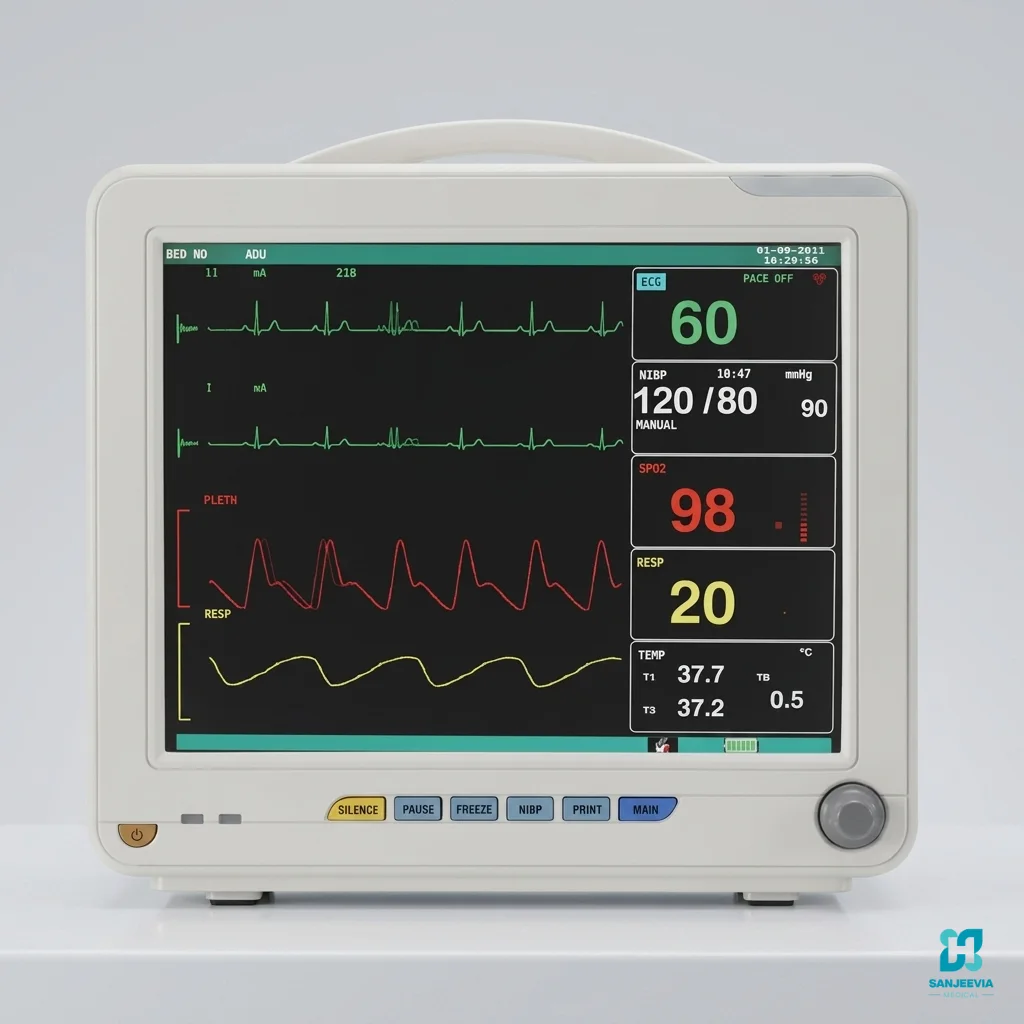
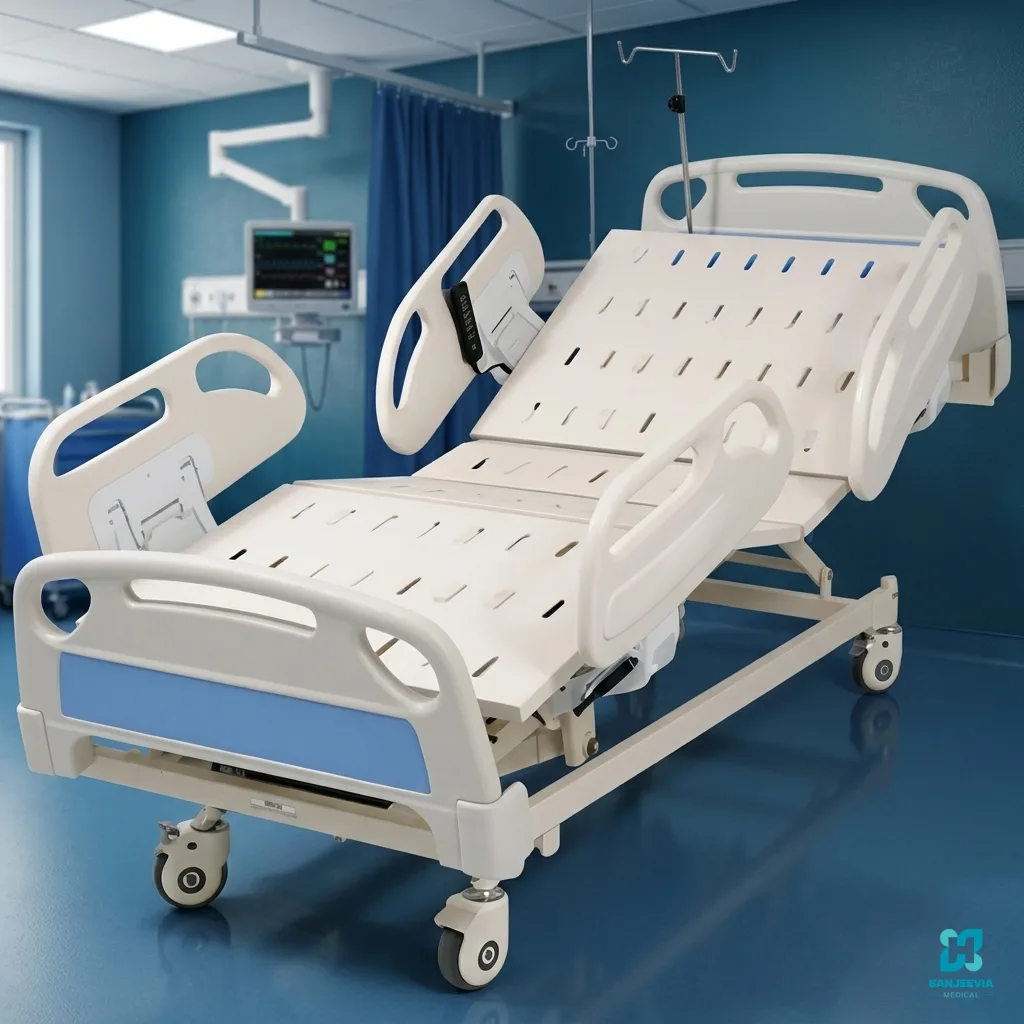
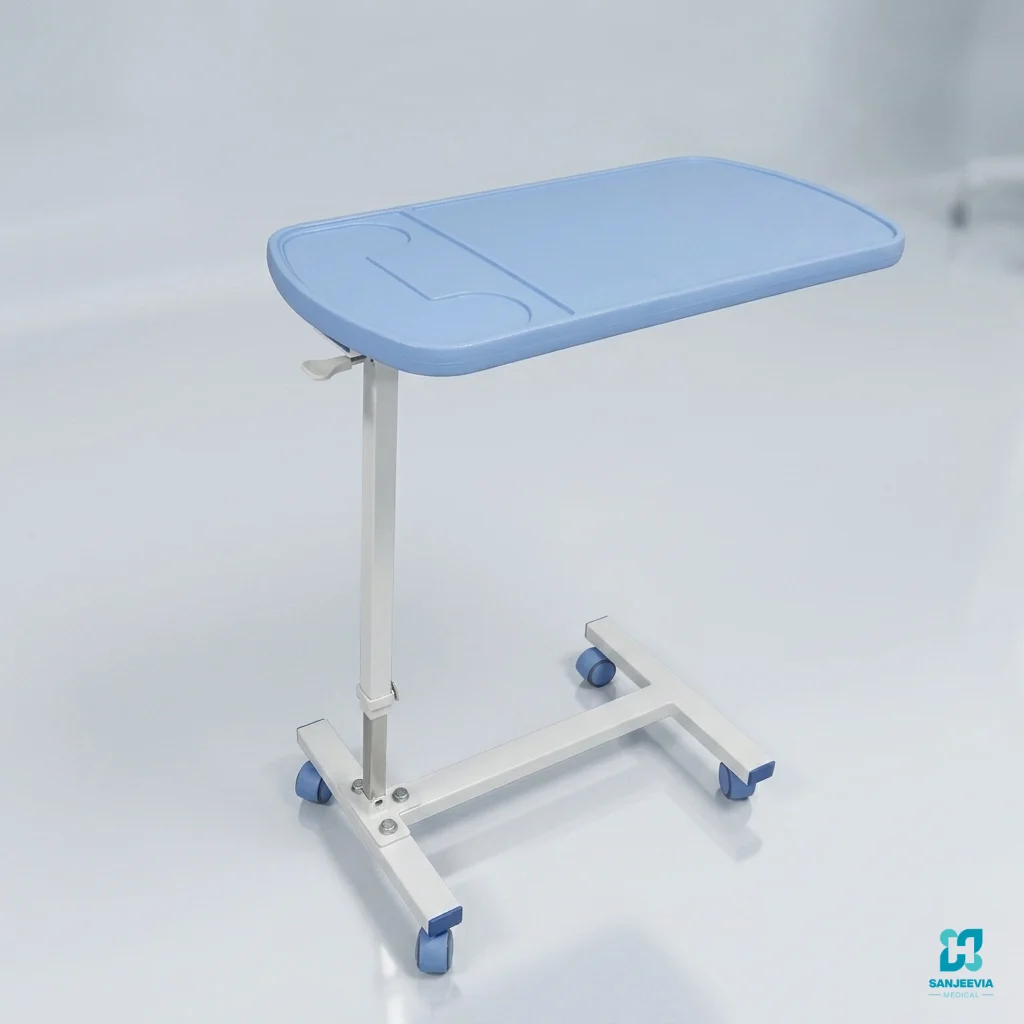
Review these Sanjeevia products, then confirm the exact configuration and quantity in your B2B enquiry.
1. Define which services should use a common specification
Start with the services shared across branches. A consultation room, observation area and rehabilitation space should not receive the same equipment simply because the purchase is centralised. Group comparable uses, then ask the clinical leads to define the essential functions for each group.
For example, patient monitoring requirements depend on the patient group, clinical service and supervision. The number of parameters is only one part of the decision. Use a common specification for equivalent services and document a different requirement when a branch provides a different level of care.
If the project also includes new locations, use Sanjeevia’s clinic equipment planning list to establish the room and service requirements first.
2. Review the equipment already in use
Ask each site for its model list, quantity, age where known, support status, accessories and recurring problems. Identify which items remain suitable and which differences cause actual difficulty. Replacing a serviceable unit solely to create a matching photograph is not an operational justification.
Separate replacement needs from expansion needs. Record an item as retain, replace now, replace later or assess further. The biomedical or authorised technical team should evaluate performance and safety concerns. Purchasing staff can then use that assessment to plan the next order.
This baseline also gives you a way to measure the benefit of standardisation rather than assuming it will automatically reduce cost or downtime.
3. Compare complete configurations, including accessories
Choose a standard configuration rather than only a brand. For a multi-parameter patient monitor, record the offered model, patient group, cuff sizes, probes, leads, mounting and battery requirements. For a hospital bed, record movements, dimensions, controls, mattress and selected accessories.
Accessories should be matched to the specific device. A common connector shape or similar product name does not guarantee compatibility. Keep a model-to-accessory reference that branch teams can use when placing a replacement request.
If different bed configurations are being considered, Sanjeevia’s comparison of ABS-panel and stainless-steel-railing beds helps frame the questions to ask before approving a common order.
4. Decide which branch exceptions are justified
A smaller room, different patient group or different electrical arrangement may require an exception. Define the reason, approving authority and replacement reference for each exception. This prevents informal substitutions from gradually undoing the standard.
Check dimensions with the actual site layout. The 3-function electric bed selected for one location should be checked against every relevant branch’s access, room space and power requirements before a combined order.
Keep the exception list short enough to manage, but let clinical suitability and physical fit determine the outcome. A standard should support the service being delivered.
5. Pilot the proposed equipment with the people who will use it
Choose a representative branch and define the questions the pilot must answer. Ask users to review controls, display visibility, alarm workflow where applicable, cleaning instructions, accessory changes and routine movement. Record what works and what requires further clarification.
A demonstration should use the exact proposed configuration. A brochure or a demonstration of a different model cannot settle every practical question. Where clinically appropriate use is involved, the authorised clinical team must supervise the assessment.
Record the pilot outcome as approved, approved with conditions or not suitable. Attach the findings to the bulk-order requirement so later quotations do not quietly change the tested configuration.
6. Align staff information and cleaning instructions
Standardisation can make staff guidance easier to organise, but training is still required. Keep the current manual and approved quick-reference information accessible at each branch. Staff who move locations should know which equipment is common and which items differ.
Cleaning and patient-contact accessory handling must follow the exact manufacturer instructions and your infection-control policy. India’s National Guidelines for Infection Prevention and Control in Healthcare Facilities provide useful principles for handling and reprocessing patient-care equipment.
For recurring accessories, distinguish reusable, single-patient and single-use items. Use the equipment consumables checklist to help document the difference.
7. Confirm support and document requirements for every location
List all cities and pin codes in the enquiry. Confirm installation, demonstration, warranty, fault reporting and service conditions for the proposed products at each site. A combined purchase should still show the obligations for individual locations.
Identify applicable product documents and standards for the exact model. Check the current regulatory resources from CDSCO and use BIS Know Your Standard where a standard needs to be identified. Product evidence should follow the item, rather than being inferred from a general company description.
Write down who will keep the serial records, acceptance documents and support contacts after each branch receives its equipment.
8. Create a repeat-order reference
After the pilot, issue one approved specification sheet with a version number. Include the model, configuration, accessories, quantities per branch and permitted exceptions. Require proposed changes to be approved before the repeat order is confirmed.
Dealers and distributors serving several healthcare sites can use the same method: obtain one approved configuration from the buyer and reference it in each enquiry to Sanjeevia. Confirm current availability and terms for every order rather than assuming a previous quotation remains current.
If the original model becomes unavailable, record the proposed alternative against the approved specification. Our alternative equipment model checklist helps structure that review.
9. Review results after the first rollout
Track missing accessories, order clarifications, staff questions, repeat faults and time needed to identify a replacement item. Use the same definitions before and after the rollout so the comparison means something.
Review whether the common configuration still fits the services at each branch. Growth, patient needs or a new procedure may justify a revised specification. Update the reference sheet rather than allowing separate informal versions to circulate.
The practical goal is an order process that staff can repeat accurately, with equipment that continues to meet the service requirement.
Save this branch comparison worksheet
| Decision | Common requirement | Branch exception | Approval or evidence |
|---|---|---|---|
| Service and patient group | Equivalent clinical function | Different service or population | Clinical lead |
| Device configuration | Exact model and functions | Documented deviation | Datasheet and pilot record |
| Accessories | Compatible sizes and types | Patient or use-specific items | Manufacturer compatibility information |
| Room and utilities | Required dimensions and supply | Site constraint | Site and technical review |
| Support | Expected documentation and workflow | Location-specific conditions | Written proposal |
| Repeat order | Versioned specification reference | Approved alternative | Buyer sign-off |
Discuss a multi-location requirement with Sanjeevia
Send Sanjeevia the branch list, cities and pin codes, equipment quantities, existing models and the proposed standard configuration. Include rollout dates and any site-specific exception. Our institutional team can prepare an itemised proposal with product comparisons and the relevant documentation for your purchasing review.
Use the Sanjeevia B2B enquiry page for clinic-chain orders, hospital-group requirements or dealer and distributor enquiries. Procurement availability and location-specific service scope are confirmed in the written proposal.
Frequently asked questions
Does medical equipment standardisation mean one brand everywhere?
No. Start with the required functions, patient group, compatible accessories and support needs. A common brand may be useful in some cases, but it should not replace a configuration-level assessment.
Should every clinic use the same patient monitor?
Only when the exact configuration meets each clinic’s clinical service and patient needs. Review parameters, accessories, alarms, mounting, power and support with the authorised team.
Can existing equipment remain during a phased rollout?
Yes, where it remains suitable and is approved for continued use. Record differences, train staff on the applicable models and use a documented replacement plan.
Can Sanjeevia quote for branches in different Indian cities?
You can submit a multi-city procurement enquiry. Include each location and requirement so Sanjeevia can confirm product availability and installation or support scope in the proposal.
How do we prevent specification drift in repeat orders?
Use one version-controlled reference with the exact model, accessories and approved exceptions. Require written approval for any proposed alternative before the order is confirmed.
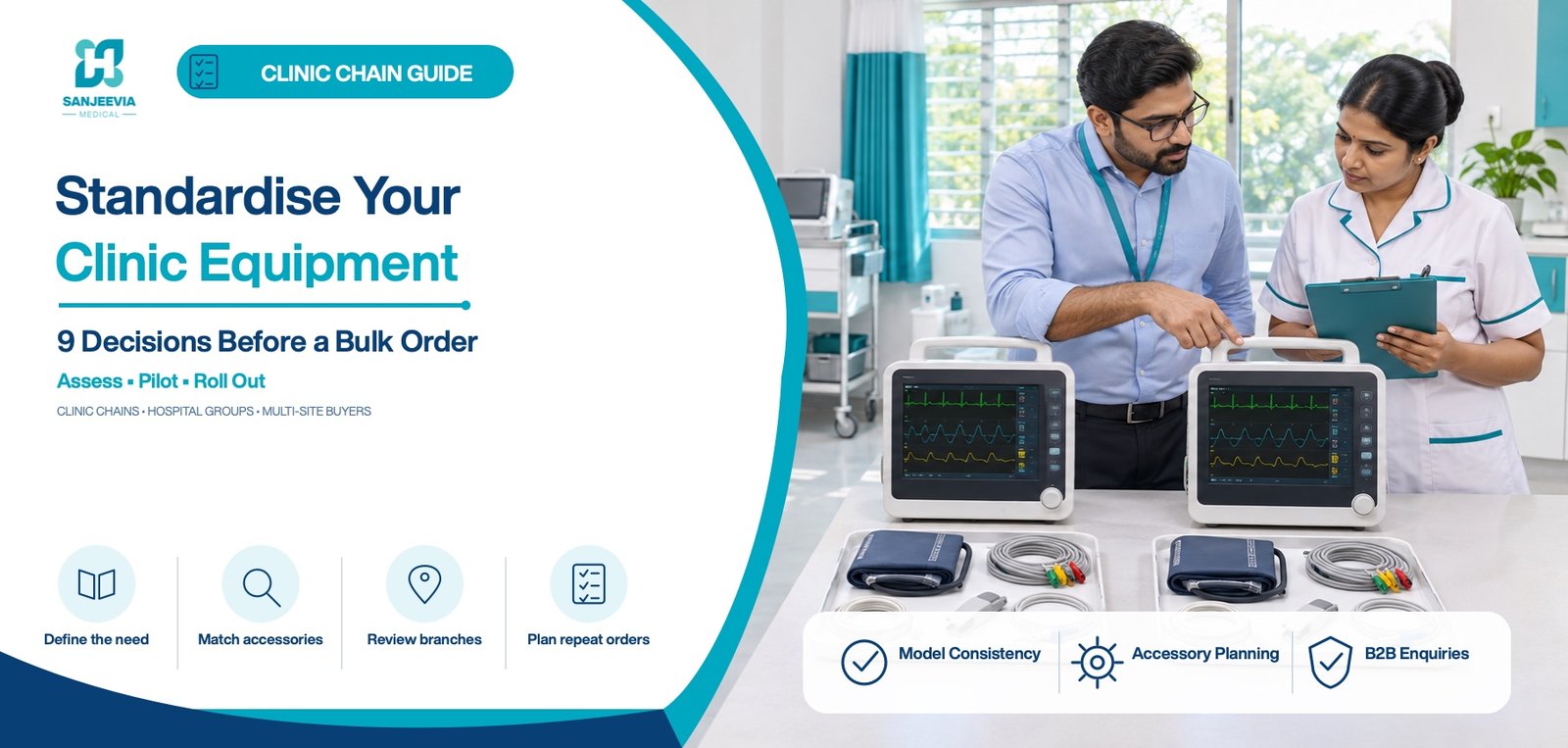
Banner: illustrative scene, not a photograph of a Sanjeevia facility or a specification for a particular model. Confirm product specifications and project scope in the written quotation.
