

A hospital bed on castors looks movable, but that does not mean every bed should be rolled with a patient on it. The correct decision depends on the bed model, the patient’s condition, the route, attached tubing and the number of trained helpers available. A short move across a flat room is different from crossing a threshold, entering a lift or moving between homes.
Compare the bed model before planning movement
Movement instructions can differ even when two beds look similar. Confirm the model delivered, its castor system, brakes, side structure, safe working load and manufacturer manual.

3 Function Bed, ABS Panels
Check the model manual, brakes and room route before any repositioning.
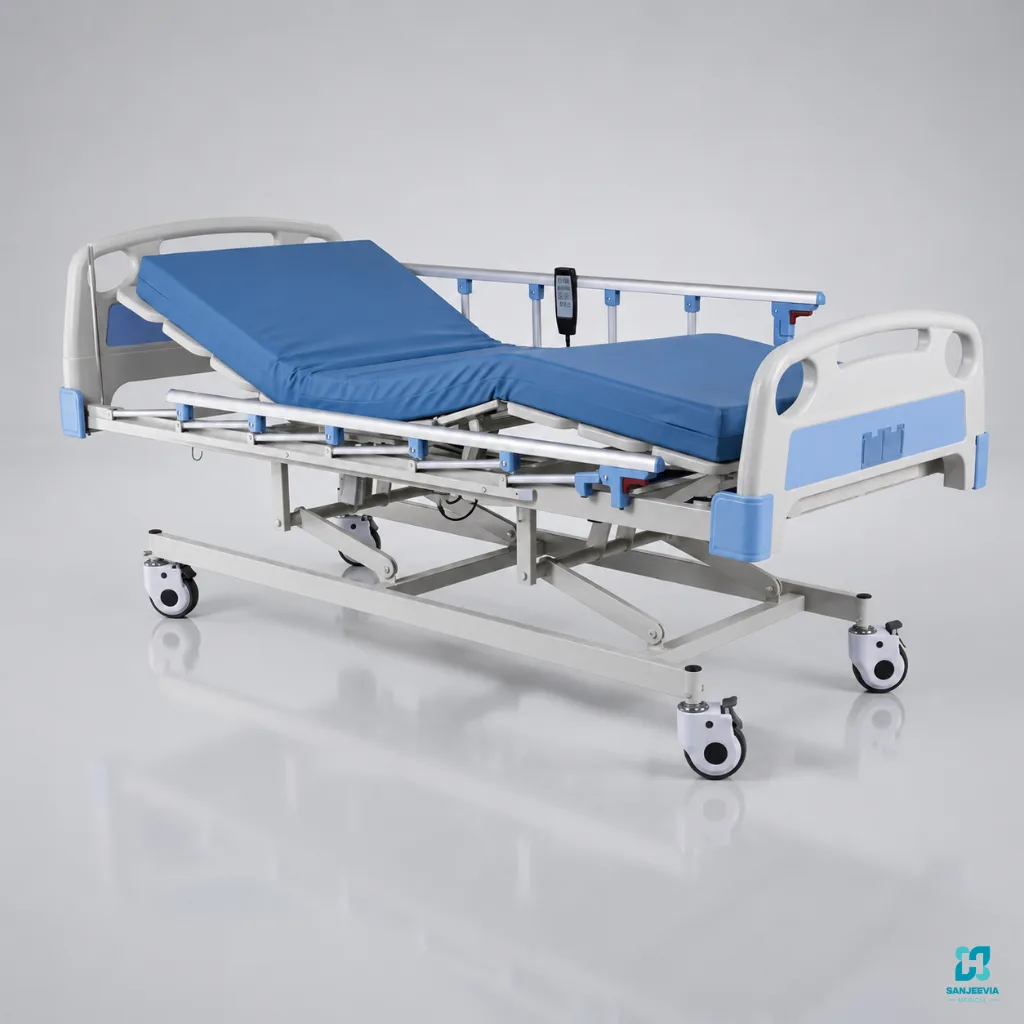
3 Function Bed, SS Railings
Confirm whether occupied movement is permitted for the exact supplied bed.
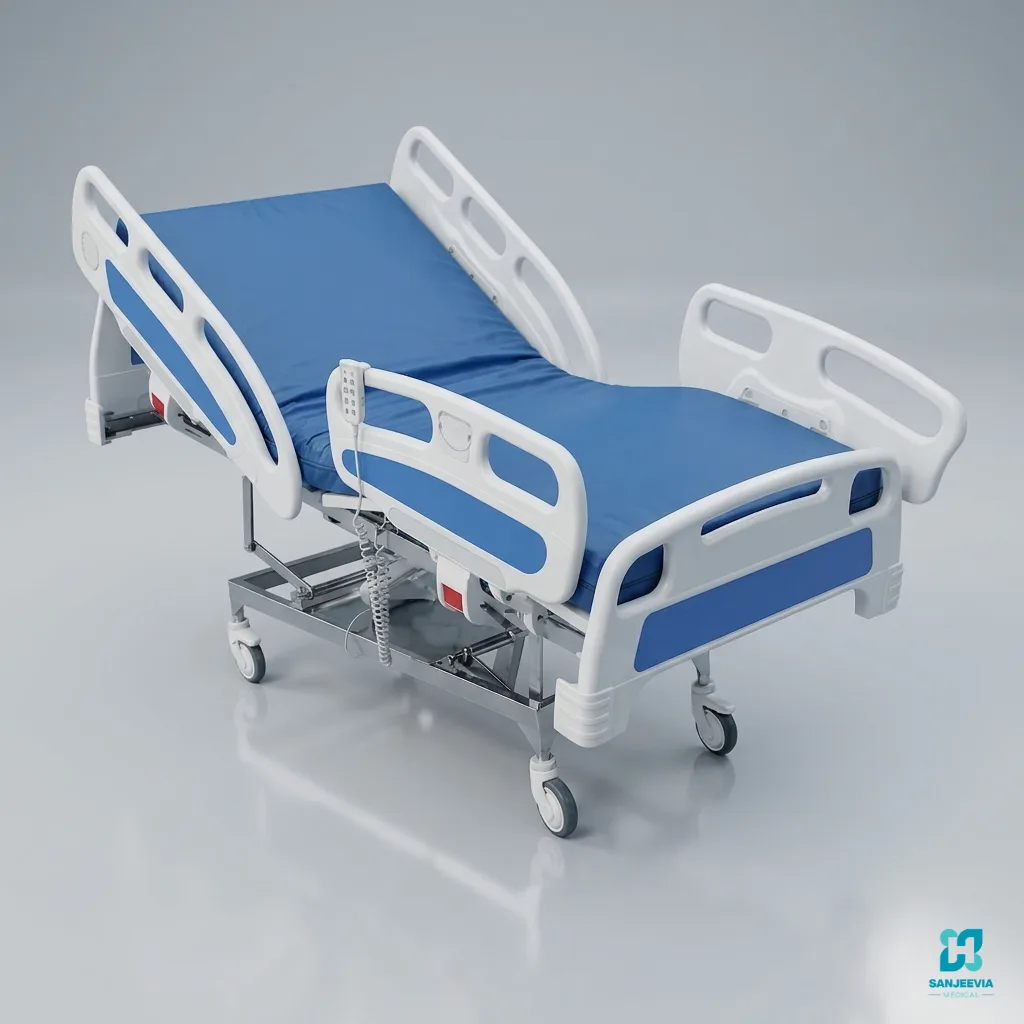
5 Function Electric Bed
Advanced functions do not replace a model-specific movement and transfer plan.
8 safety checks before moving a hospital bed with the patient
1. Confirm that the manual permits occupied movement
Find the exact make and model, then read its warnings for transport, castors, brakes, side rails and patient positioning. The Invacare home-care bed manual, for example, requires attention to patient position, protruding limbs, pinch points and castor locks. Use it as an example of the questions to ask, not as instructions for a different brand.
2. Ask whether the patient should remain in the bed
Pain, recent surgery, fractures, confusion, breathing difficulty, pressure-injury risk or unstable lines can change the safest method. Ask the clinician, physiotherapist or trained nurse when the patient’s condition makes movement uncertain. Do not improvise a lift or transfer technique from a video. The Ministry of Health and Family Welfare’s Emergency Medical Technician curriculum treats patient transfer as a planned task involving assessment, communication and suitable equipment.
3. Centre the patient and clear every limb
The patient should be positioned as the manual directs, with hands, feet, clothing and bedding clear of moving frames, side structures, castors and doorways. Never let an arm hang outside the bed or allow bedding to trail near the wheels. If the patient cannot maintain a safe position, do not start the move.
4. Walk the full route before unlocking the bed
Measure the narrowest doorway and inspect the floor, threshold, turn, ramp and lift. Remove rugs, loose wires, furniture and wet patches. A bed that fits in the room may still fail at a tight corner. For a move to a different address, use our planning guide for moving a patient between two homes. That is a logistics and equipment plan, not permission to transport the patient in the bed.
Unsure about the bed model or castor system?
Share a clear photo of the bed label, castors and route. Sanjeevia can help identify the supplied equipment and its manual. Clinical transfer decisions should remain with the treating team.
5. Control tubes, cables and accessories
List every attached item before moving: oxygen tubing, catheter tubing, drainage bags, monitor leads, pump lines, air-mattress hoses, over-bed tables and IV stands. Each item needs a safe position and enough slack without dragging or catching. Do not place portable equipment on the patient or an unstable mattress surface. If a line could be pulled out, pause and involve a trained clinician.
6. Assign roles and use one clear leader
One person should direct the movement and confirm when to start, stop and lock. Helpers should know who watches the patient, who guides the head end, who checks the foot end and who manages attached equipment. Avoid several people giving conflicting instructions. If the manufacturer specifies a minimum number of people, follow it.
7. Use castor locks at the right time
Test the brakes before use. Keep the bed locked while the patient is getting in or out, during care and after final positioning. Release only the locks that the manual says must be released for controlled movement. Do not force a bed with locked castors, and never use the brake pedal as a step. Stop if a wheel skids, jams, wobbles or does not lock reliably.
8. Reset and inspect after the move
Once the bed reaches its destination, lock it, reconnect power as instructed, restore the prescribed bed position and check every line. Confirm that the patient is comfortable, side structures are in their planned position, the call bell and essentials are reachable, and the bed functions normally. Report any new noise, alarm, cable damage or wheel problem before the next use.
When should you stop and choose another transfer method?
| Warning sign | What to do |
|---|---|
| The bed manual does not permit occupied movement, or the manual is unavailable | Do not assume permission. Identify the model and obtain the correct instructions. |
| The route has a step, steep ramp, tight lift or uneven threshold | Pause and ask the treating team or trained transfer service for an appropriate plan. |
| The patient is distressed, unstable, confused or cannot remain safely positioned | Stop. Seek clinical guidance and use the recommended transfer equipment. |
| Tubing, leads or support equipment cannot move safely with the bed | Do not disconnect or rearrange clinical lines without authorised help. |
| A castor or brake does not work properly | Keep the bed safely parked and arrange equipment support before movement. |
Frequently asked questions
Can I move an electric hospital bed after unplugging it?
Unplugging may be one required step, but it does not prove the bed can be moved while occupied. Check the manual, battery or actuator instructions, castor system and patient-transfer plan.
Should the side rails be up while moving the bed?
Use the position required by the bed manual and care plan. Side structures can reduce some risks but can also create pinch or entrapment hazards if used incorrectly. They are not restraints unless specifically prescribed and managed as such.
Can one caregiver move a hospital bed with a patient?
Do not assume one person is enough. Bed weight, patient condition, route and accessories affect control. Follow the manufacturer’s staffing instruction and the clinician’s transfer plan.
Can a hospital bed cross a doorway threshold with the patient on it?
Only if the model instructions permit it and the route can be crossed without impact, tipping, line pull or loss of control. A raised or uneven threshold is a reason to pause and plan another method.
Can the patient travel between homes in a hospital bed?
A home-care bed is not a road-transport stretcher. Use an appropriate patient transport service and vehicle based on clinical needs, then move and reinstall the empty bed separately unless a qualified service has specified another safe arrangement.
This is general safety information, not a patient-specific transfer plan. Ask the treating clinician or trained rehabilitation professional when the patient’s condition, lines or mobility make movement uncertain.
