
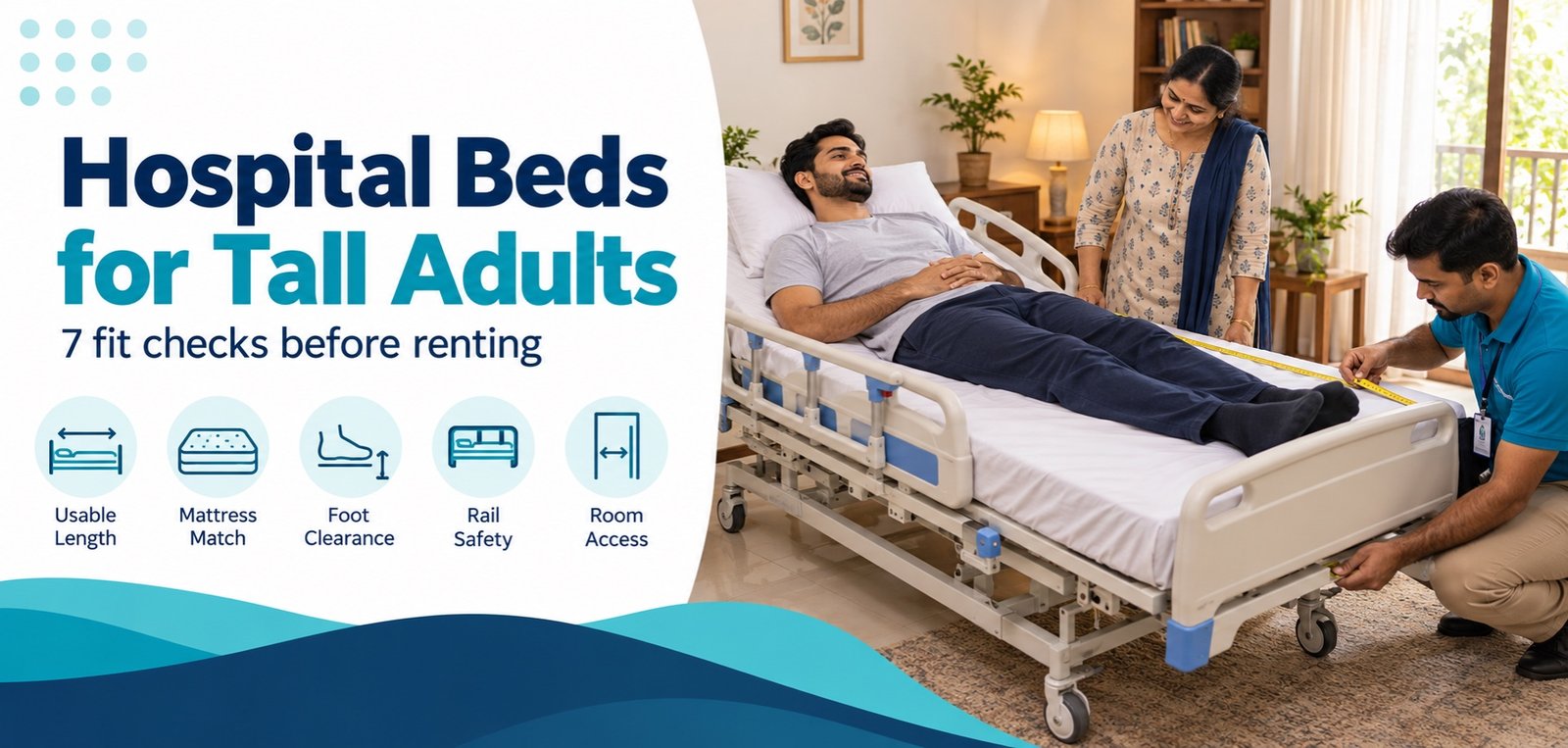
A hospital bed may look long enough in a photograph while still leaving a tall adult cramped once the mattress, footboard and raised backrest are considered. Overall bed length is not the same as usable sleeping length. Choosing well means checking the actual supplied frame, mattress, profiling movement, rails and room, then comparing those measurements with the individual patient.
Quick answer
For a tall adult, ask for the usable mattress-platform length and the exact mattress length, then check head and foot clearance in the positions the patient will use. Confirm whether profiling causes the body to slide towards the footboard, whether any approved extension exists, and whether the frame, mattress, rails and accessories are compatible. Do not improvise an extension or use a smaller mattress to create more apparent room.
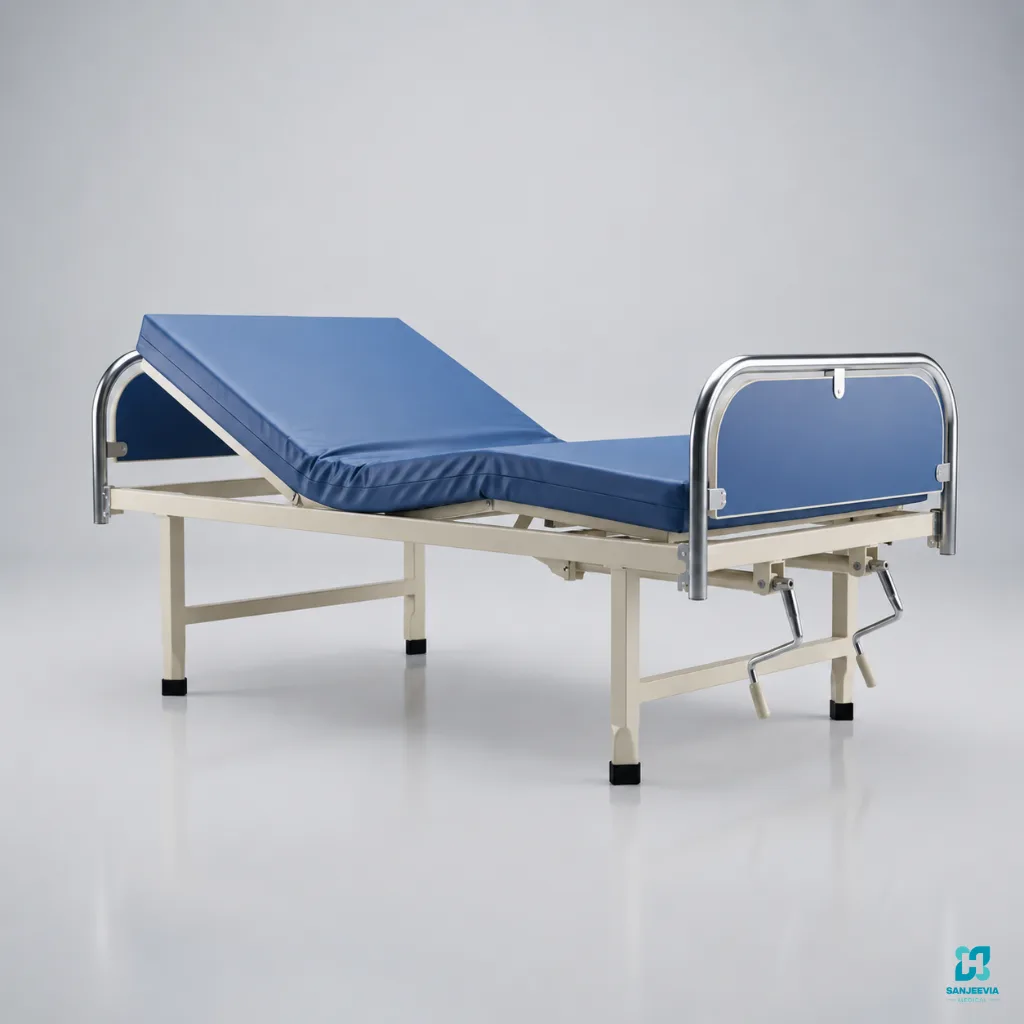
These cards show models to compare, not a guarantee that any model fits a tall user. Ask for the actual platform, mattress and accessory dimensions before confirming.


Seven fit checks before renting
1. Measure the person and the required position
Record standing height if practical, but do not stop there. Ask the clinician whether the patient needs pillows, heel off-loading, a raised backrest, knee profiling, a positioning aid or space for foot care. A person may fit while lying flat yet contact the footboard when the backrest rises and the body moves down the mattress.
Note the preferred sleeping posture and any contractures or inability to straighten the knees. A bed provider can compare measurements, but a clinician should advise therapeutic positioning and pressure care.
2. Ask for usable platform length, not only overall length
Overall length includes the headboard, footboard, frame and fittings. It does not tell you how much mattress surface supports the patient. Ask for the usable platform length and width of the actual model being supplied, measured according to the manufacturer.
Keep the answer with the booking record. Model names can cover different versions, and product photographs are not a scale drawing. If the supplier cannot confirm the required fit, do not assume a standard model will work.
3. Match the mattress to the frame
The mattress should be the correct length, width, depth and type for the bed system. A mattress that is too short can leave hazardous gaps. A mattress that is too long may bunch, interfere with movement or change rail relationships. Pressure-relief overlays also change height and compressibility.
The US FDA bed-system guide advises checking manufacturer compatibility because the frame, mattress, rails and accessories work as a system. Read Sanjeevia’s mattress size compatibility guide before adding a surface to a rented frame.
4. Check clearance during profiling
Ask for the backrest and knee functions to be demonstrated. Observe, with appropriate assistance, whether the patient slides towards the foot end or develops pressure at the heels or toes. Do not place loose objects between the feet and footboard as an improvised spacer.
A manual full Fowler bed and a three-function electric bed can move different sections and use different controls. Function count does not prove sufficient length. Compare the model’s movement with the patient’s care tasks, transfers and comfort.
5. Treat any extension as a manufacturer-approved component
If extra length is required, ask whether the exact bed manufacturer provides an approved extension and matching mattress section or mattress. Confirm how rails, footboard, safe working load and powered movement are affected. A homemade platform, loose foam block or unsupported mattress overhang can create instability and gaps.
Do not remove or relocate the footboard, rails or frame parts unless the manufacturer instructions and individual safety assessment permit it. The bed must remain complete and safe after any approved configuration change.
6. Recheck rails and gaps with the final mattress
Tall stature does not remove bed-rail risk. The FDA advice for consumers and caregivers states that rails, mattresses and frames are not universally interchangeable. The final setup should leave no gap large enough to trap the patient’s head or body.
Risk may increase when the mattress compresses, shifts or is combined with an overlay. The UK’s MHRA bed-rail guidance recommends checking compatibility and the individual occupant’s needs. Rails should be based on assessment, not added automatically as a fall-prevention measure.
7. Confirm the room, route and caregiver workspace
A longer bed or approved extension needs extra room. Measure doors, lift, corridor turns and the planned room. Leave space for the caregiver to approach the sides required for transfers, hygiene, positioning and equipment. Check that controls, sockets and emergency access remain reachable.
Use the room preparation guide and home access questions before discharge. Share the measurements before confirming the order, not when the vehicle arrives.
Watch: Hospital-bed functions overview
This overview shows a manual full Fowler bed and its functions. It does not establish that the model fits a tall adult. Confirm the actual usable platform, mattress and footboard clearance before booking.
Fit information to send the provider
| Information | Why it matters |
|---|---|
| Patient height and required positioning | Helps assess usable length in real care positions |
| Actual mattress-platform length requested | Separates patient space from overall frame length |
| Mattress type and any overlay | Affects fit, profiling and rail gaps |
| Head and foot clearance needed | Reduces contact when the backrest or knees are raised |
| Approved extension requirement | Determines whether the exact model can be configured safely |
| Door, lift, corridor and room measurements | Confirms that the equipment can reach and work in the home |
| Transfer side and caregiver tasks | Preserves working space around the bed |
Questions to ask during handover
- Is this the exact frame and mattress specification confirmed at booking?
- What are the usable platform and mattress dimensions?
- Are all rails, mattress sections and accessories approved for this model?
- Does profiling operate freely without bunching or gaps?
- Where are the emergency stop or manual-lowering instructions, if applicable?
- What inspection should the caregiver perform each day?
- Whom should the family contact if the mattress shifts, the patient contacts the footboard or a gap appears?
Sanjeevia’s product cards show examples to review. They do not certify tall-user suitability. The supplied model, dimensions and compatible mattress must be confirmed for the actual booking.
Frequently asked questions
Is overall hospital-bed length the same as sleeping length?
No. Overall length includes the frame and boards. Ask for the usable mattress-platform length and exact mattress dimensions.
Can I use a shorter mattress to create more foot space?
No. A short or incompatible mattress can create dangerous gaps. Use only a mattress approved for the bed system.
Can a bed be extended for a tall adult?
Only when the exact manufacturer provides an approved extension and compatible mattress arrangement. Confirm the complete configuration before booking.
Do more bed functions mean more length?
No. Function count describes movements, not patient length. Check dimensions and fit separately.
Does Sanjeevia guarantee that the beds shown fit every tall adult?
No. The cards show models to compare. Suitability depends on actual dimensions, patient positioning, mattress, accessories and the individual assessment.
Educational equipment-selection guide reviewed against FDA and MHRA bed-system safety guidance on 23 October 2026. Confirm the actual model and individual clinical needs.
Next Read
Prepare the destination before ordering with How to Prepare a Room for Medical Equipment at Home Safely.