
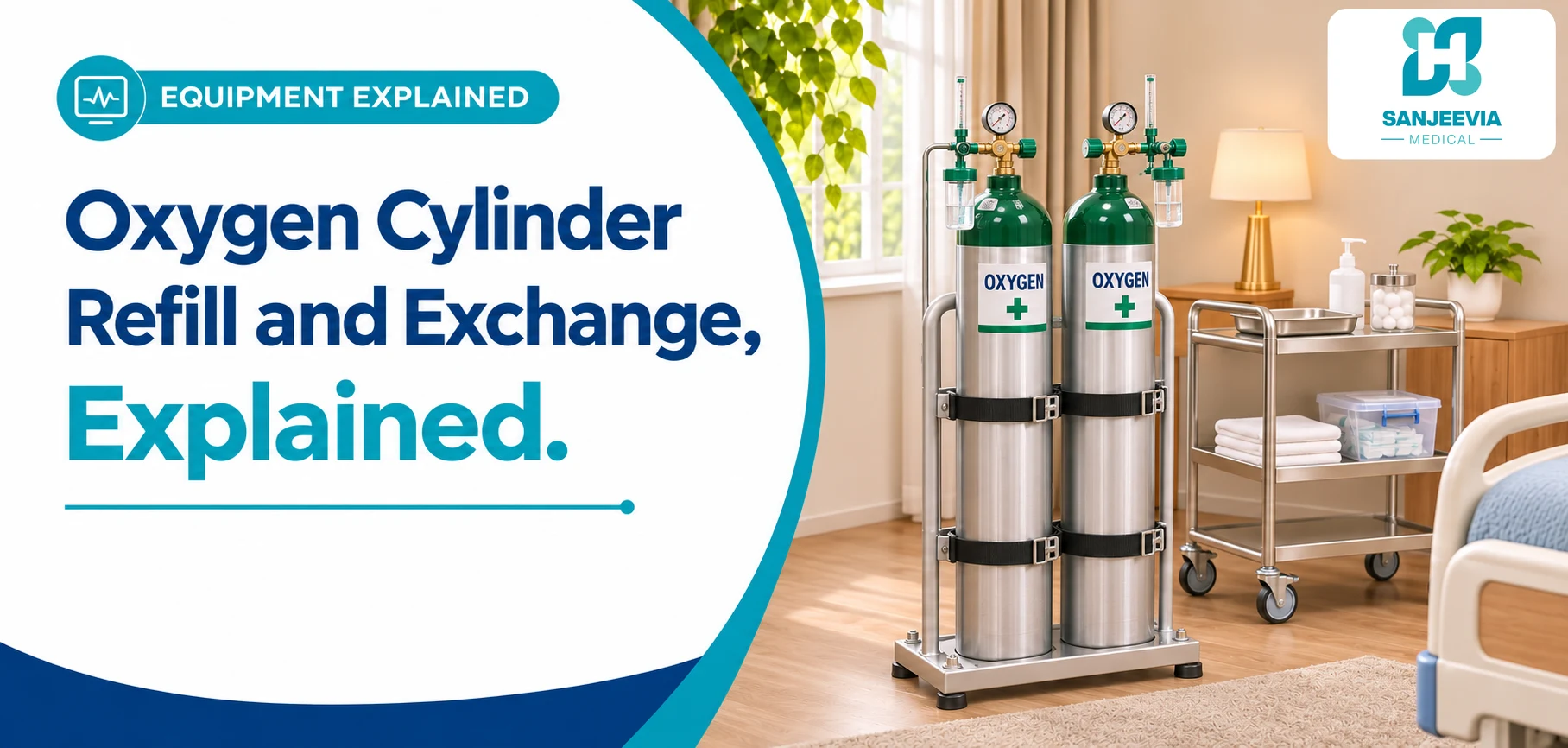
When the gauge starts to fall, the first question is how the patient will receive their prescribed oxygen while the cylinder is away. A refill generally means an accepted cylinder goes to an authorised facility to be filled and returned. An exchange means handing over an eligible cylinder and receiving a different filled one under the supplier’s terms. Both routes need medical oxygen, equipment compatibility and a continuity plan. Ask who owns the cylinder, whether it is eligible, and who will check the replacement setup before relying on it.
Explore relevant equipment
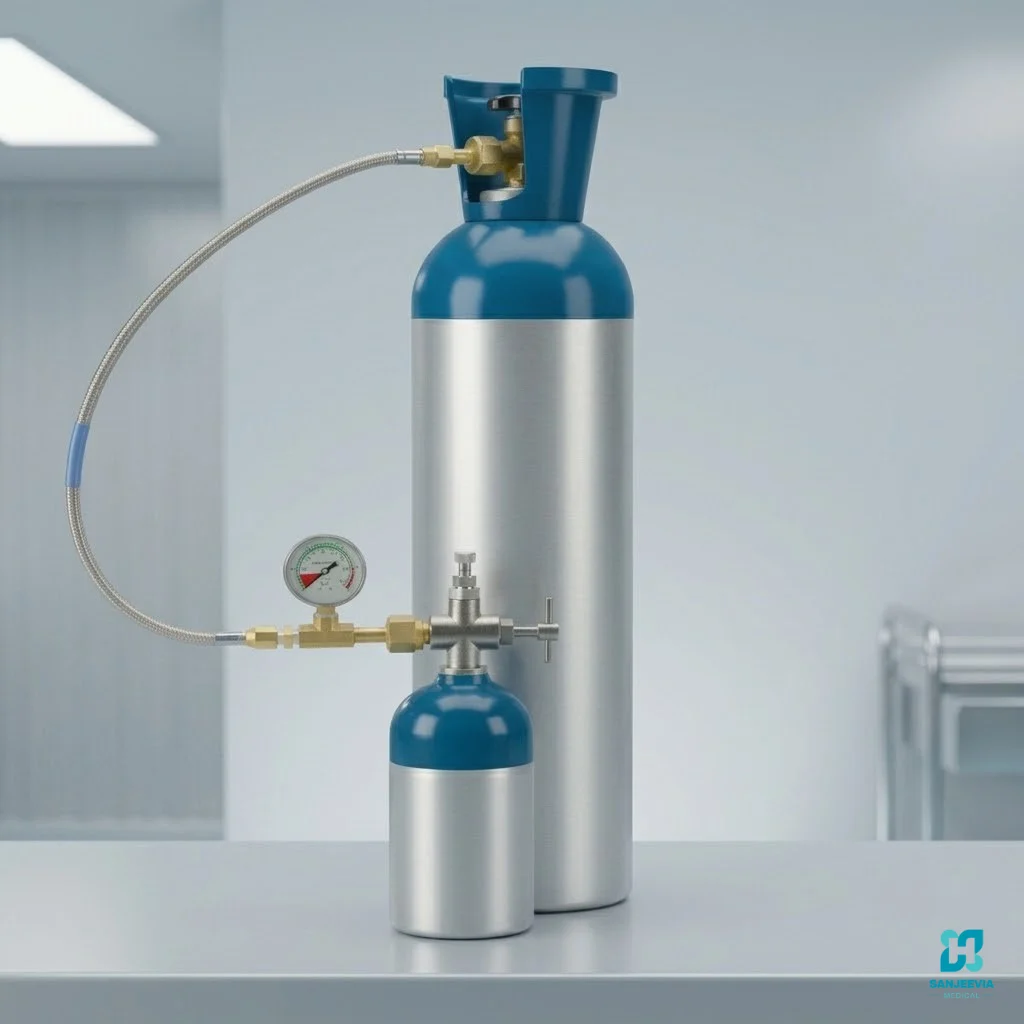
Medical Oxygen Cylinder Refill or Exchange Service
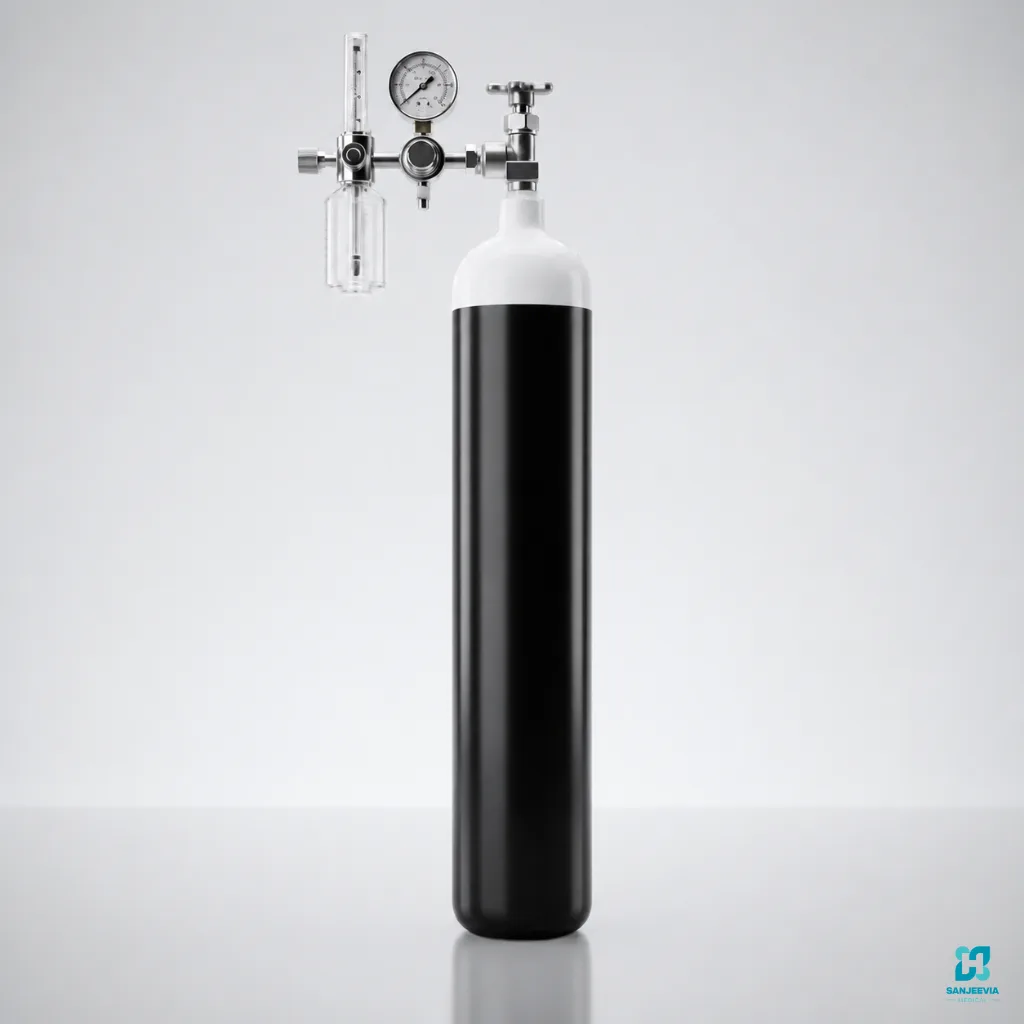
Oxygen Cylinder 10L
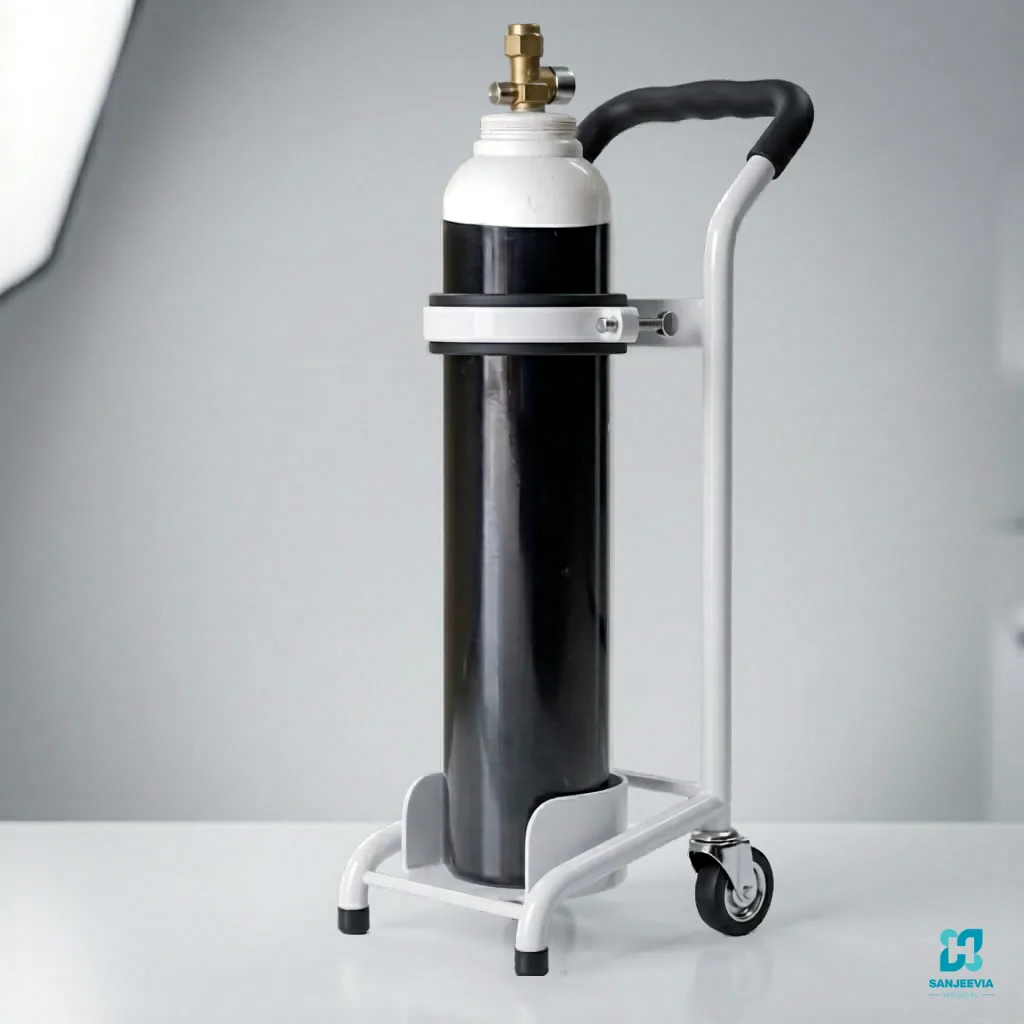
Oxygen Cylinder 47L
Related video: Using a medical oxygen cylinder at home
Sanjeevia demonstrates a home cylinder setup. Ask your supplier for a handover of the exact cylinder you receive.
Refill, exchange and rental solve different problems
A refill may suit someone who owns a cylinder and wants that same unit returned. Confirm whether the provider can identify and track it by serial number, and what happens if the facility rejects it. An exchange can reduce the time the original unit is out of service, depending on stock and arrangements. The incoming cylinder may have a different serial number, valve or capacity. If the cylinder is rented, call the owner before handing it to any third party. Ask whose cylinder you will retain and how a deposit, return or collection will work.
Read the cylinder label and gauge separately
Terms like 10 L or 47 L often describe the cylinder’s internal water capacity. The regulator’s pressure gauge may show bar or psi. The flowmeter indicates delivery flow in litres per minute, which the care team sets from the prescription. These figures describe different things. A cylinder size alone cannot tell you how much usable oxygen remains. Ask your supplier or care team to explain the gauge, the usable reserve and when to arrange replacement. Share the label and serial number with the supplier when booking. Ask what test marks and records they need to accept the cylinder.
See Sanjeevia’s oxygen regulator guide and cylinder trolley guide for the rest of the setup.
Confirm medical oxygen and an authorised filling route
Ask where the cylinder is filled, how the filling facility is authorised and how the provider identifies medical oxygen and traces the supplied cylinder. India’s Gas Cylinders Rules set out licensing requirements for filling. PESO publishes information on oxygen filling and storage licences, and the Ministry of Health and Family Welfare provides national medical oxygen guidance. A cylinder with unreadable markings, damage, suspect valve condition or an unresolved test status should be assessed by the provider. Keep filling, testing, valve work and cylinder-to-cylinder transfers with authorised professionals. Confirm the gas by its label and supply documentation rather than relying on paint colour.
Arrange backup before collection
Agree a replacement point with the supplier and clinical team based on the prescription, remaining supply, the reserve and collection time. If the patient depends on oxygen, arrange an approved backup that can provide the prescribed therapy before releasing the working cylinder. Include nights, weekends, delays and a concentrator power outage in that plan. A full cylinder does not guarantee a fixed number of hours. Ask for a unit-specific estimate using the prescribed flow and the provider’s usable reserve. If oxygen supply is failing and the patient is in distress, follow the emergency care plan and seek urgent medical help.
Quick enquiry
Ask Sanjeevia to confirm the supplied equipment and current Delhi NCR terms.
Check the replacement before relying on it
Ask the trained person to match the cylinder and valve outlet with the oxygen regulator, confirm the approved seal and flowmeter, and demonstrate the checks specified for that setup. Avoid forcing a connection or fitting improvised adapters. Record the cylinder serial number, delivery details and who verified the setup. Have the provider show how the cylinder is secured, how to interpret the gauge, and whom to call if there is a suspected leak, unexpected pressure drop or damaged valve. Keep cylinders secured upright according to the supplied instructions, in a ventilated location away from heat, smoking and flames. Keep oils and grease away from oxygen fittings.
What to include in a Delhi NCR booking
Give your locality, ownership status, cylinder label and size, regulator type if known, and whether the cylinder is the active supply or a backup. Confirm collection, filled replacement, regulator compatibility, trained handover and all charges. Ask if a replacement can arrive before the outgoing cylinder leaves, and agree what happens if the cylinder fails inspection. Use the supplier’s approved handling and transport arrangements. Keep the prescription and service contact accessible, then plan the next reorder with the care team.
Frequently asked questions
Will I get my cylinder back?
Confirm by serial number for a refill. An exchange generally supplies a different eligible cylinder.
Can I keep the same regulator?
Have a trained person verify the valve outlet, regulator and approved seals for the incoming cylinder.
Should I wait until the gauge reads empty?
Arrange replacement while the agreed reserve and backup remain available.
Can I turn up the flow after delivery?
Use the prescribed flow and contact the treating team for clinical changes.
Does the video show a refill?
It is a related home cylinder-use demonstration. Filling and exchange arrangements are covered in the written guide.
Explore your equipment options
Medical Oxygen Cylinder Refill or Exchange Service
Oxygen Cylinder 10L
Oxygen Cylinder 47L
Sources and further reading
- PESO oxygen filling and storage licences
- PESO Gas Cylinder Rules 2016
- MoHFW National Guidelines on Medical Oxygen Management
- Sanjeevia catalogue: Medical Oxygen Cylinder Refill or Exchange Service
Confirm the supplied model and follow its instructions and the care team’s plan.
