
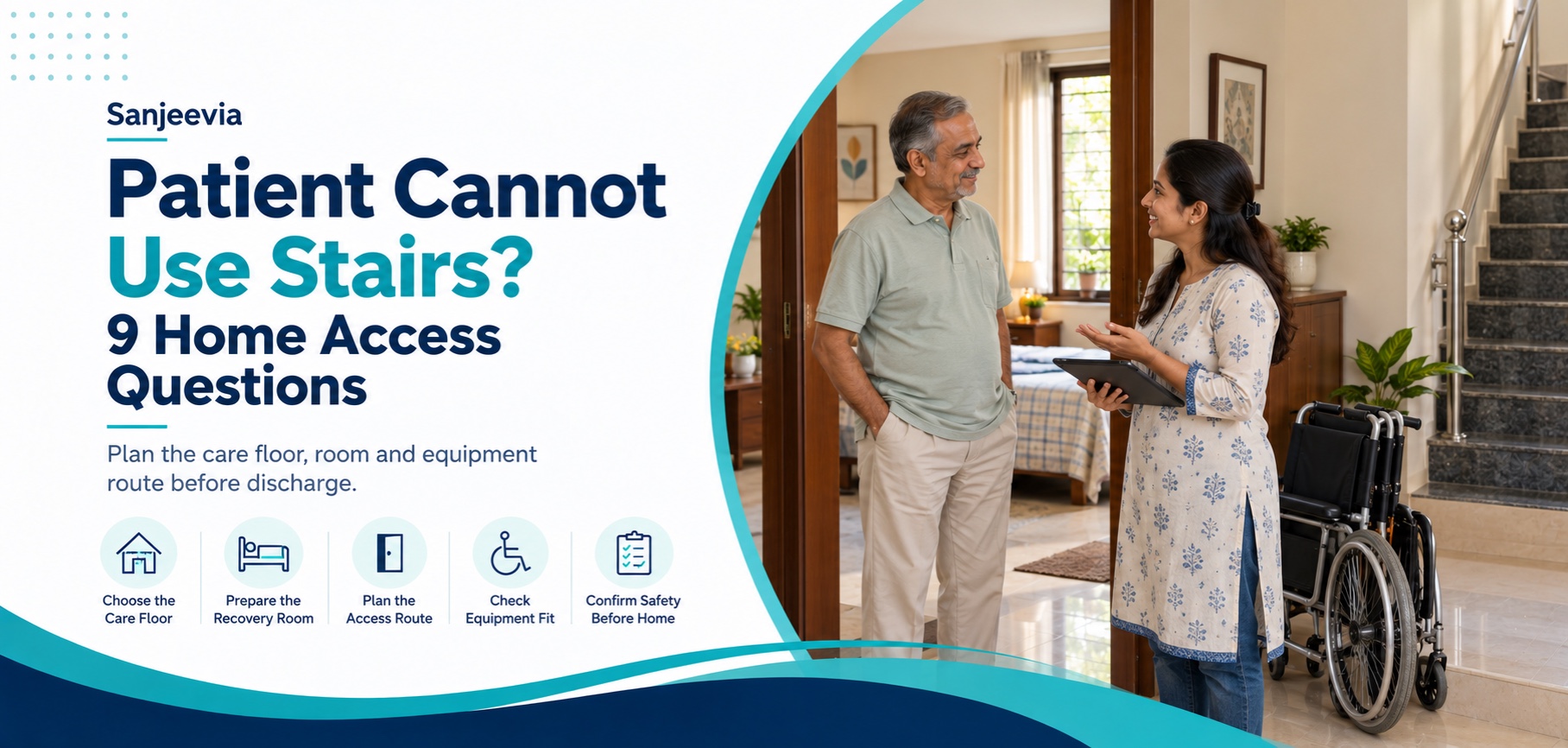
A discharge date can feel reassuring until one practical problem becomes obvious: the patient cannot safely use the stairs at home. The bedroom may be upstairs, the bathroom may be on another floor, or the building entrance may have steps. Planning medical equipment for a patient who cannot use stairs begins with the destination and the assessed way the person will enter, move, toilet and rest there. It does not begin with choosing the biggest wheelchair or hospital bed.
Use these nine questions with the hospital team, the usual caregiver and the equipment provider before the patient leaves. The answers should describe the actual home, the patient’s current abilities and the method demonstrated by the treating professionals.
Quick answer: what should a family plan first?
Confirm which floor the patient will use and how the discharge team expects them to reach it. If stairs are not permitted or cannot be managed safely, ask whether a suitable care space can be prepared on an accessible level. Do not plan to carry an occupied wheelchair up or down stairs without a method and trained assistance specifically arranged by qualified professionals.
These products do not solve stair access by themselves. Confirm the discharge destination, patient movement and required model with qualified professionals before enquiring.

Medical equipment for a patient who cannot use stairs
| Planning area | Question to resolve | Who should confirm it |
|---|---|---|
| Destination | Which room and floor can support the care plan? | Discharge team and family |
| Patient movement | How will the person enter and move between essential spaces? | Physiotherapist or occupational therapist |
| Equipment route | Can each item reach the selected room for assembly and use? | Family and equipment provider |
| Daily care | Can sleeping, toileting, meals and caregiver access work on one level? | Care team and usual caregiver |
| Contingency | What happens if the planned route or equipment cannot be used? | Care team, family and relevant support contacts |
Nine home-access questions to answer before discharge
1. Which floor will the patient actually live on?
Start with the room, not the product. Write down where the patient will sleep, toilet, wash, eat and meet the caregiver. If those essential activities are split across floors, ask the hospital team whether a temporary care zone on one accessible level would be more suitable. A living room may sometimes be considered, but only if the care team agrees and the space can support privacy, equipment and safe working access.
The Kingston and Richmond NHS discharge guide describes creating a one-room care environment when illness or injury affects stairs and daily movement. Use that idea as a discussion prompt, not as a substitute for an individual home assessment.
2. Has a professional assessed the stair problem?
“Cannot use stairs” can mean pain, weight-bearing restrictions, breathlessness, poor balance, weakness or a temporary instruction after surgery. Those situations do not share one equipment answer. Ask the physiotherapist or occupational therapist to state what the person may do, what assistance is needed and which movements should be avoided.
Do not assume that a wheelchair solves a staircase. A standard wheelchair is designed for level movement and should not be carried with the person seated unless a qualified team has selected and demonstrated a specific method using appropriate equipment. If a stairlift, ramp or structural adaptation is being considered, obtain a proper assessment. The NHS home-adaptations overview explains why stairs, entrances and doorways need assessment as part of the whole home.
3. Is the patient route different from the equipment route?
A bed may arrive in sections and be assembled inside the room, while the patient may need a separate accessible route. Measure both journeys. For the equipment route, record the gate, steps, lift opening and cabin, corridor turns, doorway width and final assembly area. For the patient route, follow only the method agreed by the care team.
Share photographs and measurements before booking, but do not treat a photo as confirmation that a patient can be moved safely. Our guide on preparing a room for medical equipment helps families record the full route and working space.
4. Can sleeping and positioning work on the accessible level?
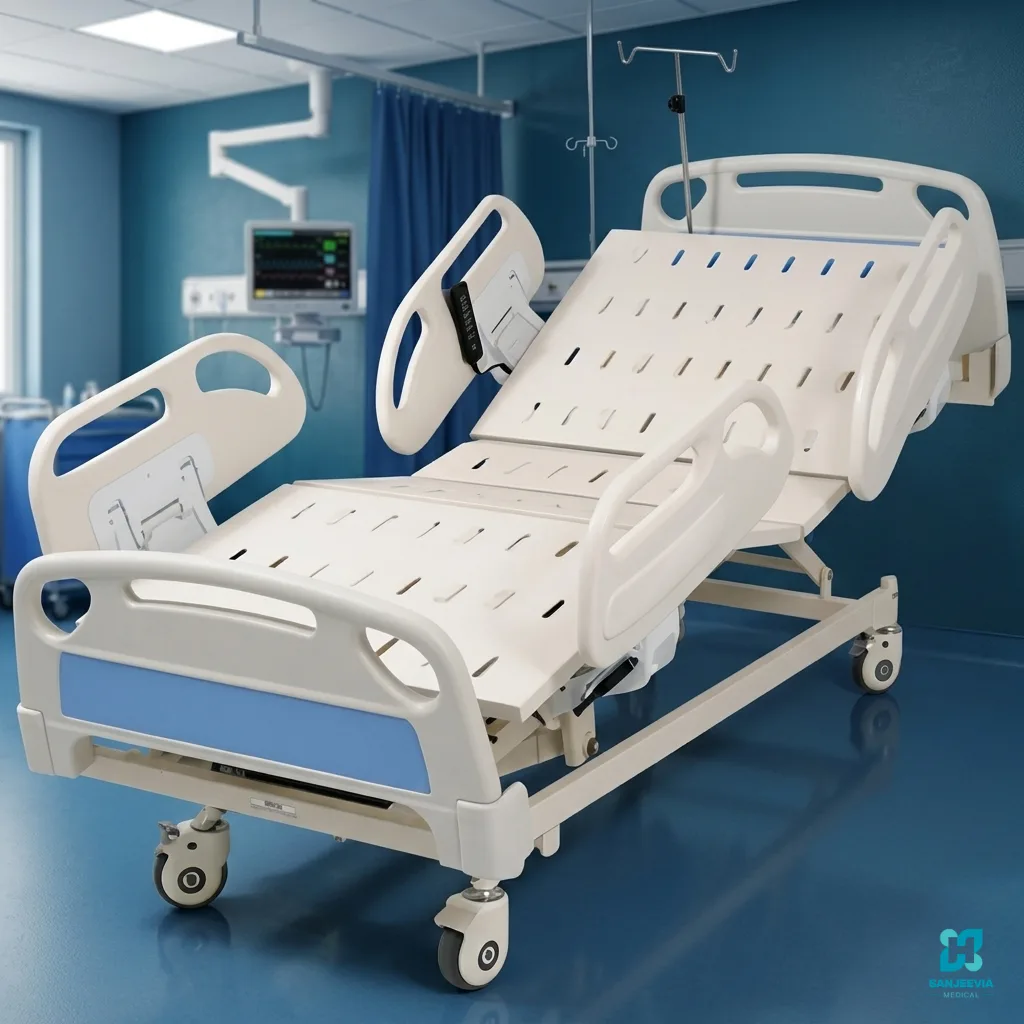
If the ordinary bedroom is upstairs, ask whether the selected ground-floor room can accommodate the prescribed sleeping and positioning plan. A hospital bed may help when specific positioning or caregiver access is required, but it is not automatically necessary for every person who avoids stairs. Confirm the recommended bed functions, mattress, rails and room clearance before choosing a model.
Where an adjustable bed has been recommended, review the listed 3-function electric hospital bed against the written requirements. An electric bed also needs a suitable power arrangement and a plan for a power interruption. Never use a movable over-bed table or side rail as a transfer handle unless the manufacturer and care team specifically allow it.
5. How will toileting work without another staircase?
A usable sleeping area is incomplete if the toilet remains inaccessible. Ask whether the patient can reach the bathroom on the same level using the assessed aid and assistance. If a bedside toileting option is being discussed, confirm the transfer method, seat dimensions, height, capacity, privacy and cleaning routine.
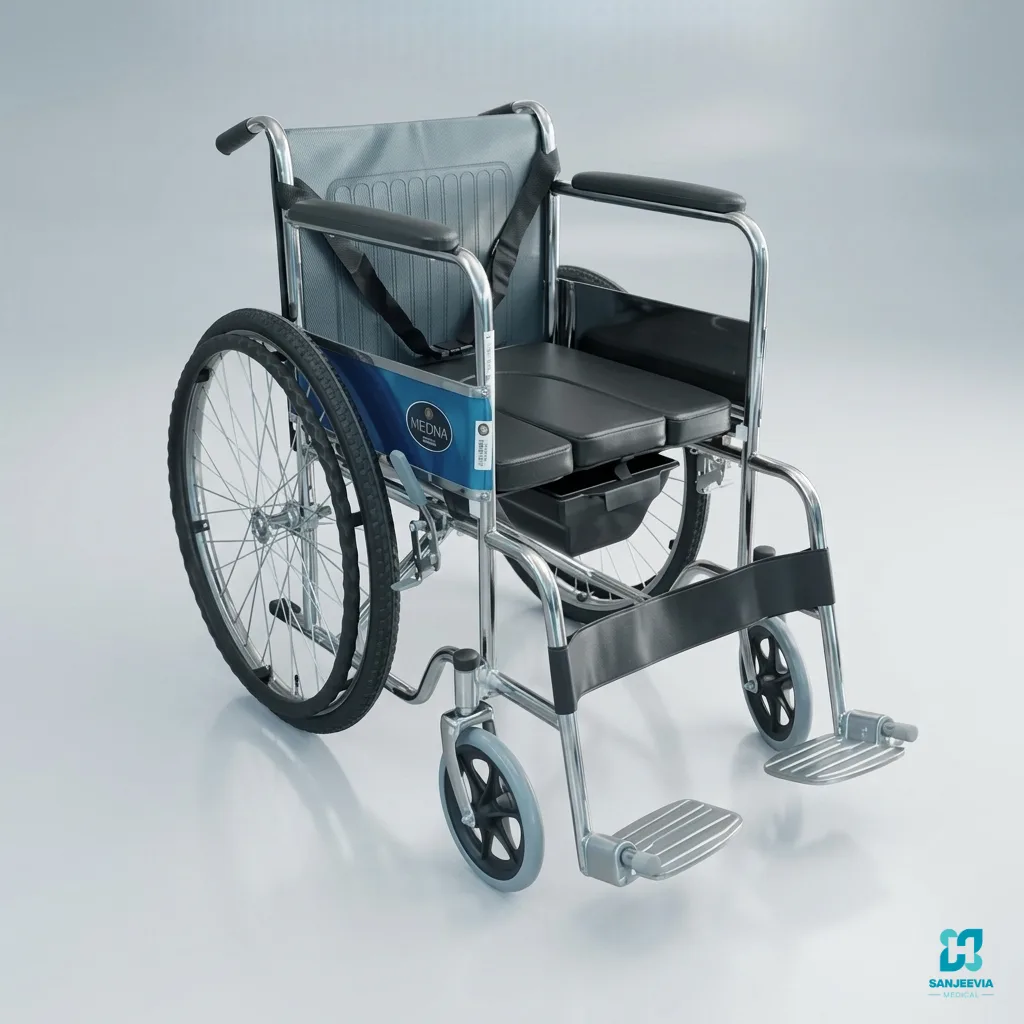
Sanjeevia lists a manual commode wheelchair, which is different from a static bedside commode. Its presence in the catalogue does not establish that it is suitable for the patient or approved for use in a shower. Read the bedpan versus bedside commode guide before asking the care team which type matches the plan.
6. Which wheelchair or walking aid matches the accessible area?
Once the person is on the selected level, confirm how they will move between the bed, chair and toilet. A wheelchair needs the correct seat fit, user-weight capacity, foot support and turning space. A walking frame needs assessed balance, strength and a method taught by a professional. Neither should be selected only because it fits through a door.
The standard manual wheelchair is one listed option for level mobility after individual fit and transfer checks. It is not a stair-transport device. If the patient cannot manage the usual chair or the home route, return to the therapist rather than improvising with more helpers.
7. Can the caregiver reach both sides of the care area?
A room can hold a bed and still be unusable. Check whether the usual caregiver can approach the agreed working side, operate controls, manage linen and assist with the demonstrated transfer. Keep doors, exits, electrical panels and commonly used paths clear. Leave space for any prescribed mobility aid rather than parking it where it blocks access.
Ask the person who will provide daily help to attend the equipment handover. A relative who visits once may not notice the difficulties faced during the night or when working alone. Record the steps that require two people or trained assistance so they are not quietly reassigned to one caregiver.
8. How will emergency access work?
Write down the selected room, building access details and the person who can open the property. Keep the patient’s care contacts and equipment support information easy to find. Do not block the entrance with cartons, furniture or unused equipment. If the building has access restrictions, discuss them with the relevant care and transport professionals before discharge.
A medical equipment provider does not replace emergency transport or clinical services. If the patient’s condition changes or the agreed home arrangement no longer works, contact the treating team or emergency services as appropriate.
9. What is the backup if the first plan fails?
Before discharge, name the alternatives. What if the selected bed cannot reach the room? What if the usual caregiver is unavailable? What if the patient cannot complete the transfer that was demonstrated in hospital? Decide whom to call and what the patient should avoid while advice is obtained.
The NHS discharge guidance advises families to understand new equipment, needed supplies and support contacts before returning home. The exact services differ in India, but the planning principle remains useful: do not leave essential access questions until the patient reaches the door.
What information should you send with an equipment enquiry?
- The clinician-approved equipment requirement and any positioning restrictions.
- The floor where the item will be used and whether a working lift is available.
- The narrowest doorway, corridor turns, steps and final room dimensions.
- The patient’s relevant fit and capacity information for a wheelchair or chair.
- The name of the adult receiving the equipment and attending the demonstration.
For equipment enquiries in Delhi NCR, contact Sanjeevia with these details. The team can discuss listed models and home-access information. Clinical assessment, patient transport, stair training and transfer instruction remain with qualified healthcare professionals.
Frequently asked questions
Can a wheelchair be used to carry someone up household stairs?
Do not use a standard wheelchair this way unless qualified professionals have selected and demonstrated a specific method with suitable equipment and trained assistance. A wheelchair designed for level mobility is not automatically a stair-transport chair.
Should we move the patient to a ground-floor room?
Ask the discharge team whether an accessible-level care zone suits the person’s condition, privacy and care plan. The room must also support toileting, caregiver access and any required equipment.
Will a hospital bed fit through a staircase or narrow landing?
Some beds can be transported in sections and assembled in the room, but this varies by model and property. Share the full access-route measurements before booking and confirm the assembly plan.
Does Sanjeevia arrange stairlifts or patient transport?
This article does not promise those services. Sanjeevia can discuss medical equipment listed on its website. Confirm patient transport and structural home adaptations with appropriately qualified providers.
What if the patient becomes weaker after returning home?
Contact the treating team promptly for reassessment. Do not change the transfer method or substitute equipment based only on an online article.
Educational home-equipment guide. Sources and linked catalogue pages checked on 18 October 2026. Clinical suitability, stair access and patient movement must be assessed by the treating professionals. Cover image is illustrative.
Next Read
If the patient will recover somewhere other than their usual home, continue with Temporary Recovery at a Relative’s Home: 10 Medical Equipment Questions Before Delivery.