
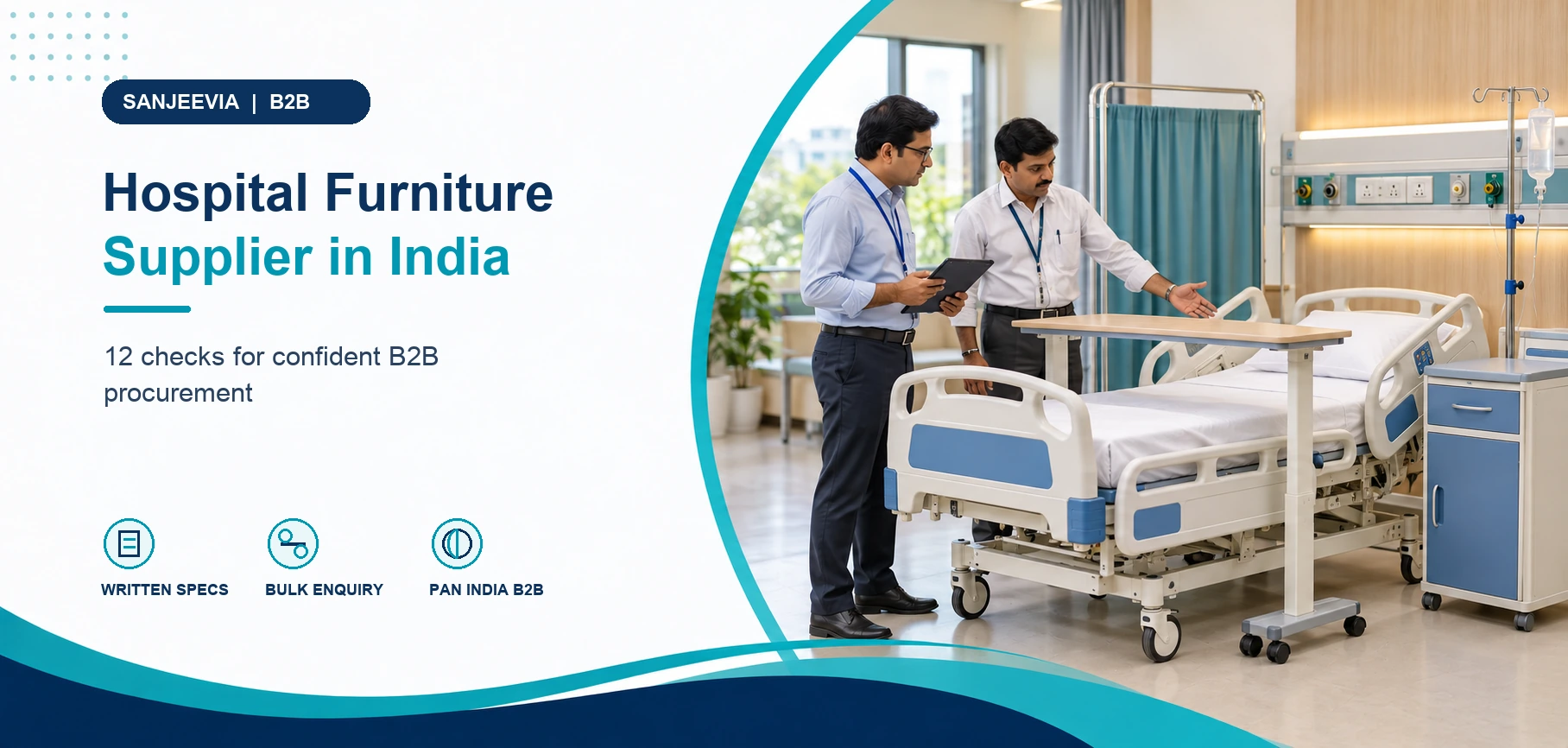
A hospital furniture supplier in India should help an institutional buyer turn a room list into clear, comparable product specifications. For a hospital, clinic, nursing home, rehabilitation centre or healthcare project, the correct order is rarely just a list of beds and tables. It must account for intended use, room dimensions, infection-control routines, staff workflow, patient movement, accessories, inspection and long-term support.
This guide explains the checks a B2B buyer can use before requesting a quotation. Sanjeevia supports institutional and trading enquiries across India through a specification-led procurement process. Availability, serviceability and commercial terms are confirmed against the buyer’s written requirement.
Quick answer: how should you choose a hospital furniture supplier?
Start with a room-wise bill of quantities, not a generic catalogue. For every item, record dimensions, intended load, adjustment mechanism, materials, finish, castors, brakes, side rails, mattress or accessory requirements and the applicable documentation. Ask each supplier to quote against the same specification, then inspect samples or approved product details before placing a bulk order.
Who this hospital furniture procurement guide is for
The checklist is designed for hospital administrators, purchase teams, architects, project consultants, clinic owners, nursing-home operators, rehabilitation facilities, corporate healthcare teams and medical-equipment traders. A small clinic may use the same process for a few critical items, while a new facility can apply it room by room.
12 checks before placing a bulk hospital furniture order
1. Define the clinical area and intended use
A general ward, ICU, procedure room, examination area, recovery bay and attendant space have different needs. Name the department and intended use beside every line item. This prevents a general-purpose product from being accepted for a task that requires a different design or feature set.
2. Build a room-wise bill of quantities
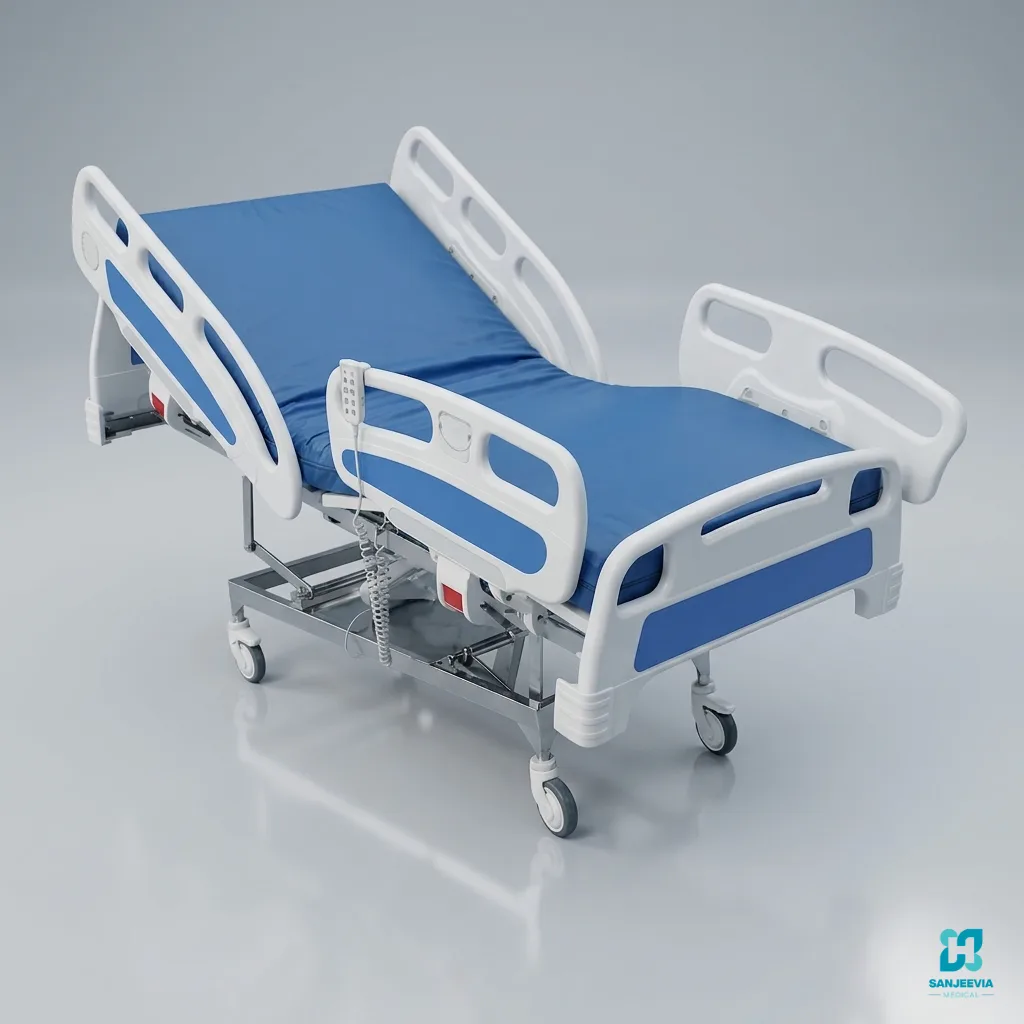
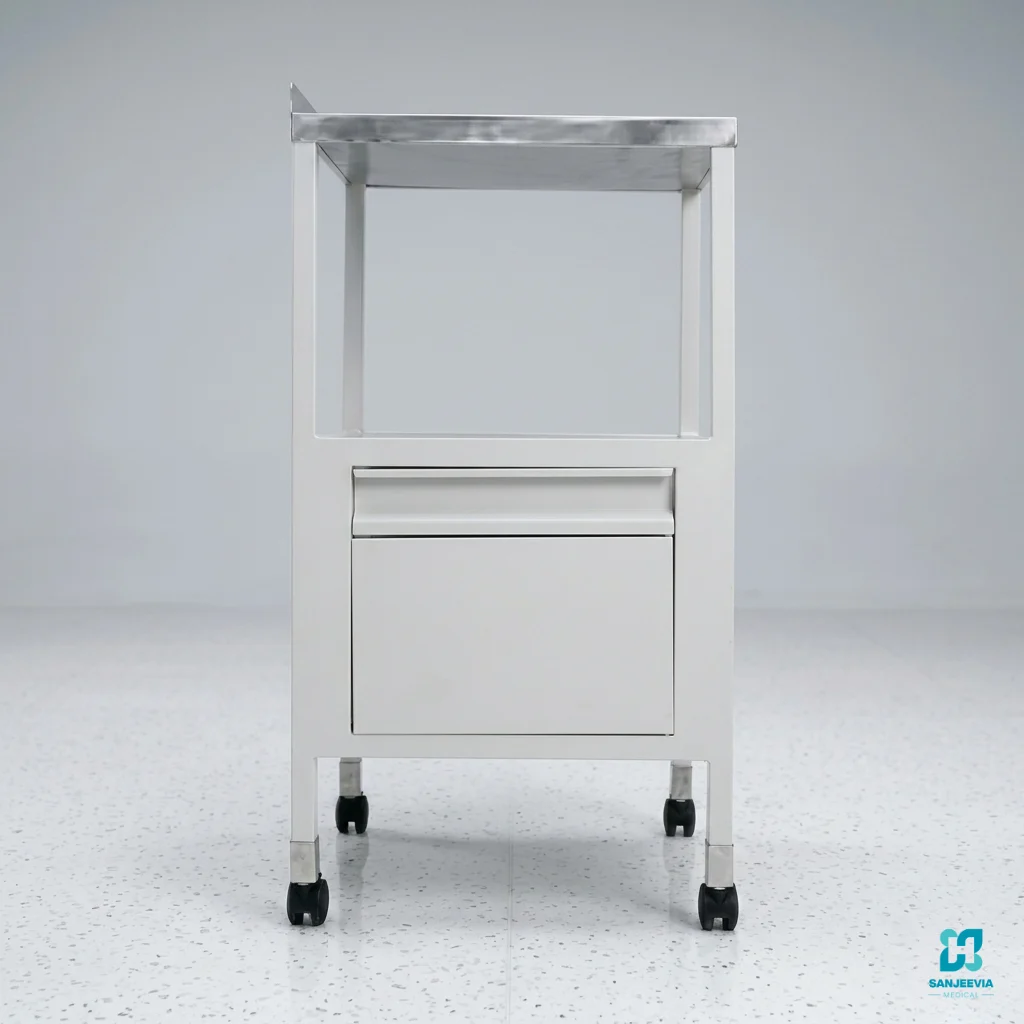
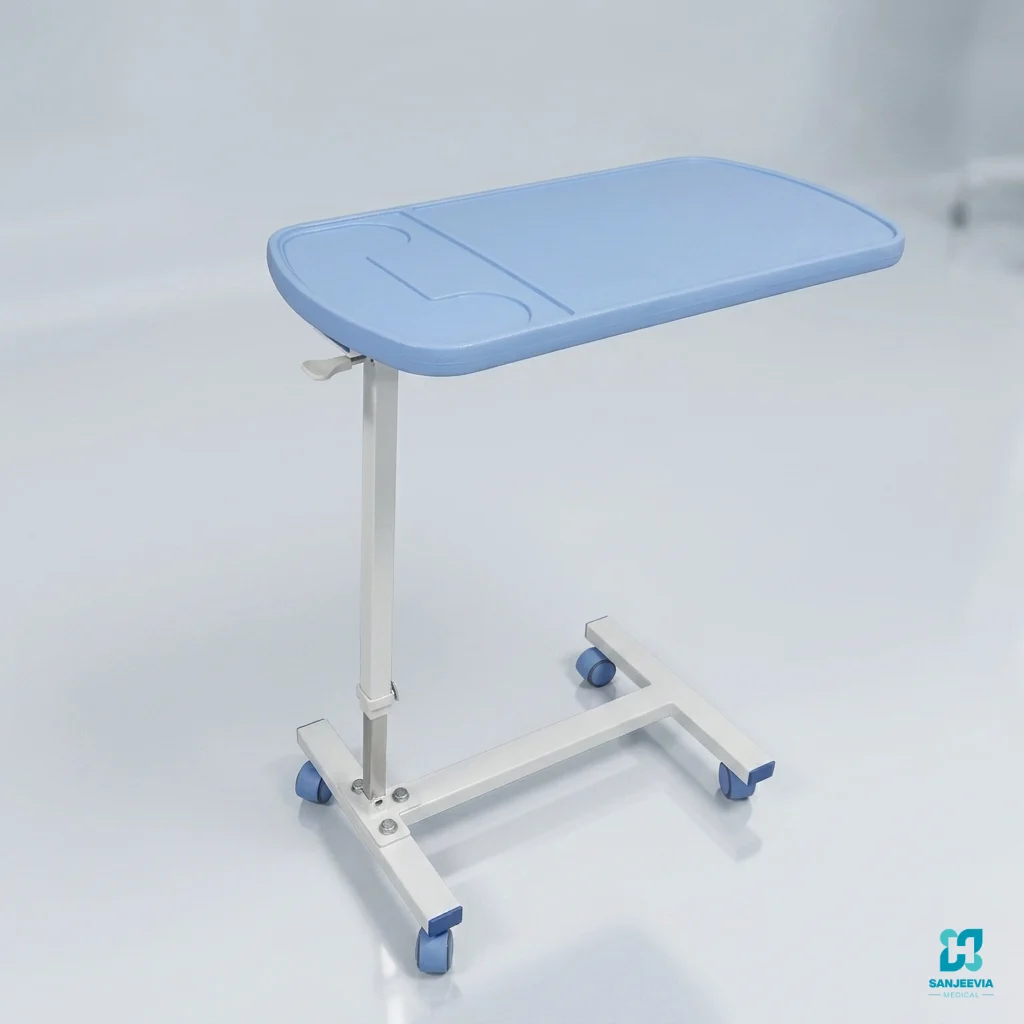
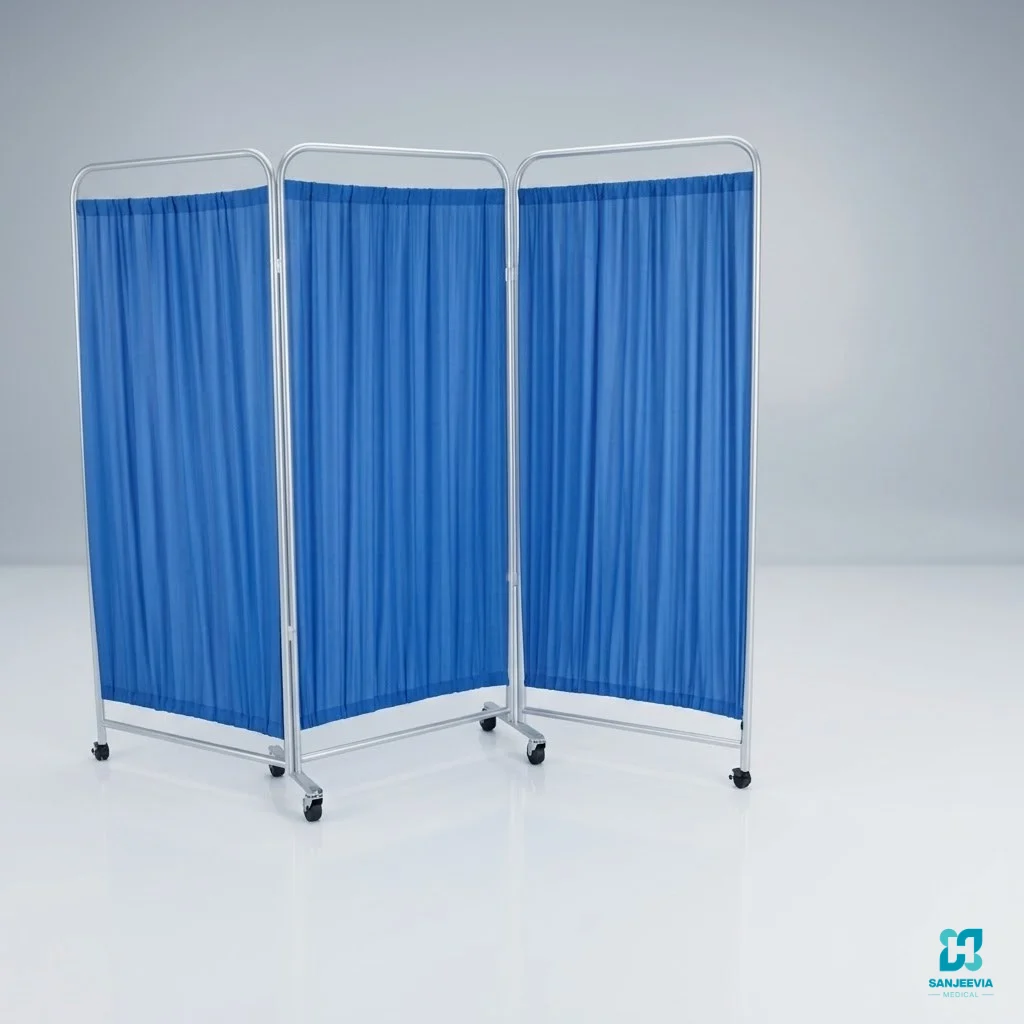
Prepare quantities by room or floor, including main furniture and supporting items. A ward list may include medical beds, mattresses, bedside lockers, over-bed tables, IV stands, privacy screens and foot steps. A room-wise list makes shortages, duplicates and phased requirements easier to see.
3. Write a specification for every item
Do not send a request that says only “hospital bed” or “bedside table.” Specify the required function, approximate dimensions, adjustment method, safety features, finish, castor and brake arrangement, compatible accessories and any model-specific requirement. Written specifications make competing quotations genuinely comparable.
4. Confirm safe working load and functional limits
Ask for the stated load rating and the conditions under which it applies. Confirm that adjustment ranges, rail height, table travel and other moving functions suit the intended patient group and workflow. Never infer a rating from appearance.
5. Review construction, surfaces and finish
Check the offered material, joint quality, exposed edges, finish consistency and areas that may trap soil or moisture. The correct material depends on the product and clinical setting. The buyer’s cleaning and disinfectant protocol should be shared before final approval so material compatibility can be checked.
6. Check dimensions against the actual site
Overall size is only the beginning. Measure doors, corridors, lifts, turning space, room clearances and the working space needed by staff. For beds and trolleys, include the effect of side rails, attachments and movement. For over-bed tables, confirm that the base can move around the chosen bed.
7. Specify castors, brakes and movement needs
Furniture that moves between rooms needs suitable castors and a clear brake arrangement. Furniture intended to remain stationary may need a different base. Ask how each item is locked, released and steered, and include a functional check in the receiving inspection.
8. Match beds, mattresses and accessories
A mattress should fit the deck and articulation pattern of the selected bed. Side rails, IV poles, tables and other attachments must also be compatible with the exact model. Review Sanjeevia’s medical bed mattress options alongside the bed specification rather than treating the mattress as an unrelated purchase.
9. Choose manual or powered adjustment deliberately
Manual beds can suit settings where simple mechanical adjustment is sufficient. Electric beds can reduce repeated manual adjustment and offer more positioning options, but they also require appropriate electrical planning and user instruction. Compare manual adjustable beds with electric beds using the same clinical and operational requirements.
10. Ask for product and regulatory documentation
Medical devices in India are regulated under the Medical Devices Rules, 2017. The exact documentation required depends on the product, classification and supply chain. Buyers should review the current CDSCO medical-device resources and request applicable licences, manufacturer or importer details, model information, instructions and warranty documents. For relevant standards, use the BIS Know Your Standard search rather than assuming that one standard covers every product.
11. Define acceptance, warranty and support terms
Record the inspection criteria, supplied accessories, warranty coverage, excluded conditions, support contact and spare-part process in the order. Powered products may need a more detailed commissioning and support plan than simple furniture. These terms should be reviewed before approval, not after installation.
12. Approve a sample or documented configuration
For a large order, compare a physical sample where practical or approve a complete documented configuration with photographs and specifications. Record any accepted variation in writing. At receipt, inspect the delivered items against that approved reference.
Hospital furniture by care area
| Care area | Typical furniture requirement | Useful checks |
|---|---|---|
| General ward | Beds, mattresses, lockers, over-bed tables, IV stands, privacy screens | Cleanability, movement, brakes, rail design, room clearance |
| ICU or high-dependency area | Advanced beds and compatible accessories | Positioning functions, electrical planning, accessories, inspection and support |
| Examination or procedure room | Examination furniture, steps, stools, screens and trolleys as specified | Working height, stability, surface compatibility and workflow |
| Recovery and rehabilitation | Adjustable beds, mobility support and patient-care accessories | Transfer space, rail access, caregiver operation and future care needs |
How to write an RFQ suppliers can answer accurately
Your request for quotation should include the institution name and delivery city, project stage, room-wise quantities, required specifications, acceptable alternatives, documentation checklist, inspection method and desired order phasing. Where a requirement is clinically sensitive, have the specification approved by the appropriate clinician or biomedical team.
Use the same RFQ for every shortlisted supplier. If a supplier proposes an alternative, require a line-by-line statement of differences. This helps the purchase committee evaluate the offered configuration instead of comparing names alone.
How Sanjeevia handles institutional and trading enquiries
Sanjeevia works with hospitals, clinics, corporate healthcare teams, home-care partners and medical-equipment traders. The process begins with the buyer’s written requirement, followed by catalogue matching, clarification of specifications and a formal quotation for the confirmed configuration. For multi-category requirements, the team can coordinate furniture with patient-care and critical-care equipment.
For Pan India trading or institutional requirements, send the city, quantities, specifications and project timeline through the Sanjeevia B2B enquiry form. The team will confirm the available product options and serviceability for that enquiry.
Frequently asked questions
Does Sanjeevia supply hospital furniture for bulk orders?
Sanjeevia accepts B2B procurement and trading enquiries. The available models, quantities, documentation and serviceability are confirmed after reviewing the written requirement.
Can one enquiry include beds and supporting furniture?
Yes. A consolidated room-wise list can include beds, mattresses, lockers, over-bed tables, IV stands, privacy screens and other relevant items. Each line should still have its own specification.
Can a buyer request a specific brand or equivalent option?
State the required brand and model where it is mandatory. If equivalents are acceptable, define the minimum functional and documentation requirements so alternatives can be evaluated consistently.
Is a catalogue enough for a hospital project?
No. A catalogue helps shortlist products, but the final order should refer to the agreed model, configuration, accessories, documentation and acceptance criteria.
Next read
For a broader multi-category purchase, continue with our medical equipment supplier checklist. Buyers focused on beds can use the hospital bed dealer and distributor guide.
Planning a hospital, clinic or trading order? Send Sanjeevia your B2B requirement with the city, item list, quantity and specifications for a relevant response.