

Quick answer: A syringe pump advances the plunger of a compatible syringe for precise, low-volume delivery. A volumetric infusion pump controls fluid from a bag or bottle through an infusion set and is generally used when a larger volume must be delivered. The prescription, medicine, access route, programmed rate and monitoring plan must be set by the treating clinical team.
When a family is preparing for IV therapy or palliative care at home, the equipment list can feel confusing. A discharge note may say “infusion pump”, while the nurse asks whether a syringe pump is available. These devices belong to the same broad family, but they are not interchangeable. Choosing the wrong pump or programming it without proper training can cause too much medicine, too little medicine or a delayed treatment.
This guide compares a syringe pump with a volumetric infusion pump, including their reservoirs, typical uses, included items and the questions families should settle before arranging a rental in Delhi NCR.
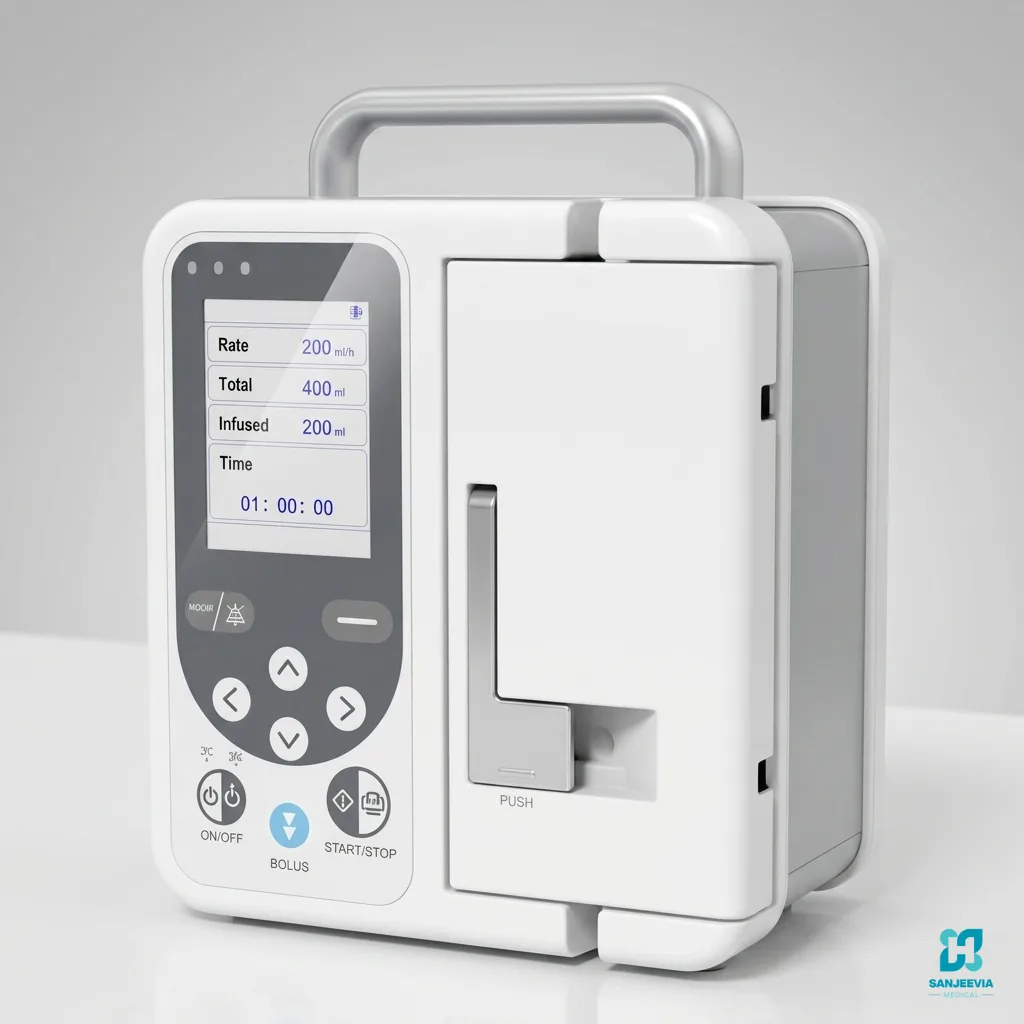
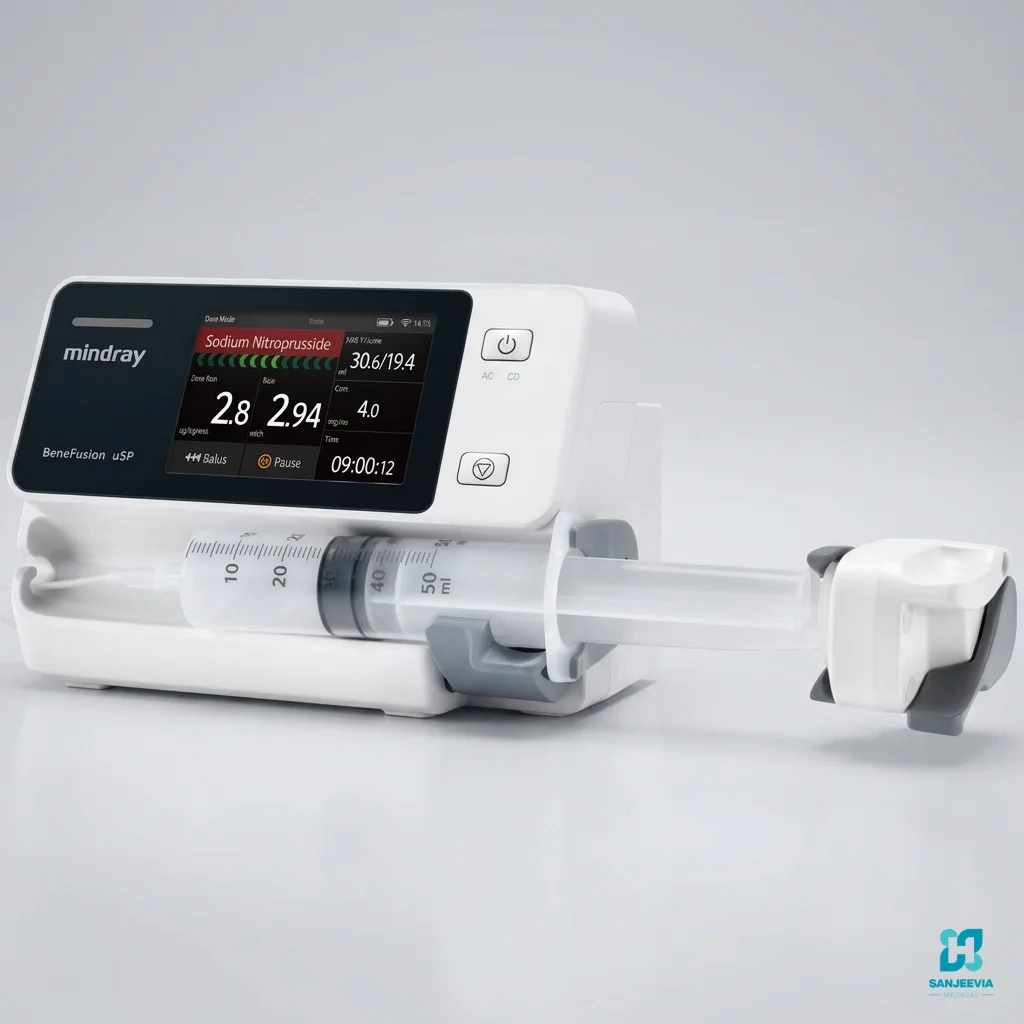
Syringe pump vs infusion pump: the core difference
The easiest way to distinguish the two devices is to look at the fluid container and delivery mechanism. A syringe pump holds a syringe in a clamp and moves its plunger at a programmed rate. A volumetric pump usually moves fluid from an IV bag or bottle through compatible tubing.
| Comparison point | Syringe pump | Volumetric infusion pump |
|---|---|---|
| Fluid reservoir | Compatible syringe | IV bag, bottle or other prescribed container |
| Common decision factor | Small-volume, concentrated delivery | Larger-volume fluid or medicine delivery |
| Disposable item | Syringe and extension line | Compatible infusion set and patient line |
| Programming | Rate and syringe specification must match the prescription | Rate, volume and infusion-set compatibility must match the prescription |
| Home use | Only under a clinician-led plan with trained operation | Only under a clinician-led plan with trained operation |
The United States FDA describes an infusion pump as a device that delivers fluids, nutrients or medicines in controlled amounts. It identifies a syringe pump as one type of infusion pump, with the syringe acting as both the reservoir and part of the fluid-control mechanism. In day-to-day rental conversations, however, “infusion pump” often means a volumetric pump, which is why confirming the exact device matters.
When is a syringe pump considered?
A syringe pump may be prescribed when a medicine has to be delivered in a relatively small volume at a controlled rate. Sanjeevia’s listed unit is intended for clinician-directed care such as palliative symptom management, pain-control plans or certain critical medicines. These are examples, not permission to start therapy independently.
Before arranging the pump, the prescriber or trained nurse should confirm:
- The medicine and route of administration
- The syringe size and type compatible with the selected pump
- The programmed rate and total duration
- The extension line and other patient-specific consumables
- Who may start, stop, pause or reprogram the device
- What each alarm means and whom to call
- The backup plan for power failure, blockage, disconnection or pump failure
The Sanjeevia syringe pump page lists the pump, power cable, syringe clamp and handover card as included. Syringes, medicine, extension lines and other consumables are arranged separately because they are prescription-led and patient-specific.
When is a volumetric infusion pump considered?
A volumetric pump may be selected when the written treatment plan involves controlled delivery from an IV bag or compatible fluid container. Examples can include prescribed antibiotics, hydration, nutrition or other medicines. The device does not decide which treatment the patient needs and it should never be used to improvise a rate.
Sanjeevia’s infusion pump listing includes the pump, power cable, IV-pole attachment, handover card and one initial IV set. Future infusion sets, medicines, IV bags, cannulas, swabs and gloves are arranged according to the clinical plan.
Infusion-set compatibility is important. A set that physically fits may still be unsuitable for the selected pump or therapy. Before delivery, ask the treating nurse to confirm the set specification, access route and replacement schedule.
Home setup and safety questions before delivery
Both pumps require a clean, stable setup and a trained operator. The FDA’s home-use guidance advises families to complete training, verify that the medicine label matches the prescription, understand batteries and alarms, and know whom to contact if the treatment does not run as expected.
- Confirm the exact written order. Keep the prescribed medicine, route, rate, volume and schedule available to the trained operator.
- Identify the responsible person. Decide who will operate the pump and who provides clinical support outside normal hours.
- Check the line. The trained person should check for leaks, kinks, closed clamps, disconnections and visible air according to the treatment protocol.
- Plan for power loss. Confirm the battery condition, expected backup time and the clinical plan if the pump cannot continue.
- Keep the device visible. Do not bury the pump under blankets or place drinks above it.
- Understand every alarm. Never silence an alarm repeatedly without identifying the cause and assessing the patient.
- Keep emergency contacts ready. A device alarm is not a substitute for clinical assessment.
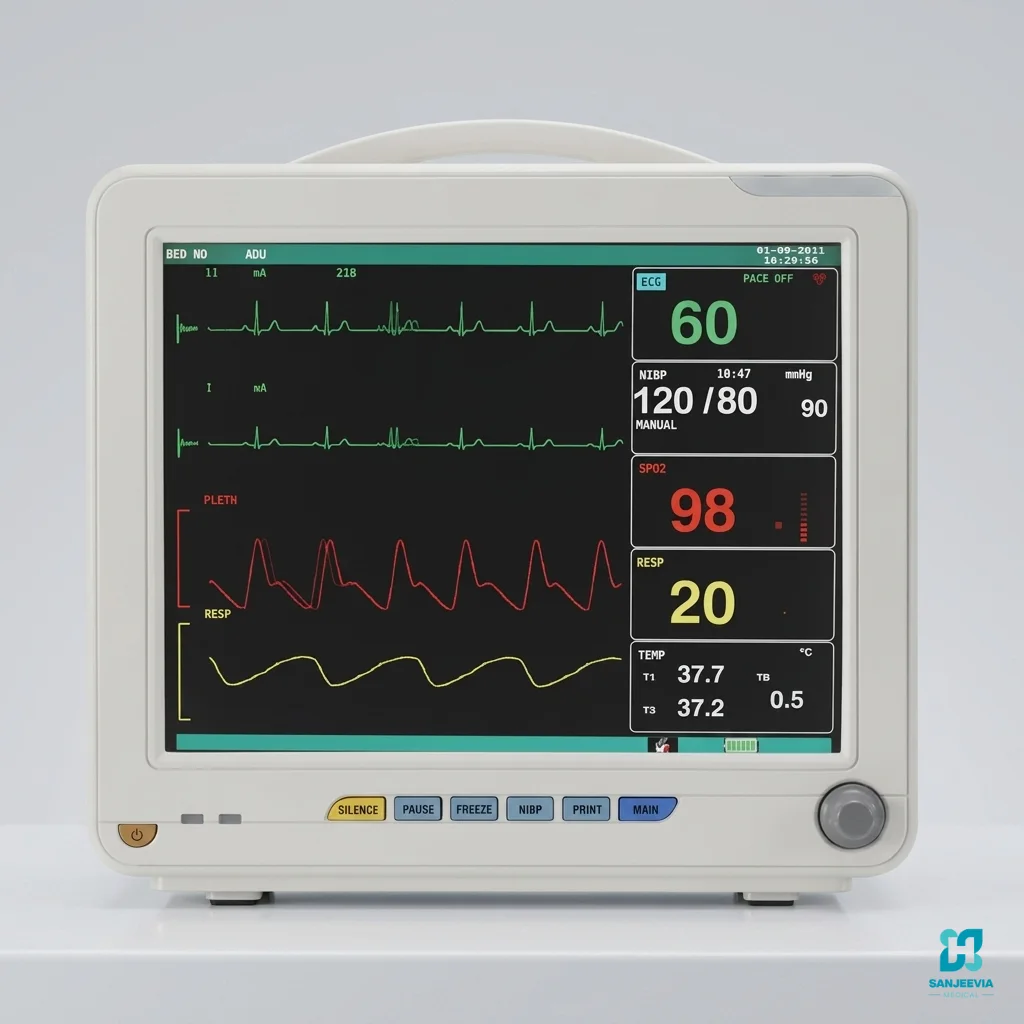
Families arranging several devices after discharge can use Sanjeevia’s ICU-discharge home-care checklist and review the 5-parameter patient monitor only when monitoring has also been prescribed.
Who should choose which pump?
- Choose the syringe pump listed on the prescription when the clinician has specified controlled delivery from a compatible syringe.
- Choose the volumetric infusion pump listed on the prescription when therapy uses a compatible bag or container and infusion set.
- Choose according to the prescription. The reservoir, medicine, route and rate determine suitability.
- Pause the booking and clarify if the discharge note says only “pump” or if nobody has confirmed the required consumables.
- Do not begin home infusion until a trained clinician has prepared the treatment plan and the responsible caregiver understands the device.
How Sanjeevia can help
Sanjeevia can help families compare the listed syringe pump and infusion pump after the clinical requirement is clear. Share the device type, rental duration and required delivery area when requesting a quotation. For other prescribed home-care equipment, browse critical-care and home-care essentials or contact Sanjeevia.
Frequently asked questions
Is a syringe pump the same as an infusion pump?
A syringe pump is a type of infusion pump, but in common rental language an “infusion pump” often refers to a volumetric device using an infusion set and fluid bag. Confirm the exact device named by the treating team.
Can a family member program the pump?
Only a person trained and authorised within the patient’s care plan should program or change the device. The medication, rate and response plan require clinical oversight.
Does the rental include medicines and disposable supplies?
No. Medicines and patient-specific consumables are arranged separately. Check the relevant product page and written quotation for the included pump accessories.
What should we do if the pump alarms?
Assess the patient and follow the written alarm and escalation plan taught by the clinical team. Do not repeatedly restart or reprogram the pump without understanding the cause.
Should we rent or buy?
Rental may suit a defined treatment period or an initial requirement. Purchase may be more economical for a long, confirmed need, but the expected duration, maintenance and consumables should be reviewed first.
Official safety reference
For general device-safety information, read the FDA’s tips for using an infusion pump at home. Patient-specific instructions must come from the treating team and the supplied device manual.
Next read
If the discharge plan also requests a heart tracing, your next question is likely: 12-Lead ECG Machine on Rent in Delhi NCR: Setup and Safety.