
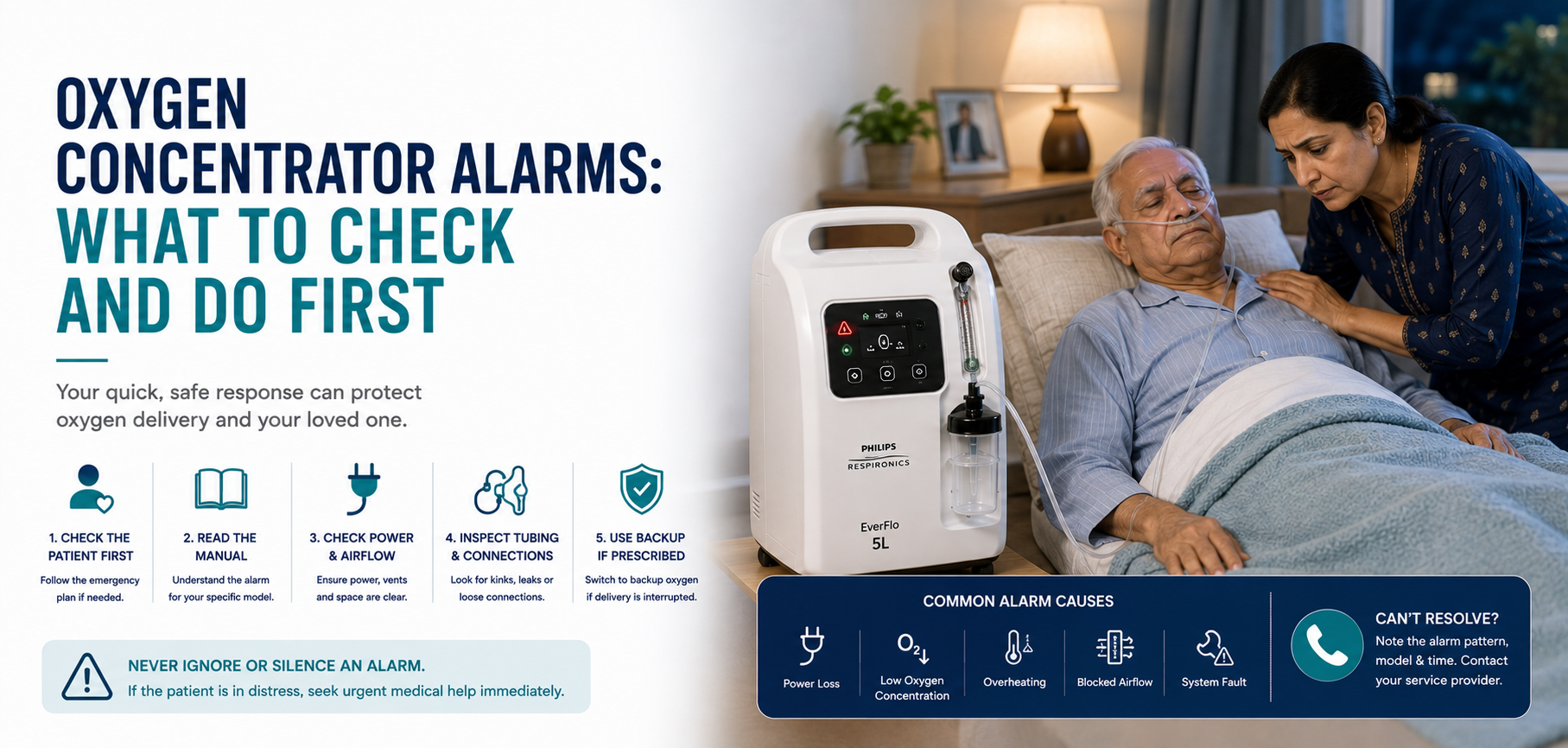
Treat an oxygen concentrator alarm as a warning that needs attention. Check the patient first, then read the model-specific indicator, confirm power and airflow, inspect tubing, and use the prescribed backup oxygen plan if delivery is interrupted. Never silence or ignore an unexplained alarm.
“The oxygen machine suddenly started beeping at 2 a.m.—is the patient getting oxygen?” Different models use different lights and alarm patterns, so the manual and label matter. The safe response is to protect the patient first and diagnose only simple, visible causes.
At a Glance
- Look at the patient and follow the emergency plan if symptoms are worsening.
- Identify the alarm from the supplied model’s manual; colours are not universal.
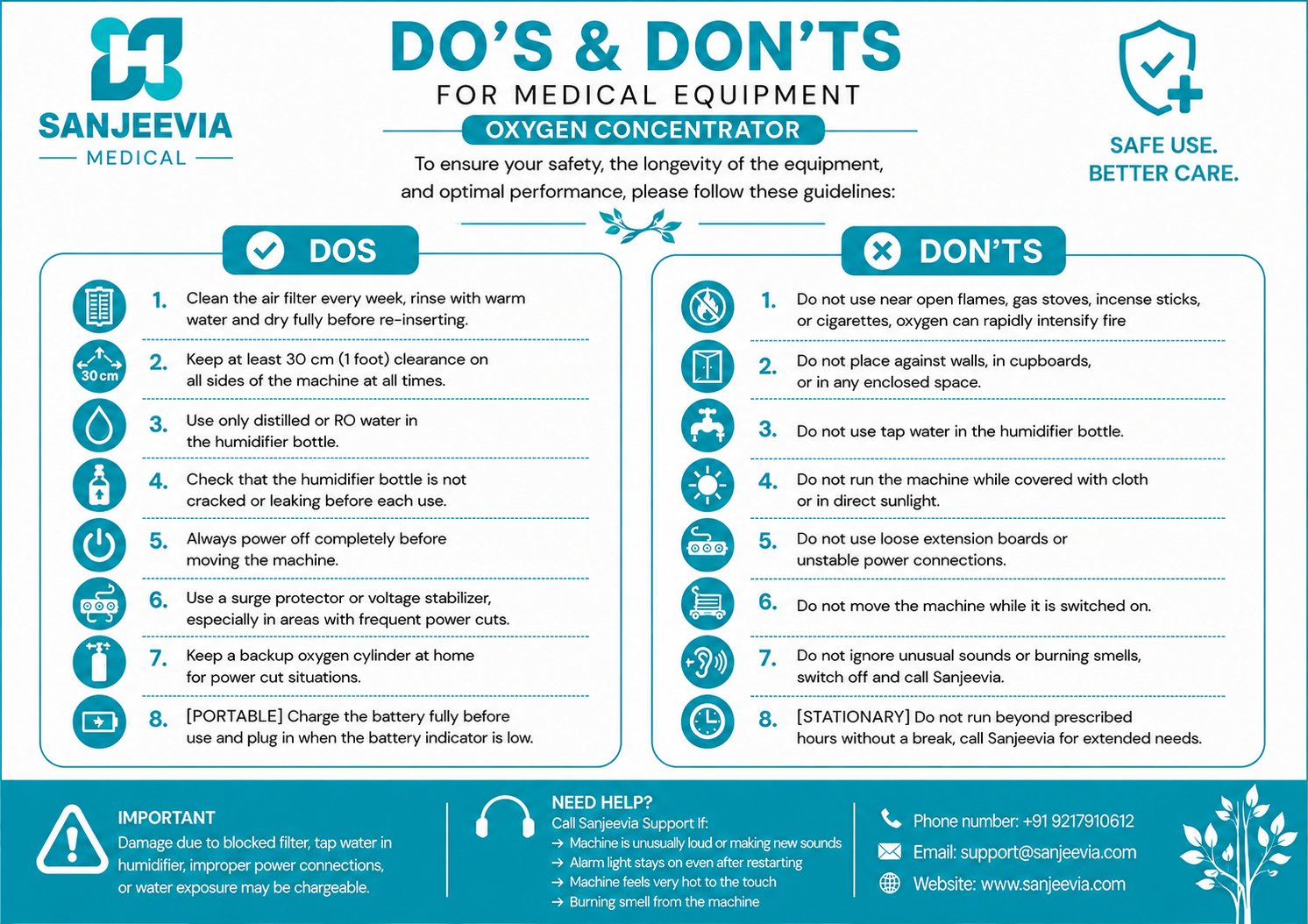
- Keep vents clear and never open the machine casing.
Start with the Patient and Backup Plan
If oxygen delivery may have stopped, move to the clinician-approved backup source if one is available and you have been trained to use it. Contact the equipment provider after the patient is supported.
If the patient is in distress, seek urgent medical care. A service call is not a substitute for medical escalation.
Simple Checks a Family Can Perform
Confirm the plug is secure, the socket works and the power switch is on. Make sure the machine stands upright with space around its air inlet and outlet. Remove curtains, bedding or walls blocking ventilation.
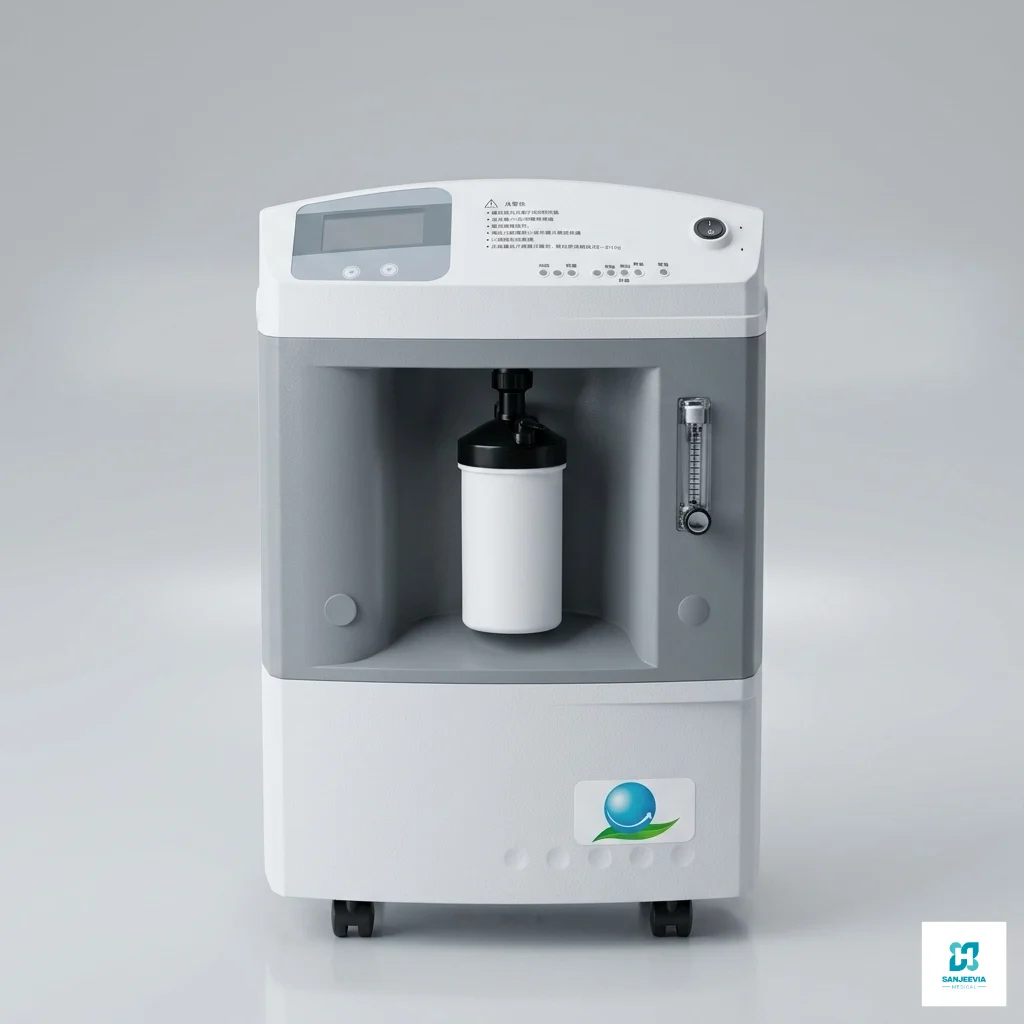
Inspect the tubing from outlet to cannula or mask. Straighten kinks, reconnect loose joints and check whether a humidifier bottle is cross-threaded or leaking. Do not use oil, grease or unapproved sealants.
What the Alarm Could Mean
Depending on the model, an alarm may indicate power loss, low oxygen concentration, overheating, blocked airflow, a system fault or a need for service. The meaning of a yellow or red light is device-specific.
If basic checks do not clear the alarm exactly as described in the manual, stop experimenting. Record the alarm pattern, model and time, and contact the provider.
Safe Checks to Keep Ready
- Device manual beside the concentrator
- Model and serial details available
- Backup oxygen ready if prescribed
- Vents clear with adequate room around the unit
- Tubing and humidifier connections checked
- Service contact saved on every caregiver’s phone
Important: Do Not Change Oxygen Flow on Your Own
Use the flow rate, duration and delivery device prescribed by the treating clinician. If the patient is breathless, unusually drowsy or confused, has blue or grey lips, chest pain, or is deteriorating, seek urgent medical help. Equipment checks must not delay emergency care.
Frequently Asked Questions
Can we keep using the concentrator while it alarms?
Follow the model manual. If oxygen concentration or system failure is indicated, use the prescribed backup and contact support.
Why does it alarm after a power cut?
Some units signal power loss or restart status. Confirm the restart procedure and that normal indicators return.
Can dust cause an alarm?
Blocked filters or vents can affect airflow and heat. Clean only the user-serviceable parts as instructed.
Should we reset the machine repeatedly?
No. Repeated resets can hide a persistent fault. Follow the manual once, then contact the provider if the alarm returns.
Trusted Patient-Safety References
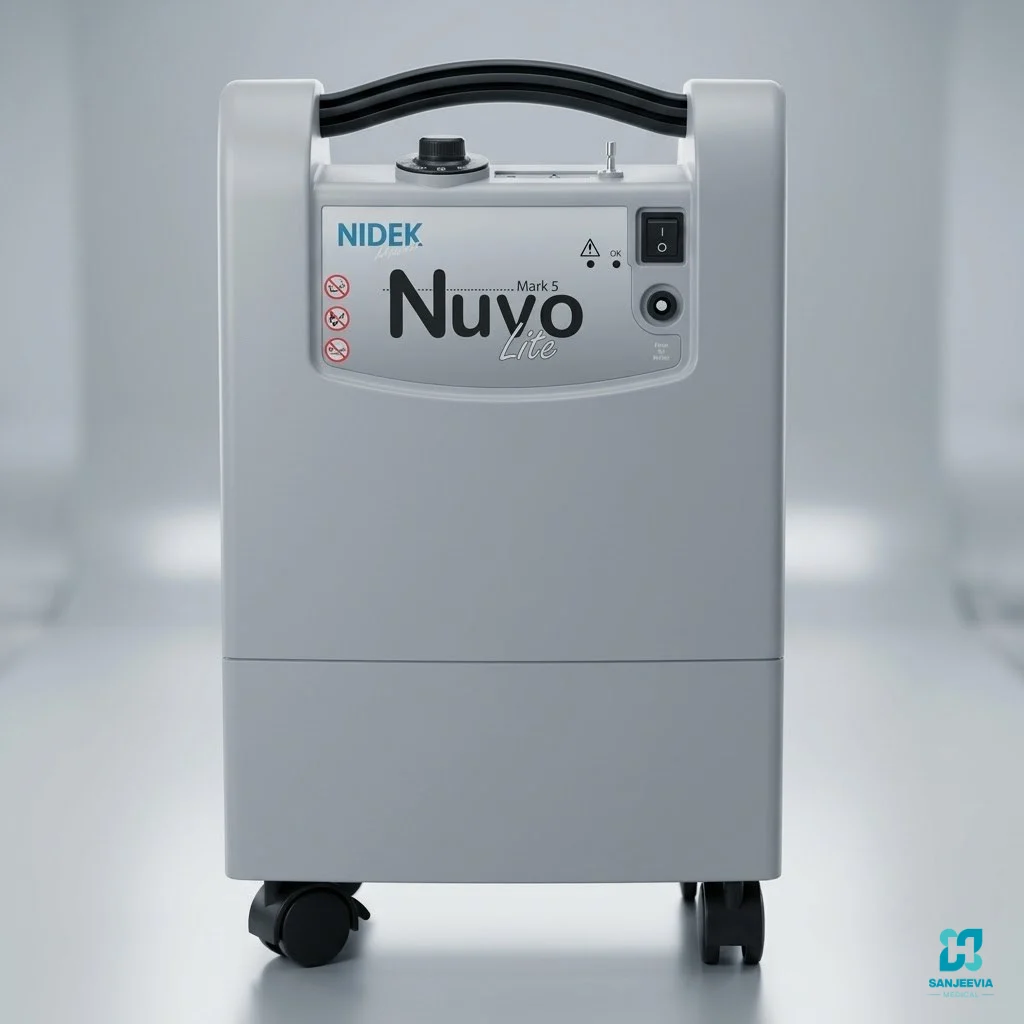
When reporting an alarm, identify the exact unit from the concentrator model catalogue and share its label and alarm message with support; do not select a replacement by capacity alone.
Arrange Oxygen Support in Delhi NCR
Keep the prescription ready, including flow rate and duration, then compare Sanjeevia’s oxygen-support options. Confirm the exact equipment, backup plan, accessories, demonstration and current availability before booking.
Related Guidance and Equipment
For prescription-led oxygen care, the links below explain the next decision and point to the exact equipment pages discussed.
Continue Reading
- Using an Oxygen Concentrator at Night — prepare overnight use and power backup.
- Oxygen Cylinder vs Oxygen Concentrator — compare continuous powered oxygen with cylinder supply.
Relevant Product Pages
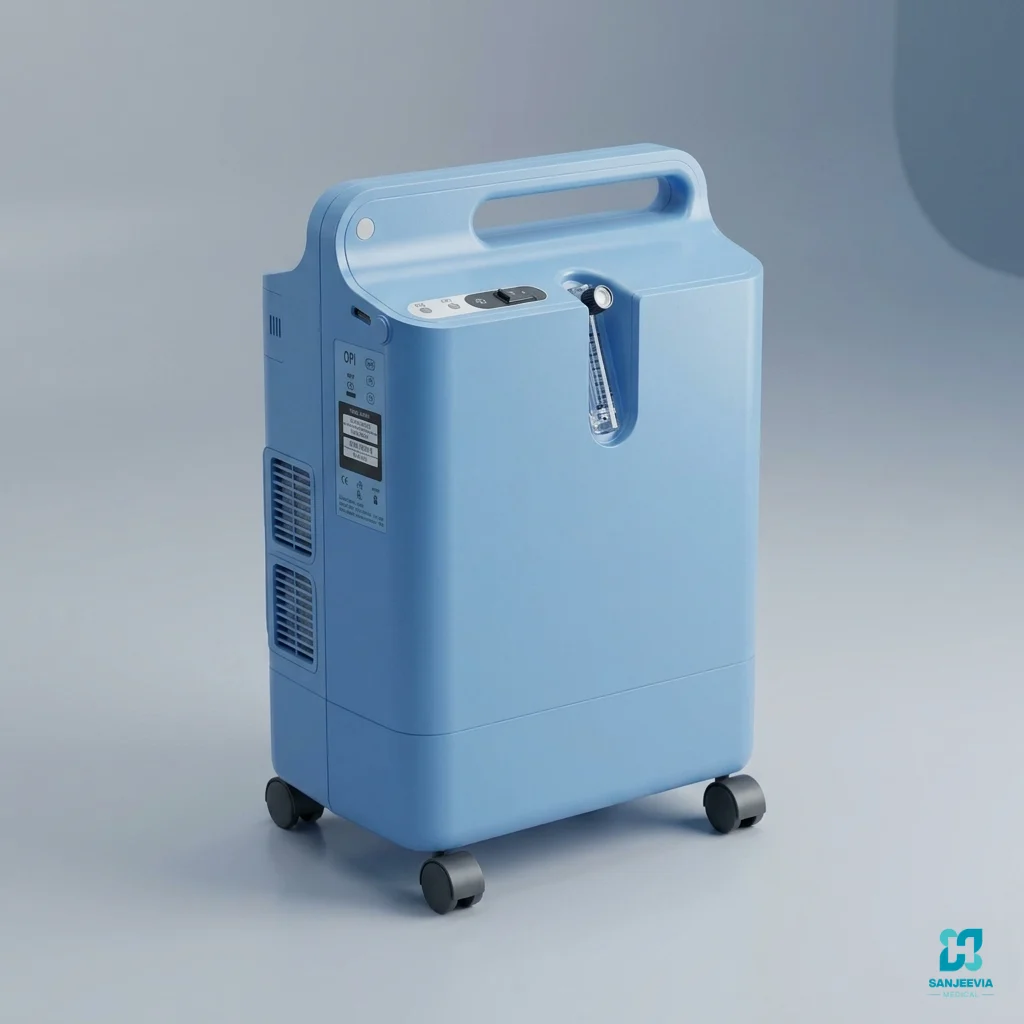
- Philips EverFlo 5L Oxygen Concentrator — review a published 5 LPM concentrator option.
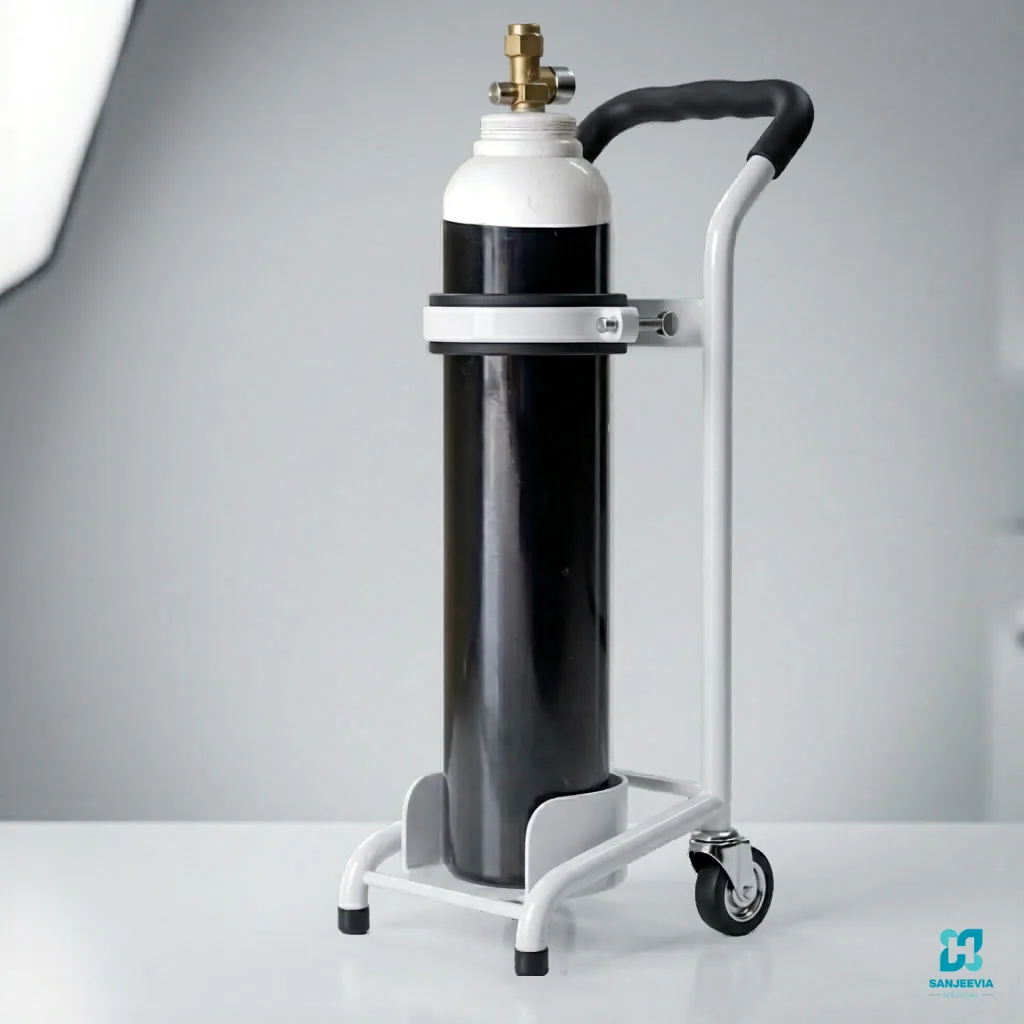
- 47L Medical Oxygen Cylinder — review a large-cylinder primary or backup option.
Medical disclaimer: This content is general information, not a diagnosis or treatment plan. Oxygen is a prescribed therapy. Follow the treating clinician and device manual.
Published by Sanjeevia Medical | Delhi NCR