
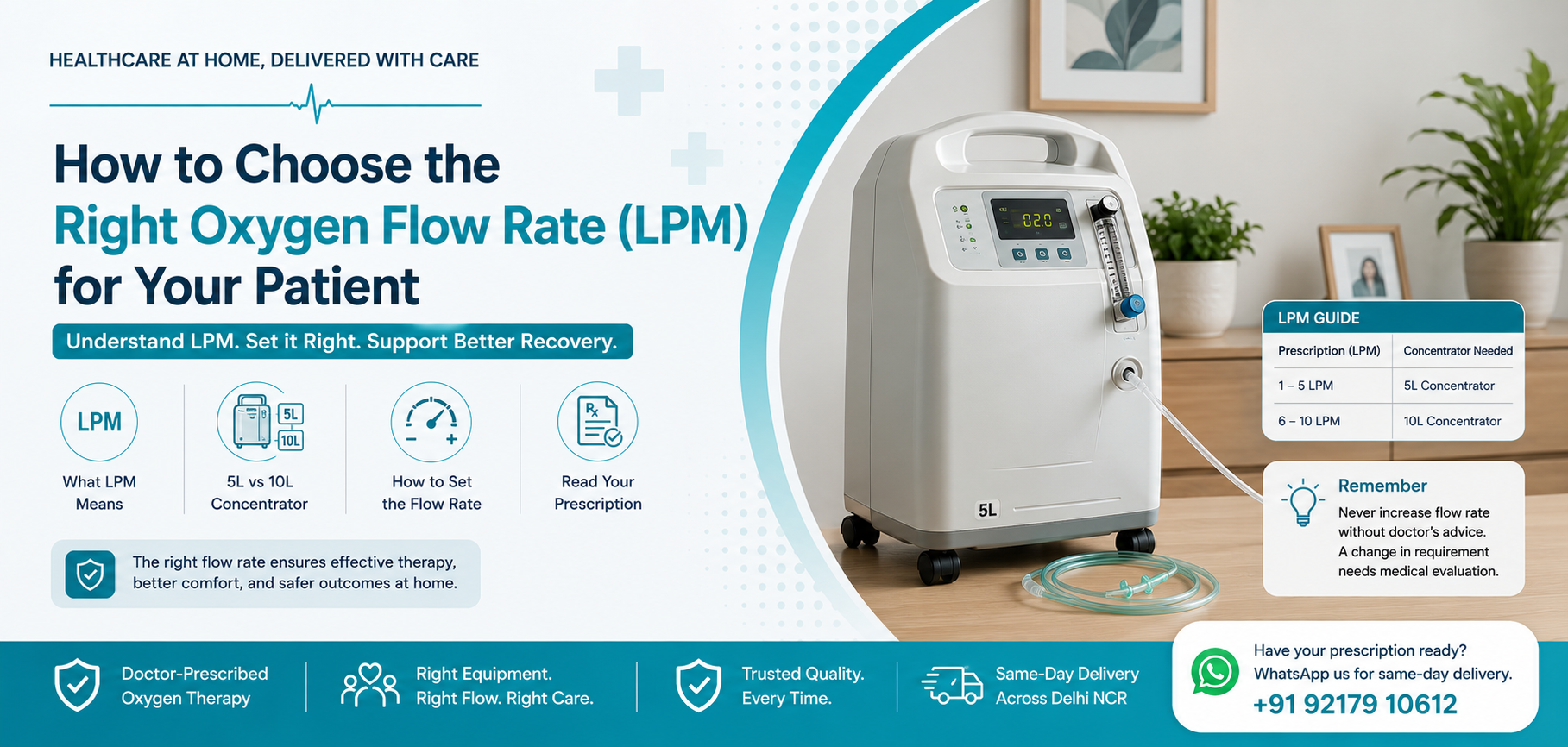
Quick answer: The correct oxygen flow rate is the rate written in the patient’s prescription or home-oxygen plan. It may differ during rest, sleep and activity. Do not select or change litres per minute (LPM) from a diagnosis, a pulse-oximeter reading or an online table.
An oxygen concentrator is a medical device, and its maximum flow number is only one part of the specification. Families should match the written prescription with the performance of the exact model supplied, including oxygen concentration at the prescribed flow, continuous-flow capability, alarms, accessories and the plan for an interruption.
What LPM means
LPM means litres of oxygen delivered per minute. It describes flow, not the percentage of oxygen in the patient’s blood and not the oxygen concentration produced by every machine.
A prescription may state different requirements for:
- resting while awake;
- walking or physiotherapy;
- sleep;
- recovery after exertion; or
- use with another prescribed respiratory device.
If the prescription is unclear, contact the treating clinician before delivery or use. Sanjeevia can explain equipment specifications and demonstrate the controls, but it cannot set a clinical flow rate or target oxygen saturation.
Why diagnosis alone cannot determine oxygen flow
Two people with the same diagnosis may require different oxygen plans. The decision can depend on clinical testing, blood-gas results, oxygen saturation during rest or exertion, risk of carbon-dioxide retention and other medical factors. A list that assigns a standard flow to COPD, interstitial lung disease, post-COVID recovery or heart disease would therefore be misleading.
The American Thoracic Society’s patient guidance on oxygen therapy explains that clinicians prescribe the flow required during rest, activity and sleep. Follow that written plan rather than a generic internet range.
5-litre and 10-litre concentrators: what to compare
A “5-litre” or “10-litre” label describes a product class. It does not guarantee that every model produces the same oxygen concentration at every setting. Before choosing a unit, confirm:
- the prescribed continuous flow in LPM;
- the manufacturer’s stated oxygen concentration at that flow;
- whether requirements differ during sleep, rest or activity;
- the prescribed cannula, mask or other interface;
- which alarms the exact model provides;
- the electrical supply and contingency plan; and
- who to contact if the patient’s symptoms or readings change.
Manufacturer specifications illustrate why a universal flow-to-purity table is unsuitable. Philips publishes specifications for the EverFlo model, while Nidek publishes a different performance range for the Nuvo Lite. Always use the manual for the exact unit and version being supplied.
Useful comparisons:
- 5-litre vs 10-litre oxygen concentrator: how to read the prescription
- Nidek Nuvo Lite vs Philips EverFlo 5L
- Philips EverFlo 5L product specifications
- 10L oxygen concentrator options
Do not use a generic oxygen-saturation target
The treating team should document the patient’s target range and what action to take when a reading is outside it. The target is not identical for every person. Some patients are at risk of hypercapnic respiratory failure, and uncontrolled oxygen can be harmful.
A pulse oximeter also has limitations. Movement, cold hands, nail products, circulation and device performance can affect readings. The US FDA’s pulse-oximeter guidance advises considering symptoms and clinical advice rather than relying on one number alone.
What Sanjeevia should verify at handover
For a prescription-led delivery, the equipment handover should cover:
- the model name and serial number;
- the manufacturer-rated flow range and oxygen-concentration specification;
- how to operate the unit at the prescribed setting without changing it;
- alarm meanings and the steps stated in the manual;
- filter, tubing and accessory instructions for that model;
- safe placement and fire precautions; and
- equipment-support contact details.
Clinical assessment, oxygen titration and changes to the prescription remain with the treating healthcare professional.
When to seek medical help
Use the patient’s written escalation plan. Seek urgent medical assistance for severe or rapidly worsening breathlessness, blue or grey lips, new confusion, collapse, chest pain, inability to wake normally or any emergency sign identified by the treating team. Do not respond by increasing oxygen above the prescribed setting unless a clinician or emergency plan specifically instructs this.
Frequently asked questions
Can I choose the flow from the pulse-oximeter reading?
No. Use the prescribed flow and target range. Contact the treating team if readings or symptoms are outside the written plan.
Is every 5L concentrator suitable for a prescription of 5 LPM?
Not automatically. Verify the exact model’s oxygen concentration at the prescribed flow, continuous-flow rating, alarms and interface requirements.
Can Sanjeevia change the oxygen setting?
Sanjeevia can set up the equipment according to the written prescription and explain its controls. A clinician must approve any clinical change.
Medical note: This article explains equipment questions and does not replace the patient’s prescription, discharge plan or emergency instructions.