
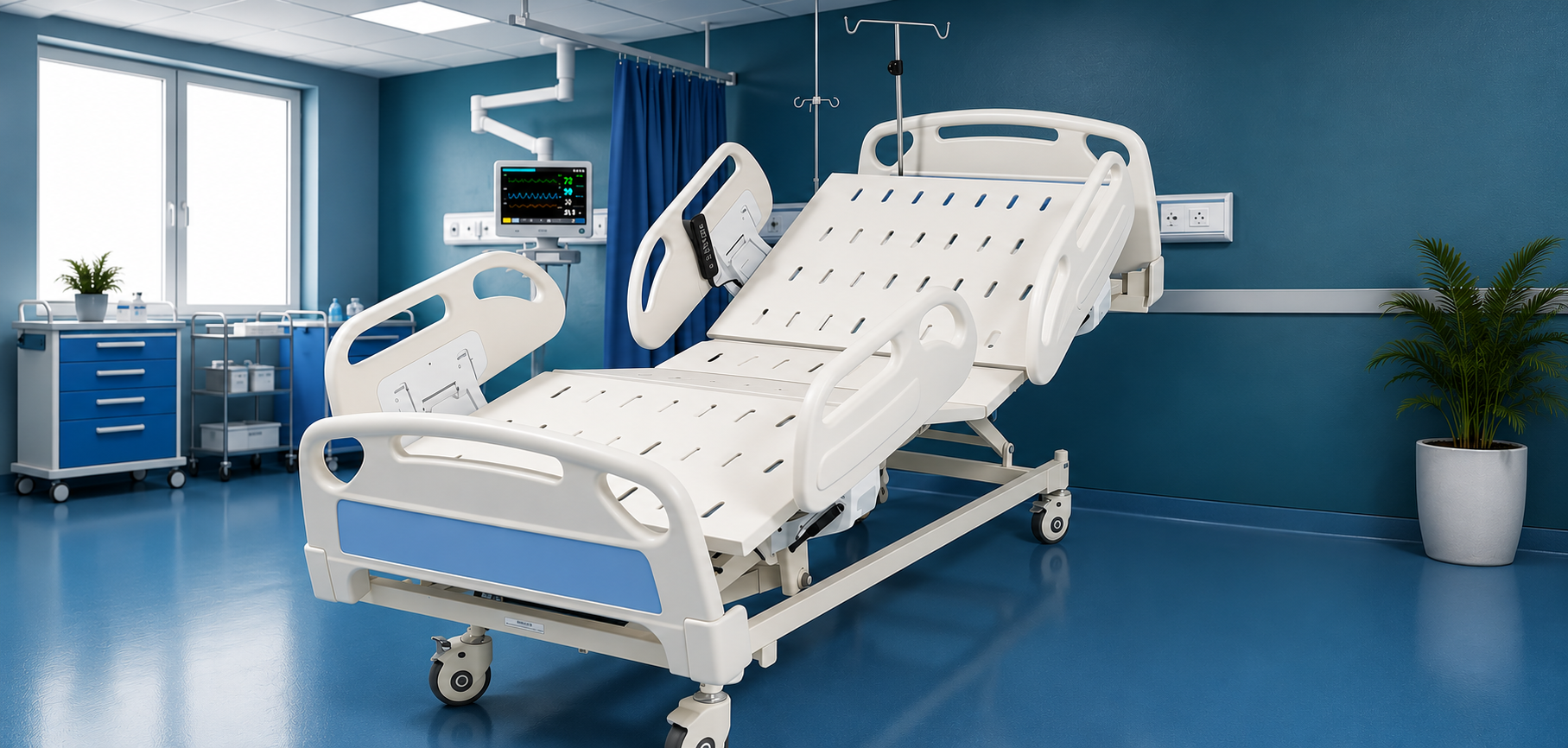
Quick answer: Safe hospital-bed setup depends on the exact bed, mattress, rails, room and patient transfer plan. Use the manufacturer’s dimensions and clearances instead of universal distances.
Before delivery
- Measure the entrance, lift, turns, doorway and intended room.
- Confirm the assembled bed dimensions and safe working load.
- Identify an earthed electrical outlet if the bed is powered.
- Leave enough space for the transfer method and caregiver tasks.
- Remove loose rugs, unstable furniture and cable trip hazards.
Mattress and rails
Use a mattress compatible with the bed platform. Side rails require individual assessment and correct mattress-to-rail dimensions because rails can introduce entrapment and climbing risk. An added overlay can reduce effective rail height.
See the UK medical-device guidance on bed rails.
Placement and other equipment
Follow the exact manuals for wall clearance, ventilation, cables and accessories. There is no one-metre oxygen-concentrator rule suitable for every model. Do not route oxygen tubing or power leads where they can be trapped by moving bed sections.
Handover checks
- Locking castors and brakes
- All bed movements and emergency lowering
- Safe transfer height identified in the care plan
- Rail operation and assessed rail configuration
- Power-failure procedure
- Cleaning and support contacts
Transfers should use the method demonstrated by the physiotherapist, occupational therapist or nurse. Do not use an arbitrary waiting time or generic technique for dizziness or blood-pressure concerns.
Related pages
This article covers equipment setup; clinical positioning and transfers must follow the individual care plan.