
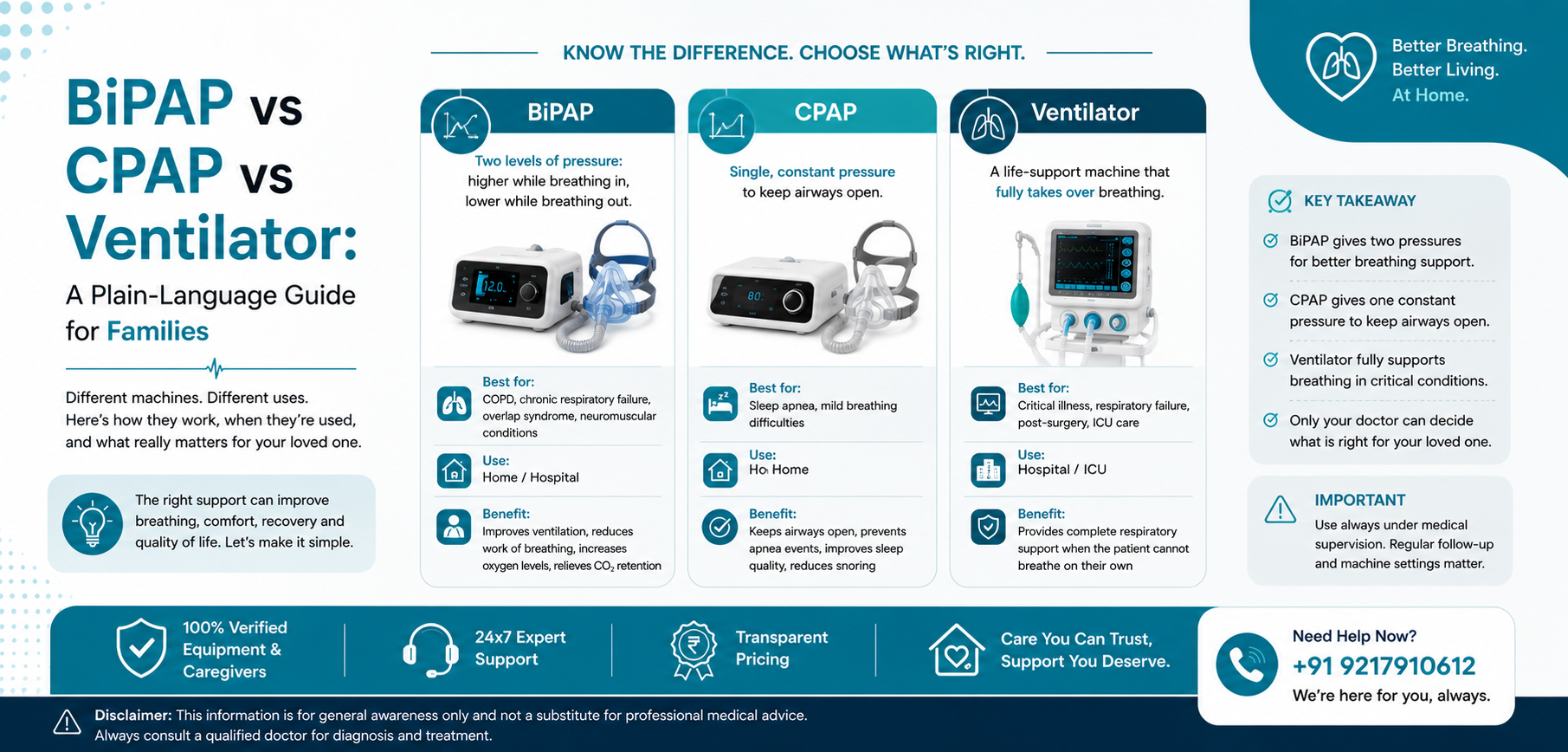
Quick answer: CPAP, bilevel PAP and ventilators deliver different forms of respiratory support. The correct device, mode, pressures, backup rate and interface must come from the treating clinician and relevant testing.
CPAP
CPAP provides one continuous positive airway pressure. It is commonly used for obstructive sleep apnoea and can also be appropriate in other clinician-selected situations, including some people who have both COPD and obstructive sleep apnoea. It is incorrect to say that CPAP can never help a person with COPD.
Compare the CPAP/APAP models and BiPAP models only after the clinician specifies the equipment class; these categories are separate because their therapy modes are not interchangeable.
Bilevel PAP
Bilevel equipment provides separately set inspiratory and expiratory pressures. Depending on the exact model and mode, it may also provide a backup rate or volume-assured support. “BiPAP” is often used conversationally, but the prescription must identify the required mode and settings.
Ventilator
A home ventilator can provide more advanced, monitored respiratory support through a mask or, for some patients, an invasive airway. A device should not be chosen merely because it is described as stronger. Dependence, alarms, circuits, humidification, backup power and caregiver training require a formal plan.
Why diagnosis-only tables are misleading
People with the same diagnosis may have different airway obstruction, ventilation, oxygen needs and tolerance. The American Academy of Sleep Medicine PAP guideline stresses objective diagnosis, education and follow-up. Device choice should follow test results and prescription rather than a blog table.
Questions to ask before delivery
- What exact device category, mode and settings are prescribed?
- Which mask or interface is required?
- Is supplemental oxygen prescribed, and how must it be connected?
- Which alarms must remain enabled?
- What cleaning and replacement schedule applies?
- What is the plan for intolerance, leak, power failure or worsening symptoms?
Do not reduce pressure, start at a lower pressure or change the range without clinical approval. Comfort problems should be addressed through mask fit, humidification where prescribed and follow-up—not by self-adjusting therapy.
Relevant Sanjeevia pages
Compare Sanjeevia’s CPAP, BiPAP and home-ventilator range for current model specifications and rental prices after the treating clinician has specified the device and mode.
Sanjeevia can explain equipment specifications and setup. Clinical selection and settings remain with the treating team.
For a focused two-device comparison, see our BiPAP vs CPAP guide with pressure, mode and home-setup checks.