
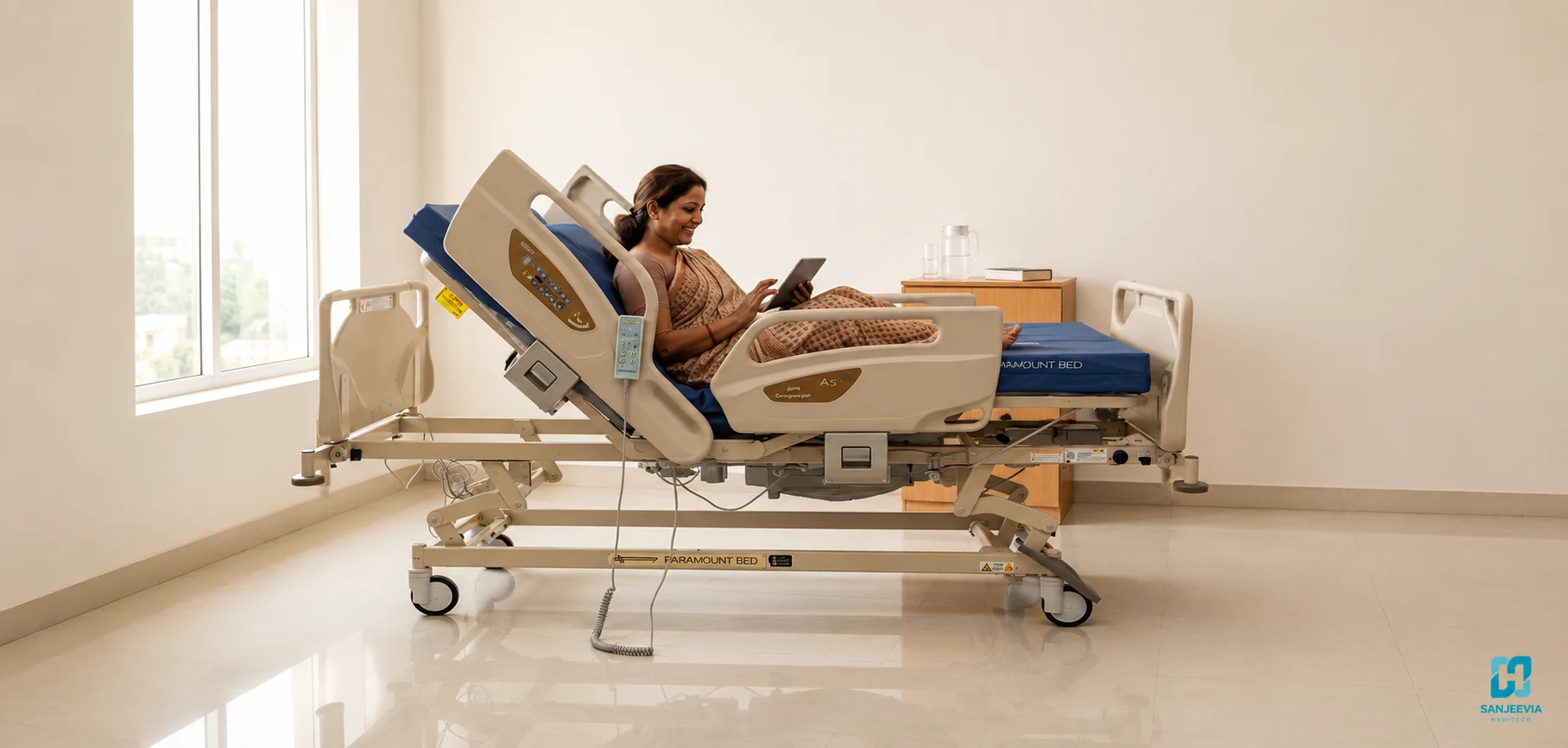
Quick answer: A hospital bed can be useful when a person needs prescribed positioning, an adjustable transfer height or safer caregiver access. A regular bed may remain suitable for other patients. The decision should be based on assessed function and the care plan.
When an adjustable bed may help
- The discharge plan requires supported head, knee or whole-body positioning.
- The patient cannot transfer safely from the available bed height.
- Care tasks require better access and a safe-handling assessment.
- A compatible pressure-redistributing surface has been recommended.
- The patient needs bed functions that the home bed cannot provide.
Adjustable positioning can support comfort and care, but it does not guarantee prevention of aspiration, breathing problems, swelling or pressure injury. Positioning must follow the relevant clinical plan.
Side rails require assessment
Rails are not routine fall-prevention devices or universal handles for getting up. They can introduce entrapment, climbing and injury risks. Suitability depends on the patient, mattress, bed and rail dimensions. See the UK medical-device guidance on bed rails.
Mattress and pressure-injury risk
A pressure injury does not inevitably begin after a few days on a standard mattress. Risk depends on mobility, sensation, skin, circulation, nutrition, moisture and other factors. Use an individual risk assessment, repositioning plan and compatible support surface.
Read: Do you need a pressure-redistributing mattress?
How to choose the bed
- Required functions and range of movement
- Safe transfer height and method
- Patient and caregiver dimensions and weight limits
- Mattress and rail compatibility
- Room access, power and emergency lowering
- Cleaning, maintenance and support arrangements
Relevant Sanjeevia pages
Sanjeevia can explain product specifications and setup. Clinical positioning and transfer decisions remain with the treating team.