
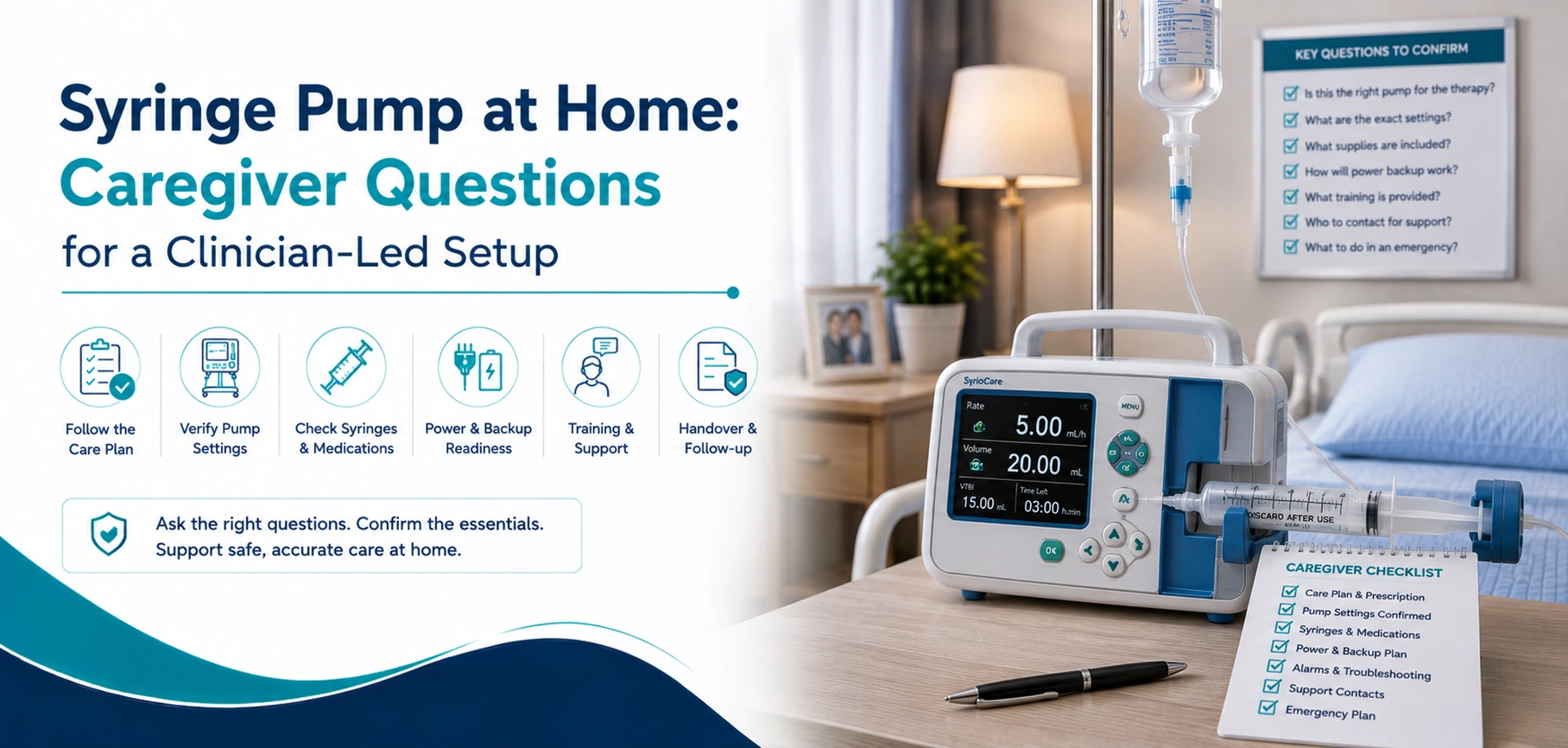
Quick answer: A syringe pump should be used at home only under a clinician-led plan with a prescribed medicine, concentration, dose or rate, compatible syringe and line, trained caregiver and clear response instructions. It is not a general appliance that a family should configure from an online guide.
Questions for the prescribing team
- What medicine and concentration will be used?
- What syringe brand and size are compatible?
- What rate or programme is prescribed, and who may change it?
- Which route and line are being used?
- What observations are required?
- What symptoms or pump alarms require an urgent call?
- Who replaces the syringe or line, and using what aseptic procedure?
Questions for the equipment provider
- Does the exact model support the prescribed syringe and programme?
- Which accessories, power adaptor and battery are included?
- What do occlusion, empty, low-battery and system alarms mean?
- How is the unit mounted securely?
- What is the cleaning procedure and service contact?
Important boundaries
Do not change the rate, silence or bypass an unresolved alarm, force fluid through an occluded line or substitute a syringe size. Do not restart an infusion after a line problem unless the clinical plan authorises it. A pump alarm can indicate a clinical or line problem as well as an equipment issue.
Power and handover
Confirm battery duration for the exact unit, when mains power is required and what to do during an outage. The caregiver should receive a hands-on demonstration and written contacts for both clinical and equipment problems.
Relevant Sanjeevia page
Review the currently listed syringe-pump equipment and included accessories.
This article is an equipment-question checklist. Medicine, line and pump programming must remain under the responsible clinical team.