
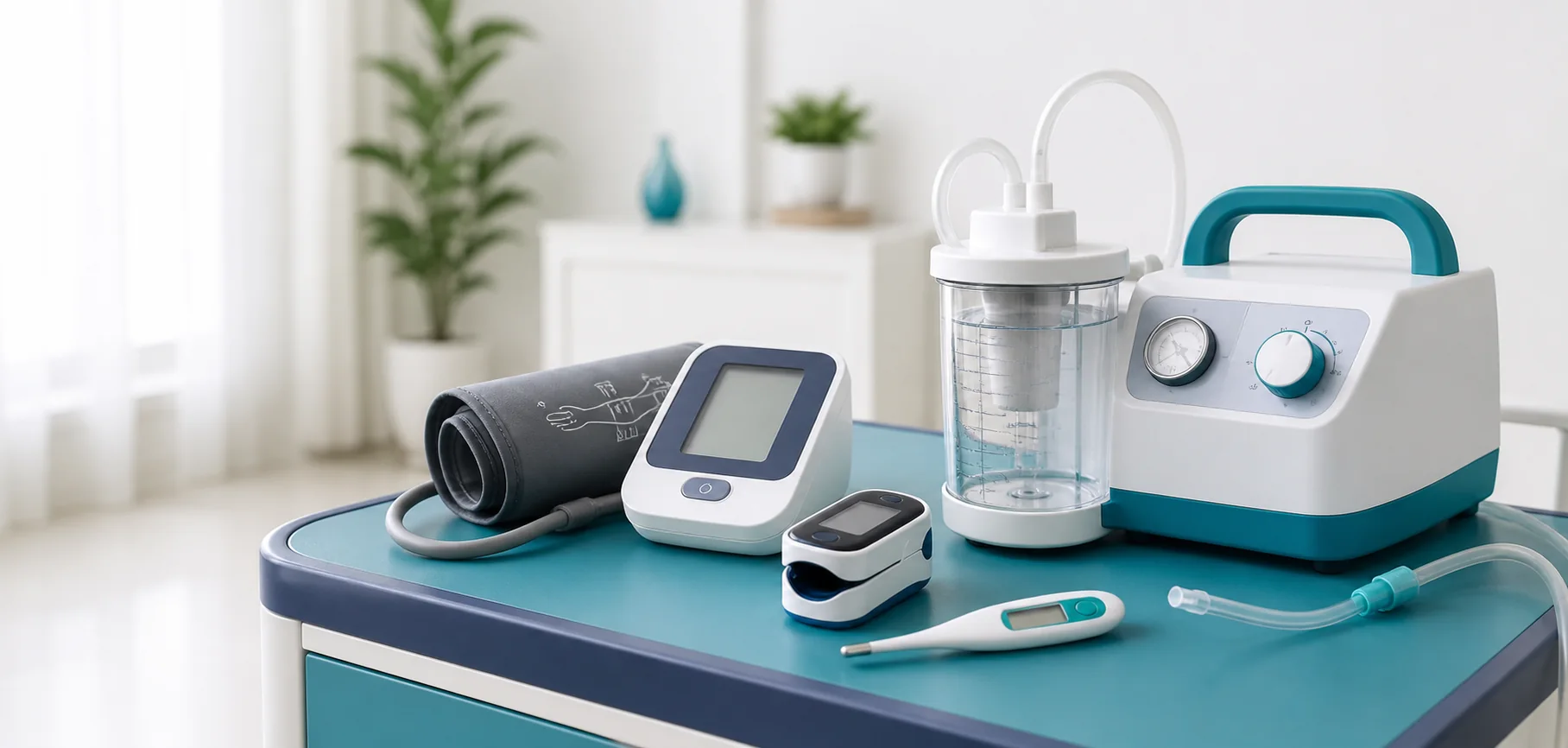
Quick answer: When considering suction machine cleaning, use suction only for the route, catheter, pressure and technique taught by the clinical team. Prepare clean equipment, observe the patient continuously, stop for distress or bleeding, and keep a backup secretion-management and emergency plan.
Understanding “Suction Machine Cleaning”
A suction machine creates controlled negative pressure to remove secretions through prescribed tubing and a collection jar. The route may be oral or through an airway, and the equipment and technique differ. Jar count affects capacity and overflow management, not the clinical pressure or technique.
Clinical plan and caregiver training
The clinician should define why suction is needed, route, catheter or Yankauer type, pressure, duration, frequency or signs, infection-control method, oxygen or ventilation coordination, and when to stop and seek help. Every caregiver should demonstrate the complete routine before home use.
Sanjeevia’s clinician-led setup guide, jar comparison and pre-discharge checklist cover related planning.
Machine, jar, filter and tubing
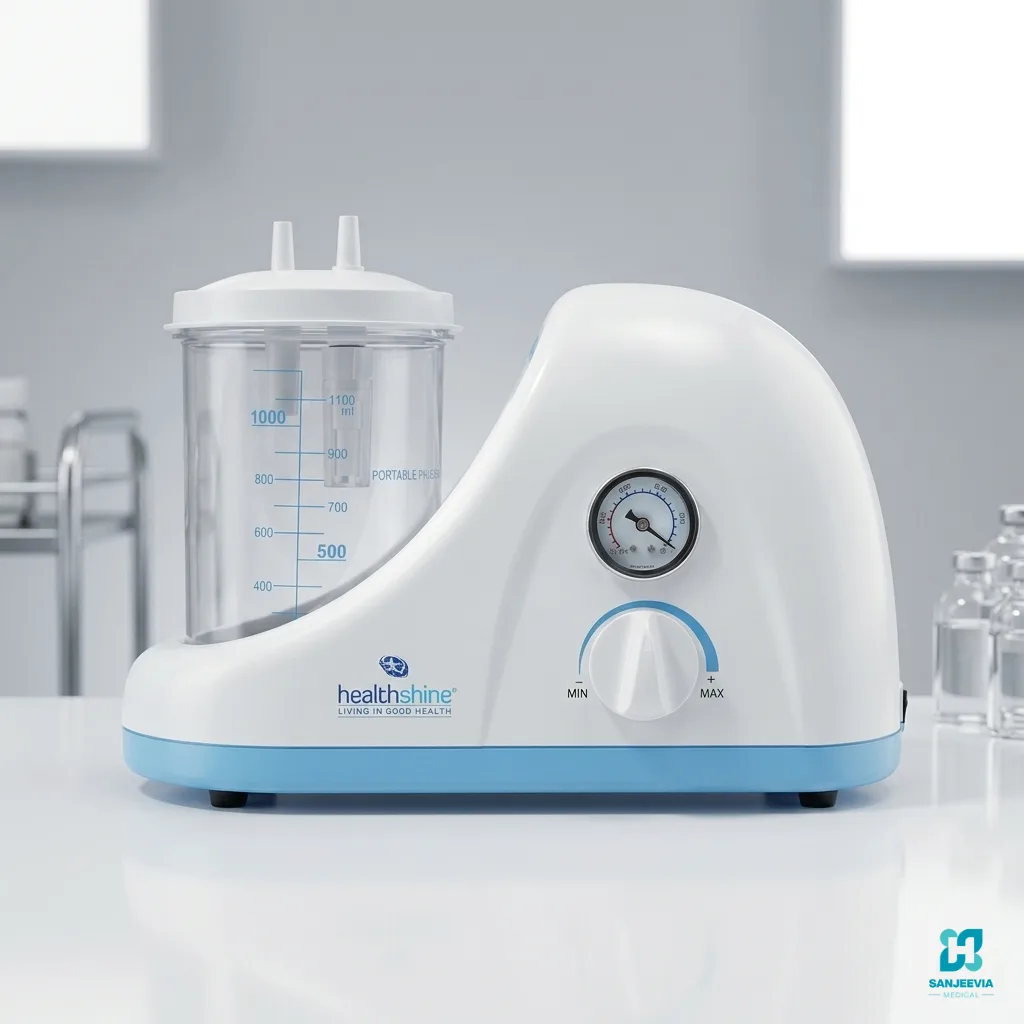
Confirm machine, collection jar and lid, overflow protection, bacterial or hydrophobic filter when specified, connecting tubing, patient tubing, catheter or Yankauer, charger or mains cable and spare consumables. Assemble exactly as the diagram shows; reversed tubing or a missing filter can prevent suction or contaminate the pump.
Keep the unit upright on a stable surface with gauge visible and cable protected. Do not overfill the jar. Single-use patient-contact items should not be cleaned and reused unless the manufacturer and clinical policy allow it.
Safe procedure boundaries
Wash hands, position the patient as trained, explain the procedure, set only the prescribed pressure and observe breathing, colour, comfort and secretions. Oral suction guidance from NHS hospitals warns against pushing solid objects toward the back of the throat and advises stopping for gagging, bleeding or discomfort.
Do not insert a catheter deeper, apply suction longer, or increase pressure because secretions are difficult. Stop and follow the emergency plan for severe distress, colour change, bleeding, inability to clear the airway or equipment failure in a dependent patient.
Cleaning, disposal and maintenance
Empty and clean the collection system with the products and frequency specified by the manufacturer and clinical team. Disconnect power before cleaning the exterior, keep the pump dry, wear required protection, and dispose of secretions and single-use items safely.
Inspect jar, lid seal, tubing, filter, gauge, control, cable and battery. Replace a wet, blocked or contaminated filter as instructed. Qualified personnel should open the pump; do not lubricate or repair it at home.
Power and breakdown preparedness
Keep battery units charged as instructed and test operation during handover. If suction is essential to airway safety, the clinical plan must identify backup equipment or another method, expected service response and when to call emergency services. A spare jar without a working pump is not a complete backup.
For rental, confirm service history, accessories, cleaning, filter schedule, breakdown exchange, battery condition, delivery demonstration and collection terms.
Shift handover and supply readiness
At each caregiver change, confirm patient condition, last suction, secretion change, current prescribed setup, jar level, filter condition, battery charge, clean accessories, emergency contacts and any fault. Keep clean and used equipment physically separated.
Maintain a dated inventory of jars, lids, filters, tubing, Yankauer tips or catheters, gloves and cleaning supplies required by the plan. Reorder before the emergency reserve is opened and check packaging integrity and expiry dates.
Safe checks when suction is weak or absent
Protect the patient and activate the backup plan. Check only permitted visible items: power, battery indicator, control position, loose or reversed tubing, jar-lid seal, overfill shutoff, kink and blocked filter. A deliberate occlusion test should be performed only as the manual and training describe.
Do not increase pressure beyond the prescription, bypass the filter, hold the overflow valve open or open the pump. Record gauge response, sound, jar setup and recent cleaning, then call technical support.
Transport and infection-control planning
For essential suction outside the home, confirm battery duration, secure upright transport, spare clean circuit and destination power. Protect the jar from tipping and never transport it overfilled. Follow the clinical team’s plan for disposal and hand hygiene in public settings.
New fever, changed secretion colour or quantity, bleeding, increased work of breathing or reduced alertness requires clinical assessment. Equipment cleaning cannot substitute for infection evaluation.
Delivery, demonstration and written records
Before delivery, confirm the route, stable equipment location, suitable power where needed, lighting, storage for clean supplies and a clear place for instructions. Have the patient’s assessment or prescription available so the installer can compare the delivered model and accessories with the order.
At handover, ask the provider to demonstrate setup, normal operation, user checks, cleaning boundaries, consumable replacement, alarm or fault response, backup and safe shutdown. Every regular caregiver should perform a return demonstration rather than only watch. Photograph the assembled configuration and labels without recording private patient information.
- Record model, serial or asset number and delivery condition.
- List every included accessory and personal-contact part.
- Keep the manual, clinical plan and support numbers together.
- Confirm preventive maintenance and breakdown replacement.
- Clarify exchange, pickup, deposit and damage terms.
Review the setup after a hospital visit, fall, new symptom, caregiver change, home modification or equipment exchange. Stop using a damaged or unsuitable component and contact the responsible clinician or provider; do not create an improvised workaround simply to continue the routine.
Frequently asked questions
Can families choose suction pressure themselves?
No. Use the clinician-taught and device-appropriate setting.
Is oral suction the same as airway suction?
No. Route, catheter, depth, infection control and risks differ.
Can the jar be filled to the top?
No. Follow the marked maximum and overflow-protection instructions.
What if suction suddenly stops?
Protect the patient, use the backup plan, check permitted visible connections and contact support or emergency services.
Sources and further reading
Medical boundary notice: Suction is a clinical procedure. This article cannot replace hands-on training, a prescribed pressure and route, or an airway emergency plan.
Need help arranging prescribed suction equipment? Contact Sanjeevia Medical with the clinician’s requirements, accessories, battery and backup needs.
Published by Sanjeevia Medical.