
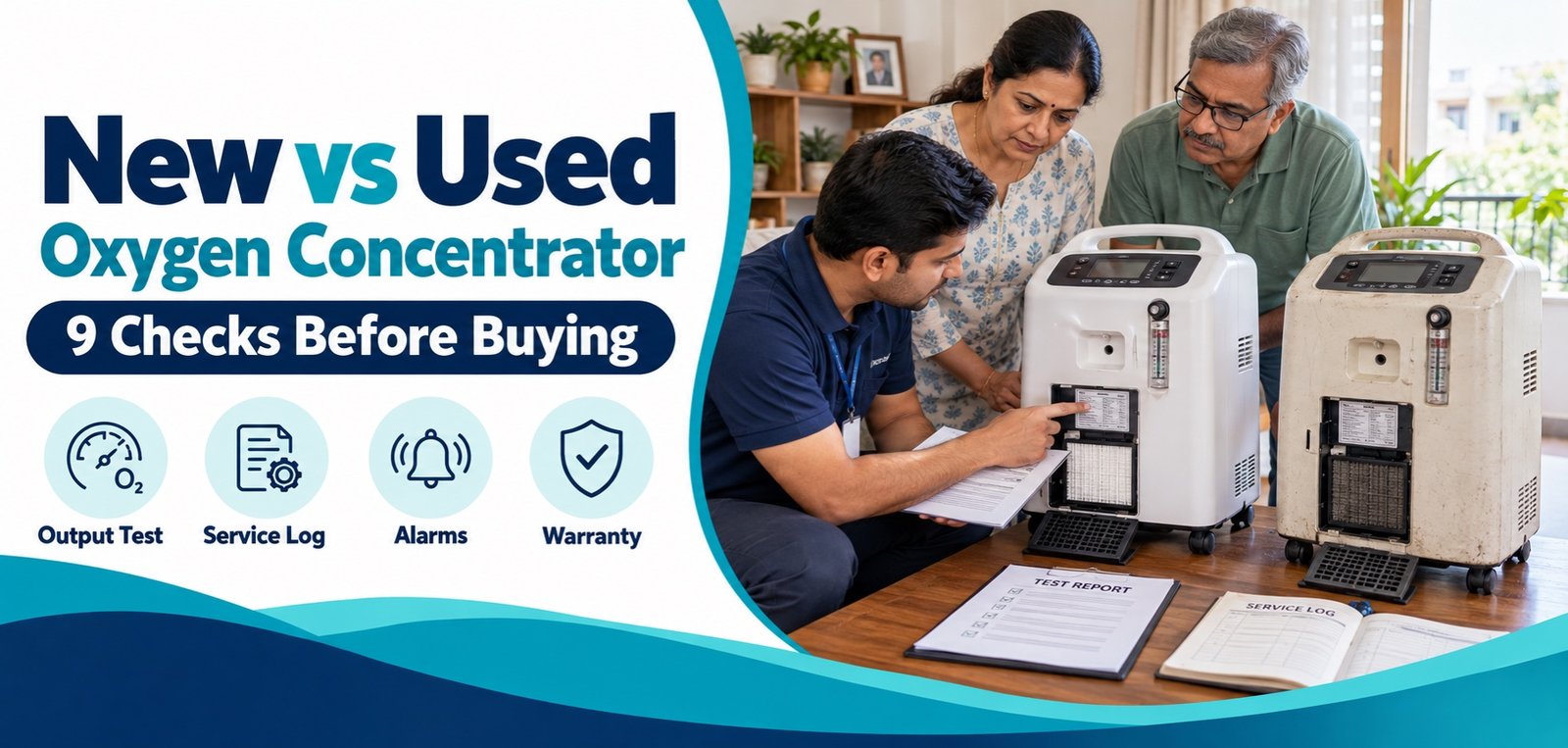
A used oxygen concentrator can look clean and still have weak output, an inaccurate flow meter, overdue service or alarms that do not work. A new machine can also be a poor choice if its flow capacity, service network or documentation does not match the prescription. The decision needs objective checks rather than assumptions about age or appearance.
Current oxygen-concentrator options to compare
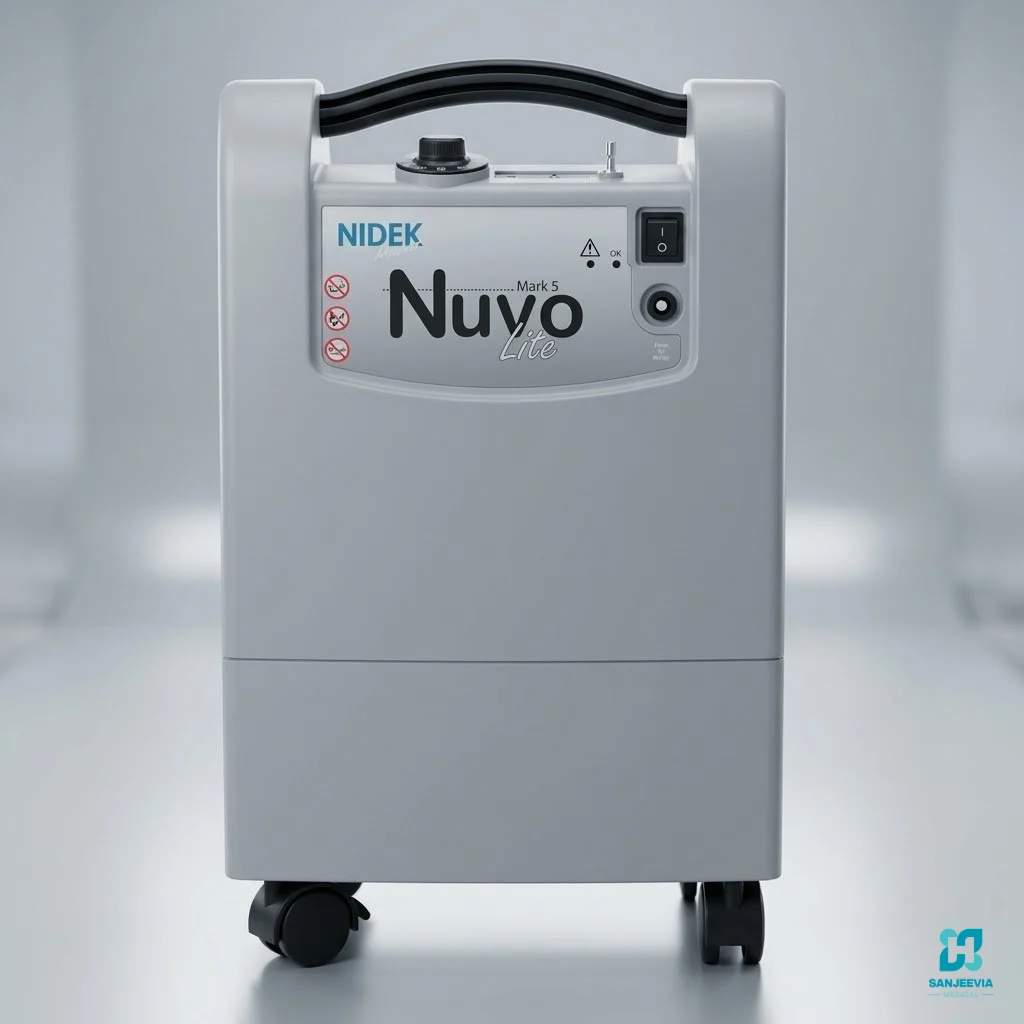
Nidek Nuvo Lite 5L
Review the exact model label, output specification and service documentation.
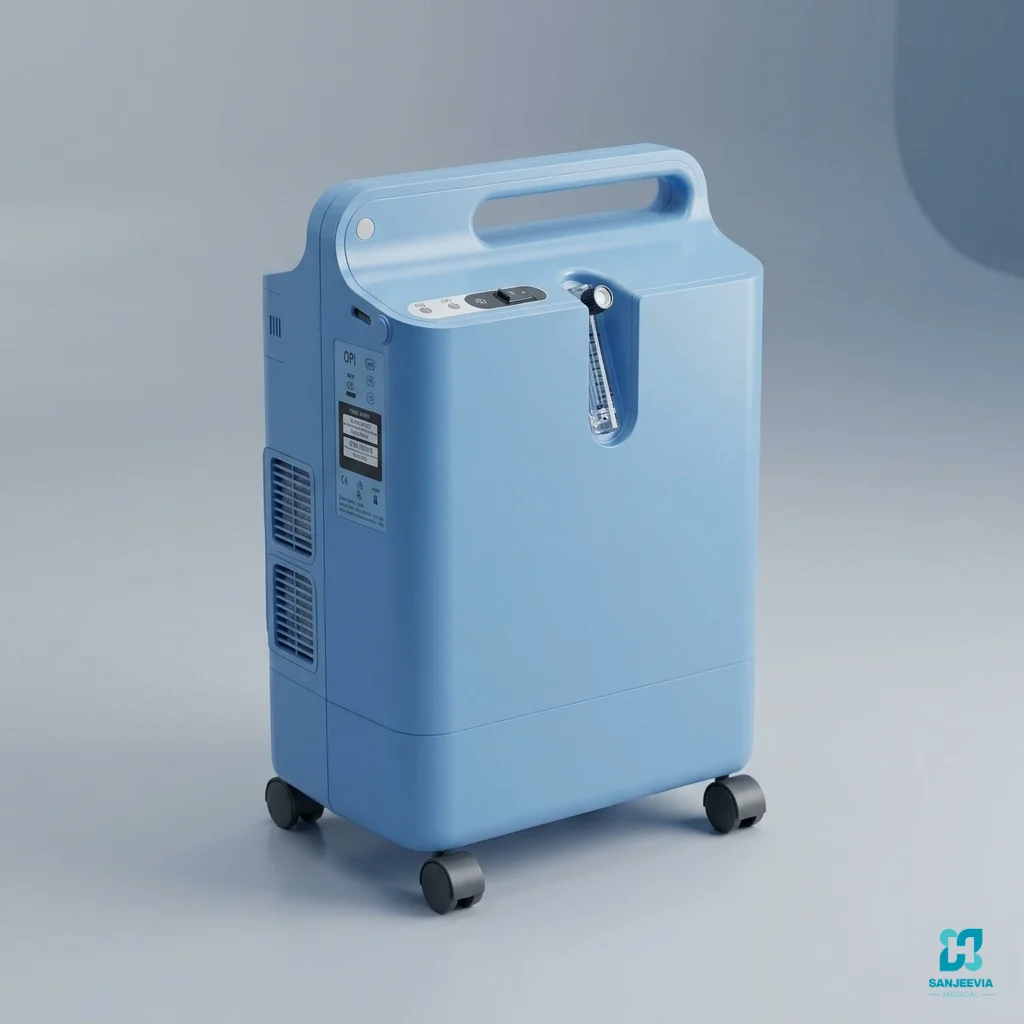
Philips EverFlo 5L
Compare prescription fit, maintenance, consumables and support for the exact unit.

New vs used oxygen concentrator at a glance
| Check | New unit | Used unit |
|---|---|---|
| Service history | Begins with the first user, subject to proper supply and setup. | Must be documented. A verbal assurance is not enough. |
| Output verification | Still verify commissioning, alarms and prescribed-flow performance. | Requires measured oxygen concentration and flow at the required setting, not only a power-on test. |
| Consumables | Confirm which filters, tubing and cannula are supplied new. | Patient-contact consumables should be new; internal parts need approved cleaning and service. |
| Warranty | Usually clearer, but terms, registration and exclusions must be read. | May be limited or supplier-backed. Obtain the period and process in writing. |
| Remaining life | No previous operating hours, but component life still depends on use and maintenance. | Hours are one clue only. Compressor condition, sieve performance, environment and servicing matter. |
| Traceability | Invoice, model and serial number should be recorded. | Model, serial, ownership, repair and recall history are essential. |
1. Confirm the prescription and required flow
Start with the prescription or written clinical plan. Confirm whether continuous flow is required, the litres per minute, expected hours of use and whether the machine is a main source or backup. A five-litre label describes a maximum flow category; it does not prove that every unit maintains its stated oxygen concentration at every setting.
Some people need higher flow, a different delivery system or additional monitoring. A home concentrator should not be selected by copying another patient’s setup. Ask the treating clinician what range, interface and escalation plan apply to the individual user.
2. Identify the exact machine
Record the manufacturer, full model, serial number, electrical rating and year or manufacturing information where available. Check that the safety labels are readable and have not been altered. Ask for the current user guide. If the supplier cannot identify the unit clearly, it is difficult to confirm the correct filters, alarm behaviour, service procedure or recalls.
3. Measure oxygen concentration at the prescribed flow
A fan running and air coming from the outlet do not demonstrate therapeutic performance. A trained technician should use a suitable calibrated oxygen analyser and follow the manufacturer’s test procedure. The unit needs time to warm up, and the reading should be checked at the prescribed flow. Results should be recorded with the date, flow, instrument and tester.
For a used machine, ask whether performance remains stable during an extended run. Intermittent low concentration may appear only after heating or under a higher flow. The manufacturer’s service manual determines the acceptable test method and specification.
Need an oxygen-concentrator option?
Share the prescribed flow, expected daily use, city and preferred model. Sanjeevia can explain available equipment and support. Oxygen settings require a clinician.
4. Verify flow accuracy and every alarm
Compare the indicated flow with a suitable flow-measurement method. Check that the flow control moves smoothly and holds the selected setting. Test the alarm functions that the exact model provides, such as power failure, low oxygen concentration or system fault, according to the service instructions. Never create a fault in an unsafe manner simply to see whether an alarm sounds.
Ask the provider to explain what each light and alarm means, what the family can check safely and when to switch to the prescribed backup plan or contact clinical support.
5. Review hours, service and repair records
Operating hours matter, but no single hours figure declares a concentrator good or bad. A lower-hour unit used in dust, heat or poor ventilation may be worse than a higher-hour unit maintained correctly. Look for dated records covering filters, compressor work, sieve beds, valves, tubing, cooling system and electrical repairs.
Ask whether parts were genuine or approved for that model and whether a full functional test followed the repair. A fresh coat of paint or new outer cabinet cannot replace this evidence.
6. Separate cleaning from technical reprocessing
External cleaning is visible; internal reprocessing is not. Patient-contact items such as nasal cannula and tubing should be new for the new user. Humidifier bottles, if clinically required and manufacturer-approved, need the correct model and cleaning process. Internal filters and components should be handled according to manufacturer service instructions.
Avoid perfumes, oils and flammable products near oxygen equipment. Never lubricate oxygen fittings with oil or grease.
7. Inspect physical and electrical condition
- Power cord and plug have no cuts, heat damage or loose pins.
- Cabinet, wheels, handles and outlet are secure.
- Air inlet and exhaust are unobstructed.
- Flow-meter tube is intact and readable.
- The unit runs without unusual vibration, smell or repeated cycling.
- Required filters are fitted correctly.
- The machine has adequate clearance and a suitable power connection at home.
An extension lead or inverter should not be assumed suitable. Confirm power requirements and backup arrangements with the manufacturer guidance and qualified personnel.
8. Compare warranty, service and parts access
For a new machine, read the manufacturer’s warranty and confirm who performs service locally. For a used unit, obtain any supplier warranty in writing, including what happens if oxygen concentration falls below specification. Ask about response time, replacement-unit policy, consumables and availability of authorised technical support.
Sanjeevia can help families compare currently available concentrators and equipment-support arrangements. Product availability and the condition of any specific unit must be confirmed at the time of enquiry.
9. Demand a documented handover
The handover should record model, serial number, hours, tested oxygen concentration, test flow, alarm checks, included accessories and warranty. The family should practise switching on, setting only the prescribed flow, connecting the interface, reading indicators and following the backup plan. Keep the prescriber’s and equipment provider’s contact details visible.
When should you reject a used concentrator?
Do not accept a unit when identity is unclear, output has not been measured, alarms fail, power components are damaged, service records conflict, filters or parts are missing, or the supplier refuses a documented test. Also reject any proposal that encourages changing the prescribed flow without clinician approval.
Authoritative guidance
Read the NHS home oxygen guidance, the US FDA overview of home oxygen therapy and the Nidek Nuvo Lite user guide. The manual supplied with the exact machine is the controlling equipment reference.
Frequently asked questions
Is a low-hours concentrator automatically safe?
No. Hours do not prove oxygen concentration, flow accuracy, alarm operation or maintenance quality.
Can I test a concentrator with a pulse oximeter?
A pulse oximeter measures a person’s blood oxygen estimate, not the concentrator’s gas concentration. A suitable oxygen analyser is required for equipment-output testing.
Should patient tubing and cannula be reused?
Patient-contact consumables should be new for the new user unless the manufacturer provides a validated reprocessing method for that exact item.
Can Sanjeevia choose the oxygen flow?
No. The treating clinician prescribes oxygen flow. Sanjeevia can support equipment selection and handover within that prescription.