

“Hybrid” sounds like a backup version of an electric bed, but the word describes how the functions are divided. On Sanjeevia’s listing, the backrest is powered while the platform height is adjusted manually—two controls for two different jobs.
Quick answer: A hybrid hospital bed combines an electric backrest with a manual height crank. The knee section is fixed on this configuration, and the crank is not an emergency manual substitute for the powered backrest.
Explore relevant equipment
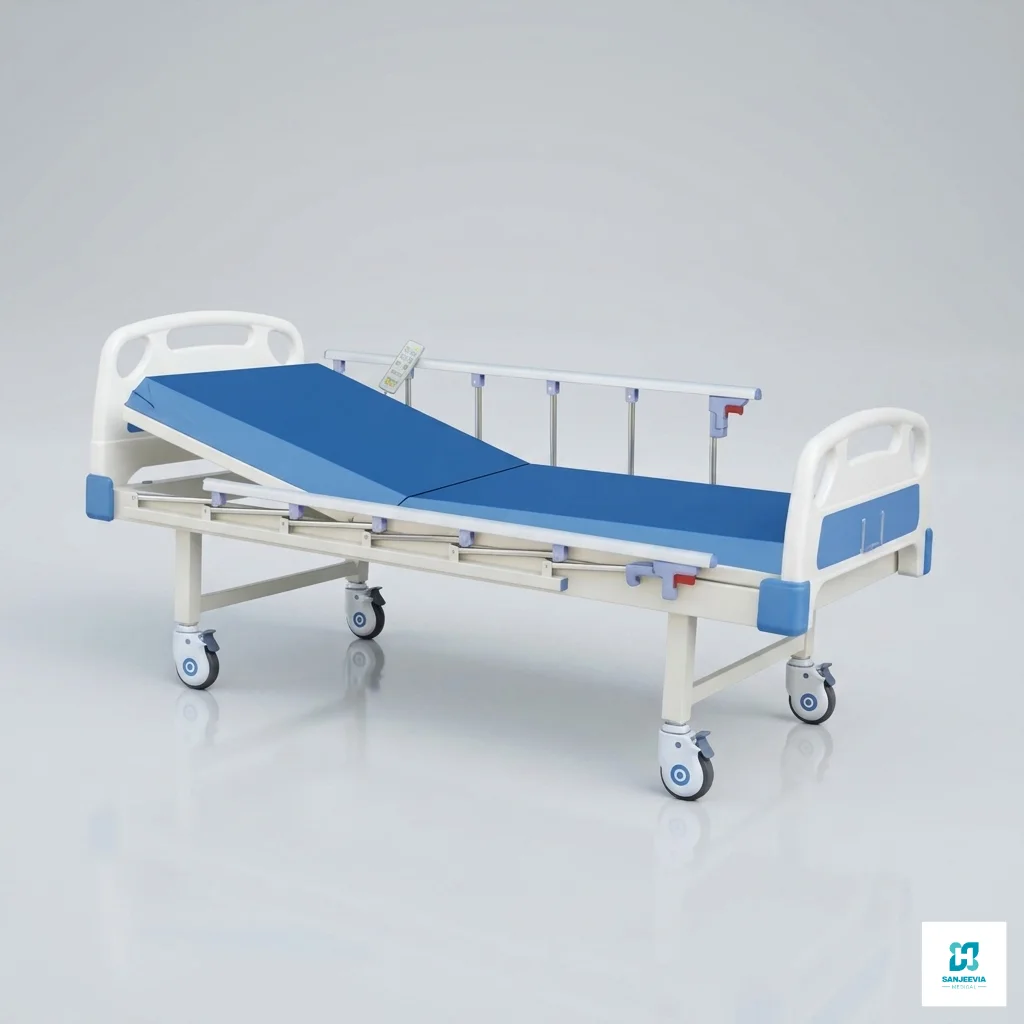
1 Function Hybrid Electric Bed
Review the live listing for the confirmed configuration, included parts and current Delhi NCR rental or purchase options.
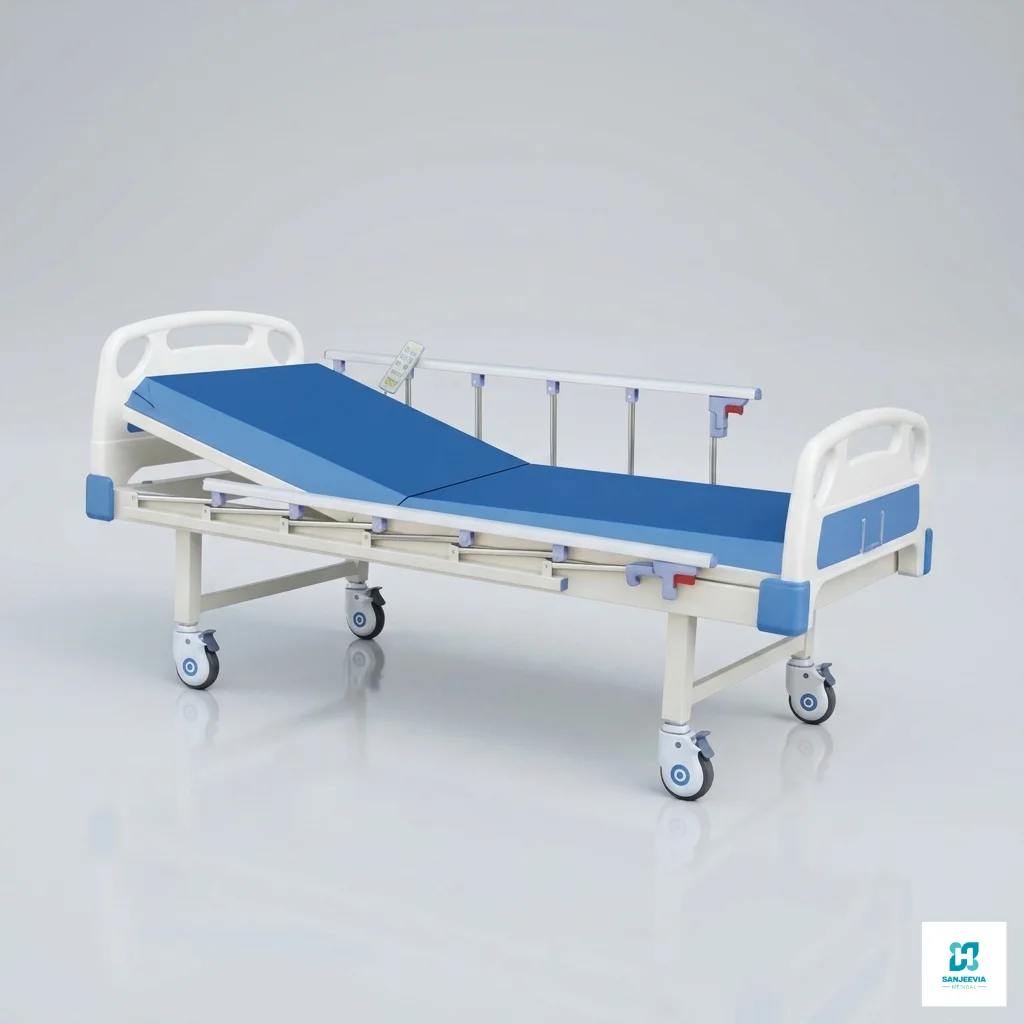
1 Function Electric Bed
Review the live listing for the confirmed configuration, included parts and current Delhi NCR rental or purchase options.
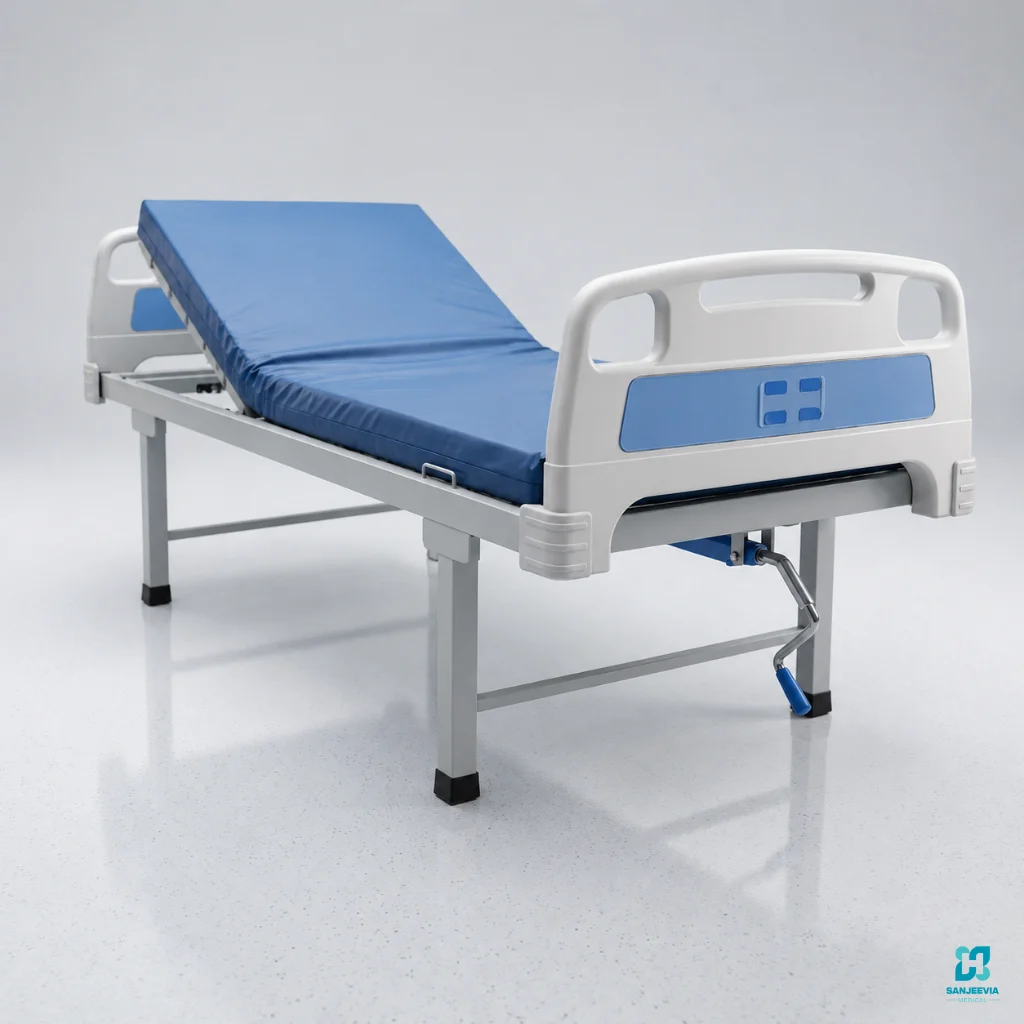
Manual Semi Fowler Bed – ABS Side Rails
Review the live listing for the confirmed configuration, included parts and current Delhi NCR rental or purchase options.
Confirm the exact bed, mattress, rails, accessories, room access and handover before booking.
Jump to equipment details
What makes this bed hybrid?
The electric actuator controls the backrest through a wired handset. A separate manual crank changes the platform height. These mechanisms are independent: a power cut can stop the powered backrest while the manual height mechanism remains available, but the height crank does not lower the backrest.
This arrangement may reduce caregiver effort for frequent backrest changes while retaining manual height adjustment. It is different from a one-function electric bed with fixed height and from a multi-function electric bed with powered height and knee controls.
The term “hybrid” is not a universal specification. Always list the actual functions on the quotation and handover sheet.
Parts and control map
| Control or part | What it changes | What it does not change |
|---|---|---|
| Handset up/down | Powered backrest position. | Platform height or knee section. |
| Height crank | Raises or lowers the bed platform manually. | Backrest angle. |
| Fixed knee deck | Supports the legs. | Does not provide a powered or crank knee break. |
| Sectioned mattress | Follows the backrest movement. | Does not itself provide pressure therapy. |
| Rails and castors | Bed-edge barrier and bed positioning when assessed. | Rails are not automatically transfer handles. |
Label and demonstrate both controls. A new caregiver should be able to explain which movement will occur before touching either control.
A safe everyday sequence
- Apply all brakes and clear the handset, crank and moving-deck areas.
- Inspect cables, mattress alignment, rails and attached clinical tubing.
- Adjust bed height for the planned task using the crank, if trained to do so.
- Use the handset for backrest movement while observing the patient.
- Stop for pain, sliding, line tension, unusual noise or resistance.
- Return the bed to the transfer or resting height specified in the care plan.
- Stow the crank and handset safely.
Do not move height and backrest simultaneously. Operating one control at a time makes it easier to observe clearance and stop when something changes.
Manual height adjustment and transfers
Height adjustment can help match a wheelchair, commode or caregiver working height, but there is no single correct height for every task. Transfers require assessment of the user’s strength, weight-bearing status, footwear, mobility aid and available assistance.
Lower is not always safer: it may make standing harder, increase caregiver bending or interfere with a hoist. Higher can increase fall consequences. Set the bed for the specific activity and return it to the planned resting configuration afterward.
Confirm the crank remains accessible in the room and that the bed can move through its height range without hitting tables, wall fixtures, tubing or other equipment.
Common misunderstandings and errors
- Assuming the manual crank operates the backrest during a power cut.
- Expecting a knee-break function because the mattress has several sections.
- Turning the height crank while a hoist, table or cable is under the frame.
- Using an unverified extension lead or routing the cable beneath a castor.
- Leaving the bed high after care without considering the user’s fall and transfer plan.
- Forcing either control when the mechanism stops.
- Adding incompatible rails or a thick overlay that changes gaps.
If the deck tilts, the height mechanism binds or the motor behaves intermittently, stop adjustment and request service.
Need help matching the bed?
Share the patient’s mobility, transfer method, required bed movements, mattress needs and delivery access. Sanjeevia can help confirm the configuration and current Delhi NCR options.
Power, cleaning and maintenance
Ask whether the exact bed has battery backup; do not infer it from the word hybrid. Plan power cuts around the backrest’s last position and the approved model procedure. The manual height function remains manual, but it should not be used as a workaround for another failed mechanism.
Unplug before cleaning powered components. Wipe the handset, rails, crank, boards and frame with compatible products, keeping liquid away from connectors and the control box. Dry fully before reconnection.
Inspect the power and handset cables, actuator mounts, height drive, crank, deck hinges, rails, castors, brakes and mattress. Preventive service should test both systems, not only the motor.
Questions before renting or buying
- Are the powered and manual functions written clearly on the quotation?
- Does the patient require knee adjustment that this bed lacks?
- Can the caregiver operate the height crank safely?
- Is the powered backrest suitable for the intended user control?
- What mattress and rail configuration is included?
- What happens to the backrest during a power cut or fault?
- Is there enough room for the full height and backrest movement?
- Who provides demonstration, maintenance, breakdown exchange and pickup?
Compare the 1-function electric bed guide, hospital bed overview and power-cut guide.
Frequently asked questions
What works manually on a hybrid bed?
On this listing, platform height is manual and the backrest is powered.
Can the crank lower the backrest during a power cut?
No. It serves the height mechanism. Follow the approved outage procedure for the powered backrest.
Does this bed adjust the knees?
The listed configuration has a fixed knee section.
Why choose it over a basic electric bed?
Manual height adjustment may help transfers and caregiver tasks while keeping powered backrest control, if that combination matches the care plan.
Explore your equipment options
1 Function Hybrid Electric Bed
Review the live listing for the confirmed configuration, included parts and current Delhi NCR rental or purchase options.
1 Function Electric Bed
Review the live listing for the confirmed configuration, included parts and current Delhi NCR rental or purchase options.
Manual Semi Fowler Bed – ABS Side Rails
Review the live listing for the confirmed configuration, included parts and current Delhi NCR rental or purchase options.
Confirm the exact bed, mattress, rails, accessories, room access and handover before booking.
Sources and useful reading
- MHRA: Bed rails—management and safe use.
- FDA: Hospital bed system guidance to reduce entrapment.
- NHSRC India: Biomedical Equipment Management and Maintenance Programme.
- CDC: Environmental cleaning procedures and noncritical equipment.
- Sanjeevia 1 Function Hybrid Electric Bed listing.
- UK HSE: Equipment safety in health and social care.
Prepared by Sanjeevia’s editorial team. Updated 10 November 2026. Confirm the exact powered and manual functions and use patient-specific transfer guidance.
