
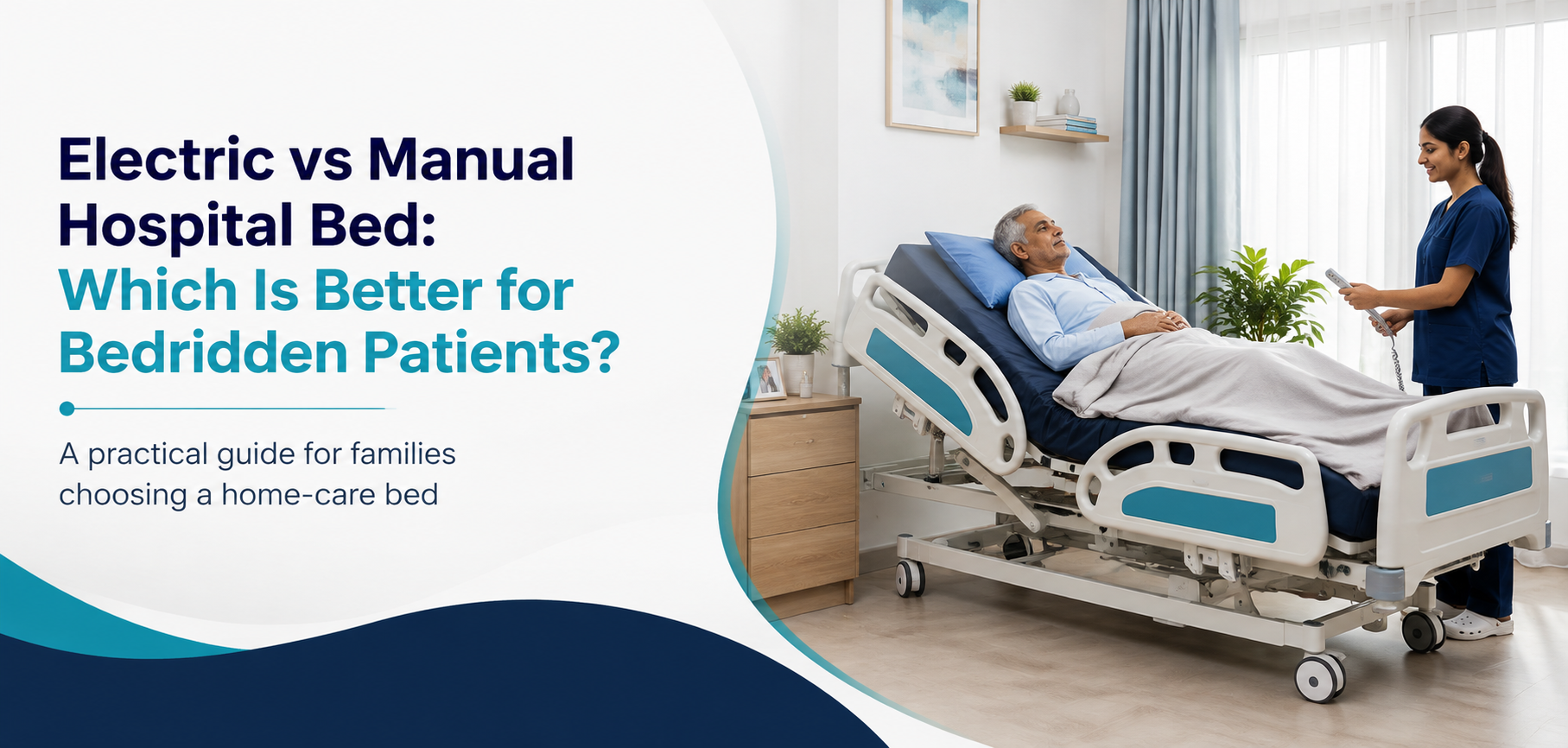
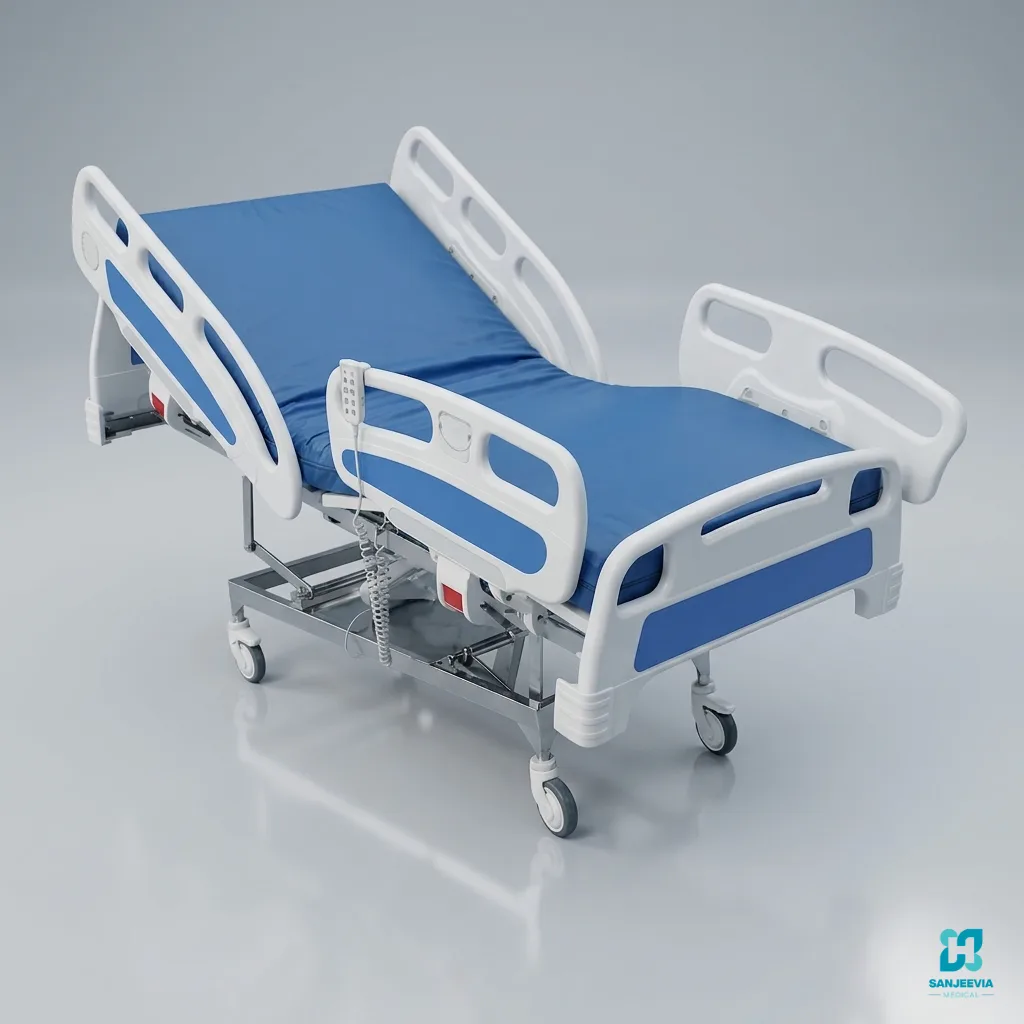
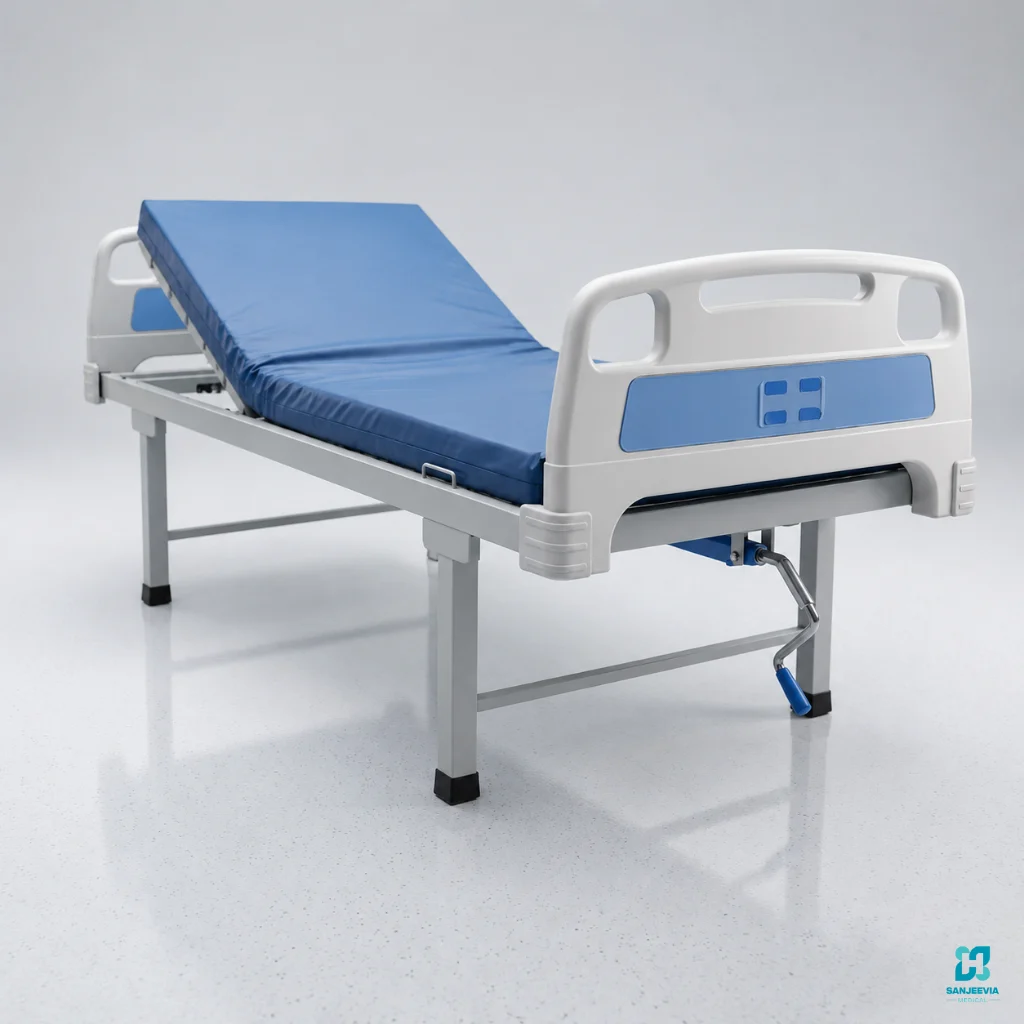
For a patient who cannot reposition independently, the practical choice depends on how often the backrest, knee section and bed height must change. An electric bed can reduce repeated manual cranking, while a simpler manual bed may be suitable when adjustments are infrequent and a caregiver can operate it safely.
“My father cannot sit up or turn without help—which hospital bed should we take?” This is one of the most urgent questions families ask after discharge. The answer is not based on the patient’s age alone. It depends on mobility, prescribed positions, transfer method, pressure-injury risk, room access and how much physical assistance the caregiver can safely provide.
At a Glance
- Ask the care team which positions and transfer precautions are required.
- Match the bed functions to the daily care routine, not only to the headline rental price.
- Plan the mattress, rails, turning schedule and caregiver access as one complete setup.
When an Electric Bed Can Make Daily Care Easier
A remote-operated backrest can help with clinician-approved upright positioning for meals and conversation. Knee-rest and height functions may also support care routines when prescribed. The main advantage is repeatability: a caregiver does not need to bend and crank the bed every time the position changes.
An electric bed does not eliminate the need for safe handling. Someone must still understand the controls, keep cables clear, lock castors and follow the care team’s transfer method.
When a Manual Bed May Be Enough
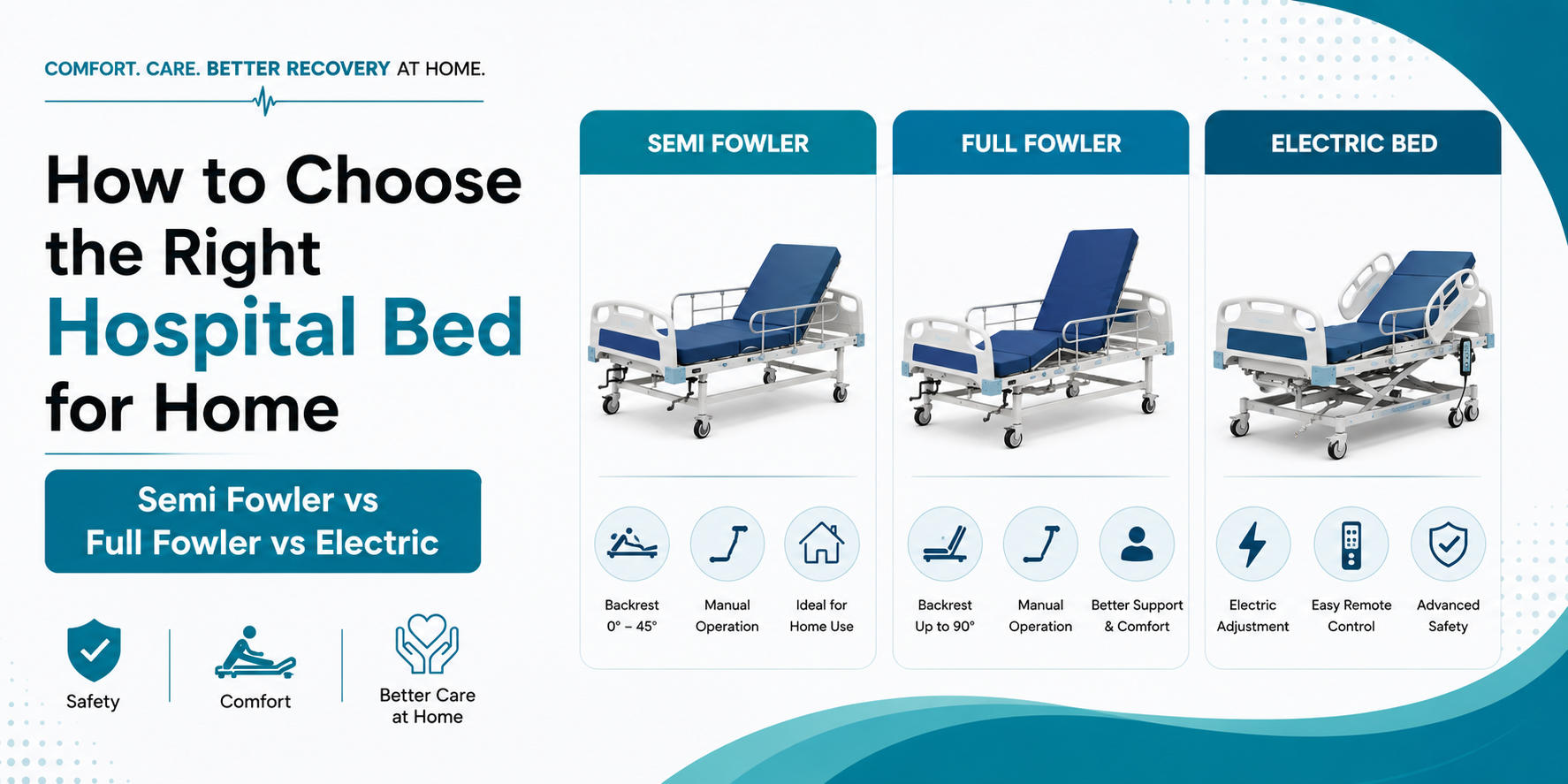
A manual Semi Fowler or Full Fowler bed may suit a short recovery when only one or two adjustments are needed and an able caregiver is available. Confirm the supplied model’s exact movements because similar-looking beds can have different functions.
Do not assume that every bedridden person automatically needs the most advanced bed. Ask what the patient actually needs today and what may change during the expected recovery period.
Think Beyond the Bed Frame
A compatible mattress, pressure-care plan, side-rail decision, absorbent protection and clear space around the bed all affect safety and comfort. A bed cannot prevent pressure injury by itself; repositioning and skin care must follow professional guidance.
If the patient is discharged with oxygen, BiPAP, suction or monitoring equipment, plan sockets and tubing routes so nothing is trapped under castors or stretched across a walking path.
Questions to Confirm Before You Arrange the Equipment
- Required backrest, knee-rest and height movements
- Patient’s ability to turn, sit and transfer
- Caregiver strength and frequency of adjustment
- Mattress and pressure-care recommendation
- Door, staircase, lift and bedroom measurements
- Power socket and outage plan for an electric model
Frequently Asked Questions
Is an ICU bed necessary for every bedridden patient?
No. “ICU bed” is a broad market label. Choose the functions and accessories required by the home-care plan.
Can the patient operate an electric bed alone?
Only if the care team considers it safe and the patient can understand and reach the controls. Some patients require caregiver-only operation.
Should we rent or buy the bed?
Renting often suits uncertain or short recovery periods. Buying may suit long-term use. Compare expected duration, service support and the possibility that care needs may change.
Do we need an anti-bedsore mattress?
Ask the treating team to assess pressure-injury risk. The answer depends on mobility, skin condition, nutrition and other clinical factors.
Need Help Choosing a Medical Bed in Delhi NCR?
Keep the discharge summary or clinician’s instructions ready, then compare Sanjeevia’s medical-bed options. Confirm current availability, exact functions, accessories, delivery access, rental terms and demonstration before booking.
Related Guidance and Equipment
For a patient who cannot reposition independently, these pages connect bed selection with pressure care and the exact equipment options discussed.
Continue Reading
- How to Choose the Right Hospital Bed for Home — compare Semi Fowler, Full Fowler and electric-bed functions.
- Do You Need an Anti-Bedsore Mattress? — review pressure-care questions for a patient spending long hours in bed.
Relevant Product Pages
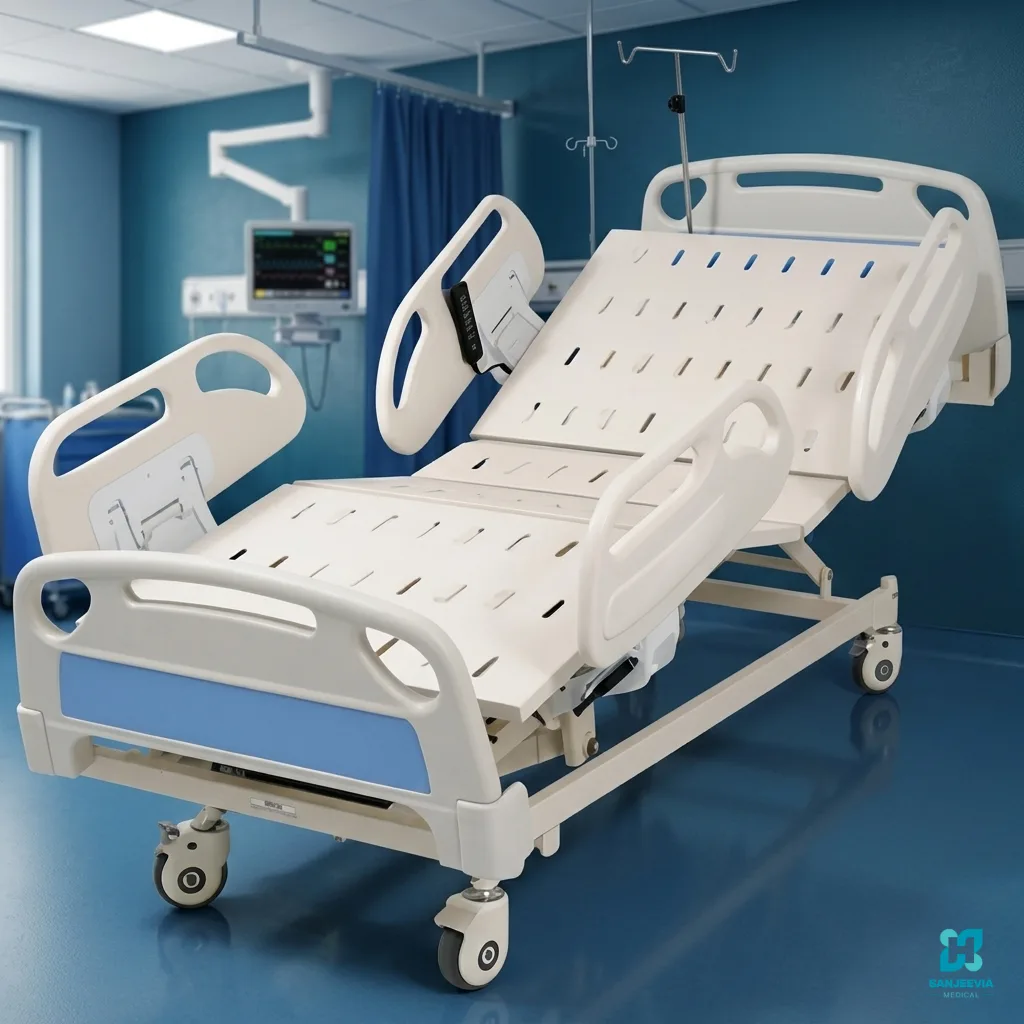
- 3-Function Electric Hospital Bed — review backrest, knee-rest and height-adjustment specifications.
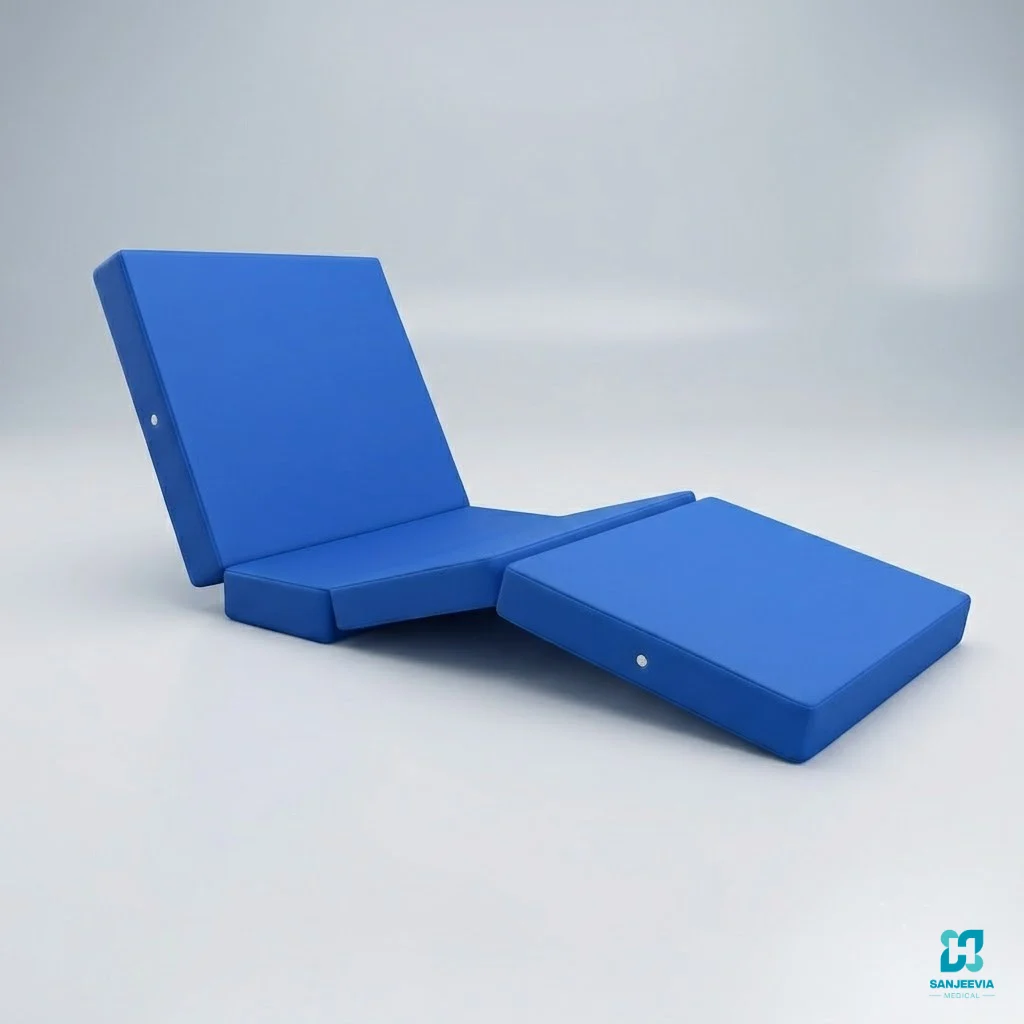
- Four-Section Medical Bed Mattress — check mattress compatibility with an adjustable bed.
Medical disclaimer: This article provides general information and is not medical advice. Bed type, positioning, transfer technique and side-rail use should follow the treating doctor, nurse, physiotherapist or occupational therapist’s instructions.
Published by Sanjeevia Medical | Home-care equipment guidance for Delhi NCR