
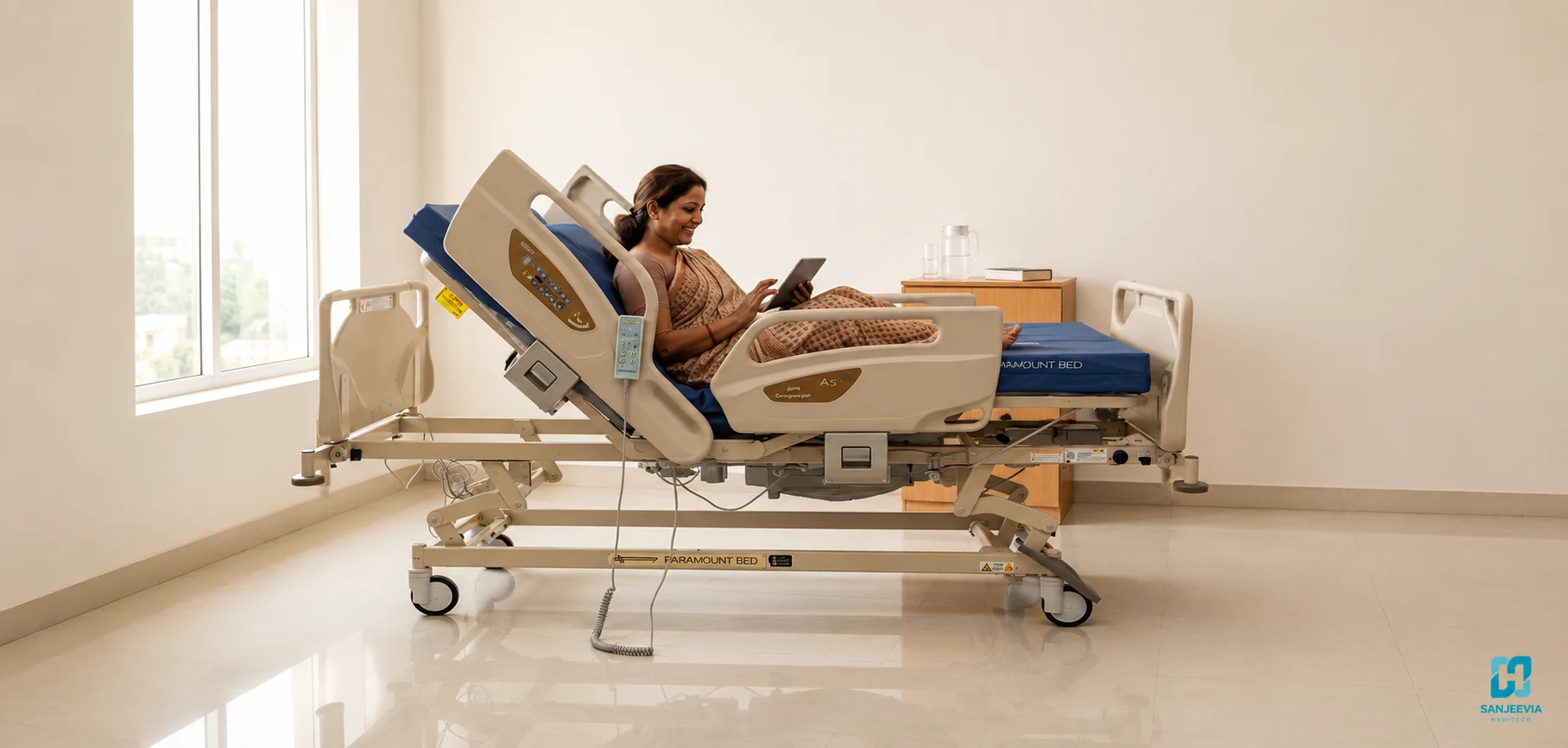
Quick answer: Home preparation after hip or knee replacement should follow the surgeon’s and physiotherapist’s written instructions. Weight-bearing status, movement precautions, walking aids and recovery speed vary, so no single week-by-week equipment schedule applies to every patient.
Questions to answer before discharge
- How much weight may the patient place through the operated leg?
- Which walking aid and assistance level are required?
- Are there procedure-specific movement precautions?
- What chair, bed and toilet height is suitable?
- What exercises and stop criteria has the physiotherapist provided?
- What wound, medicine and blood-clot instructions must be followed?
Choose equipment by safe function
A walker, raised toilet arrangement, commode, wheelchair or adjustable bed may help some patients, but none should be labelled essential for every operation or for a fixed number of days. An occupational therapist or physiotherapist can assess transfers, stairs, bathroom access, seating and caregiver support.
Low, soft seating may be difficult for some people, while others can safely use their normal furniture. The decision should follow demonstrated transfer ability and any procedure-specific precautions.
Medicines and wound care
Follow the discharge medication list exactly. Do not assume every patient will receive the same anticoagulant, antibiotic or pain regimen. Contact the clinical team before adding, stopping or changing medicines.
Some swelling, bruising or warmth can occur after surgery, while other changes require review. Use the hospital’s written wound and red-flag instructions rather than treating every instance of redness as identical.
Mobility and recovery timing
Do not promise that most patients will return equipment by week four or resume near-normal activity by week eight. Progress depends on the operation, pre-operative function, complications and rehabilitation. Review equipment when the patient can safely complete the relevant transfer or activity using the method demonstrated by the therapist.
Seek urgent help
Use the discharge plan. New chest pain, severe breathing difficulty, collapse, a suddenly cold or discoloured limb, uncontrolled bleeding or another emergency sign requires urgent assessment.
Relevant Sanjeevia pages
- Walker or Zimmer frame
- Manual wheelchair
- Commode wheelchair
- Reviewing when a hospital bed is no longer needed
This guide supports home preparation and does not replace the orthopaedic discharge plan.