
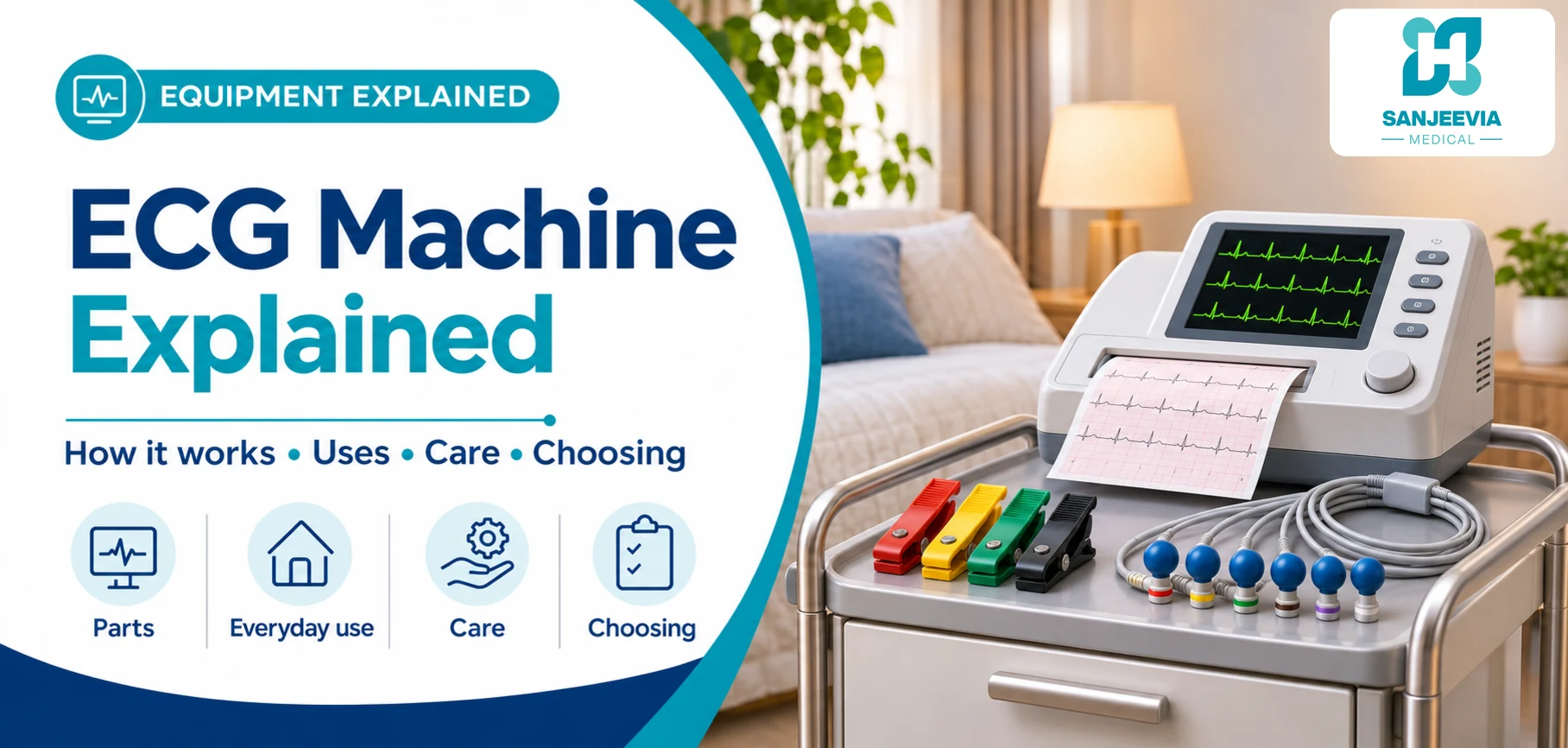
A standard “12-lead ECG” uses ten skin electrodes—not twelve. The twelve leads are twelve electrical views calculated from those electrodes, and even one misplaced chest electrode can change the tracing.
Quick answer: A resting ECG machine records the heart’s electrical activity for clinical interpretation. It produces a short diagnostic tracing; it is not continuous bedside monitoring, does not explain every symptom by itself and should never delay emergency care.
Explore relevant equipment
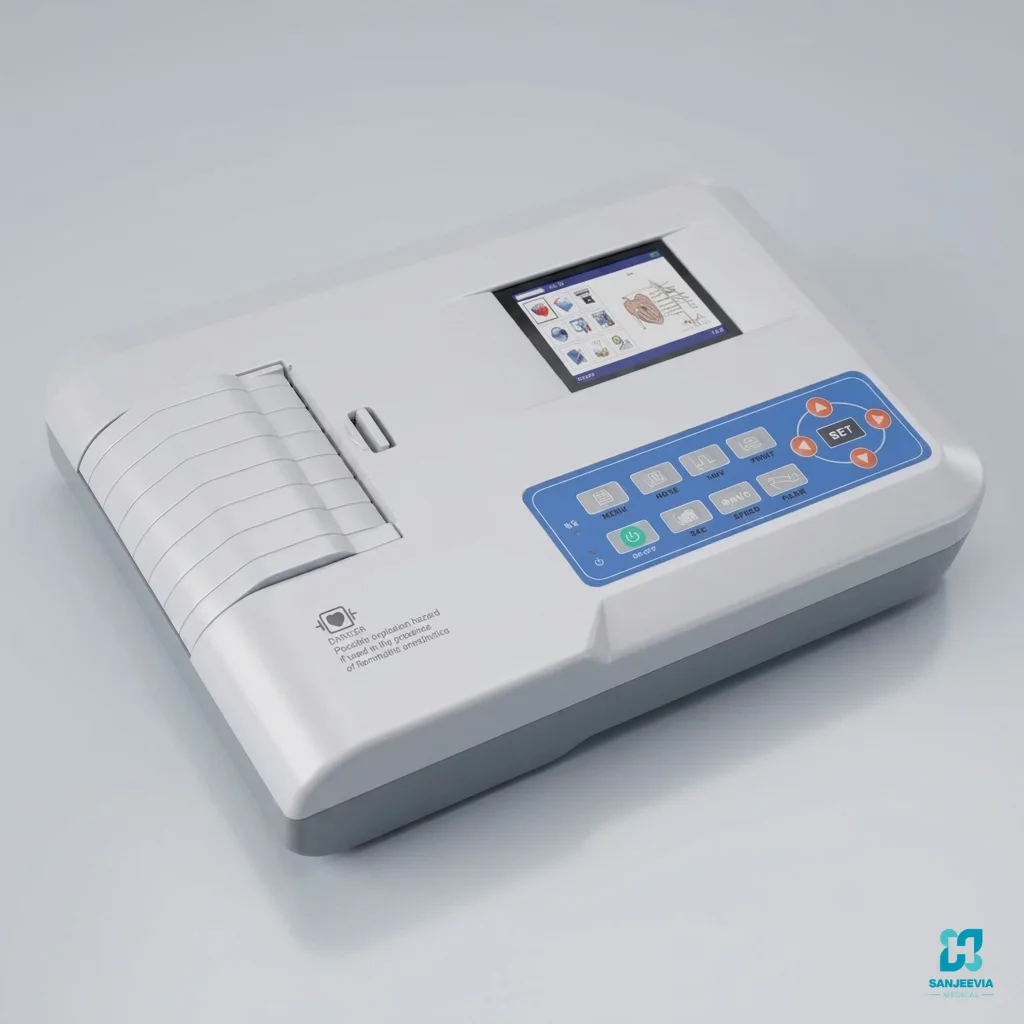
12-Lead Resting ECG Machine
Review the live listing for the supplied package, compatible accessories and current rental or purchase options.
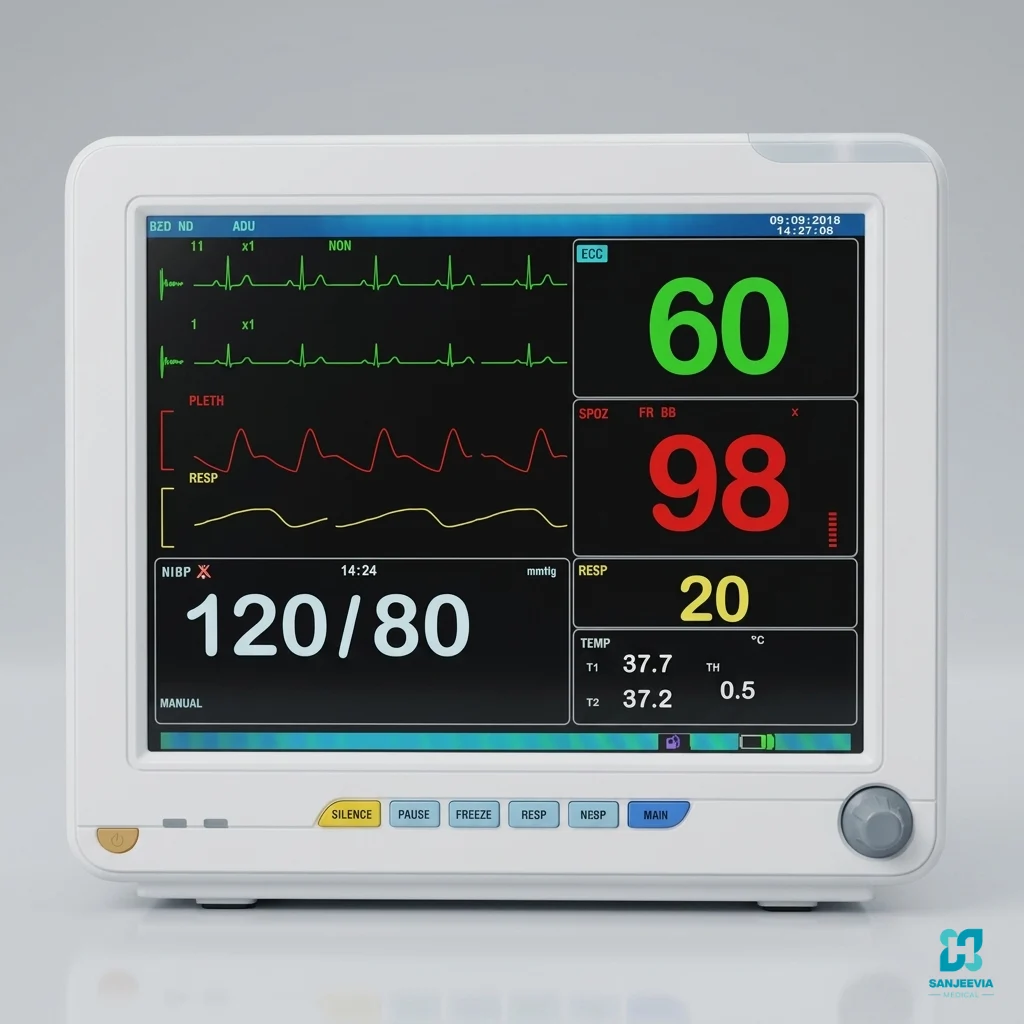
3-Parameter Patient Monitor
Review the live listing for the supplied package, compatible accessories and current rental or purchase options.
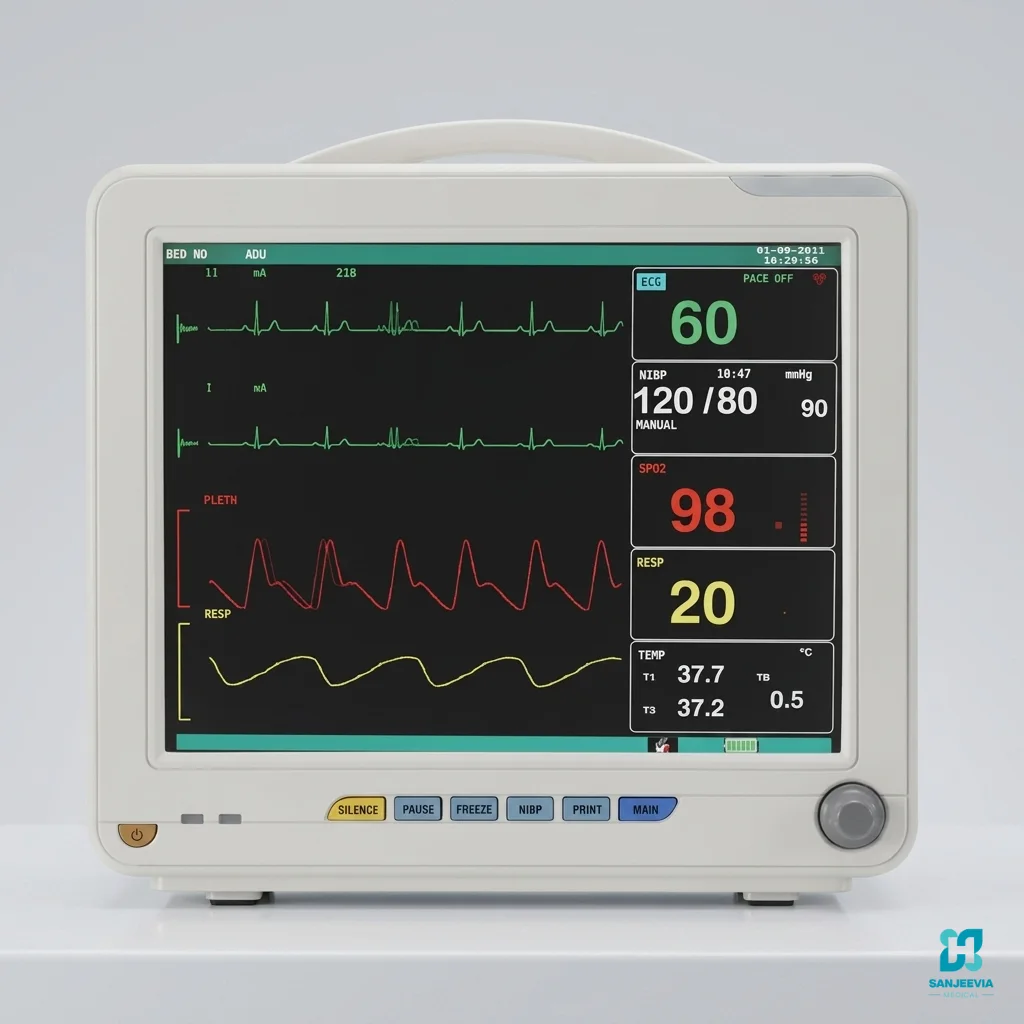
5-Parameter Patient Monitor
Review the live listing for the supplied package, compatible accessories and current rental or purchase options.
Confirm the exact supplied model, compatibility, included accessories and delivery availability for your PIN code before booking.
Exact-model demonstration and handover
Sanjeevia’s channel does not currently have a verified demonstration dedicated to the 12-lead resting ECG machine. Use the supplied model’s manual and an in-person or live handover for controls, accessories, alarms and permitted operation. The steps below are orientation—not a substitute for trained use.
Jump to equipment details
What does a 12-lead resting ECG record?
Electrodes on the limbs and chest detect tiny voltage changes produced as the heart depolarises and repolarises. A ten-wire patient cable feeds those signals to the machine, which displays or prints twelve named leads. Each lead views the same cardiac activity from a different direction.
The paper or screen uses a grid so clinicians can assess time and voltage. Common machine controls include paper speed, gain or sensitivity, filters, lead selection and automatic/manual recording. These are technical settings for a trained operator; changing them can alter how the trace appears and should be documented.
An ECG can support assessment of rate, rhythm, conduction and other electrical patterns, but the machine’s automated statement is not the final diagnosis. A qualified clinician must interpret the tracing with symptoms, history and other tests.
What should arrive with the machine?
| Item | Role | Confirm |
|---|---|---|
| ECG unit and display | Acquires, processes and records signals. | Exact model, modes, date/time and service condition. |
| 10-wire patient cable | Connects limb and chest electrodes. | All wires labelled and undamaged. |
| Limb clips and chest electrodes | Make contact at standard anatomical positions. | Compatible type and trained placement method. |
| Consumable electrodes/gel | Support skin contact. | Fresh patient-contact supplies; expiry and quantity. |
| Thermal paper | Produces a physical tracing on compatible models. | Correct width and grid; spare supply if needed. |
| Mains cable and battery | Power and short portable operation. | Battery status, charger and shutdown procedure. |
The Sanjeevia rental listing includes the ECG machine, patient cable, limb and chest leads, power cable, internal battery and an initial paper roll. It does not include a clinician, diagnosis, continuous monitoring or emergency response.
How is a useful tracing recorded?
- Confirm the patient identity, clinical request and who will interpret the result. Explain the procedure and provide privacy.
- Position the person as instructed, usually resting and still. Prepare the skin using the approved method; do not improvise abrasive preparation.
- Place limb and precordial electrodes at the taught anatomical landmarks. Do not estimate chest positions through clothing or shift electrodes merely to avoid hair, wounds or dressings without clinical guidance.
- Connect labelled lead wires, keep cables supported and ask the patient to remain relaxed. Check for a stable baseline and correct lead display.
- Record in the requested mode. Review for artefact, missing leads, lead reversal, patient details, date/time, calibration information and readable output before sending it for interpretation.
The operator should note any unavoidable variation—such as a dressing affecting placement—because it can influence comparison with earlier or later ECGs.
Common causes of a misleading ECG
Muscle tension, talking, shivering, movement, poor skin contact, dried electrodes, loose wires, mains interference and cable damage can create artefact. Incorrect limb connections or misplaced V1–V6 electrodes can imitate or hide clinically important patterns. A clean-looking tracing is not proof that placement was correct.
Do not repeatedly change filters or gain just to make the printout look normal. Preserve the original tracing and record the technical setting. If the machine reports a lead fault, check the specific electrode and cable rather than swapping several positions at once.
New severe chest pain, collapse, marked breathlessness, confusion or other acute symptoms need emergency assessment. Recording an ECG at home must not become a reason to wait for a remote opinion.
Need help matching the equipment?
Share the written requirement, intended use and delivery area. Sanjeevia can help you check the exact model, accessories, rental or purchase option and service coverage in Delhi NCR.
Cleaning, consumables and electrical checks
Switch off and disconnect the machine before cleaning unless its manual says otherwise. Use only manufacturer-compatible products on the case, display, cable and reusable clips; liquid entering connectors can damage signal pathways. Dispose of single-use electrodes after the assigned patient and clean reusable contact parts between patients.
Inspect the patient cable for cuts, stiff sections, exposed conductor and damaged pins. Keep thermal paper dry, correctly oriented and away from heat or chemicals that may fade it. Check that the internal battery charges and that the machine retains the correct date and time.
Do not open the case or attempt electrical repairs at home. Report repeated noise, missing channels, battery failure, overheating, unusual smell or damaged insulation to the provider.
Choosing or renting an ECG machine in Delhi NCR
- Is a resting 12-lead machine the requested equipment, or is continuous monitoring/Holter testing needed instead?
- Which recording and printing format must the receiving clinician accept?
- Are all ten lead wires, reusable electrodes and the correct paper included?
- Who is trained to place electrodes and check trace quality?
- How will the ECG be transferred securely for interpretation?
- What are the rental period, deposit, delivery, consumable and service arrangements?
A bedside monitor and a diagnostic ECG machine are complementary, not interchangeable. Review the 3-parameter monitor guide if ongoing ECG/SpO₂/NIBP observation was requested.
Frequently asked questions
Why are there 12 leads but only 10 electrodes?
The machine derives twelve electrical views from four limb electrodes and six chest electrodes.
Can the machine’s printed interpretation be accepted as the diagnosis?
No. Automated statements can assist review but require clinician interpretation in the patient’s context.
Is a resting ECG the same as a patient monitor?
No. A resting ECG captures a short diagnostic-quality recording; a bedside monitor displays ongoing selected signals and alarms.
Can an ECG rule out every cardiac problem?
No. A single ECG can be normal despite important symptoms or intermittent conditions. The clinician decides what additional assessment is required.
Explore your equipment options
12-Lead Resting ECG Machine
Review the live listing for the supplied package, compatible accessories and current rental or purchase options.
3-Parameter Patient Monitor
Review the live listing for the supplied package, compatible accessories and current rental or purchase options.
5-Parameter Patient Monitor
Review the live listing for the supplied package, compatible accessories and current rental or purchase options.
Confirm the exact supplied model, compatibility, included accessories and delivery availability for your PIN code before booking.
Sources and useful reading
- NHS: Electrocardiogram (ECG) — purpose and patient-facing procedure overview.
- WHO: cardiovascular survey methods — resting ECG recording and electrode-position guidance.
- NHSRC: CHC medical-equipment technical specifications — ECG-machine specifications.
- Sanjeevia 12-lead resting ECG machine listing.
- NHSRC: Materiovigilance Programme of India.
Prepared by Sanjeevia’s editorial team. Updated 8 November 2026. This guide explains equipment; diagnosis, treatment, settings and patient-specific suitability must come from the responsible clinical team.
