
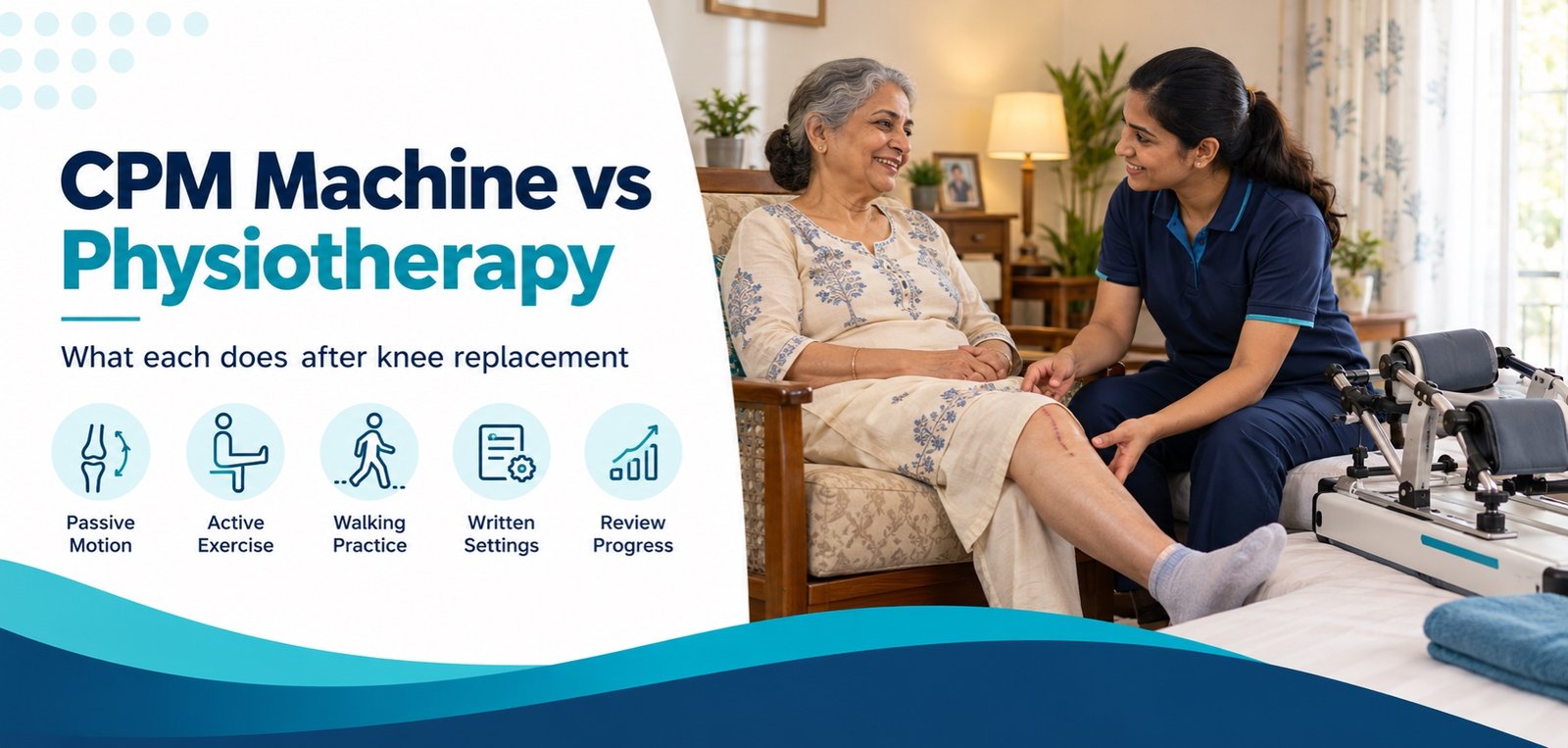
After a total knee replacement, families may hear about a continuous passive motion machine and physiotherapy at the same time. That can make them sound like two versions of the same treatment. They are not. A CPM machine moves the knee repeatedly through a set range while the person remains passive. Physiotherapy is a broader, individual rehabilitation programme that may include active movement, strength, walking, transfers, balance, swelling management and progression towards daily activities.
Quick answer
CPM does not replace physiotherapy after knee replacement. Major orthopaedic guidance advises against routine CPM use after uncomplicated knee replacement because it has not shown meaningful improvement in patient outcomes. A surgeon may still prescribe it for a particular reason. If CPM appears in the plan, confirm the range, speed, session length and stop instructions in writing, and continue the active rehabilitation prescribed by the clinical team.
Use CPM or a walking aid only when it forms part of the individual rehabilitation plan. Equipment rental does not include physiotherapy or clinical assessment.

CPM machine vs physiotherapy at a glance
| Question | CPM machine | Physiotherapy |
|---|---|---|
| What is it? | A motorised device that passively bends and straightens the knee through a programmed range | An assessed rehabilitation programme led by a qualified professional |
| Does the patient work actively? | The machine produces the movement | Usually includes active exercises, functional practice and education |
| Does it teach walking? | No | May include gait, transfers, stairs and walking-aid training when appropriate |
| Can it build strength? | Passive movement is not strength training | May progressively train strength and control |
| Is it routinely needed? | Not routinely recommended after knee replacement | Rehabilitation is planned according to the operation, condition and goals |
| Who sets the plan? | The treating surgeon or physiotherapist must specify settings and schedule | The treating rehabilitation team assesses, teaches and progresses the programme |
The American Academy of Orthopaedic Surgeons guideline reports strong evidence that CPM after knee arthroplasty does not improve outcomes. Its Choosing Wisely material also says routine use should be avoided. This does not mean a family should cancel a prescribed device independently. It means the indication should be clear and the machine should be treated as one possible tool within the rehabilitation plan.
What each one actually does
1. CPM provides passive, repeatable joint movement
A knee CPM machine supports the leg and moves it between extension and flexion limits entered on the controller. The patient should not guess those limits. The allowed range may depend on the operation, wound, pain, swelling and the surgeon’s instructions. The device should be fitted so the knee aligns with its hinge and the leg is supported without harmful pressure.
Before arranging one, use Sanjeevia’s CPM delivery and bed-compatibility questions. Confirm which knee is being treated, whether the clinician has actually prescribed CPM, the starting range, speed, duration, frequency and who to contact if the patient cannot tolerate it.
2. Physiotherapy addresses active recovery and function
Physiotherapy is not one machine or one exercise. The therapist assesses the patient and may work on movement, muscle activation, transfers, standing, walking, balance and a home exercise plan. The programme also helps the family understand which activity is allowed now and what progress should trigger the next step.
A person can complete passive machine sessions yet still need help learning to rise from a chair, use a walker safely or manage stairs. Those goals need active participation and professional progression. A machine cannot observe gait, correct unsafe technique or decide whether pain and swelling require medical review.
3. CPM cannot make clinical decisions
The controller displays settings, but it does not assess the wound, circulation, pain, swelling, fever or overall recovery. Do not increase the range merely because the previous session was completed. Do not continue through unusual pain, equipment movement or a new symptom without following the written stop and escalation plan.
If the surgeon prescribed CPM, ask what problem it is intended to address and how benefit will be reviewed. Also ask when the rental should end. A clear review point prevents a passive device from continuing automatically after its purpose has been reconsidered.
4. Physiotherapy does not mean forcing the knee
Active rehabilitation should follow the surgical team’s restrictions and the therapist’s assessment. More discomfort is not proof of better progress. Families should know the difference between expected exercise discomfort and symptoms that require the session to stop and the treating team to be contacted.
The American Association of Hip and Knee Surgeons exercise guide explains that exercises are progressed with professional guidance. Use it as general education, not as a substitute for the patient’s own instructions.
5. Bed and machine setup affect safe use
The support surface should be firm, stable and large enough for the CPM frame. A soft or uneven sofa may let the device shift. Check electrical access without creating a trip hazard. Keep the controller within the instructed reach, and do not place cables where a caregiver may catch a foot during transfers.
Sanjeevia’s CPM setup and recovery guide covers the information to prepare before delivery. The rental handover should identify the supplied parts and demonstrate safe stopping. It does not include a clinical assessment or physiotherapy.
6. Walking aids require their own assessment
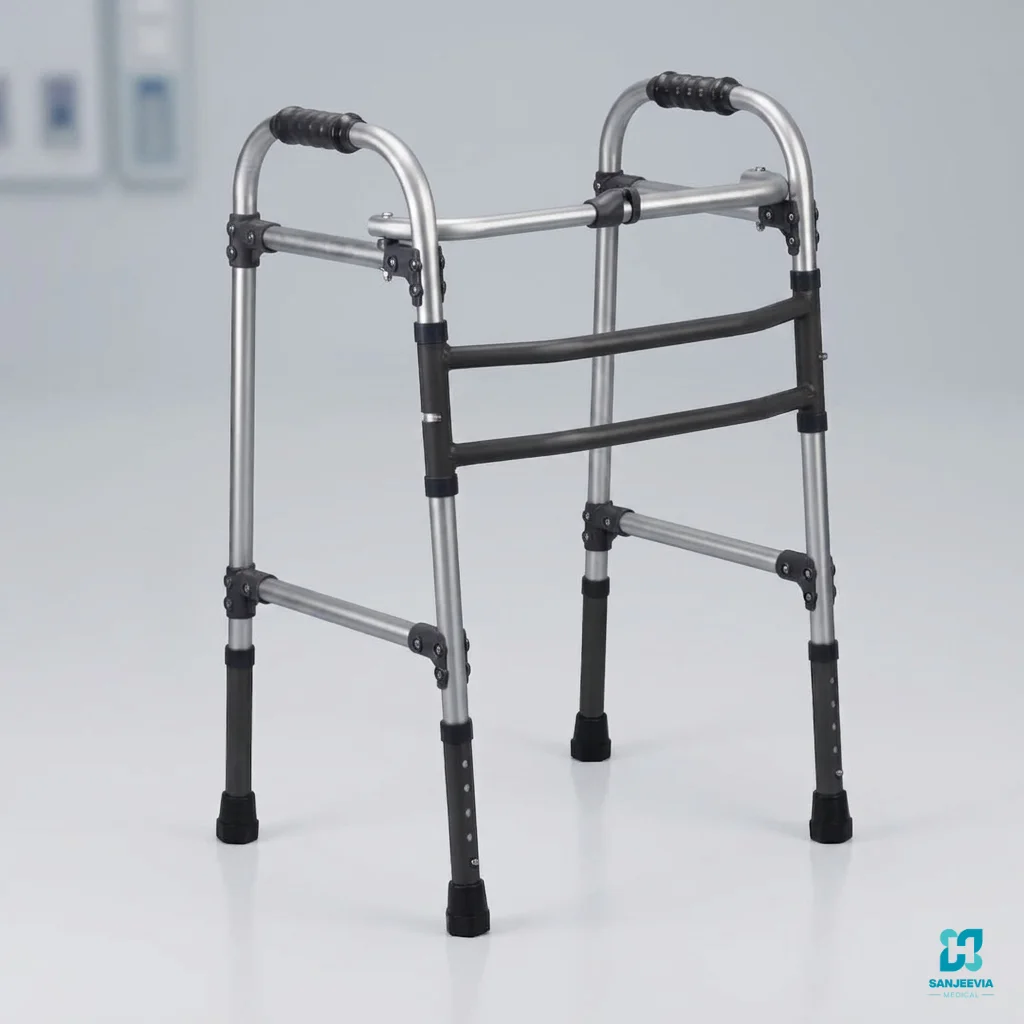
A CPM machine does not determine when a patient may stand or how much weight may be placed through the operated leg. If a walker is prescribed, confirm its height, gait pattern and assistance level with the physiotherapist. Do not use the walker shown in a product card as evidence that it is suitable for every patient.
For wider recovery planning, read the home setup checklist after hip or knee replacement. It helps families separate equipment questions from medication, wound, mobility and follow-up instructions.
Questions to ask before renting a CPM machine
- Has the treating surgeon or physiotherapist prescribed CPM for this patient?
- What exact range, speed, session duration and daily frequency are authorised?
- Which leg is being treated, and how should the machine align with the knee?
- What symptoms or equipment problems mean the session should stop?
- Who reviews progress, and on what date should CPM use be reconsidered?
- What active exercises and walking plan continue alongside it?
- Is the bed or support surface compatible with the machine?
- Who will be trained to position the leg and operate the controller?
When to seek clinical help
Follow the hospital’s discharge instructions for urgent and routine concerns. Contact the treating team about new or worsening symptoms such as unusual pain, marked swelling, wound concerns, fever, calf symptoms, breathing difficulty or a sudden loss of function. Emergency symptoms require emergency medical care. A device provider can address equipment operation and support, but cannot diagnose a complication or revise treatment.
Frequently asked questions
Can CPM replace physiotherapy after knee replacement?
No. CPM provides passive movement and does not replace active exercises, strength, gait training, functional practice or clinical assessment.
Is CPM routinely recommended after total knee replacement?
No. Major orthopaedic guidance advises against routine CPM use after uncomplicated knee replacement. Use it only when the treating team has a patient-specific reason and written plan.
Who should set the CPM range and speed?
The treating surgeon or physiotherapist should specify the settings and schedule. The family should not increase them independently.
Can a CPM machine be used on a normal bed?
Only if the support surface is firm, stable, large enough and accepted for the supplied model. Confirm bed compatibility before delivery.
Does Sanjeevia’s CPM rental include physiotherapy?
No. Equipment rental and handover do not include physiotherapy, clinical assessment or revision of the rehabilitation plan.
Educational guide reviewed against orthopaedic guidance on 23 October 2026. Follow the patient’s surgeon and physiotherapist. Product availability and supplied models require confirmation.
Next Read
Prepare the home before delivery with CPM Machine Before Delivery: Bed Compatibility and Setup Questions.