
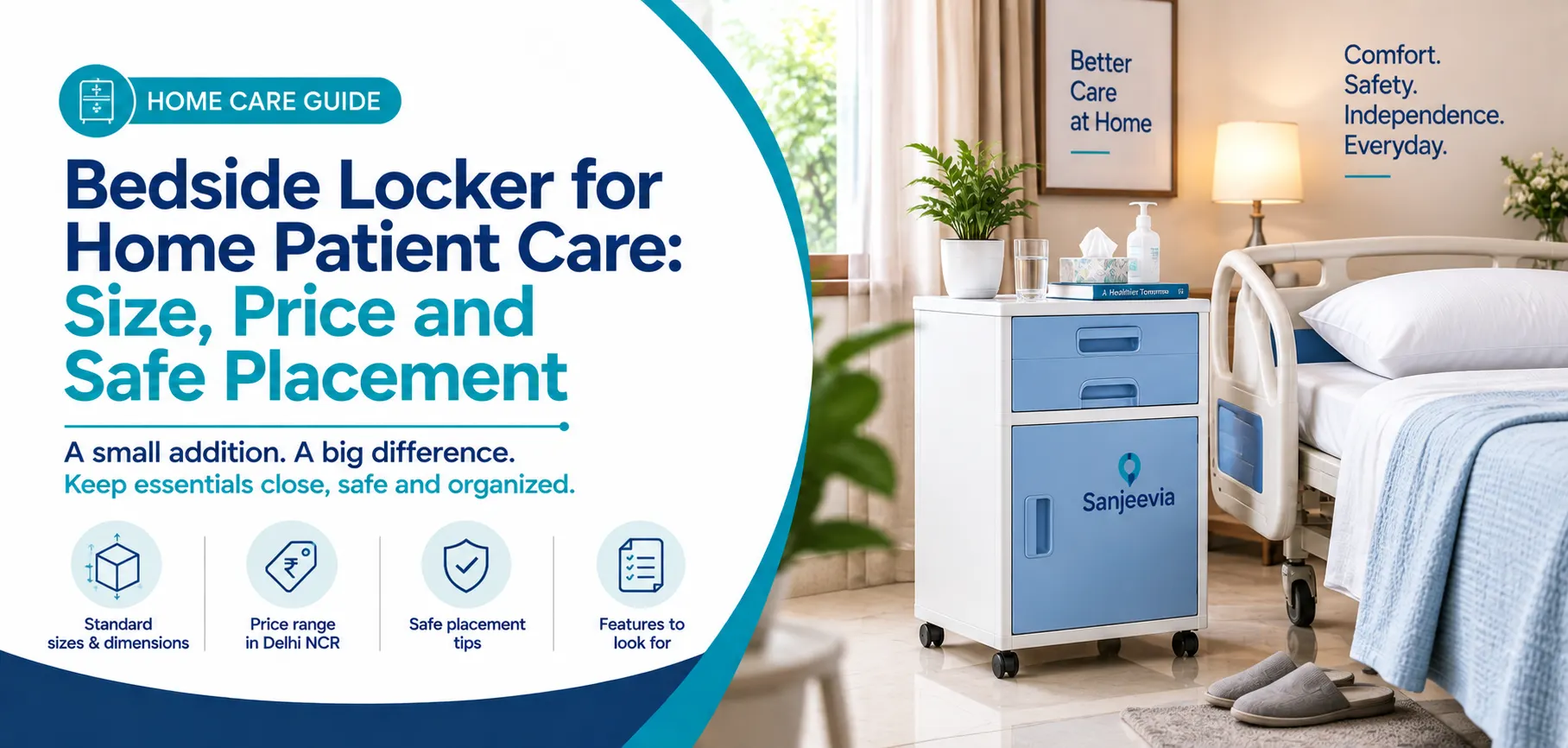
Quick answer: Sanjeevia lists a bedside locker for home patient care at ₹1,400 for one month, ₹1,120 per month on a six-month plan and ₹7,500 to buy. It measures approximately 450 × 400 × 800 mm and includes a lockable upper drawer, an open middle shelf, an enclosed lower cabinet and four castors with brakes.
A hospital bedside locker can keep routine care items within the caregiver’s reach, but it is not a certified medicine safe and must not be used as a support for standing or transfers. Good placement matters as much as storage capacity.
Bedside locker price and rental options
| Option | Listed amount | Plan total |
|---|---|---|
| One-month rent | ₹1,400 | ₹1,400 |
| Six-month rent | ₹1,120 per month | ₹6,720 |
| Purchase | ₹7,500 | One-time equipment price |
| Transport | ₹750 | Listed delivery and collection charge |
| Refundable security deposit | ₹1,000 | Subject to the rental and return terms |
Prices were checked on 10 September 2026 and may change. Confirm availability and the complete written invoice before delivery.
Bedside locker dimensions and storage layout
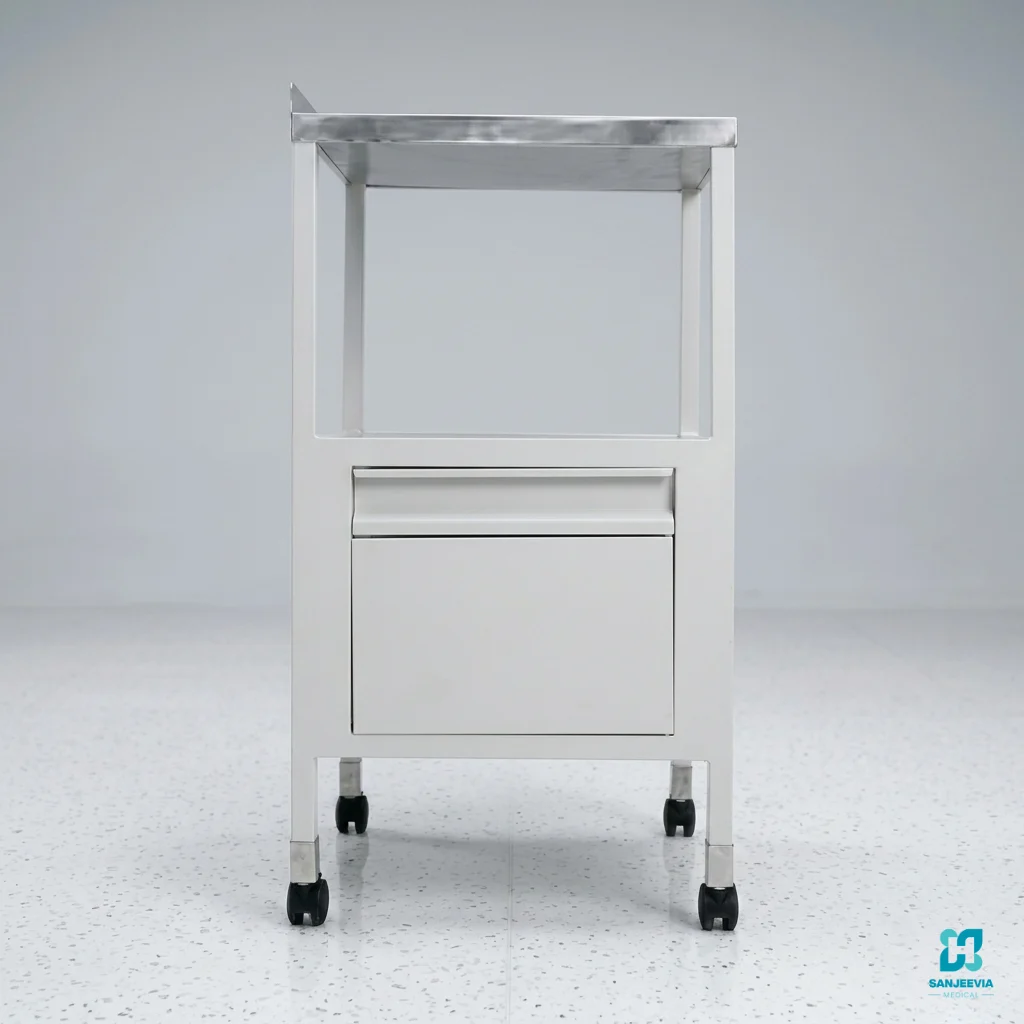
- Overall size: about 450 mm wide × 400 mm deep × 800 mm high
- Upper section: lockable drawer supplied with two keys
- Middle section: open shelf for frequently used items
- Lower section: enclosed cabinet
- Construction: mild-steel frame with laminate panels
- Movement: four castors with brakes
- Delivery: supplied fully assembled
The product page does not publish a safe load rating. Do not place a person, heavy machine, full oxygen cylinder or other concentrated load on it until a verified limit is available.
Measure the bedside space before ordering
The locker needs enough clearance to open the drawer and cabinet without blocking care. Use a tape measure and sketch the room from above. Record:
- The clear space between the bed and the wall or other furniture
- The route used by the patient and caregiver to enter or leave the bed
- The swing of the room door and cabinet door
- The space required for a walker, wheelchair or commode
- Access to electrical sockets and medical equipment
- The route needed for emergency access or stretcher movement
Add practical clearance to the 450 × 400 mm footprint. A locker that technically fits into a gap can still interfere with a wheelchair footrest, over-bed table base or caregiver stance.
Where to place a bedside locker
Place the locker on a firm, level surface and engage the brakes after positioning. Keep it on the side that the care team considers safe and accessible. It should not narrow the primary walking route or become an object the patient instinctively grabs while standing.
| Placement issue | Safer setup question |
|---|---|
| Next to the bed rail | Can the rail move fully without striking the locker? |
| Near oxygen equipment | Does it preserve ventilation and keep tubing free from pinching? |
| Beside a wheelchair | Is there room for footrests, brakes and a caregiver-assisted transfer? |
| Near electrical sockets | Can plugs be reached without stretching cables across the floor? |
| At the patient’s stronger side | Has the therapist confirmed the side used for transfers and reaching? |
What to store in each section
Organise the locker around frequency of use and caregiver access. A simple arrangement could be:
- Open shelf: tissues, a clean water cup if permitted, reading glasses, call bell and the day’s non-clinical care items.
- Upper drawer: small personal items, written care log, charging cables and supplies that should stay dust-free.
- Lower cabinet: sealed packs of gloves, dry linens or larger light supplies.
Keep clean and used items separate. Label containers clearly. Check the care team’s infection-control instructions when dressings, catheters, feeding equipment or wound supplies are involved.
What should not be stored casually
- Medicines that require controlled access, refrigeration or a specific storage temperature
- Sharps without an approved sharps container
- Used dressings, soiled linen or open waste
- Open liquids above electrical equipment
- Heavy oxygen cylinders or devices beyond a verified load rating
- Cleaning chemicals alongside food, medicines or clinical supplies
- Items that a child or cognitively impaired patient could access unsafely
The lockable drawer provides basic restricted access, but it is not a certified medicine safe. Keep keys under a responsible caregiver’s control and follow the pharmacist’s storage instructions.
A bedside locker is not transfer support
Castors can move even when some brakes are engaged, and the cabinet has no published patient-support rating. The patient should not pull on the drawer handle, lean on the top or push down on the unit to stand. Use the transfer method and equipment prescribed by the physiotherapist or occupational therapist.
If the patient repeatedly reaches for nearby furniture, review the bed height, mobility aid, call-bell position and supervision plan. Moving the locker closer may increase risk rather than solve it.
Cleaning the locker at home
- Remove supplies and dispose of waste through the correct route.
- Wipe visible dirt with a soft cloth and mild cleaner compatible with the surface.
- Clean handles, keys, drawer pulls, shelf edges and brake controls carefully.
- Avoid flooding joints, castors or laminate edges with water.
- Dry all surfaces before replacing clean supplies.
- Clean spills promptly and keep wet-floor hazards away from the bed.
Do not mix cleaning chemicals. For an infection or isolation plan, use the disinfectant and contact time specified by the clinical team and confirm that it is compatible with the materials.
Daily and weekly safety checks
| Frequency | Check |
|---|---|
| Daily | Brakes engaged, walking route clear, liquids contained and drawer closed |
| Daily | No medicine, sharp or hazardous item accessible to the wrong person |
| Weekly | Castors roll and stop correctly; cabinet stands level without wobbling |
| Weekly | Drawer, shelf, hinges and handles show no looseness or sharp damage |
| After moving | Bed controls, rails, wheelchair and caregiver route still have clearance |
| Before return | Both keys and all delivered parts are present |
Bedside locker versus over-bed table
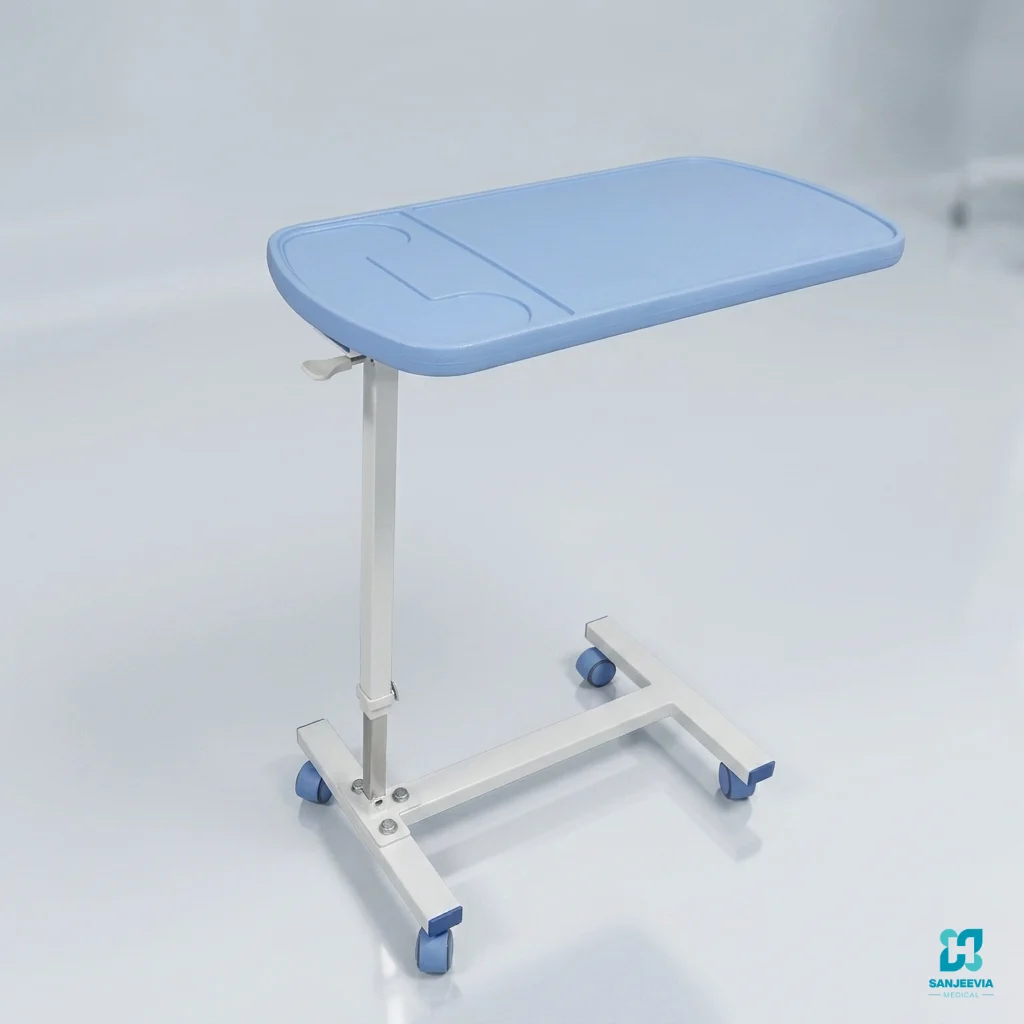
A locker stores supplies. An over-bed table provides an adjustable surface that can extend across the bed for meals or approved activities. One does not automatically replace the other.
| Need | Usually matched product |
|---|---|
| Enclosed storage beside the bed | Bedside locker |
| Surface positioned over the mattress | Height-adjustable over-bed table |
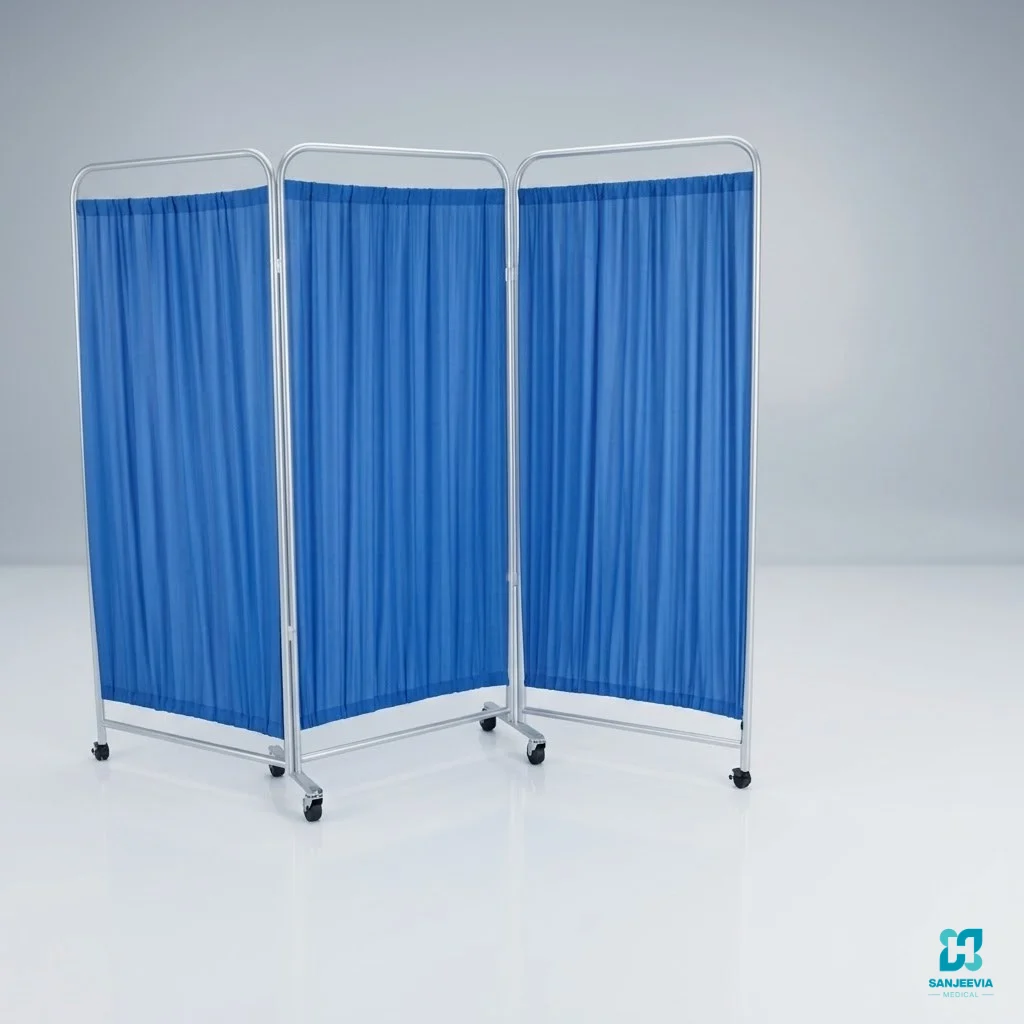
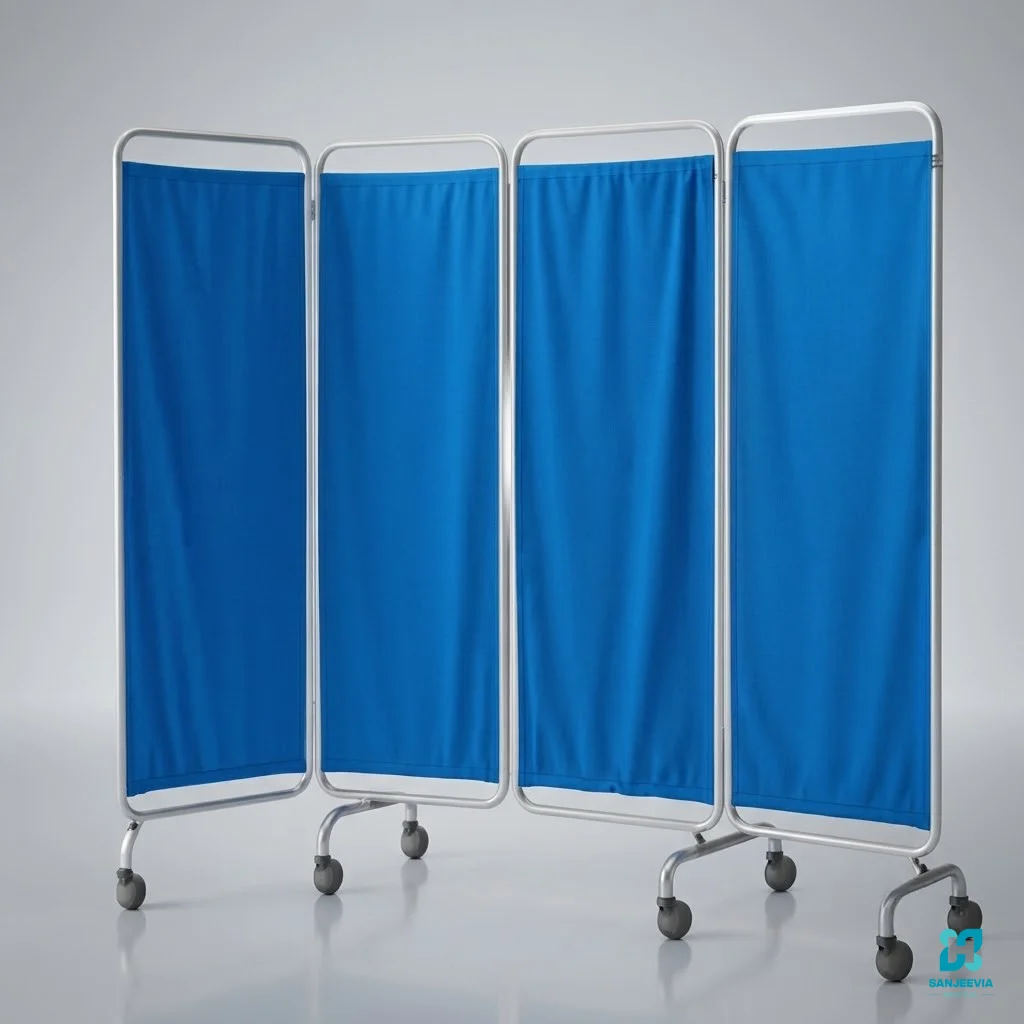
| Visual privacy during care | Three-panel bedside screen |
| Patient positioning or powered bed functions | Hospital bed selected for the care plan |
When combining products, check that their bases and castors can pass one another without trapping tubing or blocking transfers.
Rent or buy a bedside locker?
Rental can suit a short recovery, temporary home-care arrangement or a period when the room layout may change. Purchase can suit long-term care when the dimensions, material and storage layout have already been tested.
At the current listed rates, six months of rent totals ₹6,720 before transport and deposit, close to the ₹7,500 purchase price. Ownership also brings responsibility for long-term cleaning, repairs and disposal. Compare the whole arrangement, not only the headline monthly figure.
Review Sanjeevia’s rental policy, security deposit policy and delivery policy before ordering.
Delivery checklist
- Confirm the 450 × 400 × 800 mm approximate dimensions.
- Match the delivered model and condition to the booking.
- Open and close the drawer, shelf area and cabinet.
- Test each castor and brake on the room’s floor.
- Count both keys and decide who will hold them.
- Inspect edges, laminate and handles for damage.
- Position the unit and repeat the bed, wheelchair and walking-route clearance check.
- Record the support contact and return process.
Frequently asked questions
What is a bedside locker used for?
It stores light personal and care supplies beside a patient’s bed. It is not a walking aid, transfer support, medicine safe or seat.
Does the locker come assembled?
Yes. The current product information says it is supplied fully assembled.
Can I lock medicines in the upper drawer?
The drawer can restrict casual access, but the unit is not a certified medicine safe. Follow the medicine label, pharmacist and care team’s storage requirements.
What are the current rental charges?
Sanjeevia lists ₹1,400 for one month or ₹1,120 per month for six months, plus ₹750 transport and a ₹1,000 refundable security deposit.
How do I request delivery?
Review the bedside locker product page, then contact Sanjeevia with the delivery area, duration and measured bedside space.
This article covers furniture selection, placement and rental logistics. Follow the treating team’s instructions for patient transfers, medicines and clinical supplies.